 Anacortes
 Roofing in the Cap Sante Area Isn't Generic Roofing
Cap Sante sits high and exposed above the Anacortes waterfront, and that position comes with a trade-off. The views are worth it, but the roofs up there take a harder hit than roofs a few miles inland in Skagit County. Salt-laden air off the water, wind that funnels around the headland, and a long, damp moss season all work on asphalt shingles year-round, not just during winter storms. A roof that would coast along fine in a drier, more sheltered part of the county can start showing granule loss, moss colonies, and fastener corrosion years earlier up here.
That's the reason a Cap Sante-specific approach to asphalt shingle roofing matters. It's not a different product line — it's different judgment calls on materials, ventilation, and detailing, made by a crew that has actually worked this exposure before and knows what fails first.
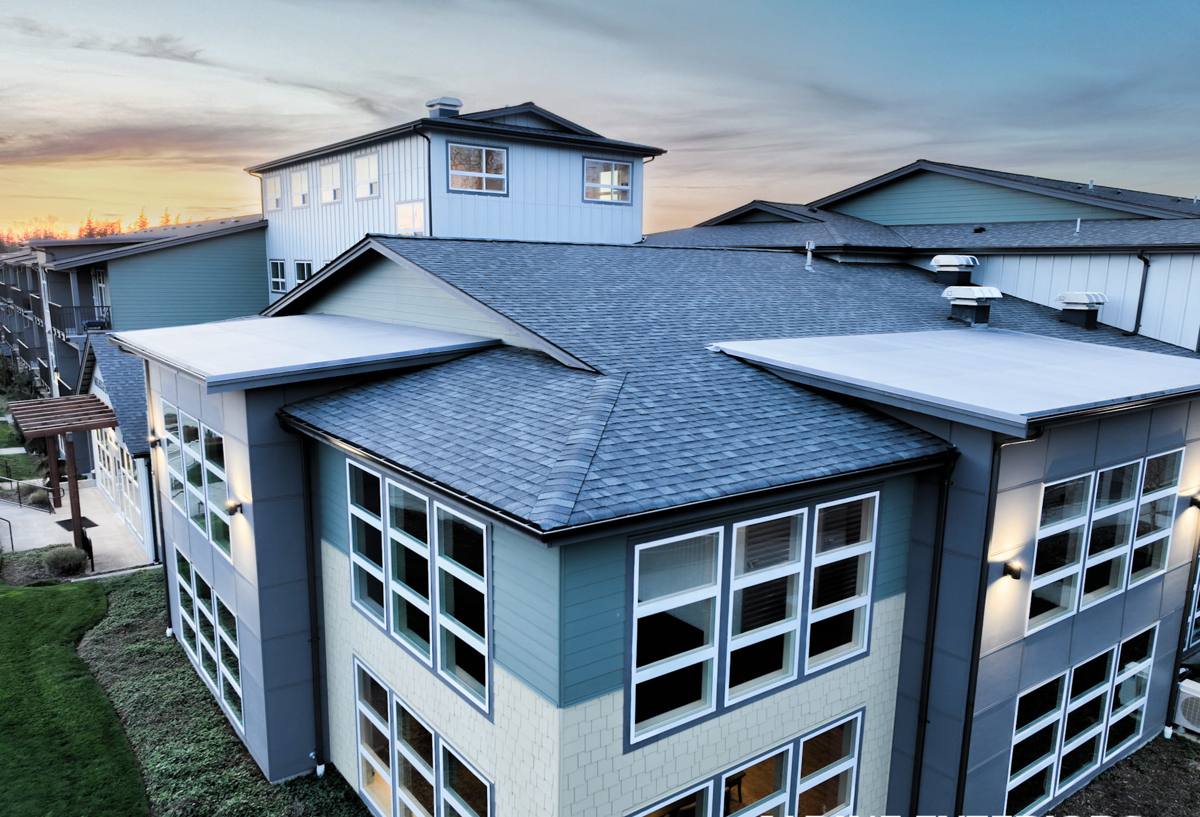
What the Climate Actually Does to a Shingle Roof Here
Salt Air and Metal Fasteners
Airborne salt from the marina and the strait accelerates corrosion on any exposed metal — nail heads, flashing edges, and vent housings. Standard electro-galvanized fasteners can start showing rust streaks on the shingle field well before the shingles themselves are due for replacement. It's a cosmetic issue at first, but rust-weakened fasteners eventually lose their grip, and that's how shingles start lifting in wind.
Driving Rain and Wind-Driven Water
Anacortes gets its share of storms that come in sideways off the water rather than straight down. Wind-driven rain finds every weak lap, every under-driven nail, and every spot where underlayment coverage was skimped. On a headland like Cap Sante, that wind loading is a real factor in shingle selection and nailing pattern, not an afterthought.
Moss and Algae Season
Skagit County's damp season runs long, and north-facing or shaded slopes near tree cover hold moisture for weeks at a time. Moss doesn't just sit on top of shingles — its root structure works under tab edges and holds water against the mat, which shortens the life of the shingle underneath it. Left unchecked for a few seasons, moss growth is one of the most common reasons we see otherwise decent shingle roofs replaced early.
What a Correct Asphalt Shingle Job Involves
A shingle roof is a system, not a single layer. Skipping or downgrading any piece of it is where premature failures start, especially in an exposure like this one.
- Deck inspection and repair — soft, delaminated, or water-stained sheathing gets replaced before anything new goes down, not covered over.
- Ice-and-water shield at eaves, valleys, and roof-to-wall transitions — the areas most likely to see standing water or ice damming during a cold snap.
- Synthetic underlayment across the full field, lapped and fastened to manufacturer spec, not stapled loosely and left to move in the wind.
- Corrosion-resistant flashing at valleys, chimneys, skylights, and sidewalls — this is where salt-air corrosion shows up first, so the metal grade matters here more than in a sheltered inland job.
- Proper nailing — correct nail count, placement in the manufacturer's nailing zone, and hand-driven or gun-calibrated so heads sit flush, not overdriven or underdriven.
- Balanced intake and exhaust ventilation so the attic can actually dry out between wet stretches instead of trapping moisture against the deck.
- Starter strips and ridge caps installed as a system with the field shingles, not mismatched pieces cut from leftover bundles.
Choosing the Right Shingle for This Exposure
Not every shingle line is worth the upgrade cost on every roof, but on a wind- and salt-exposed site like Cap Sante, the difference between a builder-grade three-tab and a heavier laminated architectural shingle is more than looks.
| Shingle Class | Wind Resistance | Moss/Algae Resistance | Best Fit |
|---|---|---|---|
| Standard 3-tab | Lower wind rating, lighter mat | Standard granules only | Budget-limited projects, more sheltered lots |
| Architectural / laminated | Higher wind rating, thicker construction | Often available with algae-resistant granules | Most Cap Sante homes — the practical middle ground |
| Premium/designer laminated | Highest wind ratings in the shingle category | Algae-resistant granules standard | Full waterfront/headland exposure, longer hold-the-line intent |
We'll walk you through actual product lines and pricing during the estimate rather than quoting numbers here that don't mean much without seeing your roof's pitch, exposure, and layout. In general, though, homes closer to the open water and higher elevation on the headland get more out of the wind rating and algae-resistant granule upgrade than homes tucked into more sheltered streets.
Ventilation: The Piece That Decides How Long the Roof Lasts
Shingles fail from the top down and the bottom up. Sun and weather work the surface, but trapped attic moisture works the deck from underneath, and in a climate this damp, that second failure mode is easy to underestimate. An attic that can't breathe holds humidity against the sheathing, which softens wood, feeds mold, and can void a shingle manufacturer's warranty outright — most warranties require documented, code-compliant ventilation to stay valid.
Before we quote a re-roof, we look at existing intake (usually soffit vents) and exhaust (ridge vent, box vents, or power vents) and tell you honestly whether the current setup is adequate, undersized, or mismatched. Adding or correcting ventilation during a re-roof is far cheaper than doing it as a standalone project later.
Moss and Algae: What Ongoing Care Actually Looks Like
No coating or shingle line makes moss a non-issue in Skagit County's climate — it reduces the problem, it doesn't eliminate it. Realistic upkeep for a Cap Sante roof looks like this:
- Keep gutters and valleys clear so water doesn't sit against shingle edges.
- Trim back overhanging branches to cut down on shade and debris buildup on north-facing slopes.
- Have moss growth removed with proper technique (not pressure-washed, which strips granules) before it works under tab edges.
- Consider zinc or copper strips near the ridge on moss-prone slopes as a preventive measure during install.
We'd rather tell you this upfront than let you assume a new roof means zero maintenance. It doesn't, not on this stretch of coastline.
How We Handle a Cap Sante Roofing Job
1. On-Site Assessment
We walk the roof (not just look at it from the ground), check the deck condition where accessible, and evaluate existing ventilation, flashing, and moss/algae history before recommending anything.
2. Honest Scope and Options
You get a written estimate that spells out shingle options, what's included (tear-off, deck repair allowance, underlayment type, flashing, ventilation), and what would push the price up or down — no vague allowances buried in the fine print.
3. Tear-Off and Deck Check
Old roofing comes off down to the deck so we can actually see what's underneath, rather than layering new shingles over hidden problems.
4. System Install
Ice-and-water shield, underlayment, flashing, shingles, and ventilation go in as a coordinated system, built to the manufacturer's spec so your warranty is actually valid if you ever need it.
5. Cleanup and Walkthrough
Magnetic sweep for stray fasteners, full site cleanup, and a final walkthrough where we point out anything you should keep an eye on going forward.
Signs Your Roof Needs a Look Now
You don't need to wait for an active leak to have a roof checked. Common early warning signs on homes in this area include:
- Granules collecting in gutters or at downspout outlets
- Shingle edges curling or tabs lifting, especially on wind-exposed slopes
- Visible moss or dark streaking on north-facing sections
- Rust staining around nail heads or flashing
- Daylight visible through the attic decking or damp insulation near the eaves
- Missing or torn shingles after a windstorm
Any one of these on its own isn't necessarily an emergency, but they're worth a professional look before the next storm season rather than after.
Why It Matters That We Already Work This Area
A crew that mainly works drier, inland jobs doesn't always think about salt-air fastener corrosion or headland wind loading as a default consideration — it's not part of their everyday exposure. Working Anacortes and the surrounding Skagit County waterfront regularly means we make those calls automatically: the right fastener grade, the right flashing metal, the right ventilation balance for a house that sits in wind and salt air most of the year. That's the practical value of hiring local — not sentiment, just familiarity with what actually fails on roofs like yours.
If you'd like a straight look at your roof's condition and a written estimate with no pressure to sign anything on the spot, use the form below to request a free assessment. We'll tell you what we see, plainly, and let you decide from there.