 Anacortes
 Cap Sante's Roofing Climate: Salt Air, Rain, and Moss
Homes in the Cap Sante area sit close to the water on Fidalgo Island, which means roofs here take on a mix of stresses that inland Skagit County homes don't deal with in the same combination. Salt-laden air off the marina and boat basin accelerates corrosion on exposed metal — fasteners, flashing, vent caps, and gutter hardware age faster here than they would a few miles inland. Add in Anacortes' long stretch of driving rain each fall and winter, plus the shaded, damp conditions that let moss and algae take hold on north-facing slopes, and you've got a roof that's working harder than most people realize.
None of that means a roof in Cap Sante needs to be exotic or overbuilt. It means the details — the metal you choose, the way flashing is installed, how the roof breathes — need to match the environment instead of being treated as an afterthought. That's the difference between a roof that looks fine for five years and one that actually holds up for its full expected life.
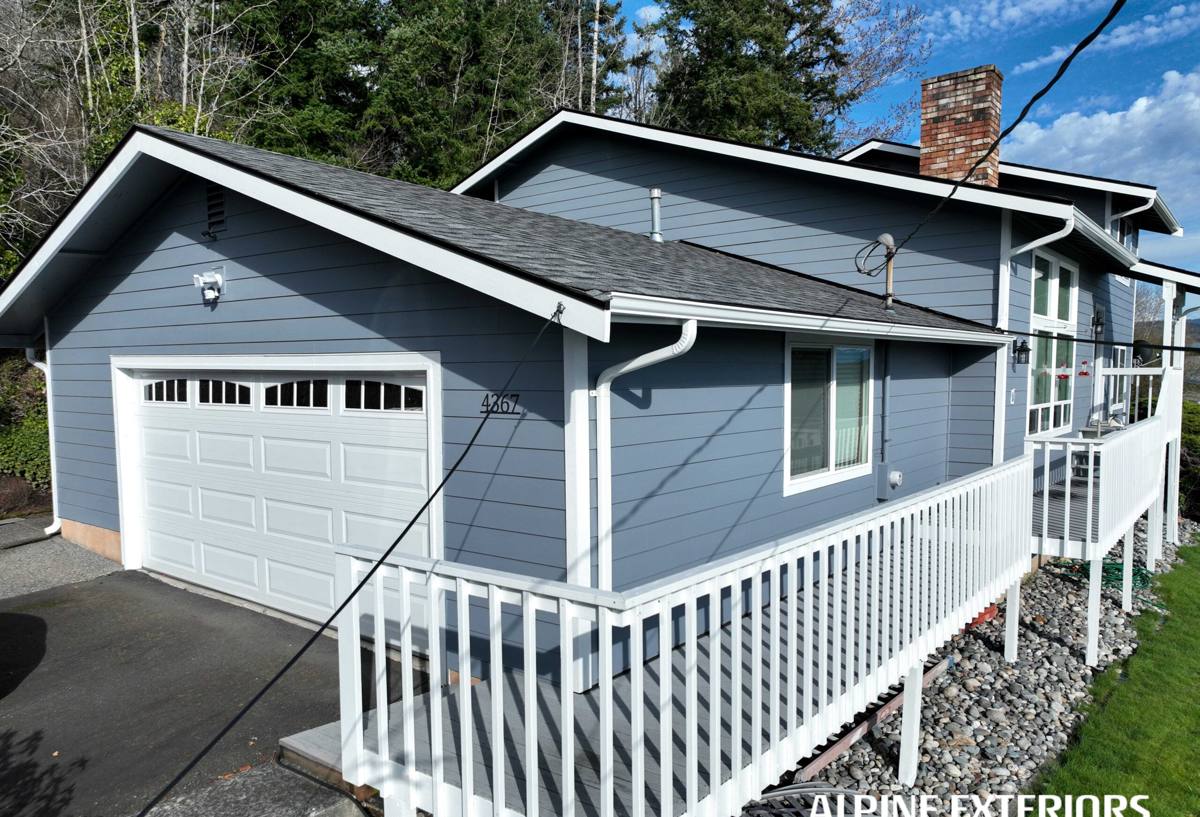
Signs Your Roof Has Reached the End of Its Service Life
Not every roofing problem calls for full replacement — plenty of issues are legitimate repairs. But there's a point where patching individual problems stops making financial sense and a full replacement becomes the more honest recommendation. Common signs we look for on Cap Sante homes include:
- Shingles that are cupping, cracking, or losing significant granule coverage, especially on south- and west-facing slopes that get the most sun and wind exposure
- Heavy, persistent moss growth that keeps returning within a season or two of cleaning, particularly on shaded north slopes
- Soft spots or sagging in the roof deck, which usually points to moisture that's already gotten past the surface layer
- Rust staining, pitting, or failing sealant around metal flashing, vent boots, and valleys — a common early sign of salt air corrosion
- Daylight visible through the attic roof deck, or water stains on interior ceilings after heavy rain
- A roof that's simply reached the upper end of its material's expected lifespan, even if it looks okay from the ground
If you're seeing two or more of these, it's worth having someone look at the whole system rather than chasing leaks one at a time.
What a Correct Roof Replacement Involves
Tear-Off and Deck Inspection
A proper replacement starts with a full tear-off down to the deck, not a layover on top of existing material. That's the only way to actually see what's underneath — soft plywood, rot around penetrations, or old damage that's been hidden for years. Any compromised decking gets replaced before anything new goes down. Skipping this step is the single most common shortcut that leads to problems a few years later.
Underlayment and Water-Resistive Barrier
Given how much wind-driven rain this area gets, the underlayment layer matters more here than in drier climates. We use synthetic underlayment as a standard water-resistive barrier across the field of the roof, with self-adhered ice-and-water membrane at vulnerable areas — eaves, valleys, and around penetrations — where wind can push water uphill under the shingles.
Flashing, Vents, and Penetrations
This is where salt air does the most damage over time, and it's also where most leaks originate — not in the field of the roof, but at the edges and transitions. New flashing at valleys, chimneys, walls, and vent penetrations should always be replaced during a full roof replacement, not reused. We pay particular attention to metal quality and fastener choice here, since this is the hardware most exposed to corrosion near the marina.
Attic and Roof Ventilation
Balanced intake and exhaust ventilation keeps the underside of the deck dry and helps prevent the trapped moisture that feeds moss and mildew growth from the inside out. A roof can look perfect from the curb and still be failing prematurely because the attic isn't breathing correctly. We check existing ventilation as part of every replacement and correct it where it's inadequate.
Choosing a Roofing Material for This Location
There's no single "best" roofing material for every home — it depends on your roof's exposure, your budget, and how much long-term maintenance you're willing to take on. Here's how the common options compare for a Cap Sante property specifically:
| Material | Salt Air / Corrosion Resistance | Moss & Algae Resistance | Typical Lifespan | Relative Upfront Cost |
|---|---|---|---|---|
| Architectural asphalt shingle | Good, with quality fasteners and flashing | Fair — benefits from algae-resistant shingle options | 25–30 years | Lowest |
| Standing seam metal | Very good with marine-grade coatings and fasteners | Very good — sheds moisture, little for moss to grip | 40–50+ years | Highest |
| Synthetic composite shingle | Good | Good | 30–40 years | Mid-to-high |
For most Cap Sante homes, a quality architectural asphalt shingle with algae-resistant granules and properly detailed metal flashing is a sound, cost-effective choice. Homeowners who want to minimize long-term maintenance and are comfortable with a higher upfront cost often lean toward metal, which handles both the salt exposure and moss issue better than any other option — but it's a bigger investment and not the right call for every budget or roof style.
What Drives the Cost of a Roof Replacement
Every quote should reflect your specific roof, not a generic per-square number. The main factors we weigh include:
- Roof size and complexity — the number of valleys, hips, dormers, and penetrations affects both material and labor
- Existing deck condition — hidden rot or soft sheathing found during tear-off adds material and labor that can't be fully known until the old roof is off
- Material choice — asphalt, synthetic composite, and metal sit at very different price points, as shown above
- Pitch and access — steep roofs or homes with limited staging area take longer and require more safety equipment
- Ventilation and flashing corrections — bringing an older roof's ventilation or flashing up to current standards is worth the cost, but it does add to the scope
We give a written estimate that spells out exactly what's included — material, tear-off, disposal, flashing, and ventilation work — so you're not guessing at what you're paying for.
Our Roof Replacement Process, Step by Step
- On-site inspection — we walk the roof and attic, note deck condition where visible, ventilation setup, and flashing condition, and talk through your goals and budget
- Written estimate — a clear scope of work and price, with material options explained honestly, including trade-offs
- Scheduling and material order — we confirm timing around weather windows, since Skagit County's wet season limits good install days
- Tear-off and deck repair — old roofing removed, deck inspected, any damaged sheathing replaced
- Underlayment, flashing, and installation — water-resistive barrier and ice-and-water membrane installed first, then flashing, then the roofing material itself
- Ventilation check and correction — intake and exhaust venting verified and adjusted as needed
- Cleanup and final walkthrough — site cleaned, magnetic sweep for stray fasteners, and a walkthrough so you can see the finished work before we consider the job done
Salt Air and Moss: Ongoing Maintenance After Installation
Even a correctly installed roof benefits from a little routine attention in this climate. A few habits go a long way toward protecting the investment:
- Clear gutters and downspouts at least twice a year so water isn't backing up under the eaves during heavy rain
- Have moss treated or gently removed before it builds into thick mats, especially on shaded north-facing slopes
- Trim back tree limbs that overhang the roof to reduce shade, debris buildup, and physical abrasion
- Have flashing and vent boots checked every few years, since these are the components most affected by salt air over time
- Watch for granule buildup in gutters, which can signal accelerated shingle wear
Why a Crew That Already Works Cap Sante Matters
A roofer who's worked mostly on inland or drier properties can still do competent work, but they're often applying general assumptions to a site that doesn't fit them. Crews familiar with Cap Sante and the broader Anacortes waterfront already know which fastener and flashing grades hold up against salt exposure, which slopes in this area tend to hold moss longest, and how to schedule around the region's wet stretches so a tear-off isn't left exposed longer than it should be. That local pattern recognition doesn't replace good workmanship, but it does mean fewer surprises and a roof that's actually built for the conditions it will face, not just the conditions on a spec sheet.
We're also familiar with the permitting and inspection process in Anacortes and Skagit County, which keeps the project moving instead of stalling on paperwork.
If your roof is showing its age or you just want an honest opinion on what shape it's in, we're happy to take a look. Reach out for a free, no-pressure estimate using the form below — we'll walk the roof, tell you what we actually see, and lay out your options plainly.