 Anacortes
 Burlington Decks Live in a Tough Little Microclimate
Burlington sits inland from Anacortes and Fidalgo Bay, but it still gets the full Skagit County treatment: damp marine air moving in off the water, long stretches of driving rain from fall through spring, and short winter days that never quite dry a deck out before the next system rolls through. Add in the shade from mature Douglas fir and cedar that many Burlington lots were built around, and you get a near-perfect setup for moss, algae, and slow wood rot to take hold on any deck that isn't built and maintained with that reality in mind.
None of that is unique to any one street or neighborhood in town — it's just how this part of Skagit County behaves for most of the year. A deck built to a generic national spec, without attention to drainage, ventilation, and fastener corrosion resistance, will show its age here faster than the same deck would in a drier climate. That's the whole case for composite decking done correctly: less organic material for moisture to sit in, no annual sanding and sealing, and a surface that resists the moss and mildew staining that plagues bare wood decks left in the shade.
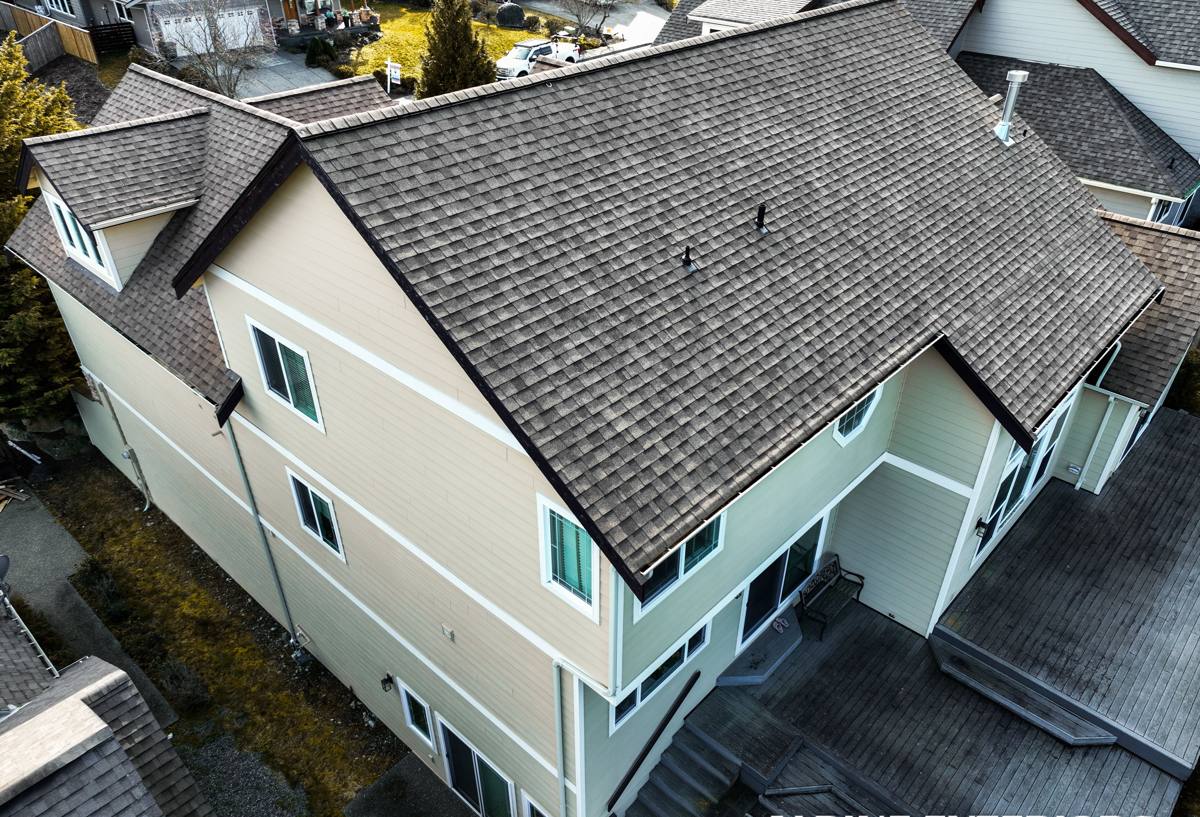
What "Correct" Actually Means on a Composite Deck
Composite decking is only as good as what's underneath it. We see plenty of older decks around the area where the boards were swapped for composite at some point, but the framing, flashing, and fastening underneath were never upgraded to match. That's a mistake — composite boards are heavier than wood and behave differently with temperature and moisture, so the substructure and hardware matter just as much as the decking brand.
The parts that don't show but matter most
- Ledger board flashing where the deck attaches to the house — the single most common source of hidden rot on Pacific Northwest decks
- Joist spacing matched to the manufacturer's spec for composite (usually tighter than for wood, especially at angles or picture-frame borders)
- Corrosion-resistant, coated fasteners and joist tape to keep moisture off the top of untreated framing lumber
- Proper slope away from the house so standing water doesn't collect against siding or foundation framing
- Ventilation gaps and clearance underneath the deck so air can actually move and dry things out between rain events
Skip any one of those and you can still end up with a rotting substructure under a composite surface that looks fine — which is worse than an obvious problem, because it hides until it's a real repair.
Picking a Composite Board for This Climate
Not all composite decking is built the same way, and the difference matters more here than in drier regions. The two broad categories are uncapped composite (wood fiber and plastic blended all the way through) and capped composite (that same core, wrapped in a solid polymer shell). We install capped composite as our standard for Burlington and the rest of the Anacortes area, because the cap is what actually keeps moisture, mold spores, and UV out of the board's core over years of wet winters.
Uncapped composite has a place — it's usually less expensive up front — but it absorbs more moisture at the surface over time, which in a climate this damp can mean earlier fading, staining, or swelling at cut ends and fastener holes. We'll talk through both honestly during an estimate, including where an uncapped product might make sense for a budget-driven project like a low utility platform, but for a main living deck we steer people toward capped boards because the maintenance savings and moisture performance pay for themselves here specifically.
Hidden fasteners vs. face screws
Most composite systems today use a hidden fastener clip system that locks boards to the joists from the side, leaving no screw heads on the walking surface. That's not just cosmetic — face screws create small punctures in the board's cap where water can find a way in over time. Hidden fastener systems also allow for slightly more consistent board spacing, which helps with drainage between boards during heavy rain.
Our Process for a Burlington Deck Project
We keep the process straightforward and make sure you understand what's happening at each stage before we move to the next one.
- On-site assessment — we look at the existing deck or the build site, check ledger attachment and grade, note shade and drainage patterns specific to your lot, and measure for board layout
- Material walkthrough — we go over composite options, colors, and railing choices in person so you're picking based on what actually holds up here, not just a brochure photo
- Substructure work — repair or rebuild framing as needed, correct any flashing or ledger issues we find, and bring joist spacing up to the composite manufacturer's spec
- Decking installation — boards installed with hidden fasteners, proper gapping for drainage and seasonal expansion, and clean picture-frame or border detailing where called for
- Railing and finish work — composite or metal railing systems, fascia boards, and stair details finished to match
- Final walkthrough and cleanup — we walk the finished deck with you, answer questions about care, and clear the site
Comparing Decking Options for a Wet Climate
| Material | Upfront Cost | Maintenance | Moisture & Moss Resistance | Typical Lifespan |
|---|---|---|---|---|
| Pressure-treated wood | Lowest | Annual cleaning, periodic sealing/staining | Poor without upkeep — absorbs water, stains with moss/mildew | 10-15 years before boards need replacing |
| Uncapped composite | Moderate | Low — occasional wash | Fair — some surface moisture absorption over time | 15-20 years |
| Capped composite | Higher | Very low — soap and water rinse | Best — sealed cap resists staining and moisture uptake | 25+ years, often with a longer manufacturer warranty |
Cost ranges vary by board width, color, and railing choice, so we always price a project against your specific layout rather than a generic per-square-foot number.
Moss, Algae, and Drainage: The Real Maintenance Conversation
Even a capped composite deck isn't zero-maintenance in a climate like this — it's low-maintenance, which is a different thing. Shaded corners of a Burlington deck, especially under overhangs or near fence lines with limited sun exposure, can still develop a thin film of algae or moss on the surface during the wettest months. The difference from wood is that it wipes or rinses off instead of soaking in and staining permanently.
What actually helps
- Keep gutters and downspouts near the deck clear so runoff isn't sheeting directly onto the decking
- Sweep leaf litter and fir needles off the surface through fall — they hold moisture against the boards
- Rinse shaded, low-traffic areas a couple times a year with plain water or a mild composite-safe cleaner
- Keep the gap under the deck clear of stored items so airflow underneath isn't blocked
- Check railing post bases and stair stringers annually — these low, often-shaded spots are where moisture problems tend to show up first
Railings and Finish Details for Coastal Exposure
Railings and fasteners take the brunt of salt-laden air near Fidalgo Bay and the wider Skagit County shoreline, even a few miles inland in Burlington. We spec corrosion-resistant hardware and either composite or properly coated metal railing systems rather than bare, uncoated metal, which can start showing surface rust within a season or two in this air. Fascia boards and stair stringers get the same treatment as the decking itself — proper flashing where they meet the house, and fasteners rated for the same exposure.
Signs an existing deck needs more than a repair
- Soft or spongy spots when you walk the surface, especially near the house or stairs
- Persistent moss or dark staining that comes back within weeks of cleaning
- Visible gaps or rust streaks at the ledger board where it meets the house
- Railing posts that flex or feel loose when pushed
- Boards that have cupped, split, or pulled away from fasteners
If you're seeing two or more of these, it's usually more cost-effective to address the substructure now than to keep patching the surface.
Why a Crew That Already Works Burlington Matters
Composite decking looks straightforward on paper, but the details that make it last here — flashing details, fastener corrosion resistance, drainage slope, shade-aware board selection — are learned by building and repairing decks in this specific climate, not from a manufacturer's install manual alone. A crew that regularly works Burlington and the surrounding Anacortes area already knows which details get skipped on decks that fail early here, because we're often the ones called back to fix them. That local pattern recognition is worth more than any brochure claim, and it's why we build every deck assuming a wet, shaded Skagit County winter is coming, not the mild dry season most manufacturer specs are written for.
If you're weighing a deck replacement or a new build in Burlington, we're happy to take a look and give you a straight assessment — no pressure, no upsell script, just an honest read on what your project actually needs. Use the form below to request a free estimate.