 Anacortes
 Building Decks for Skyline's Particular Climate
Skyline sits up on the bluffs above Anacortes with open exposure to Puget Sound, and that view comes with a trade-off: wind-driven rain, near-constant salt air, and a long, wet moss season that starts earlier and lasts longer than it does further inland in Skagit County. A deck built with generic, catalog-spec materials and generic detailing will show its age here faster than the same deck would in a more sheltered part of town. We've built and repaired decks across Skyline long enough to know which fastener finishes hold up, which board gaps actually drain, and which framing details keep water from sitting where it shouldn't.
This page is specifically about deck building for Skyline properties — not a generic overview of decks in general. If you're comparing bids for a deck on a Skyline lot, the details below are the ones that actually matter for your site.
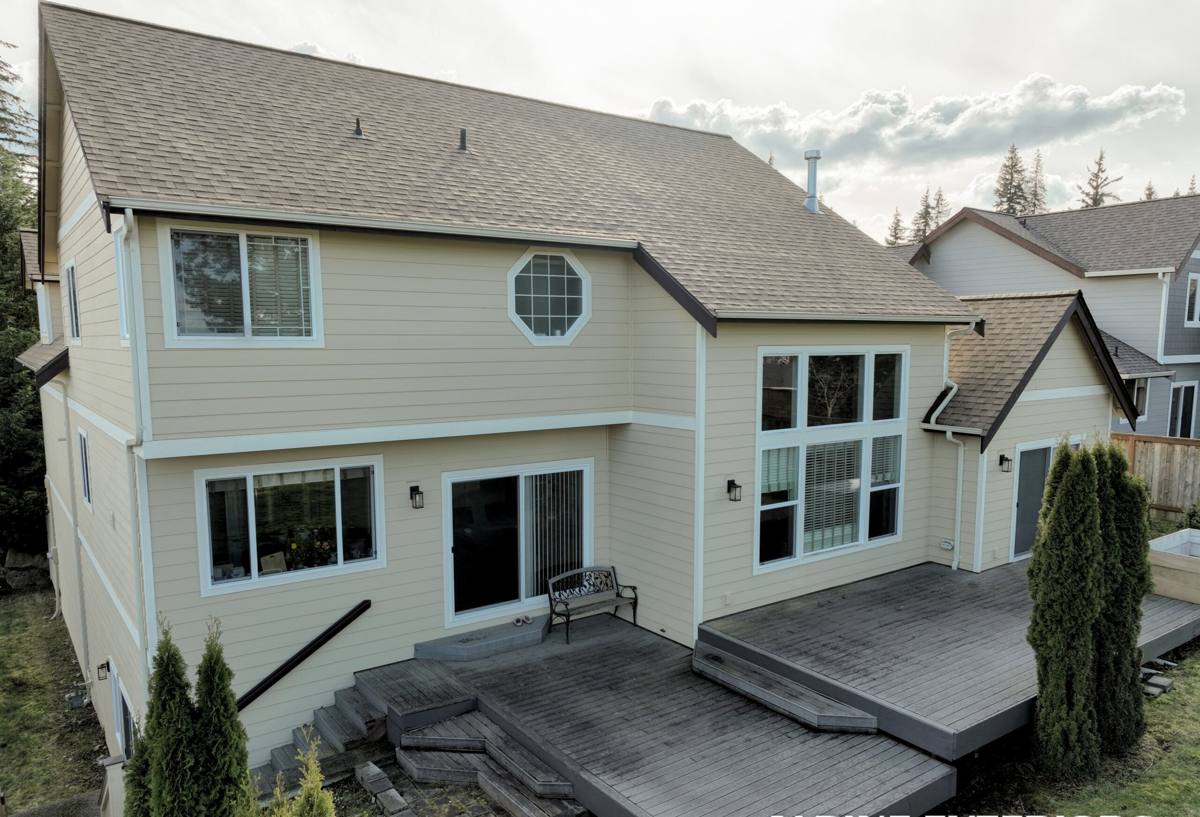
What Skyline's Exposure Does to a Deck Over Time
Salt Air and Metal Fasteners
Airborne salt from the Sound accelerates corrosion on anything less than fully rated hardware. Cheap or mismatched screws, joist hangers, and structural connectors can start rusting and staining within a couple seasons on an exposed Skyline lot, long before the wood itself is showing wear. Once a fastener starts corroding, it weakens exactly where the deck depends on it most — at the connections.
Driving Rain and Water Path
Wind off the water doesn't just fall straight down — it drives rain sideways and up under railings, fascia boards, and ledger connections. A deck built without the right flashing and drainage detailing at the house connection will eventually let water track behind the siding or into the framing, which is a much more expensive problem than the deck itself.
Moss, Algae, and a Longer Wet Season
Skagit County's wet season runs long, and elevated, shaded, or north-facing sections of a Skyline deck can stay damp for weeks at a stretch. That's exactly the environment moss and algae need. Decking with poor drainage gaps or tight board spacing traps moisture and organic debris, and that combination is what actually rots wood and stains composite decking — not just "getting rained on."
What a Correctly Built Skyline Deck Requires
- Structural fasteners and connectors rated for coastal/marine exposure, not standard interior-grade hardware
- Ledger board flashing that actually sheds water away from the house wall, with proper gap and drip edge
- Joist and beam spacing sized to the actual decking product and expected snow/wind load, not the minimum code allows
- Consistent board gapping for drainage and airflow underneath the deck surface
- Post bases that keep wood off standing water and off direct soil contact
- Railing posts through-bolted into framing, not just screwed to fascia
- A drainage plan for the ground underneath — grading or gravel so water doesn't pool under the structure
None of this is exotic. It's standard good practice applied consistently — the kind of thing that's easy to skip on a bid that's racing to the lowest price, and hard to fix after the decking is already down.
Decking Material Choices for Skyline Homes
There's no single "best" decking material — there's a best match for your site, your budget, and how much upkeep you want to do. Here's how the common options actually compare under Skyline's specific conditions:
| Material | How it handles salt air & damp | Maintenance | General cost position |
|---|---|---|---|
| Pressure-treated wood | Fine if sealed and refinished on schedule; end grain and fastener points are the weak spots | Annual cleaning, periodic re-staining/sealing | Lowest upfront cost |
| Cedar | Naturally rot-resistant but still needs finish maintenance to fight graying and moss in shaded spots | Regular cleaning and refinishing to keep appearance and protection | Mid-range |
| Composite decking | Doesn't rot or absorb water like wood, but board spacing and airflow underneath still matter for algae control | Occasional washing, no staining/sealing | Higher upfront, lower ongoing labor |
| PVC decking | Fully synthetic, very resistant to moisture damage; surface can still grow algae if it stays damp and shaded | Occasional washing | Highest upfront |
We'll walk through this with you against your actual lot — sun exposure, how sheltered the deck is, and what you want it to look like in ten years — rather than defaulting to whatever's easiest to install.
Why We're Selective About Certain Composite and Rail Systems
Not every composite decking or railing system on the market is built the same, and we don't install every product we're asked about. Some rail systems trap water in horizontal caps or hidden channels — fine in a dry climate, but a real problem where wind-driven rain hits the deck from multiple angles most of the year. Some composite boards perform differently depending on how consistently the manufacturer controls board density and moisture content at the factory, which affects how the board handles repeated wet-dry cycles over years. Our standard is to stick with products that have a track record for coastal Pacific Northwest exposure and a warranty structure that backs that up — not the cheapest SKU that happens to look similar on a showroom sample.
Our Process for a Skyline Deck Build
1. Site Walk and Exposure Assessment
We look at sun and wind exposure, how close the deck sits to the water side of the property, existing drainage, and the condition of anything we're building onto or replacing. This is where material recommendations actually get decided — not before we've seen the lot.
2. Design and Permitting
We handle layout, structural sizing, and permitting through the City of Anacortes where required. Anything attached to the house — ledger connections, stairs, guardrails — gets sized and detailed to code, not eyeballed.
3. Demolition and Framing (if replacing an existing deck)
If we're replacing a failing deck, this is often where we find out how much hidden rot or fastener corrosion was actually going on behind the old decking boards — usually worse than what was visible from the top.
4. Structural Build
Footings, posts, beams, and joists get built to the load and spacing the design calls for, with coastal-rated hardware throughout.
5. Decking, Railing, and Detailing
Decking gets installed with consistent drainage gaps, railing gets through-bolted where it needs to be, and flashing at the house connection gets checked before anything is closed up.
6. Walkthrough
We walk the finished deck with you, cover what maintenance (if any) the material needs, and point out drainage and airflow features so you know what you're looking at if you ever need to check on them yourself.
Deck Maintenance Realities for Skyline Properties
Whatever material you choose, Skyline's exposure means you can't fully "set and forget" a deck. Here's what actually needs attention and how often, in general terms:
- Clear debris and standing water off the deck surface regularly, especially in shaded corners where moss establishes first
- Check railing connections annually for looseness — wind load works these joints over time
- Wood decking: plan on re-sealing or re-staining on a multi-year cycle depending on sun exposure and the product used
- Composite/PVC decking: periodic washing to keep algae from establishing on the surface, especially in damp shaded areas
- Keep the area underneath the deck clear of debris buildup, which holds moisture against the framing
Repair vs. Rebuild: How We Evaluate an Existing Skyline Deck
Not every aging deck needs to be torn out. When we assess an existing deck, we're checking framing integrity, fastener condition, and how the ledger connection at the house is holding up — those are the structural questions. Surface wear on decking boards or railing is often a cosmetic fix, not a rebuild trigger. We'll tell you honestly which category your deck falls into rather than defaulting to "replace everything" as the answer.
Why a Crew That Already Works Skyline Matters
A deck built without accounting for Skyline's specific wind and rain exposure will need earlier repairs than the same design built somewhere more sheltered — that's not a defect in the material, it's a mismatch between the build and the site. A crew that already works this part of Anacortes has already seen what fails here and what holds up, which means fewer surprises during the build and fewer callbacks after. We're not learning Skyline's climate on your project.
Get a Free, No-Pressure Estimate
If you're planning a new deck or need an honest read on whether your current one needs repair or replacement, we're happy to take a look. Use the form below to request a free estimate — no pressure, no obligation, just a straight assessment of what your Skyline property actually needs.