 Anacortes
 Composite Decking Built for Flounder Bay's Waterfront Climate
Flounder Bay sits close enough to the water that every outdoor structure on the property feels it — salt-laden air, wind-driven rain off Rosario Strait and the surrounding waterways, and long stretches of gray, damp weather that keep wood surfaces wet for days at a time. A deck out here isn't just outdoor furniture space; it's a structure that has to hold up against conditions that are noticeably harder on lumber and fasteners than what you'd find further inland in Skagit County. Composite decking has become the practical answer for a lot of Flounder Bay homeowners for exactly that reason: it doesn't absorb moisture the way wood does, it doesn't need annual staining, and it resists the slow surface breakdown that salt air causes on softer materials.
We're an Anacortes-based crew, and Flounder Bay is part of our regular service area — not a stretch job we take once a year. That matters more than it sounds like it should, because coastal decking work has quirks that a contractor who mostly builds inland decks won't have dialed in.
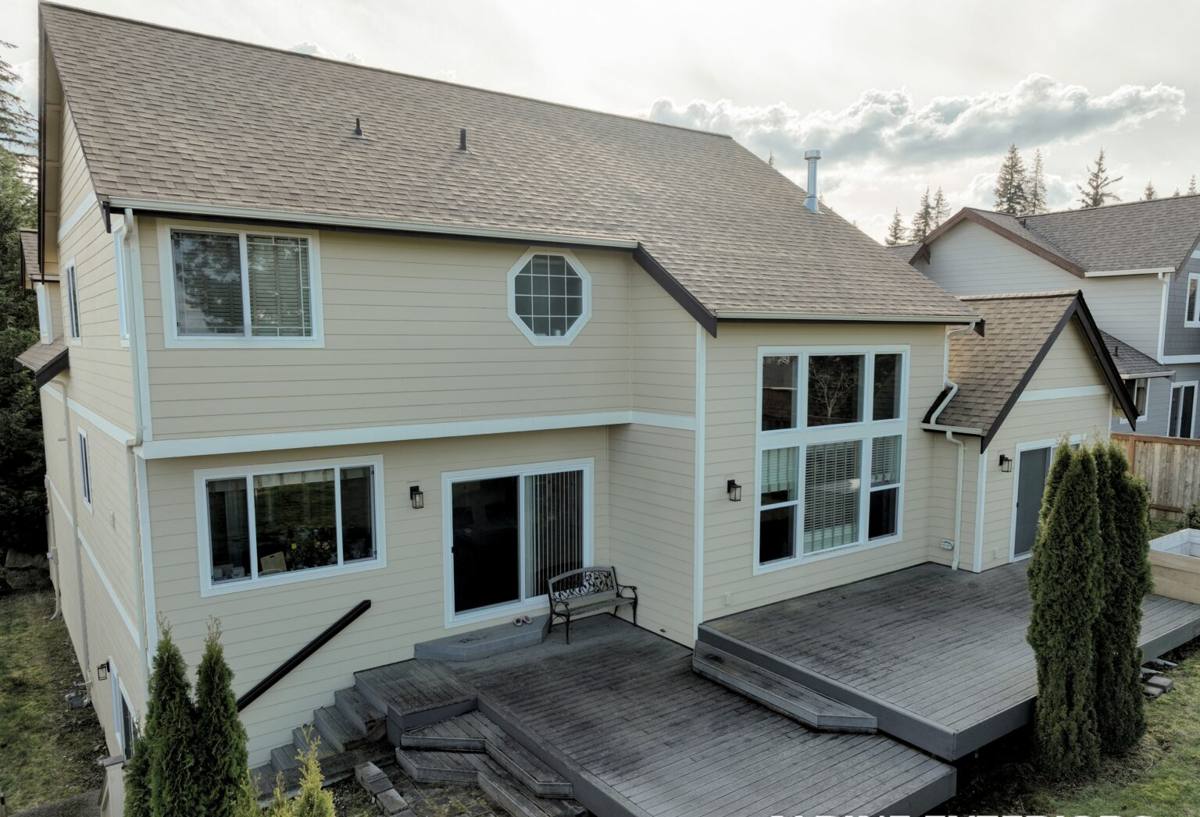
What Flounder Bay's Climate Actually Does to a Deck
Salt Air and Metal Fasteners
Homes near the bay get a steady, low-level exposure to salt in the air, even without direct ocean spray. Over time this accelerates corrosion on hardware — screws, joist hangers, brackets — faster than it would twenty minutes inland. A deck that looks fine on the surface can have fasteners quietly corroding underneath if the wrong grade of hardware was used to begin with.
Driving Rain and Standing Moisture
Anacortes gets plenty of rain that comes in sideways off the water, which means decks here deal with more wind-driven wetting than a sheltered inland yard would. Water finds its way into end grain, fastener holes, and any spot where boards butt against a house wall or post. On wood decking, that moisture cycle — wet, dry, wet again — is what drives rot, cupping, and splintering over the years.
Moss and Algae Season
Western Washington's moss season runs long, and a shaded or north-facing deck near the bay can stay damp enough to grow moss for months. Moss holds moisture against the deck surface, which is bad news for wood and can also make composite boards slick if they're not cleaned occasionally. Site orientation and airflow under the deck both affect how bad this gets.
Why Composite Makes Sense Here
Composite decking is made from a blend of wood fiber and plastic, which means it doesn't have the open grain structure that lets wood soak up water. That single difference addresses most of what's hard about decking near Flounder Bay:
- No annual staining or sealing to keep ahead of moisture damage
- Resists splintering and cupping caused by repeated wet-dry cycles
- Doesn't rot, so damp shaded areas are less of a liability
- Color and finish don't rely on a coating that salt air will eventually break down
- Cleans up with soap, water, and a soft brush rather than sanding and refinishing
It's not maintenance-free — no outdoor decking product is — but the maintenance is lighter and more forgiving of the occasional missed season, which matters if you're not the type to be out there every spring with a pressure washer and stain brush.
What a Correct Composite Deck Build Involves
Framing and Substructure
The composite boards get most of the attention, but the framing underneath is what actually determines how long the deck lasts. In a damp, salt-exposed environment like Flounder Bay, we pay close attention to:
- Joist spacing appropriate for the composite board being used — not all composites carry the same span rating as lumber
- Corrosion-resistant fasteners and hardware rated for coastal or treated-lumber contact
- Proper flashing where the deck ties into the house to keep water out of the wall assembly
- Ventilation and clearance underneath the deck so moisture and moss don't build up in the shade
Board Installation
Composite boards expand and contract with temperature more than people expect, so gapping, fastening pattern, and picture-framing details all have to follow the manufacturer's specs — not generic wood-deck habits. Done wrong, you get buckling or uneven gaps a few years in. Done right, the deck stays flat and tight for the long haul.
Railing and Trim
Most composite deck systems pair with matching composite or aluminum railing designed for the same weather exposure. We match the railing choice to how exposed the deck is — a bay-facing deck catching more wind and spray gets a different hardware and railing recommendation than a sheltered, tree-covered one.
Comparing Decking Options for a Bay-Facing Property
| Factor | Composite | Pressure-Treated Wood | Cedar |
|---|---|---|---|
| Moisture resistance | High — doesn't absorb water into the board | Moderate — treatment slows rot but doesn't stop it | Moderate — naturally rot-resistant but still absorbs moisture |
| Salt air durability | Good, especially with corrosion-resistant hardware | Fair — hardware and surface both age faster | Fair — grays and weathers quickly near the water |
| Maintenance | Periodic cleaning, no staining | Annual staining/sealing recommended | Annual staining/sealing recommended |
| Upfront cost | Higher material cost | Lowest material cost | Mid-range to higher |
| Long-term cost | Lower over 15-20 years due to reduced upkeep | Higher over time from repairs and refinishing | Higher over time from repairs and refinishing |
| Moss/algae resistance on shaded areas | Good — surface doesn't stay saturated | Poor — absorbs and holds moisture | Poor to fair |
Wood isn't a bad choice everywhere — it's still a reasonable option for a smaller, well-drained, sun-exposed deck where a homeowner doesn't mind the yearly upkeep. But for most Flounder Bay lots, where shade, wind, and moisture are all working against a wood surface at once, composite tends to pay for itself in reduced maintenance and fewer repairs.
Our Process for a Flounder Bay Deck Project
- On-site walk-through: we look at sun exposure, wind direction relative to the water, drainage, and how the deck will tie into the house before recommending a board and railing system.
- Straightforward proposal: what's included, what board and hardware grade we're using, and a realistic timeline — no vague allowances that turn into surprise costs later.
- Demo and framing: if we're replacing an existing deck, we check the ledger board and framing underneath for hidden rot before building on top of it — a common finding on older wood decks near the bay.
- Installation: composite boards, railing, and trim installed to manufacturer spec, with fastener and flashing choices suited to salt air exposure.
- Final walk-through: we go over basic care — cleaning frequency, what to avoid (like certain harsh cleaners or metal shovels in winter) — so the deck holds up the way it's supposed to.
Why a Local Crew Matters for This Kind of Work
A lot of decking problems near the water trace back to details that only show up if you've actually worked in that specific microclimate — knowing which fastener grades hold up to the salt exposure here, how much ventilation a shaded, moss-prone deck needs, or how a given composite product's expansion rate behaves through an Anacortes winter versus a drier inland town. We work in and around Anacortes regularly, including Flounder Bay, so those aren't guesses for us — they're things we build in as standard practice, not upgrades we mention after something goes wrong.
Hiring locally also means faster response if something needs a look after a big storm, and a crew that's still around in five years if a warranty question comes up — not a company that worked the area once and moved on.
What to Check Before Hiring Anyone for Decking Near the Water
- Do they specify corrosion-resistant or coastal-rated hardware, or just "standard" screws and brackets?
- Will they inspect and, if needed, replace framing and ledger boards — not just install new boards over old problems?
- Do they follow the manufacturer's gapping and fastening spec for composite boards, including at butt joints and picture-framing?
- Are they licensed and insured to do exterior construction work in Washington?
- Can they explain, in plain terms, why they're recommending a specific board and railing system for your site's sun and wind exposure?
Get a Straightforward Estimate
If you're weighing composite decking for a property near Flounder Bay, we're glad to come take a look, walk through what your site's exposure calls for, and give you a clear, no-pressure estimate — no pushy sales pitch, just an honest read on what the job needs. Fill out the form below and we'll get back to you.