 Anacortes
 Skyline's Siding Conditions: What Anacortes Homes Are Actually Up Against
Homes in the Skyline area sit close enough to the water and open air of Skagit County that siding takes a different kind of beating than it would twenty miles inland. Salt-laden air moves through constantly, driving rain comes in sideways off the Sound during fall and winter storms, and the long gray stretch from October through April keeps north- and shade-facing walls damp enough for moss and algae to take hold and stay there. None of this is dramatic on its own. It's the cumulative, year-round exposure that wears siding down faster than most homeowners expect.
Salt air is corrosive to exposed metal fasteners and trim, and it accelerates the breakdown of paint films and lower-grade wood products. Driving rain finds every gap in flashing, caulking, and butt joints, and pushes water sideways into seams that were only ever designed to shed water falling straight down. Moss doesn't just sit on the surface — its root structure holds moisture against the siding face, which is exactly the condition that rots wood, delaminates weak composites, and eventually works its way behind the cladding into sheathing and framing.
Any siding replacement done in Skyline needs to be specified and installed with all three of these factors in mind, not just the general Pacific Northwest "it rains a lot here" assumption. That's the difference between a job that looks good for a photo and one that actually holds up on this street.
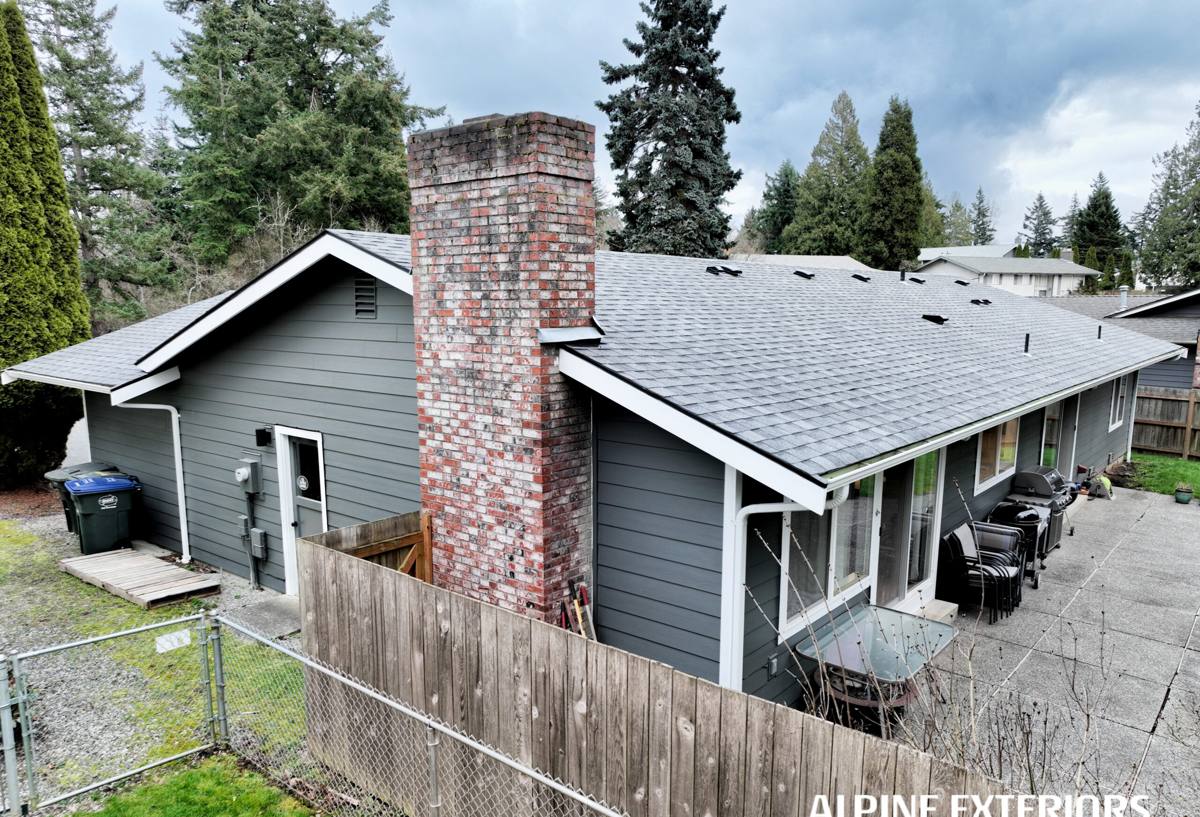
Signs a Skyline Home Needs Siding Replacement, Not Just Repair
Not every siding problem calls for a full tear-off. But in a climate like this, certain symptoms mean the damage has moved past the surface and repair is just delaying a bigger bill.
- Soft or spongy spots when you press on the siding, especially near the bottom courses or under windows
- Persistent moss or dark streaking that returns within weeks of being cleaned
- Paint that's bubbling, peeling in sheets, or won't hold a fresh coat for more than a couple of years
- Visible gaps, warping, or delamination at panel seams and butt joints
- Rot or discoloration on trim boards, corner boards, or around penetrations like hose bibs and vents
- A musty smell or soft drywall on interior walls that back up to exterior siding
If you're only seeing one or two of these on an otherwise solid wall, targeted repair may still make sense. If you're seeing several, or the siding is original wood, vinyl, or an older composite that's past its practical service life, replacement is usually the more honest recommendation — and the one that actually solves the problem instead of buying another season or two.
Why Fiber Cement Holds Up Better in This Environment
We install James Hardie fiber cement exclusively, and in a salt-air, high-rain, moss-prone location like Skyline, the material choice matters more than almost anywhere else in the county. Fiber cement is non-combustible, dimensionally stable, and engineered specifically for wet marine climates through Hardie's HZ5 product line, which is the specification built for the Pacific Northwest.
| Material | Behavior in Salt Air | Behavior Under Driving Rain | Moss/Algae Resistance |
|---|---|---|---|
| James Hardie Fiber Cement | Non-metallic core resists salt-driven corrosion; factory finish holds color | Engineered lap profile and rigid panel sheds wind-driven rain | Dense cement composition doesn't feed organic growth the way wood fiber does |
| Vinyl Siding | Fasteners and trim can corrode over time; panels can warp with temperature swings | Water can travel behind panels through loose laps | Grows moss readily, especially in shaded, damp areas |
| LP SmartSide / Wood-Based Composite | Salt accelerates edge swelling if seal is compromised | Vulnerable at cut edges and seams if not perfectly sealed and maintained | Wood fiber base is more prone to moisture retention and rot once compromised |
| Cedar / Primed Spruce | Natural wood is workable but needs constant refinishing near salt air | Absorbs moisture directly; needs consistent maintenance to stay sealed | Highly susceptible to moss and mildew without regular treatment |
We're not saying every one of those products fails — plenty perform reasonably well when installed correctly and maintained diligently. But "installed correctly and maintained diligently, forever" is a heavy ask in a climate that never really dries out. We standardized on Hardie because it removes several of those failure points from the equation before the crew even shows up.
ColorPlus Finish Matters Here Specifically
A field-painted siding job is only as good as its weakest coat, and in this climate that coat is fighting salt exposure and near-constant humidity from day one. Hardie's ColorPlus factory-applied finish is baked on under controlled conditions and backed by its own finish warranty, which holds up far better against fading and peeling than site-applied paint on wood or composite siding exposed to Skyline's air and rain almost immediately after installation.
What a Correct Siding Replacement Actually Involves
The material is only part of the equation. A large share of siding failures we see on inspection weren't caused by bad siding — they were caused by shortcuts in the parts of the job nobody sees once it's finished.
Water Management Comes First
Before a single piece of siding goes up, the wall needs a properly lapped weather-resistant barrier, correctly flashed windows, doors, and penetrations, and drainage planning that gives any water that does get behind the cladding a way back out. In a driving-rain environment, this layer is doing more of the real work than the siding itself.
Fastening and Clearances
Hardie siding has specific fastening patterns, nail penetration depth requirements, and minimum clearances from grade, roofing, and other surfaces. Skipping these doesn't show up as a problem on day one — it shows up two or three winters later as trapped moisture, corrosion, or warping at the exact points where the manufacturer's spec was ignored.
Caulking and Joint Treatment
Butt joints, corners, and trim transitions are where driving rain finds its way in. Correct joint treatment — including where to caulk and where to intentionally leave a gap for drainage — is a detail that separates a job that's watertight for decades from one that needs re-caulking every couple of years.
Ventilation Behind the Cladding
A rainscreen or properly vented gap behind the siding lets any incidental moisture dry out instead of sitting against the wall. In a moss-prone, high-humidity area like Skyline, this detail does a lot of quiet, long-term work.
Our Process for Skyline Projects
Every siding replacement we do in this area follows the same sequence, because skipping steps is how climate-related failures happen later.
- On-site inspection — we check for existing rot, moisture intrusion, and the condition of sheathing before quoting anything, since hidden damage changes the scope
- Tear-off and sheathing assessment — old siding comes off and we evaluate what's underneath rather than assuming it's sound
- Weather barrier and flashing installation — this is where most long-term performance is actually determined
- Hardie panel or lap installation to manufacturer spec — correct fastening, clearances, and joint treatment throughout
- Trim, caulking, and final detailing — the finish work that determines how the job ages, not just how it looks on day one
- Final walkthrough — so you know exactly what was done and why
We don't subcontract this out to a rotating crew. The people measuring your walls are the same people installing the siding, which matters when the correct call depends on judgment calls made in the field — how a corner is flashed, how a valley is treated, where an extra course of house wrap makes sense.
Choosing the Right Hardie Line and Color for a Coastal-Adjacent Home
Hardie's HZ5 climate zone products are engineered for exactly the kind of wet, moderate-freeze conditions Skagit County sees, which makes them the right baseline specification for Skyline. Beyond the technical spec, color selection matters more here than in drier inland areas — darker ColorPlus tones can help visually mask the fine dust and pollen that settle out of coastal air between cleanings, while lighter tones show algae growth sooner, which isn't a defect so much as something worth planning around when you pick a palette. We'll walk through the realistic options for your home's exposure rather than just handing you a color chip book.
What Siding Replacement Costs and What Drives the Price
Every home is different, and we don't quote sight unseen, but the factors that move the price up or down are consistent enough to lay out honestly.
| Cost Factor | Why It Matters |
|---|---|
| Home size and wall complexity | More corners, gables, and dormers mean more cutting, flashing, and labor time |
| Existing siding removal | Tear-off of old wood, vinyl, or composite adds labor beyond a straightforward install |
| Hidden sheathing repair | Rot or moisture damage found once old siding is off can add scope — this is why we quote after inspection, not before |
| Panel vs. lap siding style | Different Hardie profiles have different material and labor costs |
| Trim and detail work | Corner boards, window trim, and fascia detail add finish time and materials |
| Access and site conditions | Slopes, tight setbacks, or limited equipment access affect labor time |
We'd rather give you a real number after seeing the walls than a broad estimate that doesn't survive first contact with your actual home. What we can tell you upfront is that fiber cement typically costs more at installation than vinyl and comparable to or somewhat above wood-based composites — and that the gap tends to close or reverse once you factor in repainting, moss treatment, and repair costs those other materials require over the same 20-30 year window in this climate.
Why It Matters That Your Crew Already Works This Area
A contractor who mostly works dry inland neighborhoods can still do competent work, but they're making climate decisions on the fly that a crew already familiar with Skyline and the broader Anacortes waterfront has already worked out through repetition. Things like which walls take the worst of the driving rain, where moss comes back fastest, and how much ventilation clearance actually holds up here aren't things you learn from a manufacturer's install guide alone — they're things you learn by doing this work, on these streets, through enough winters to see what fails and what doesn't.
When you're vetting any siding contractor in this area, a few things are worth checking regardless of who you hire:
- They inspect in person before quoting, rather than pricing off a photo or a phone call
- They can explain their flashing and weather barrier approach in plain language, not just the siding brand
- They're a manufacturer-recognized installer for the product they're proposing
- They give you a written scope that separates material, labor, and any anticipated repair costs
- They stand behind both workmanship and material with a warranty you can actually read
We install exclusively James Hardie fiber cement because it's what we're willing to put our name behind in this climate — not because it's the only product on the market, but because it's the one we trust to still be doing its job on a Skyline home fifteen winters from now.
If your siding is showing wear, or you're just trying to understand your options before a small problem becomes a big one, we're happy to take a look. Reach out for a free, no-pressure estimate using the form below.