 Anacortes
 Building a Deck That Can Take What March Point Dishes Out
March Point sits out on open water, exposed to wind and salt air off the bay in a way that inland Anacortes neighborhoods simply aren't. A deck built here is doing a harder job than a deck built five miles inland in Mount Vernon or Burlington, even though both are technically in Skagit County. Between the salt-laden air, the driving rain that comes sideways off the water in a winter storm, and a moss season that can run eight months out of the year in shaded spots, a deck that isn't built with this specific environment in mind will show its age fast — loose railings, corroded fasteners, black streaking, soft spots underfoot.
This page is about what a custom deck actually needs to hold up on this stretch of the county, not generic advice that could apply anywhere. If you're planning a new deck, replacing a failing one, or trying to figure out why your current deck is deteriorating faster than it should, the details below are the ones that matter.
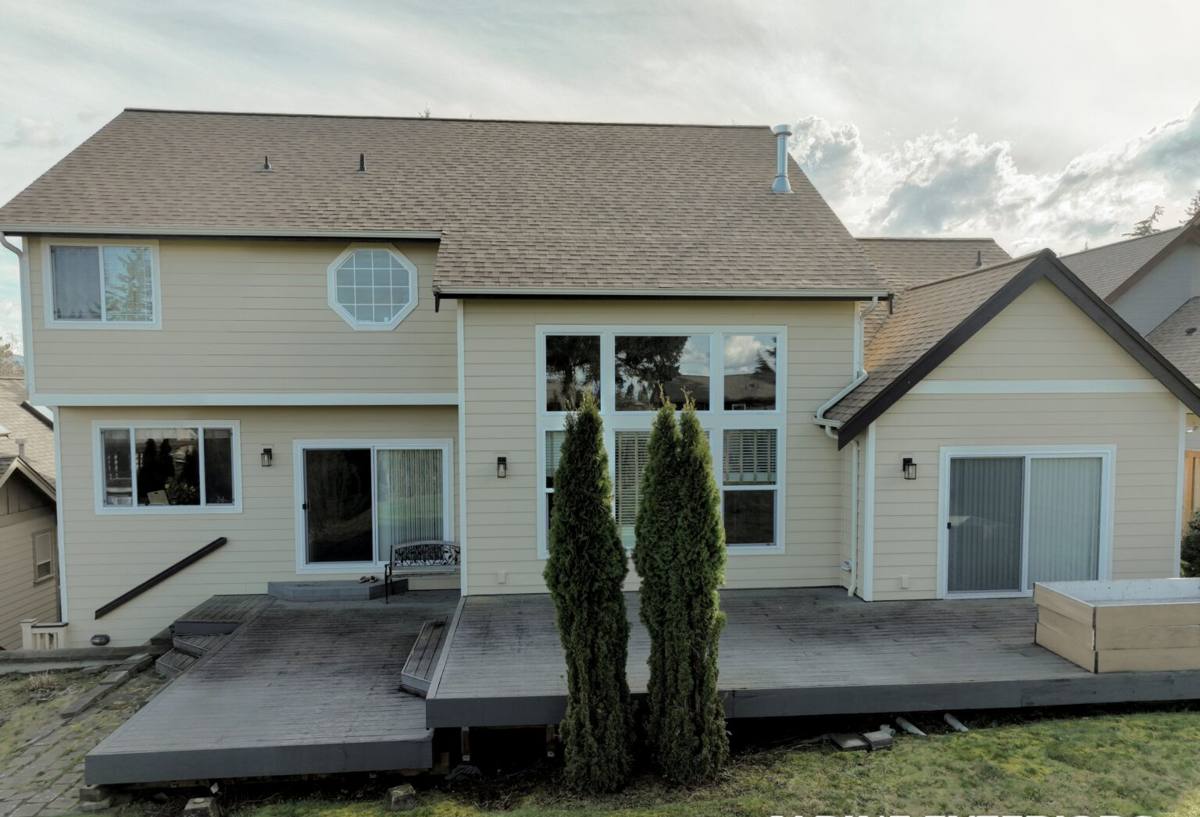
Why This Location Is Harder on a Deck Than Most
Three things stack up against a deck in this part of Anacortes:
- Salt air. Airborne salt accelerates corrosion on any metal fastener, bracket, or connector that isn't rated for it. Standard hardware store screws can start rusting and staining decking within a season or two out here.
- Driving rain. Wind-driven rain doesn't just fall on a deck — it gets pushed sideways into ledger boards, under railing posts, and into any gap that wasn't flashed or sealed correctly. Water that would just run off in a calmer setting finds its way into joints here.
- Extended moss and algae season. Cool, damp, and often shaded conditions near the water mean moss and algae get a long runway to establish themselves, especially on the north side of a house or under tree cover. Once established, they hold moisture against the decking surface and structure, which speeds up rot in wood and can make composite surfaces slick and stained.
None of this means a deck can't hold up in March Point — it means the build has to account for these three things from the footings up, not as an afterthought.
Choosing the Right Decking Material for This Setting
There's no single "best" decking material — the right choice depends on how much upkeep you're willing to do, your budget, and how exposed the deck's location is to sun, shade, and weather. Here's how the common options stack up specifically for a coastal Skagit County property:
| Material | Upfront Cost | Maintenance | Moisture & Moss Resistance | Typical Lifespan Here |
|---|---|---|---|---|
| Pressure-treated fir/hem-fir | Lowest | Annual cleaning and periodic sealing/staining | Fair — needs consistent upkeep to resist moss and rot | 15-20 years with regular maintenance |
| Cedar | Moderate | Regular cleaning, oiling or sealing every 1-3 years | Good natural rot resistance, but still needs care against moss in shaded areas | 20-25 years with upkeep |
| Composite decking | Higher | Occasional washing, no staining or sealing | Very good — resists rot and doesn't absorb moisture, though surface algae still needs washing off | 25-30+ years |
We'll talk through this honestly during an estimate rather than push one option. A lot of March Point homeowners land on composite for the decking surface specifically because they don't want to be out there staining every couple of years in a climate that doesn't give you a long dry season to do it in — but real wood, properly maintained, still has a place, especially when it needs to match an existing structure or a homeowner prefers the look and feel of natural wood underfoot.
What We Won't Install and Why
We steer away from a handful of low-end composite and PVC-wrap products that have thin capstock layers or manufacturing tolerances that don't hold up well to repeated wet-dry cycling. It's not that every board from every brand fails — it's that our standard is a product with a track record of stable performance in wet coastal climates and a warranty structure that reflects real confidence from the manufacturer. We'd rather have that conversation upfront than have a client dealing with swelling or fading boards five years in.
The Structural Basics That Actually Keep a Deck Standing
The decking surface is the part everyone sees, but the parts that determine whether a deck lasts are underneath and behind it.
Footings
Footings need to be sized and set to local frost depth and soil conditions, which can vary block to block near the water where soil composition shifts between fill, native clay, and sandier ground. Undersized or shallow footings are one of the most common causes of a deck that starts to feel bouncy or uneven within a few years.
Ledger Attachment and Flashing
Where a deck attaches to the house is the single most common failure point we see on older decks in this area. If the ledger board isn't properly flashed with a water-resistant barrier and correctly lapped with the house's existing siding or building wrap, driving rain works its way behind the ledger and rots the rim joist and sheathing from the inside — often invisibly, until the deck starts to sag or pull away from the house.
Joist Layout and Protection
Joist spacing needs to match the decking material's span rating — composite and wood often have different requirements. We also run joist tape over the top of joists on most builds, which puts a waterproof barrier between the fastener penetration and the wood, cutting down on the slow rot that starts at screw holes over years of wet weather.
Fasteners and Hardware: The Detail Salt Air Punishes First
This is the detail that separates a deck that looks good for two years from one that looks good for twenty. In a salt-air environment, standard zinc-coated screws and brackets corrode faster than they would inland — you'll see rust streaking down the decking boards, weakened structural connections, and staining around every fastener head.
For decks in March Point, we use stainless steel or heavy-duty coated fasteners rated for coastal and treated-lumber exposure, along with corrosion-resistant structural connectors at the ledger, posts, and stair stringers. It costs more upfront than standard hardware. It's also the difference between a deck that's still tight and quiet in fifteen years and one that's rattling and rust-streaked in five.
Designing to Shed Water and Resist Moss
A deck's shape and layout affect how well it handles this climate as much as the materials do. A few things we build into every design out here:
- Deck board gapping sized correctly for drainage so water doesn't pool between boards, which is where moss gets its first foothold.
- Airflow underneath the deck structure so the framing can dry out between rain events instead of staying damp for weeks at a time.
- Slope away from the house on the decking surface, subtle enough that you won't notice it standing on it, but enough to keep water moving off the deck instead of toward the ledger.
- Reduced skirting or solid enclosure on the underside where a client wants a finished look, using vented skirting instead of fully sealed panels so moisture doesn't get trapped.
None of this eliminates the need for cleaning — moss and algae will still land on any horizontal surface near the water — but it means the deck dries out and sheds water the way it's supposed to instead of holding onto moisture in ways that accelerate decay.
Railings, Stairs, and Code Requirements
Any deck more than 30 inches off grade needs a code-compliant guardrail — 42 inches high under current Washington state building code adopted locally, with baluster spacing that won't allow a 4-inch sphere to pass through. Stair railings, handrail graspability, and stringer support requirements all get checked against current code and Skagit County's adopted building requirements before we finalize a design, not after.
Permitting is required for most new deck construction and many significant replacements in unincorporated Skagit County and within Anacortes city limits, depending on size and height. We handle the permit process as part of the project rather than leaving homeowners to sort it out — it's one less thing to manage, and it protects you if the deck's compliance is ever questioned by a future buyer's inspector or insurer.
Our Process, Start to Finish
- On-site walkthrough: We look at your existing structure or planned layout, sun and shade exposure, drainage patterns, and how the deck will tie into the house.
- Material and design conversation: We go over decking material, railing style, and layout options honestly, including trade-offs in cost and maintenance for your specific spot.
- Written estimate: Clear scope, materials, and pricing before any work starts — no vague allowances you find out about later.
- Permitting: We pull the necessary permits and schedule required inspections.
- Construction: Footings, framing, ledger flashing, decking, and railings, built to the standards outlined above — not to the minimum needed to pass inspection.
- Final walkthrough: We go over the finished deck with you, including basic care guidance specific to the material you chose.
Maintenance Checklist for March Point Homeowners
Whatever material you choose, a little seasonal attention goes a long way in this climate. A basic yearly rhythm:
- Sweep debris and standing organic matter off the deck surface regularly, especially in fall when leaves and needles accumulate and hold moisture.
- Wash the deck surface at least once a year — more often on shaded sections — to remove early moss and algae growth before it establishes.
- Check and clear gaps between boards so water and debris aren't trapped, particularly after storms.
- Inspect railing posts and stair connections annually for any looseness, which can be an early sign of a fastener or connection issue.
- For wood decks, plan on re-sealing or staining on the schedule appropriate to the product — waiting too long lets moisture back into the wood.
- Look underneath the deck once a year for any signs of moisture staining near the ledger board, which can catch a flashing problem early.
Why Hiring a Crew That Already Works This Area Matters
A contractor who mostly builds decks in drier, inland parts of the state can still build a structurally sound deck — but they may not default to stainless fasteners, extra flashing detail at the ledger, or drainage-conscious board layout unless they're specifically thinking about salt air and driving rain, because those aren't universal requirements everywhere they work. Building in and around Anacortes and Skagit County's coastal areas regularly means these details aren't an upsell or an afterthought — they're just how we build a deck here, every time.
If you're planning a new deck or need to replace one that's showing its age, we're happy to come take a look and put together a straightforward, no-pressure estimate. There's a form below to get that started.