 Anacortes
 Windows Built for Conway's Delta Climate
Conway sits low in the Skagit River delta, close enough to Skagit Bay that salt-laden air is a fact of daily life, not an occasional nuisance. Combine that with the driving, wind-pushed rain that comes through this part of Skagit County most of the year, plus a moss season that can stretch from fall through spring, and you have one of the tougher environments in Western Washington for exterior building components — windows included. A window that's a perfectly fine choice in a drier inland town can fail early here if it isn't installed with this specific exposure in mind.
That's the core of what we do differently on a Conway job: we're not installing a generic window into a generic wall. We're installing it into a low-lying, moisture-heavy, salt-exposed environment where the flashing details and sealant choices matter more than the window brand printed on the label.
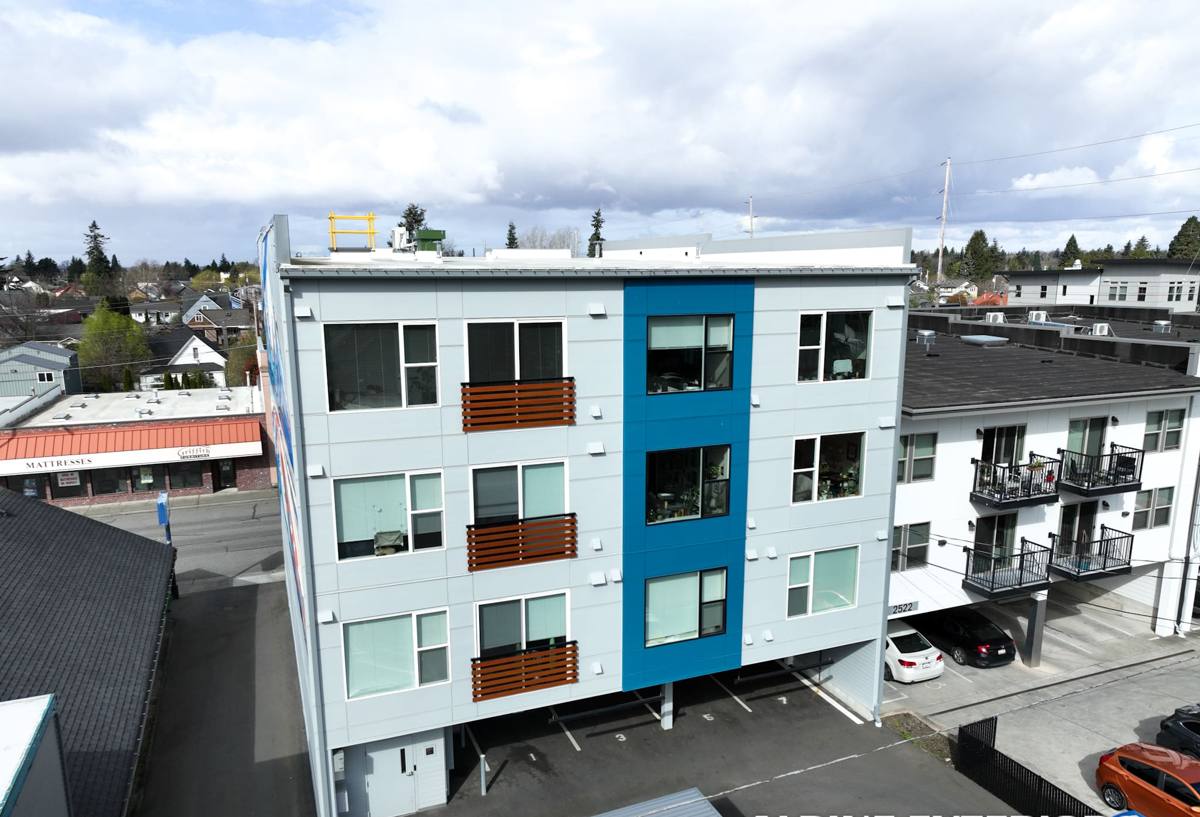
How Salt Air and Driving Rain Damage Windows Over Time
Salt Air
Airborne salt from the bay settles on exterior surfaces and accelerates corrosion of metal window components — screws, cranks, balance hardware, and especially lower-quality aluminum or unclad wood cladding. Over years, that corrosion works its way into hardware function long before the glass itself shows any problem.
Driving Rain
Wind-driven rain doesn't just hit a window — it pushes against it, testing every seam and seal for weaknesses that a calm, straight-down rain would never find. In Conway's open, low terrain, wind has fewer obstructions to slow it down before it reaches a house. Water that gets past a poorly flashed window doesn't just stain a sill; it can travel down into the wall framing and rot sheathing you won't see until the damage is extensive.
Moss and Persistent Moisture
A long moss season means more months where trim, sills, and the area immediately around a window stay damp instead of drying out between rain events. Wood surfaces that don't fully dry are where rot organisms take hold. Moss growth on horizontal trim surfaces around a window is often the first visible sign that water isn't shedding the way it should.
Signs Your Windows Are Already Struggling
- Fogging or condensation between panes on double- or triple-glazed units — a sign the seal has failed
- Soft or discolored wood trim, sills, or casing around the window frame
- Moss or dark staining building up on horizontal surfaces near the window
- Drafts you can feel with a hand near the frame on a windy day
- Difficulty opening, closing, or locking a window that used to operate smoothly
- Paint or finish peeling specifically around the window perimeter, not the wall in general
- Visible daylight or gaps between the window frame and the siding or trim
Any one of these on its own might just mean routine maintenance is due. Two or more together, especially on a window facing prevailing weather, usually means moisture has already gotten past the original installation.
What a Correct Installation Actually Involves
Most window failures we see in this region aren't a bad window — they're a window installed without the moisture-management details that coastal, high-rainfall exposure demands. A correct installation includes, at minimum:
- Removing and inspecting the existing rough opening for hidden rot before anything new goes in
- Installing a properly lapped weather-resistant barrier so water is directed out and down, never trapped behind the window
- Flashing the sill pan, jambs, and head in the correct sequence — sill first, then jambs, then head, each lapping over the one before it
- Setting the window level, plumb, and square, then shimming correctly so the frame isn't stressed and hardware operates smoothly
- Sealing with exterior-grade sealant rated for the movement and exposure the window will see, applied at the right points — not everywhere, since trapping moisture in the wrong spot causes its own problems
- Properly trimming and finishing the exterior so water sheds away from the unit rather than pooling on the sill
Skip or rush any one of these steps and the window itself becomes almost irrelevant — water will find the gap in the process, not the product.
Choosing a Frame Material for This Exposure
| Frame Type | How It Handles Salt Air & Moisture | Trade-offs to Know |
|---|---|---|
| Vinyl | Doesn't corrode or rot; handles moisture well | Can expand/contract with big temperature swings; color/finish choices are more limited than clad wood |
| Fiberglass | Very stable, resists corrosion, holds paint finishes well | Higher upfront cost than vinyl |
| Aluminum-clad wood | Attractive, but the wood core is vulnerable if any seal or cladding gap lets moisture in | Requires flawless installation and ongoing sealant maintenance in coastal exposure |
| Bare wood | Most vulnerable to rot in a salt-air, high-rainfall environment | Needs the most frequent maintenance; we generally steer Conway clients away from this for exposed elevations |
We don't push one brand or material on every job. What we do is walk each elevation of the house with the homeowner, note which sides take the worst weather, and match frame material to that specific exposure rather than using the same spec on every window regardless of orientation.
Our Installation Process
- Walkthrough and assessment — we look at every window being replaced, note existing damage, and check the condition of the rough openings before quoting anything
- Product selection — we go over frame material, glazing options, and hardware based on which side of the house each window is on
- Removal and opening inspection — old windows come out and we inspect the framing and sheathing underneath for rot before installing anything new
- Repair as needed — any soft or damaged framing gets addressed before a new window ever goes in; installing a new window into a compromised opening just hides a bigger problem
- Flashing and installation — sill pan, window, jamb and head flashing, shimming, and fastening, done in the correct order every time
- Sealing and exterior finish — trim, sealant, and paint or stain matched to the rest of the home's exterior
- Final walkthrough — every window operates smoothly, locks properly, and is checked for gaps before we consider the job done
Full-Frame Replacement vs. Insert Windows
Not every window needs to come out down to the studs. If the existing frame is solid, dry, and square, an insert (pocket) replacement can go into the old frame with less disruption and lower cost. But in a moisture-heavy area like Conway, that's only the right call if we've actually confirmed the old frame is sound — inserting a new window into a frame that's already taking on water just seals the problem inside the wall. Where we find rot, soft framing, or evidence of past water intrusion, a full-frame replacement that lets us rebuild the opening properly is the honest recommendation, even though it costs more.
What Affects the Cost of a Conway Window Project
| Factor | Why It Matters |
|---|---|
| Insert vs. full-frame replacement | Full-frame costs more but is often necessary where framing has taken on moisture |
| Number and size of windows | Larger openings and specialty shapes take more labor and material |
| Frame material chosen | Vinyl, fiberglass, and clad-wood price differently, as discussed above |
| Hidden framing repair | Rot found during removal adds time and material, but skipping it isn't a real option |
| Glazing package | Double vs. triple pane, and low-E or gas-fill options, affect both price and performance |
We'd rather give a homeowner an honest range up front, including the possibility that framing repair adds to the number, than quote a number that only holds up if nothing is found once the old window comes out.
Why Hire a Crew That Already Works in Conway
A lot of what makes a window installation succeed here has nothing to do with the window itself — it's knowing how this specific stretch of Skagit County behaves. Crews unfamiliar with delta and near-shore exposure sometimes under-flash a window because it "looked fine" for a similar job somewhere drier, and the failure doesn't show up for a year or two, once it's someone else's callback. We work this area regularly, so we're not guessing at how much weather protection a given elevation needs — we're applying what we've already seen hold up, and what hasn't, on homes with the same salt air, wind-driven rain, and moss exposure yours deals with.
Keeping Your New Windows Performing Long-Term
- Rinse salt residue off frames and glass periodically, especially on sides facing open water or wind
- Clear moss or debris from sills and trim before it holds moisture against the surface
- Check and refresh exterior sealant every few years — sealant is a wear item, not a one-time application
- Operate hardware (locks, cranks, balances) a few times a year so corrosion doesn't set in unnoticed
- Watch for early signs of trouble — condensation between panes, sticking sashes, or soft trim — and address them before they spread
If your Conway home's windows are showing their age, or you just want a straight answer on whether an insert replacement will hold up versus a full-frame job, we're glad to take a look. Fill out the form below for a free, no-pressure estimate — we'll walk the house with you and tell you what we'd actually recommend, not just what's easiest to sell.