 Anacortes
 Why Ship Harbor Decks Take More Punishment Than Most
Homes near Ship Harbor sit close enough to the water that salt-laden air is a daily fact of life, not an occasional nuisance. That air finds every exposed nail head, every joist hanger, every screw that wasn't rated for it, and it starts working on the metal from the day the deck was built. Add in Anacortes' long stretch of driving rain each fall and winter, plus the shaded, damp conditions that let moss and algae take hold on north-facing boards and stair treads, and you have a climate that ages decks faster than homeowners expect. A deck that would last two decades inland might start showing real trouble in twelve or fifteen years out here.
None of that means a deck near Ship Harbor is doomed to fail early. It means the deck has to be built and repaired with that environment in mind — the right fasteners, the right flashing details, and a maintenance rhythm that matches the local weather pattern instead of a generic national guide. That's the difference between a repair that holds and one you're redoing again in five years.
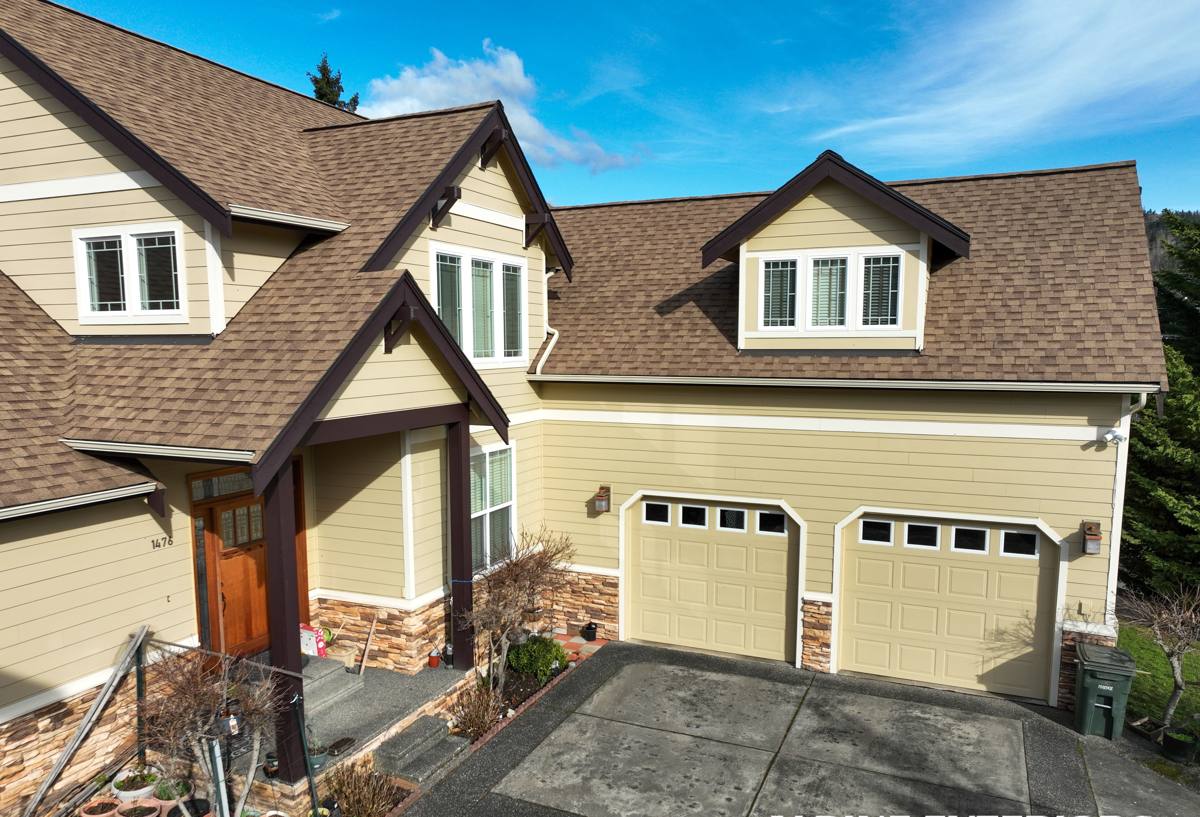
The Deck Problems We See Most Often in This Area
Every deck repair call is a little different, but in this part of Fidalgo Island the same handful of issues show up again and again.
Corroded or Failing Fasteners
Standard hot-dip galvanized nails and screws hold up fine in a lot of the country. Near salt water, they can start rusting from the inside of the wood outward, which means the corrosion is often worse than it looks from the surface. Rust stains bleeding out around a screw head, or a joist hanger with visible pitting, are early warning signs worth acting on rather than ignoring.
Ledger Board Rot
The ledger board — where the deck attaches to the house — is the single most important structural connection on most decks, and it's also the one most likely to trap moisture if the flashing was skipped or installed wrong. Soft, spongy wood at the ledger, or gaps where the deck meets the siding, are structural red flags, not cosmetic ones.
Moss, Algae, and Surface Decay
Shaded decks, decks under tree cover, and decks on the north or east side of a house hold moisture longer through Anacortes' wet months, and moss gets a foothold fast. Beyond making boards slippery and unsafe, moss holds water against the wood surface, which accelerates rot in exactly the boards it's growing on.
Post and Footing Movement
Freeze-thaw cycles are milder here than inland, but saturated soil around footings still shifts over time, especially on sloped lots common around Fidalgo Island. A deck that's developed a slight wobble or a post that's no longer plumb usually points to a footing issue below grade, not just a loose connection above it.
Wood vs. Composite: What Actually Holds Up Near the Water
Homeowners often ask us to settle the wood-versus-composite debate, and the honest answer is that both can work well near Ship Harbor if they're detailed correctly — the material matters less than the installation.
| Material | Strengths in This Climate | Trade-Offs to Plan For |
|---|---|---|
| Pressure-treated lumber | Lower material cost, easy to source replacement boards, straightforward to repair board-by-board | Needs re-sealing every 2-3 years near salt air; more prone to surface checking and moss growth if not maintained |
| Cedar or other naturally durable wood | Attractive weathering, decent natural rot resistance | Softer surface, higher cost, still needs periodic sealing and moss treatment |
| Composite decking | Resists rot and moss staining better, minimal sealing required | Higher upfront cost; substructure (joists, ledger, framing) is still wood and needs the same protective detailing |
We won't tell a homeowner that one material is universally "better" — that's an oversimplification. What we will say is that whichever surface material you choose, the framing underneath needs to be treated the same way: properly flashed, properly fastened with corrosion-rated hardware, and given airflow underneath so moisture doesn't sit and stall.
How We Approach a Deck Repair
- On-site inspection. We check the ledger connection, probe suspect boards and posts with an awl to find soft wood that isn't visible from the surface, and look at footings and post bases for movement or rot at the base.
- Honest scope. We tell you plainly whether you're looking at a targeted board and hardware repair or something more extensive, and we explain why — not just what it will cost.
- Structural fixes first. Ledger flashing, joist hangers, and post connections get addressed before anything cosmetic, because a deck that looks fine but is failing structurally is a safety issue, not a maintenance item.
- Material-matched repair. Replacement boards and hardware are matched to what's already there, or upgraded to better-performing options where it makes sense for the budget.
- Surface and safety pass. Loose railings, worn stair treads, and moss-prone areas get addressed so the deck isn't just structurally sound but safe to actually use.
Repair or Replace? How to Think About It
This is usually the real question homeowners are trying to answer, and it depends on more than the age of the deck.
| Factor | Repair Often Makes Sense | Replacement Often Makes Sense |
|---|---|---|
| Ledger board condition | Solid wood, flashing intact or easily corrected | Widespread rot at the house connection |
| Framing/joists | Isolated soft spots, most joists sound | Rot or corrosion spread across multiple joists |
| Footings and posts | Stable, plumb, no visible base rot | Movement, cracking, or rot at multiple posts |
| Surface boards | A handful of boards showing wear or splitting | Most of the deck surface is worn, cupped, or moss-stained throughout |
| Age of the structure | Under roughly 15 years with good maintenance history | Original construction quality unknown or already patched multiple times |
In a lot of cases the honest answer is a hybrid: keep the framing and footings that are still sound, and replace the decking surface and railings. That's usually the most cost-effective path, and it's the first option we look at before recommending a full teardown.
Railings, Stairs, and Code Considerations
Railings and stairs are where deck neglect turns into an actual safety problem, and they're also where building code requirements come into play for height, baluster spacing, and guard strength. A railing that "seems solid" when you lean on it lightly can still fail a real load test if the posts weren't lagged into solid framing to begin with. If your deck's railing system was built years ago, it may not meet current code — and if you're doing a repair that touches the railing anyway, it's worth bringing it up to current standards rather than reinstalling something that was already marginal.
Skagit County and the City of Anacortes may require permits for structural deck repair work depending on scope, particularly anything involving footings, framing, or railings. We can walk you through what your specific project needs before work starts, so there are no surprises later.
Timing: When to Get Deck Repair Done in This Climate
Late spring through early fall is the ideal window for deck repair work around Ship Harbor — the wood is drier, moss growth has slowed, and there's a longer stretch of dry weather to work with for anything involving glued or sealed connections. That said, structural issues like a soft ledger board or a shifting post shouldn't wait for the "right season." A structural problem gets worse every wet month it sits, and catching it before the fall rains arrive is almost always cheaper than dealing with it after a winter of saturation.
If you're planning ahead rather than reacting to a problem, booking repair or resealing work in spring — before the moss season really takes hold — is the best way to get ahead of the annual cycle instead of chasing it.
A Quick Self-Check Before You Call
You don't need to be a contractor to catch the early warning signs. Walk your deck and check for these:
- Soft or spongy spots when you press on boards, especially near the house or around post bases
- Rust streaks bleeding from screw heads or nail holes
- Gaps, cracks, or discoloration where the deck meets the house siding
- Visible moss or algae buildup, particularly on shaded sections
- Railings or posts that flex or wobble when you push on them
- Stair treads that feel loose or bounce underfoot
- Standing water that doesn't drain within a few hours after rain
- Any post that no longer looks plumb compared to when the deck was built
Finding one or two of these doesn't necessarily mean a full replacement — but it does mean it's worth a closer look before the next wet season adds to the damage.
Why a Crew That Already Works Ship Harbor Matters
Deck repair here isn't the same job as deck repair fifty miles inland. A crew that works this area regularly already knows which fastener grades hold up against the salt air, which sides of a house tend to trap moisture given the prevailing weather off the water, and how to schedule around the wet season instead of getting caught mid-project by it. That local knowledge shows up in small decisions — the flashing detail at the ledger, the hardware spec, the drainage slope on a resurfaced deck — that don't show up on an estimate sheet but make the real difference in how long the repair lasts.
It also matters for permitting and inspection familiarity. A crew that regularly pulls permits in Anacortes and Skagit County knows the local requirements and inspection expectations, which keeps a repair project from stalling on paperwork.
If you've got a deck near Ship Harbor that's showing some of these signs — or you just want an honest read on where it stands — we're happy to come take a look. Reach out using the form below for a free, no-pressure estimate.