 Anacortes
 Why Decks on Cap Sante Wear Out Faster Than You'd Expect
Homes on and around Cap Sante sit close enough to Fidalgo Bay and the marina that salt-laden air is a daily fact of life, not an occasional nuisance. That air carries moisture and fine salt residue onto every exposed surface of a deck — the boards, the railings, and especially the fasteners and hardware most homeowners never look at. Combine that with Anacortes' long stretch of driving rain from fall through spring, and a deck here is working harder than the same structure would be twenty miles inland.
Skagit County's marine climate also means a moss season that runs longer than most homeowners expect — often eight months or more where shaded or north-facing sections of a deck stay damp. Moss and algae don't just look bad; they hold moisture against the wood surface and turn decking into a slip hazard well before it becomes an eyesore. On elevated Cap Sante lots with more wind and rain exposure, that cycle of wetting, drying, and slow decay is what actually ends a deck's useful life — not old age by itself.
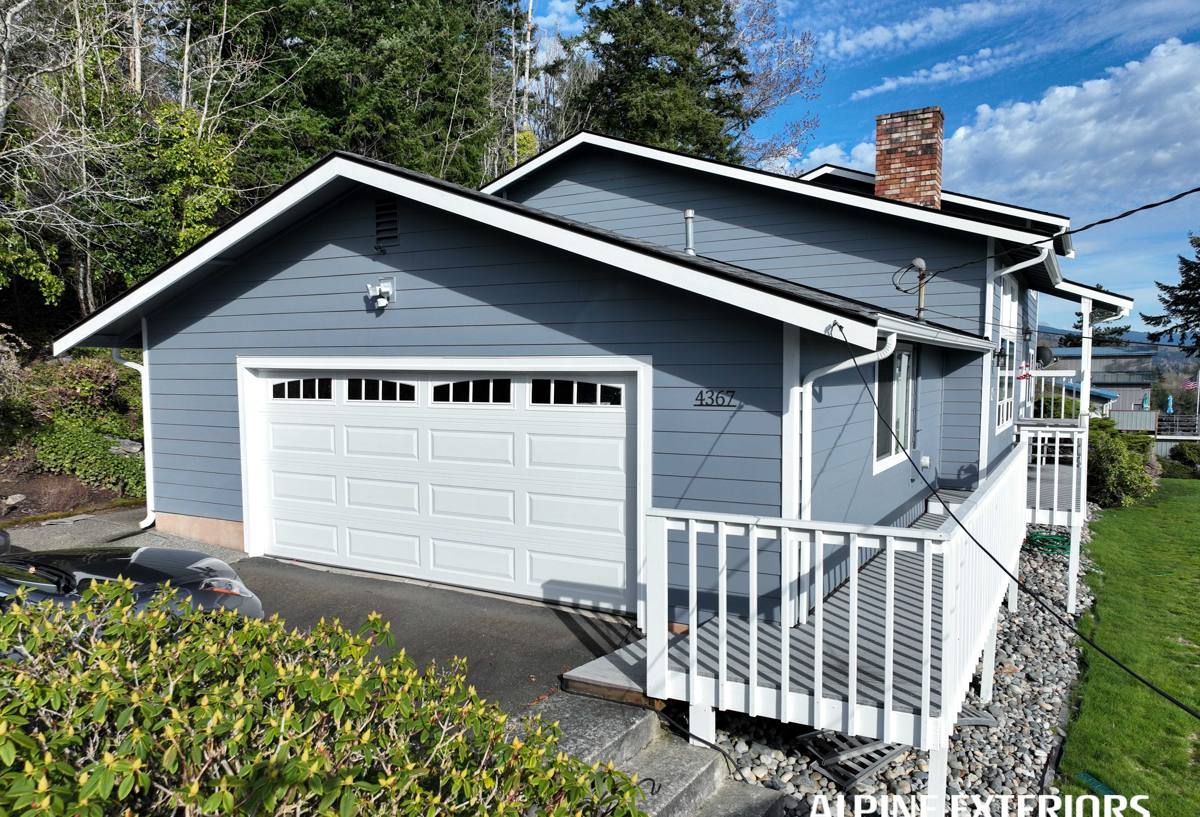
Signs a Deck Needs Replacement, Not Another Repair
Repairing a board here and there makes sense when the problem is cosmetic. Replacement becomes the right call when the damage has reached the structure itself. On Cap Sante properties, we typically see the same failure points repeat from house to house because the exposure conditions repeat:
- Soft or spongy decking, especially near the house where roof runoff drains onto the deck surface
- Rust streaking or corroded fastener heads — a strong sign moisture has been sitting in the wood around the screws or bolts
- Ledger board separation or gaps where the deck meets the house siding, often hidden until flashing is pulled back
- Persistent moss or black staining that returns within weeks of cleaning, indicating the wood underneath is no longer shedding water properly
- Railings or posts that flex more than they used to — a structural issue, not a cosmetic one
- Visible rot or delamination in the framing when viewed from underneath the deck
If more than one or two of these are showing up, patch repairs usually end up costing more over a few years than a single well-built replacement.
Why Underneath the Deck Matters More Than the Surface
Most homeowners judge a deck's condition by walking on it. We judge it from underneath first. Joists, beams, and post bases are where marine moisture does its real damage, and they're the parts that are expensive and dangerous to ignore. A deck can look presentable on top while the framing beneath it has already lost meaningful strength — that gap is exactly why we inspect the substructure before quoting repair versus replacement.
What a Correct Deck Replacement Actually Involves
A deck replacement done right is a structural project, not a surface swap. On a Cap Sante home, that means paying close attention to the details that determine whether the new deck lasts fifteen years or five:
- Ledger board and flashing — the connection point where the deck attaches to the house is the single most common source of hidden water damage. It gets proper flashing and sealing, not just a bolted board.
- Footings and posts — sized and set to current structural standards, not just matched to what was there before, especially if the original deck was undersized to begin with.
- Joist spacing and hardware — corrosion-resistant, rated for exterior and coastal use, since standard interior-grade hardware corrodes quickly in salt air.
- Drainage under the deck — grading and gaps that let water move off the site instead of pooling under the structure where it can't dry out.
- Railings and stairs — built to current code requirements, which matters both for safety and for resale or refinancing appraisals down the road.
Choosing the Right Decking Material for This Climate
There's no single "best" decking material — there's a best material for your budget, your maintenance tolerance, and how much sun or shade your particular deck gets. In a marine climate like Anacortes, moisture behavior matters more than it does in drier parts of the state.
| Material | How It Handles Salt Air & Rain | Maintenance | Typical Lifespan |
|---|---|---|---|
| Pressure-treated wood | Prone to graying, splitting, and moss buildup if not sealed regularly | Annual cleaning and re-sealing recommended | 10–15 years with upkeep |
| Cedar | Naturally rot-resistant but still needs protection from prolonged wet exposure | Periodic oiling or sealing to hold its color and resist moss | 15–20 years with upkeep |
| Composite decking | Doesn't absorb moisture the way wood does; resists moss better on shaded sections | Occasional washing; no sealing or staining | 25+ years, manufacturer-dependent |
| PVC/capped decking | Fully moisture-sealed surface, strong performance in salt air exposure | Lowest maintenance of the group | 25+ years, manufacturer-dependent |
We'll walk through these trade-offs honestly during your estimate — including where a lower-maintenance material is worth the higher upfront cost for a Cap Sante home, and where traditional wood still makes sense for your budget or style.
Fasteners and Hardware Matter as Much as the Decking
We see more decks fail early from the wrong hardware than from the wrong decking material. In salt air, standard galvanized fasteners can corrode faster than they would inland. We use fasteners and structural hardware rated for coastal or marine exterior exposure on every replacement, regardless of which decking material you choose — it's a small cost difference that prevents the rust-streaking and loosening that shortens a deck's life.
Our Deck Replacement Process
Every deck replacement follows the same disciplined sequence, whether it's a modest ground-level deck or a larger elevated one taking advantage of a Cap Sante view:
- On-site assessment — we inspect the existing deck from top to bottom, including the framing, ledger connection, and any visible moisture damage, and give you a straight answer on repair versus replacement.
- Design and material selection — sizing, layout, railing style, and decking material chosen around your budget and how you actually use the space.
- Permitting — most deck replacements in Anacortes and unincorporated Skagit County require a permit, particularly for elevated structures or ones tied into the home's structure. We handle that process rather than leaving it to you.
- Demolition and disposal — full removal of the old deck, including a check of the ledger and framing for hidden rot before anything new goes up.
- Structural rebuild — footings, posts, beams, and joists installed to current code, sized for your deck's actual span and load.
- Decking, railing, and finish work — installed per manufacturer specifications, with attention to fastener spacing and board gapping for proper drainage and expansion.
- Final walkthrough — we go over the finished deck with you, including care instructions specific to the material you chose.
Building for the Site: Elevation, Wind, and Drainage
Cap Sante's terrain means more variation in deck height, sun exposure, and wind loading than you'd find on a flat inland lot. A deck built off a sloped or elevated foundation needs footings and post bracing sized for that specific site, not a generic template. Wind exposure off the water also affects railing and post bracing decisions, especially on taller decks. And because runoff patterns vary block to block depending on grade and nearby structures, we look at how water actually moves across your lot before finalizing footing placement and under-deck drainage — a detail that's easy to get wrong without site-specific experience.
Keeping a New Deck Looking Good Through Anacortes Winters
Even the best-built deck needs some seasonal attention in this climate. A short annual routine goes a long way toward protecting your investment:
- Sweep debris and standing leaves off the deck surface regularly through fall, when moss growth accelerates
- Rinse or wash the deck surface at least once or twice a year to clear salt residue and organic buildup before it stains
- Check railings and stair connections annually for looseness, especially after winter storms
- For wood decking, plan on resealing or refinishing on the schedule recommended for your specific product
- Keep gutters and downspouts near the deck clear so roof runoff isn't draining directly onto the deck surface
- Inspect underneath the deck once a year for early signs of moisture or pest activity
Why Local Experience on Cap Sante Actually Matters
A deck built to a generic spec sheet can still fail early in this environment if it wasn't designed with local exposure in mind. Crews who work regularly in and around Anacortes know which fastener grades hold up to salt air, which sections of a lot tend to stay wet longest through moss season, and how local permitting works for elevated and ledger-attached decks. That local knowledge shows up in the details — flashing choices, hardware selection, drainage layout — that don't appear on a basic estimate but determine whether your deck is still solid in fifteen years.
We've built and replaced decks across Skagit County's coastal conditions long enough to know where corners typically get cut on lower-bid jobs, and we don't cut them. That means being upfront about what your specific site needs, even when it costs a bit more upfront than a bare-minimum rebuild.
Get an Honest Look at Your Deck
If your deck is showing soft spots, persistent moss, rust streaking, or railings that don't feel as solid as they used to, it's worth having someone look at the structure before deciding between repair and replacement. We offer free, no-pressure estimates for deck replacement on Cap Sante and throughout the Anacortes area — just fill out the form below and we'll take a look.