 Anacortes
 Fidalgo Island's Weather Is Harder on Siding Than Most Homeowners Realize
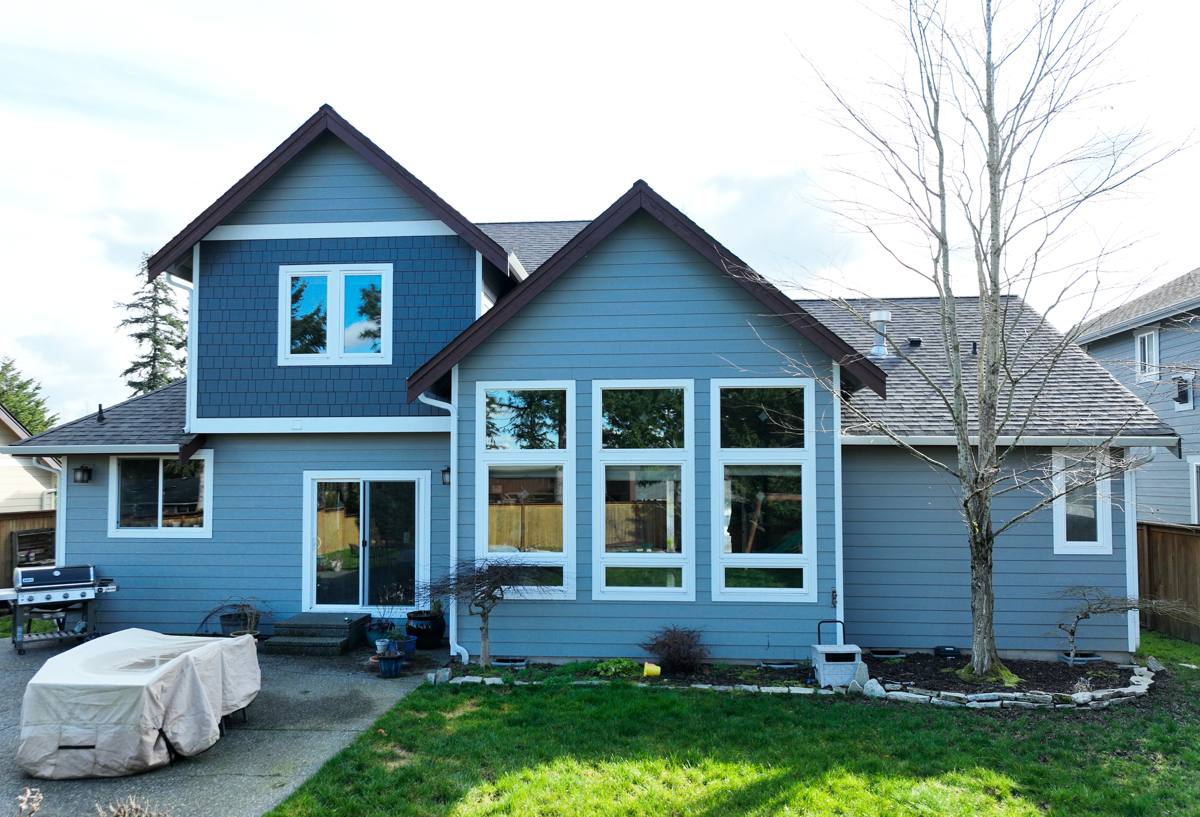
Fidalgo Island sits where marine air, tidal exposure, and heavy seasonal rainfall all converge. Homes here don't just get "Pacific Northwest weather" in the abstract sense — they get salt-laden air coming off the water, wind-driven rain that hits siding at an angle instead of falling straight down, and long stretches of gray, damp months where surfaces rarely get a chance to fully dry out. That combination is exactly the kind of environment that separates siding that holds up for decades from siding that starts failing in year five or six.
We're a local Anacortes crew, and Fidalgo Island work is a regular part of what we do. This page is about one thing specifically: installing James Hardie fiber cement siding correctly on Fidalgo Island homes, and why the details matter more here than they would in a drier, more sheltered inland location.
Why This Climate Is Tougher on a House's Exterior
Salt Air and Coastal Exposure
Airborne salt is corrosive to metal fasteners, flashing, and trim if those components aren't rated and installed for coastal exposure. It also accelerates the breakdown of finishes that aren't formulated to resist it. Siding material and paint that perform fine forty miles inland can chalk, fade, or degrade faster within sight of the water. Any product going on a Fidalgo Island home needs a finish system built to handle that, not just standard exterior paint.
Driving Rain and Wind-Driven Moisture
Storms off the Salish Sea don't just drop rain — they push it sideways into wall assemblies. That means water finds its way into laps, joints, and penetrations (window trim, hose bibs, light fixtures) that would stay dry in a calmer climate. If the water-resistive barrier, flashing, and drainage plane behind the siding aren't done right, that moisture works its way into sheathing and framing where nobody sees it until there's a soft spot or a stain on an interior wall.
Moss, Shade, and Moisture Cycling
Between the tree cover common on the island and the extended damp season, north- and west-facing walls in particular stay wet longer and get less direct sun to dry them out. That's a setup for moss and algae growth on any siding material with texture or porosity that gives organic growth something to hold onto. It's also a setup for repeated wet-dry-wet cycling, which is hard on materials that swell, warp, or delaminate when they take on moisture.
Why We Install Fiber Cement — and Only James Hardie — on Every Job
We standardized on James Hardie fiber cement siding, and we don't install vinyl, LP SmartSide, primed wood, cedar, or other fiber cement brands like Allura or Cemplank. That's a deliberate professional standard, not a sales preference. Fiber cement is non-combustible, dimensionally stable in wet climates, and doesn't rot, feed insects, or warp the way wood-based products can. James Hardie backs its siding with a strong transferable warranty and a factory-applied ColorPlus finish that's baked on and cured before the boards ever leave the plant — which matters directly for salt-air durability, since a factory finish resists fading and wear better than most field-applied paint jobs.
Hardie also engineers its products by climate zone. The HZ5 formulation used in this region is built specifically for wetter, cooler conditions like the Pacific Northwest — it's a different engineering target than the HZ10 product formulated for hot, humid climates. That distinction is easy for homeowners to miss, but it's part of why we specify HZ5 product on every Fidalgo Island job rather than treating fiber cement as a one-size-fits-all material.
What a Correct Installation Actually Involves
Fiber cement siding is only as good as the assembly behind it. On a marine-exposed, high-rainfall site like Fidalgo Island, we treat the following as non-negotiable, not optional upgrades:
- A drainage plane (rainscreen or equivalent) so any water that gets behind the siding has somewhere to go rather than sitting against the wall assembly
- Correctly lapped and integrated flashing at every window, door, and roofline penetration, sequenced so water always sheds outward and downward
- Fasteners and trim rated for coastal/corrosive exposure, not standard-grade hardware
- Manufacturer-specified nailing patterns, gaps, and clearances — Hardie publishes exact fastening and clearance specs, and deviating from them is one of the most common ways fiber cement jobs fail early
- Proper clearance between the bottom of the siding and grade, decks, or roofing, so splashback and standing moisture don't sit against the board edge
- Caulking and sealant only where the manufacturer calls for it — over-caulking traps moisture just as often as under-caulking lets it in
None of this is unique to fiber cement in theory, but in practice it's exactly where rushed installs cut corners — and on a site with this much wind-driven rain, corners cut here show up as problems within a few years, not a few decades.
Our Process on Fidalgo Island Jobs
We approach every fiber cement job on the island the same structured way:
- Walk-through and assessment — we look at existing siding condition, wall orientation relative to prevailing wind and rain, moss/shade patterns, and any signs of existing moisture intrusion before we quote anything.
- Removal and sheathing inspection — once old siding is off, we inspect the sheathing and framing underneath for rot or hidden moisture damage, since this is often the only point in a home's life when that's visible.
- Water-resistive barrier and drainage plane installation — this layer is what actually protects the structure; the siding is the visible shell over it.
- Flashing integration at every penetration and transition point, sequenced correctly with the barrier and siding.
- Hardie fiber cement installation to manufacturer fastening, clearance, and coating specifications.
- Final detailing — trim, caulking only where specified, and a walk-through so the homeowner understands what was done and why.
Signs Fidalgo Island Homeowners Should Watch For
Given the local climate, these are the warning signs worth paying attention to on an existing home's exterior:
- Persistent moss or algae streaking on north- or west-facing walls that doesn't go away between rainy seasons
- Soft, spongy, or bubbling siding, especially near the bottom courses or around window trim
- Peeling or chalking paint that recurs quickly after repainting
- Visible gaps, warping, or separation at siding joints and corners
- Rust streaking from fasteners or trim, a sign the hardware wasn't rated for coastal exposure
- Interior stains, musty odor, or soft drywall on exterior-facing walls
Cost Factors to Understand Before You Get a Quote
Fiber cement siding costs vary by home size, existing wall condition, and how much of the underlying assembly needs correction. The table below outlines the main factors that move a quote up or down — we walk through all of these directly with homeowners rather than quoting off a flat rate.
| Factor | Why It Matters on Fidalgo Island |
|---|---|
| Sheathing/framing condition | Hidden moisture damage from prior water intrusion may need repair before new siding goes on |
| Existing drainage plane, if any | Homes without one need this added, which affects labor and material scope |
| Wall exposure and orientation | Walls facing prevailing wind and rain may warrant extra attention to flashing detail |
| Trim and fascia scope | Coastal-rated trim and fasteners cost more than standard-grade hardware but last longer here |
| Home size and complexity | Dormers, multiple stories, and cut-up rooflines add labor time for correct flashing integration |
| Color/finish selection | ColorPlus factory finishes vs. field-painted options affect long-term maintenance needs |
Why Hiring a Crew That Already Works This Island Matters
A contractor who mainly works inland Skagit County jobs isn't necessarily thinking about coastal fastener corrosion, wind-driven rain angles, or which walls on an island lot will stay shaded and damp longest. Those aren't universal siding concerns — they're specific to homes exposed to marine air and heavier, sideways rainfall. Crews who work Fidalgo Island regularly build habits around it: where to double-check flashing, which orientations need extra drainage attention, and which hardware grade actually holds up here instead of rusting out in a few seasons. That local pattern-recognition is hard to substitute for, no matter how skilled a crew is in general.
Maintenance After Installation
Correctly installed James Hardie siding is low-maintenance, but "low" isn't "none" in this climate. We recommend homeowners periodically rinse siding to clear salt residue and organic buildup, especially on shaded or north-facing walls, and keep an eye on caulking at trim joints over time. Gutters and downspouts should stay clear so runoff doesn't sheet down the wall face during heavy storms. None of this is difficult, but staying ahead of it is what keeps siding performing for its full service life on a site exposed to this much salt air and moisture.
If you're weighing a siding project on Fidalgo Island — whether you're dealing with visible damage or just want ahead of it before the next wet season — we're happy to take a look and walk you through what your home specifically needs. Use the form below to request a free, no-pressure estimate.