 Anacortes
 Guemes Island Homes Face a Different Kind of Weather
Guemes Island sits out in the Salish Sea, reachable only by a short ferry ride from Anacortes, and that location changes what a home's exterior has to put up with. Wind comes off open water with almost nothing to slow it down. Salt-laden air settles on every exposed surface, day after day. Rain doesn't fall straight down here — it drives sideways during winter storms and finds its way into any gap or seam that isn't sealed correctly. Add in the shaded, damp pockets that are common on wooded island lots, and you have ideal conditions for moss and algae to take hold on siding that isn't built to resist them.
A siding product and installation that hold up fine on a sheltered mainland lot in Anacortes can fail years sooner on Guemes Island. This page covers what that climate actually does to exterior siding, why James Hardie fiber cement is the product we put on island homes, what correct installation looks like in this environment, and why working with a crew that already handles the logistics of Guemes Island jobs matters as much as the material itself.
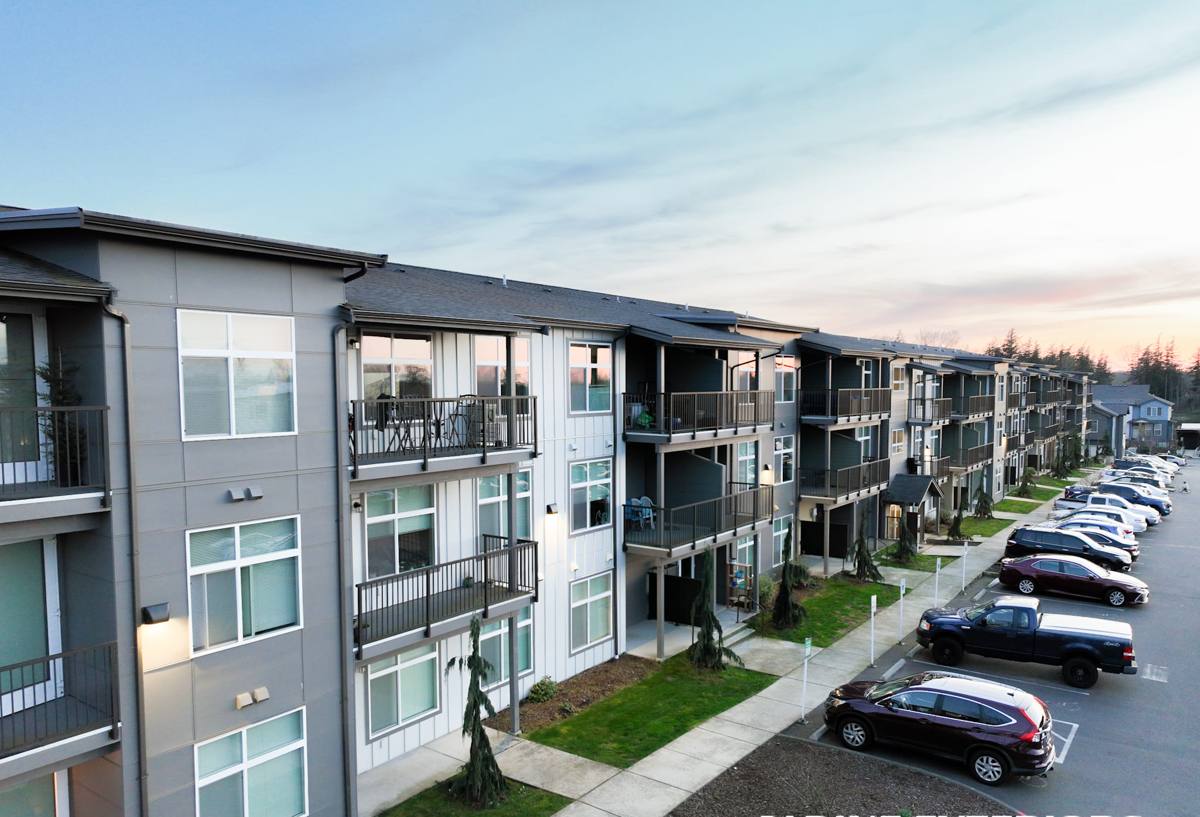
What Salt Air, Rain, and Moss Actually Do to Siding
Salt Air
Airborne salt is corrosive to fasteners, flashing, and any metal trim components, and it accelerates the breakdown of finishes that aren't formulated to resist it. On wood-based or vinyl siding, salt residue combined with moisture speeds up fading, chalking, and surface degradation. It's a slow process, but on an island with near-constant marine exposure, it adds up faster than most homeowners expect.
Wind-Driven Rain
Open water exposure means rain regularly hits Guemes Island siding at an angle instead of falling straight down. That matters because it puts extra stress on joints, seams, and any spot where two pieces of siding or trim meet. If those areas aren't detailed correctly — proper overlap, flashing, and sealant — wind-driven rain will eventually find a way behind the siding, and moisture behind the siding is where real damage starts: rot, sheathing failure, and mold.
Moss and Algae
Western Washington's long wet season, combined with the shade from mature trees common on Guemes Island lots, creates conditions where moss and algae can colonize siding within a few seasons if the material and finish don't resist it. Beyond looking bad, sustained moss growth holds moisture against the siding surface, which shortens the life of anything that isn't dimensionally stable and properly finished.
Why We Only Install James Hardie Fiber Cement
We standardized on James Hardie for every siding job we do, including on Guemes Island, and this climate is a big part of why. Hardie siding is fiber cement — it doesn't absorb and release moisture the way wood-based products do, so it doesn't swell, cup, or delaminate when it gets repeatedly wet and dry, which is exactly the cycle island weather puts a house through. It's also non-combustible, which matters on a wooded island where wildfire risk is a real consideration for insurance and peace of mind.
Hardie's ColorPlus factory finish is baked on and cured under controlled conditions rather than field-applied, which gives it stronger resistance to fading and chalking from UV and salt exposure than most site-painted finishes achieve. And Hardie engineers its siding by climate zone — the HZ5 product line used throughout Western Washington is formulated specifically for regions with sustained moisture exposure, which is exactly the environment Guemes Island sits in.
The James Hardie Product Lines That Work Best on Guemes Island
| Product | Typical Use | Why It Fits This Climate |
|---|---|---|
| HardiePlank Lap Siding | Primary field siding on most elevations | HZ5-engineered, factory ColorPlus finish resists salt and UV, dimensionally stable in wet-dry cycles |
| HardieShingle | Accent walls, gables | Cedar-shake look without the moisture absorption and rot risk of real wood shingle |
| HardiePanel | Garages, outbuildings, modern accent sections | Large-format vertical panels with fewer horizontal joints for water to find |
| HardieTrim | Window and door casing, corner boards, fascia | Resists rot at the joints and end cuts where wind-driven rain collects |
What Correct Installation Looks Like on an Exposed Island Site
Hardie siding performs the way it's engineered to perform only when it's installed to spec, and on an exposed, wind- and rain-heavy site like Guemes Island, the details matter more than usual. A correct installation includes:
- A fastening schedule matched to the site's wind exposure, not just a generic default pattern
- Proper clearance — typically at least 1 to 2 inches — between the bottom of the siding and roof lines, decks, and grade, so water can't wick up into the material
- A correctly lapped and taped weather-resistant barrier installed behind the siding, with flashing integrated at every window, door, and penetration
- Factory-cut edges caulked and sealed per Hardie's published joint details, especially at butt joints and trim intersections
- Field-cut edges primed or sealed before installation so raw fiber cement isn't left exposed to moisture
Skipping any one of these steps doesn't usually cause an obvious problem right away. It shows up two, five, or ten years later as a soft spot behind the siding, a stained seam, or moss taking hold at a joint that should have shed water cleanly. Correct installation is what actually delivers the performance and the warranty coverage Hardie's product is built for.
Why a Crew That Already Works Guemes Island Matters
Ferry access changes the logistics of an exterior project in ways that don't show up on a mainland job. Sailings run on a schedule, not on demand, so a crew has to plan trips around it rather than just driving over whenever it's convenient. A contractor who hasn't worked the island before tends to underestimate this — extra trips for a forgotten tool or a miscounted bundle of siding cost real time and can stretch a project timeline well past what it should be.
We order complete material takeoffs before mobilizing to the island, stage everything for the fewest ferry crossings possible, and schedule crew time around sailing windows instead of losing hours waiting on a boat. We're also familiar with what wind exposure and site access typically look like on Guemes Island lots — narrow driveways, gravel access, and waterfront-adjacent conditions — so we can plan a job accurately from the first site visit instead of discovering surprises mid-project.
Our Process for Guemes Island Siding Projects
- On-site assessment — we walk the exterior, check existing siding and sheathing condition, and note wind exposure and access details specific to your property.
- Measurement and material takeoff — quantities are finalized and ordered before mobilization so we're not making extra ferry trips mid-job.
- Ferry-coordinated scheduling — crew and delivery timing are planned around sailing schedules to keep the project moving efficiently.
- Removal and inspection — old siding comes off and we check the sheathing underneath for moisture damage before anything new goes up.
- Weather barrier and flashing — the moisture management layer behind the siding is installed and integrated at every opening.
- Hardie siding installation — installed to manufacturer specification, including fastening schedule, clearances, and joint detailing appropriate for the site's exposure.
- Final walkthrough — we review the finished work with you and clean up the site before we're done.
What Affects the Cost of a Guemes Island Siding Project
| Factor | Why It Matters |
|---|---|
| Home size and number of elevations | More square footage and more corners, gables, and dormers mean more material and labor |
| Existing siding removal | Tear-off of old siding adds labor and disposal time compared to installing over prepped sheathing |
| Sheathing condition | Rot or moisture damage found once old siding comes off may need repair before new siding goes on |
| Trim and accent complexity | Shingle accents, multiple trim profiles, and detailed corner work add labor beyond a simple lap-siding field |
| Site access and logistics | Ferry scheduling, driveway access, and material staging affect project timeline and efficiency |
| Finish selection | Factory ColorPlus finish versus field-painted trim affects both material cost and long-term maintenance |
We give a firm, itemized estimate after the on-site assessment rather than guessing over the phone — island logistics and existing wall condition both affect the number too much to estimate blind.
Maintenance Checklist for James Hardie Siding in a Marine Climate
- Rinse siding with a garden hose a couple of times a year to remove salt residue and general grime buildup
- Keep gutters and downspouts clear so water sheets away from the wall instead of running down the siding face
- Trim back tree branches and vegetation near the house to reduce shade and airflow restriction that encourage moss
- Inspect caulking at trim joints, window and door casings, and butt joints once a year and re-seal any that have cracked or pulled away
- Address moss or algae promptly with a gentle wash rather than letting it establish and hold moisture against the surface
- Watch for chalking or fading on the finish over time as a sign it's worth a professional inspection
If your Guemes Island home is due for new siding, or you're weighing whether Hardie is worth the switch from what's on your walls now, we're happy to come out, walk the property, and give you a straight, no-pressure estimate — ferry-scheduling and all handled on our end. Use the form below to get started.