 Anacortes
 Why Fidalgo Island Roofs Wear Differently
Fidalgo Island sits surrounded by saltwater on nearly every side, and that changes how a roof ages here compared to a roof twenty miles inland. Salt-laden air drifts off Rosario Strait, Guemes Channel, and Padilla Bay and settles on every exposed surface, including your shingles, flashing, and fasteners. Add in wind-driven rain that comes in sideways during winter storms, plus the deep shade and near-constant dampness that lets moss take hold on north-facing slopes, and you have a roofing environment that punishes shortcuts. A roof replacement done for Fidalgo Island needs to account for all three factors at once, not just the fact that the old roof is worn out.
None of this means Fidalgo Island roofs fail faster than average when they're built and maintained correctly. It means the margin for error is smaller. Standard-grade fasteners corrode sooner near the water. Skimped ventilation traps moisture that feeds moss and rot. Underlayment that would be adequate in a drier part of Skagit County can fall short here. We build every replacement around the actual conditions of your specific lot — how much wind and salt exposure it gets, how much shade it sits in, and how the roof has performed historically.
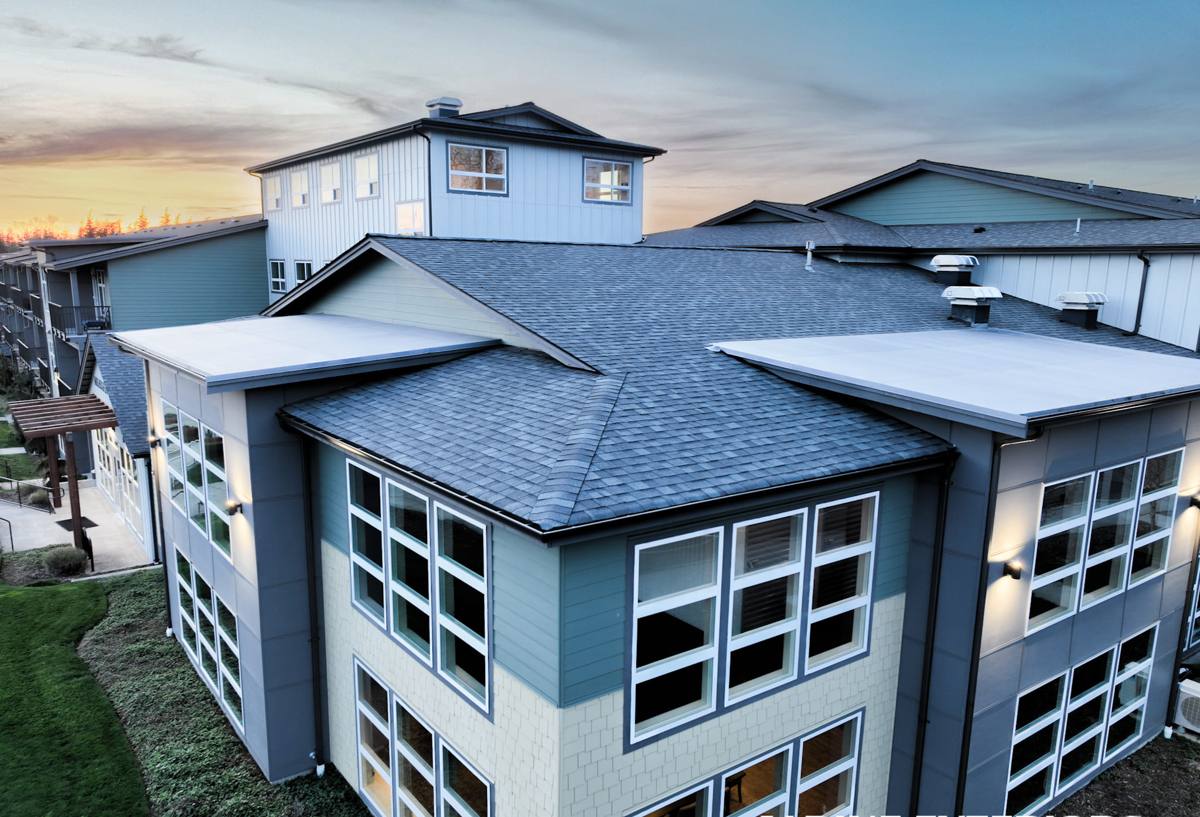
Signs Your Fidalgo Island Roof Needs Replacing
Not every roofing problem calls for a full replacement — plenty of leaks and damaged spots can be repaired. But certain signs point toward a roof that's past the point where patching makes sense.
- Shingles that are curling, cupping, or losing granules in visible patches, especially on south- and west-facing slopes
- Thick moss growth on shaded slopes that keeps returning within a season or two of cleaning
- Rusted or corroded flashing around chimneys, skylights, or roof-to-wall junctions
- Soft or spongy spots when walked on, which usually mean the decking underneath has taken on moisture
- Daylight visible through the roof deck from inside the attic, or damp insulation
- Granules collecting in gutters in noticeable amounts, a sign the shingles are past their protective life
- A roof that's 20+ years old (asphalt) or showing widespread wear, even without an obvious active leak
- Repeated leak repairs in different spots each winter rather than one isolated problem
If you're only seeing one or two of these, a targeted repair or a moss treatment and inspection may be the more honest answer. We'll tell you that directly rather than pushing a replacement you don't need yet.
Choosing the Right Roofing Material for Salt Air and Moss
There isn't one "best" roofing material for Fidalgo Island — it depends on your home's exposure, your budget, and how much upkeep you want to do. Here's how the common options actually perform in this specific climate.
| Material | Salt-Air Durability | Moss Resistance | Typical Lifespan Here | Maintenance |
|---|---|---|---|---|
| Architectural asphalt shingle | Good, with stainless or hot-dip galvanized fasteners | Better with algae/moss-resistant granules on shaded slopes | 20-30 years | Periodic moss removal on shaded sections |
| Standing seam metal | Very good with marine-grade coatings and matched fasteners | Excellent — moss struggles to grip smooth metal | 40-50+ years | Low; occasional debris clearing |
| Cedar shake | Fair; needs diligent maintenance near salt spray | Poor without regular treatment — shakes hold moisture | 20-30 years with upkeep | High; regular treatment and moss control required |
Asphalt shingle remains the most common choice on Fidalgo Island because it balances upfront cost with solid performance when the fastener and flashing details are done right. Metal roofing costs more up front but handles wind, salt, and moss with the least ongoing maintenance, which is why we see more homeowners choosing it on waterfront and heavily shaded lots. We generally steer clients away from untreated cedar shake in the shadiest, dampest spots on the island — not because it's a bad product everywhere, but because the maintenance burden it demands lines up poorly with the amount of moisture and shade those specific sites get.
What a Correct Tear-Off and Replacement Involves
Decking
Once the old roofing is off, we inspect every section of decking. Older Fidalgo Island homes sometimes have skip sheathing or plywood that's absorbed moisture over the years, especially around valleys and low-slope sections. Soft, delaminated, or rotted decking gets replaced before anything new goes down — installing new roofing over compromised decking just hides a problem that will resurface as a leak.
Underlayment and Ice-and-Water Shield
Given how much driving rain this area gets, we don't treat underlayment as an afterthought. Self-adhered ice-and-water shield goes at eaves, valleys, and around every penetration — the spots most exposed to wind-driven rain finding its way underneath shingles. The rest of the deck gets a synthetic underlayment that holds up better to the extended damp stretches common here than older felt products.
Flashing
Flashing failures are one of the most common causes of roof leaks we find on this island, usually because original flashing was standard steel that corroded faster than expected in the salt air. We use corrosion-resistant flashing at chimneys, skylights, sidewalls, and any roof-to-wall transition, and we replace rather than reuse old flashing whenever a roof comes off.
Ventilation
Balanced intake and exhaust ventilation matters more here than in a drier climate. Poor attic ventilation traps moisture, which shortens the life of the decking from underneath and contributes to the conditions moss and mold like. We check and correct ventilation as part of every full replacement, not as an upsell.
Our Replacement Process, Step by Step
- On-site inspection — we walk the roof, check the attic, and assess exposure to wind, salt, and shade specific to your property
- Material and scope recommendation — a straightforward rundown of options that fit your home and budget, without pressure toward the most expensive choice
- Written estimate — clear line items so you know what you're paying for, including decking, underlayment, flashing, and ventilation work
- Scheduling around weather — we plan tear-off for a realistic dry window, since an open roof deck and Skagit County rain don't mix
- Tear-off and decking repair — old roofing comes off, decking is inspected and repaired where needed
- Underlayment, flashing, and new roofing installation — installed to manufacturer specification with corrosion-resistant fasteners throughout
- Cleanup and magnetic sweep — job site and yard cleared of debris and stray nails
- Final walkthrough — we review the finished roof with you before calling the job done
What Affects the Cost of a Roof Replacement
Every roof is different, so we don't quote sight-unseen prices, but these are the factors that most often move the number up or down.
| Factor | How It Affects Cost |
|---|---|
| Roof size and pitch | Larger and steeper roofs take more material and labor time |
| Number of layers to remove | Tearing off multiple old layers costs more than a single-layer tear-off |
| Decking condition | Rotted or soft decking sections add material and labor to replace before new roofing goes down |
| Material choice | Asphalt shingle, metal, and cedar carry different material and installation costs |
| Roof complexity | Valleys, dormers, skylights, and chimneys add flashing work and labor time |
| Access and height | Steep or hard-to-access roofs require more safety setup and time |
As a rough starting point, most full asphalt shingle replacements on typical single-family homes run in the mid five figures, with metal roofing running higher due to material and labor costs. Your actual number depends entirely on the factors above, which is why an on-site look is worth more than a phone estimate.
Permits, Weather Windows, and Scheduling on the Island
Roof replacements on Fidalgo Island typically require a permit through the City of Anacortes or Skagit County, depending on where your property sits. We handle that paperwork as part of the job. Timing matters just as much as paperwork — an open roof deck needs a real dry stretch, and this island doesn't hand those out on a fixed schedule. We track weather closely and build in buffer time so a job doesn't get rushed into a system rolling in off the water. Fall and winter jobs are still doable, but they take more careful sequencing than a mid-summer replacement.
Why a Crew That Already Works Fidalgo Island Matters
A roofing crew that hasn't worked this island before is guessing at things a local crew already knows: which streets sit in enough wind exposure to warrant upgraded fastener specs, which neighborhoods hold onto moss no matter what material you use, how the permit process runs through the City of Anacortes versus unincorporated Skagit County, and how tight the dry-weather windows really are outside of summer. That local knowledge doesn't show up as a separate line item on an estimate, but it shows up in how the roof performs five and ten years out. We've built our process around these specific conditions because that's the roof your home actually needs — not a generic template applied to a coastal address.
If you're weighing repair versus replacement, or just want an honest read on where your roof stands, we're glad to take a look. Reach out for a free, no-pressure estimate using the form below.