 Anacortes
 Building New on Guemes Island? Get the Windows Right the First Time
New construction is the one chance to install windows the correct way from the start — proper flashing sequence, correct frame material, and a weather-resistive barrier that's actually integrated with the window instead of caulked around it after the fact. On Guemes Island, that first-time correctness matters more than almost anywhere else in Skagit County. The island sits out in Rosario Strait and Guemes Channel, fully exposed to salt-laden wind, long stretches of driving rain off the water, and a damp, shaded moss season that runs longer than it does on the mainland. A window package that would be fine in a sheltered inland lot can start showing problems within a few years out here if it wasn't specified and installed with that exposure in mind.
We work new-construction window jobs on Guemes Island as part of our regular service area out of Anacortes, so this isn't a one-off trip for us. We know what the ferry schedule does to a workday, what the salt air does to hardware, and what framing crews on the island tend to get right and wrong when they leave openings for the window install to follow.
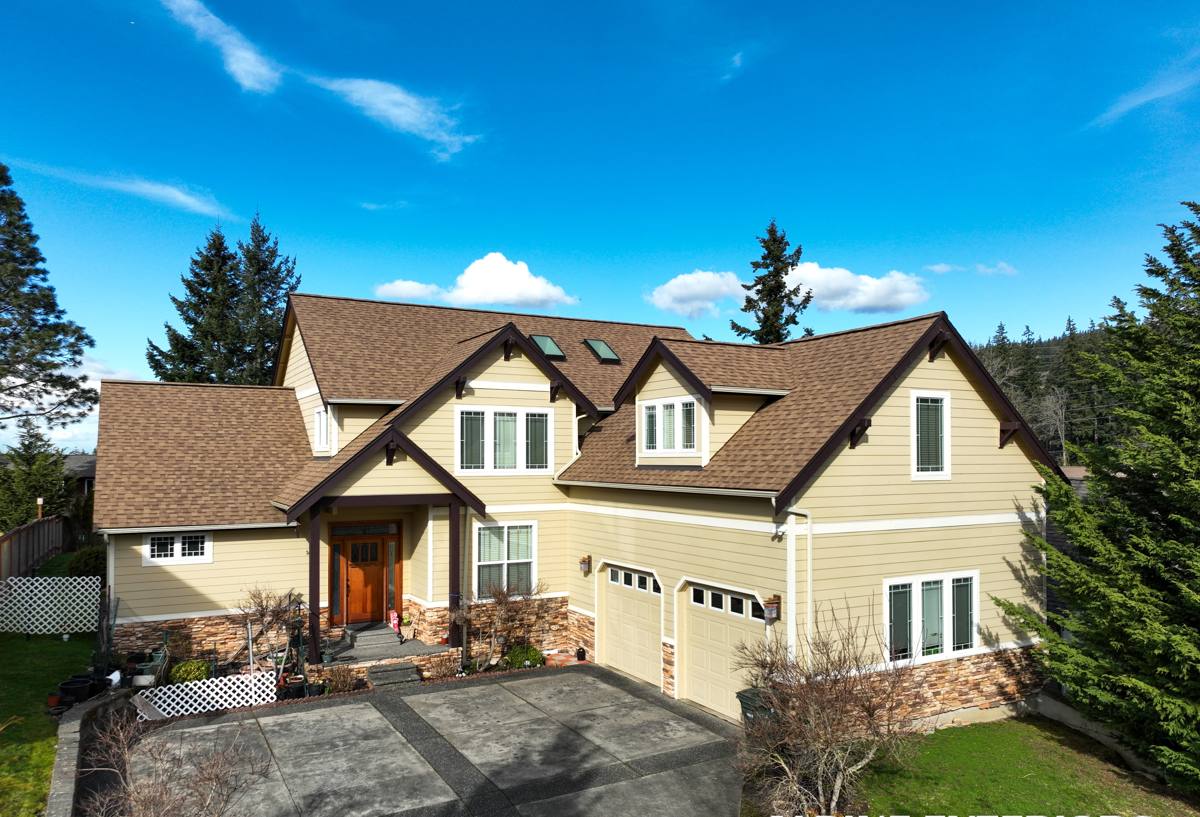
What Guemes Island's Climate Actually Does to Windows
Three things drive most of the window problems we see in new builds on the island, and all three are climate-driven:
Salt Air and Corrosion
Marine air carries salt further than most homeowners expect, and it doesn't stop at the siding. Window hardware, screen frames, cladding fasteners, and even some lower-grade vinyl reinforcement can corrode or pit faster in a shoreline-exposed home than the same product would in a Mount Vernon subdivision twenty miles inland. This is a bigger factor for homes with any real water exposure on Guemes, and it's one of the first things we account for when we spec hardware and fastener material.
Driving Rain and Wind-Driven Water
Rain on the island rarely falls straight down. Wind off the strait pushes it sideways into wall assemblies, which means window flashing has to shed water that's actively being driven uphill against the building, not just gravity-fed water running down the face of the wall. A flashing detail that passes on a calm inland site can fail here.
Moss, Shade, and Prolonged Damp
Guemes Island has a lot of tree cover and a long wet season, and homes tucked into wooded lots stay damp longer between storms than open, sunny sites. That prolonged moisture exposure is hard on any organic trim material around a window opening and can accelerate wood rot at sills and casings if the window and the surrounding weather barrier weren't properly integrated during construction.
Choosing the Right Window Frame Material for a New Build Here
There's no single "best" window material for every home — it depends on budget, architectural style, and how exposed the specific building site is. Here's how the common options stack up for island new construction:
| Frame Material | Salt Air / Coastal Exposure | Maintenance | Typical Fit |
|---|---|---|---|
| Vinyl | Good — won't rust or rot, but check hardware grade | Low | Budget-conscious builds, rentals, secondary structures |
| Fiberglass | Very good — dimensionally stable, resists corrosion | Low | Full-time residences wanting durability without wood upkeep |
| Wood with clad exterior | Good on the exterior face; interior wood still needs normal care | Moderate | Homes wanting a wood interior look with weather protection outside |
| Aluminum | Fair — conducts cold and can corrode without marine-grade coatings | Low to moderate | Modern designs, large expanses of glass, commercial-style openings |
For most Guemes Island new builds we're steering clients toward fiberglass or a quality clad-wood product with stainless or marine-rated hardware, especially on any elevation that faces open water or prevailing weather. Straight vinyl still has its place on a budget build or an outbuilding, but we're honest with clients about the trade-off: it's a lower up-front cost against hardware and seal components that may need earlier attention in a harsh coastal spot.
Glass and Glazing Choices Worth Discussing
Frame material gets most of the attention, but the glass package matters just as much for comfort and long-term performance:
- Low-E coatings reduce heat loss in winter and cut glare and UV fading year-round — worth it on nearly every window in a Pacific Northwest build.
- Argon or krypton gas fill between panes improves insulation value with no visible difference to the homeowner.
- Dual-pane vs. triple-pane — triple-pane adds cost and weight but pays off on north- and west-facing exposures that take the brunt of island weather, and it noticeably cuts down on condensation risk during cold snaps.
- Warm-edge spacers instead of older aluminum spacer bars reduce cold spots at the glass edge, which is where condensation and eventual seal failure usually start.
None of these choices are exotic or specialty items — they're standard options from most window manufacturers. The point is making sure they're actually specified for a Guemes Island exposure instead of defaulted to whatever's cheapest on the order sheet.
Installation Details That Matter More Out Here
A correctly installed window on a new build comes down to sequence, not just product quality. On an exposed island site, we pay particular attention to:
Sill Pan Flashing
Every new-construction opening should get a sloped sill pan that directs any water intrusion back out of the wall assembly rather than letting it sit against the sill or drain into the framing. This is inexpensive and easy to skip if a crew is moving fast — and it's the single most common corner we see cut on builds we're asked to inspect or fix later.
Weather-Resistive Barrier Integration
The house wrap or weather barrier needs to be shingle-lapped over the flashing at the window head and properly taped at the jambs, so water is always directed outward and downward, never trapped behind the window. On a site catching wind-driven rain, gaps or reverse-lapped seams that would be minor elsewhere become real leak paths.
Fastener and Hardware Selection
We spec corrosion-resistant fasteners and hardware for coastal-exposed openings rather than the standard-grade parts that ship with some window packages. It's a small cost difference at install time and a meaningful difference in how the window operates ten years out.
Shimming and Air Sealing
Proper shimming keeps the window square and operating smoothly for the life of the building, and correct low-expansion foam or backer rod and sealant at the perimeter closes the air gaps that drive both energy loss and moisture infiltration.
Our New-Construction Window Process
- Review the architectural plans and rough opening schedule before framing is finalized, so window sizes and swing directions are locked in early.
- Walk the site with the builder to confirm exposure on each elevation and flag any openings that need upgraded glazing or hardware.
- Verify rough openings are square, plumb, and correctly sized before any windows arrive on site.
- Install sill pan flashing, integrate the weather-resistive barrier, and set each window level, plumb, and square.
- Shim, fasten, foam, and seal per manufacturer specification — adjusted for coastal exposure where needed.
- Final operational check on every window and door — smooth operation, proper latching, and a visual seal inspection before we sign off.
Getting Crews and Materials to the Island
Guemes Island is reached by ferry from Anacortes, and that reality shapes how any construction project on the island actually runs. Material deliveries, crew scheduling, and even a simple mid-day supply run all have to work around ferry sailings rather than around a clock the way they would on the mainland. Contractors who don't build regularly on the island tend to underestimate this and end up with idle crew time, missed sailings, or rushed installs to make the last boat back. We schedule island window installs as full-day or multi-day blocks rather than quick in-and-out jobs, and we coordinate material delivery in advance so a full crew isn't standing around a job site waiting on a window order that missed the ferry.
Common New-Construction Window Mistakes We See on Island Builds
- Skipping or shortcutting sill pan flashing to save time on a tight framing schedule
- Using standard-grade hardware on elevations with direct water or wind exposure
- House wrap taped or lapped incorrectly at the window head, allowing water behind the barrier
- Rough openings cut slightly out of square, forcing the window to be racked to fit
- Choosing dual-pane glass with no argon fill on a north- or west-facing wall that takes the worst of the weather
- No coordination between the window supplier's delivery schedule and the ferry, leading to delays that push the whole framing timeline
Living With the Windows After Move-In
A well-installed window on Guemes Island still needs basic seasonal attention, same as anywhere in Skagit County — clearing debris from tracks and weep holes before the wet season, checking that exterior caulking at the trim stays intact, and keeping nearby vegetation trimmed back so moisture and moss don't build up against the frame. Homes on shaded, wooded lots should expect to check window sills and trim for early moss growth more often than an open, sunny site would need to. None of this is heavy maintenance — it's the kind of thing that takes an afternoon once or twice a year and keeps a correctly installed window performing the way it should for decades.
Why Hire a Crew That Already Works Guemes Island
A window installer who mainly works sheltered inland lots can still do competent work, but they're often specifying and detailing for a different climate than the one Guemes Island actually delivers. We build ferry logistics into our scheduling instead of learning it on your job, we spec hardware and glazing for salt air and driving rain as a default rather than an upsell, and we've seen firsthand what happens on island builds when flashing or fastener choices get shortcut. That local, repeated experience is what keeps a new-construction window job on schedule and keeps the windows themselves performing well past the first few wet seasons.
If you're planning new construction on Guemes Island and want windows specified and installed correctly from the start, we're happy to walk the plans with you and give you a straightforward, no-pressure estimate. Reach out using the form below to get started.