 Anacortes
 Why Board & Batten Fits La Conner Homes
La Conner's mix of farmhouses, waterfront cottages, and historic-district homes is part of why board and batten siding shows up so often on request lists here. The style reads as simple and honest — wide vertical boards with a narrow batten covering each seam — and it suits the working-waterfront, agricultural character of the area better than a busy trim profile ever could. It also plays well with the town's older homes, where a vertical siding pattern can modernize a house without fighting its original lines.
But board and batten is a detail-heavy system, not a look you can bolt onto any wall and expect to perform. In a climate like Skagit County's — salt air pulled in off the water, driving rain, and a moss season that can run half the year — the details are exactly where board and batten either holds up for decades or starts failing in five.
What Board & Batten Actually Is
At its core, the system is two layers: a field of vertical panels or boards, then a second, narrower board (the batten) fastened over each seam. Done correctly, the batten covers the joint and sheds water down and away from the wall. Done poorly — wrong fastening pattern, wrong gap, wrong flashing at the bottom — the same joint becomes a place for water to sit against the substrate.
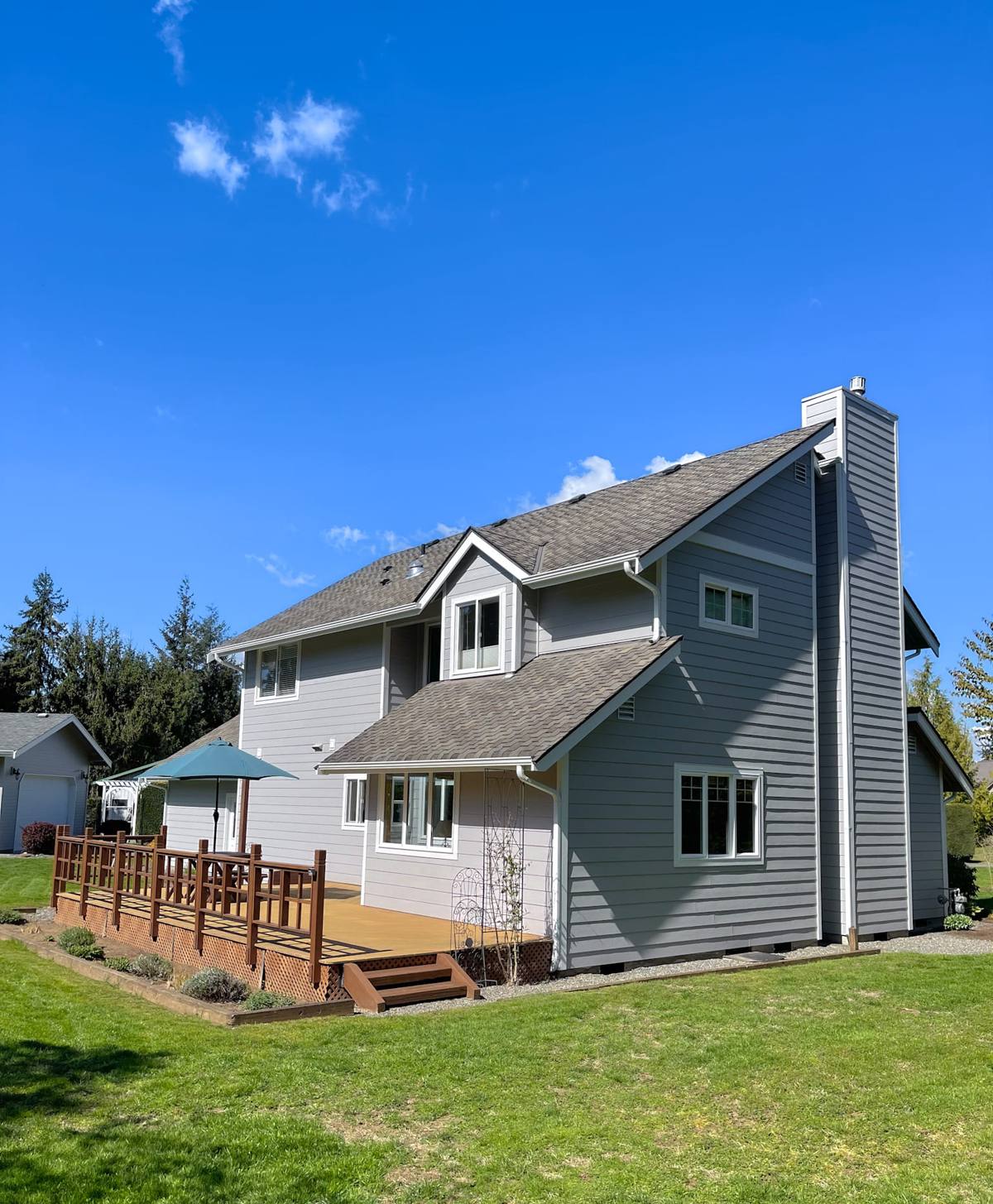
What the Local Climate Actually Does to Vertical Siding
Anacortes and the surrounding Skagit County shoreline sit in a marine environment, and La Conner is close enough to tidal water that salt-laden air is a constant, low-grade stress on exterior materials. Combine that with the region's driving, wind-pushed rain and a long stretch of damp, low-sun months, and you get three separate problems that all land on the same wall assembly:
- Salt air acceleration — airborne salt speeds up corrosion on fasteners and metal flashing, and it degrades paint films faster than an inland climate would.
- Wind-driven rain — rain here rarely falls straight down. Wind pushes it sideways and upward, which means water finds horizontal seams and batten edges that a calmer climate would never test.
- Extended moss and algae season — long stretches of shade, moisture, and mild temperatures give moss and algae a real foothold on any siding surface that stays damp, especially on north-facing walls and under eaves.
None of this means board and batten is a bad choice for La Conner. It means the material, the fasteners, and the installation details all have to be chosen with this specific climate in mind — not generic best practices from a drier region.
Where Board & Batten Installations Usually Fail
The Batten Joint Itself
The batten is doing real structural work: it's the piece that keeps water out of the seam between two field boards. If the batten isn't fastened correctly, or if it's nailed straight through both boards into a rigid pattern that doesn't allow for any material movement, the joint can open a hair over a few seasons of wetting and drying. Once that gap exists, wind-driven rain will find it.
Fastener Corrosion
In a salt-air environment, the wrong fastener is a slow-motion failure. Standard fasteners can start showing corrosion streaks and losing holding power years before a homeowner would think to check them. This is a bigger deal on board and batten than on lap siding, because vertical fastening patterns put more of the fastener's shank in direct exposure.
Bottom Terminations and Flashing
Vertical siding has to end somewhere — at the foundation line, over a porch roof, around a window. Every one of those terminations needs proper flashing and a drainage gap behind the siding. Skipping this is invisible on install day and shows up as rot or staining two or three winters later.
Why We Install Board & Batten Only in James Hardie Fiber Cement
We don't install board and batten in vinyl, LP SmartSide, primed spruce, cedar, or other fiber cement brands, and that's a deliberate standard, not a sales pitch. In this specific climate, the material choice matters as much as the workmanship:
- Non-combustible core — fiber cement doesn't feed a fire the way wood-based products can, which matters anywhere with dry-season wildfire smoke drifting in from inland, even in a generally wet coastal county.
- Engineered for moisture cycling — Hardie's fiber cement is manufactured to resist swelling, cupping, and the freeze-thaw-adjacent wet/dry cycling that a marine climate produces year-round.
- Factory-applied ColorPlus finish — the finish is baked on in a controlled environment rather than field-applied, which gives it far better resistance to the fading and film breakdown that salt air causes on job-site-painted wood or primed products.
- Climate-specific product engineering — Hardie builds its HZ product lines specifically for higher-moisture climates, which is the category the Anacortes and Skagit County coastline falls into.
HardiePanel Vertical Siding and Batten Options
For true board and batten, we install HardiePanel vertical siding with Hardie batten boards over the seams, or HardieTrim battens sized and spaced to the specific look a homeowner wants — narrow farmhouse spacing, wider modern spacing, or a mixed pattern around windows and gables. The panel and batten are both fiber cement, so they age at the same rate and take the factory finish the same way — no mismatched material aging faster than its neighbor.
What Correct Installation Looks Like
The difference between a board and batten job that lasts and one that doesn't almost never shows up in the finished photo. It shows up in the details underneath. Here's what separates a correct install from a shortcut:
| Detail | Common Shortcut | Correct Approach |
|---|---|---|
| Fasteners | Standard galvanized nails, driven anywhere convenient | Corrosion-resistant fasteners, driven per manufacturer pattern and spacing |
| Batten fastening | Nailed rigidly through both boards at every point | Fastened to allow for material movement, following Hardie's fastening schedule |
| Drainage plane | Siding installed tight to the sheathing | Rainscreen gap or drainage wrap behind the siding for water to escape |
| Bottom terminations | Siding runs to grade or a roof line with no flashing | Z-flashing and proper clearance at every horizontal termination |
| Caulking | Heavy caulk used to mask gaps and misalignment | Minimal caulk, used only where the manufacturer specifies it |
None of these correct-approach items cost much more in materials. They cost more in time and attention — which is exactly why they're the first things a rushed install skips.
Our Process, Start to Finish
For a La Conner board and batten project, our process is built around getting the water-management details right the first time, since re-doing them later means pulling siding back off:
- On-site assessment of the existing wall, moisture conditions, and any current siding or trim issues
- Confirming batten spacing and reveal with the homeowner before any material is ordered
- Removing old siding and inspecting sheathing for hidden moisture damage before covering it back up
- Installing or verifying a proper drainage plane behind the new siding
- Installing HardiePanel with corrosion-resistant fasteners per Hardie's published fastening schedule
- Installing battens with correct spacing and fastening to allow for material movement
- Flashing every horizontal termination — foundation line, roof intersections, window and door heads
- Final walk-through with the homeowner before we consider the job done
Maintenance Through Moss Season and Beyond
Even the right material and a correct install don't make a wall maintenance-free in this climate. Board and batten's vertical grooves and batten shadows give moss and algae a place to establish, especially on shaded, north-facing walls. A yearly soft wash — not a pressure washer aimed directly at seams — keeps growth from taking hold and protects the factory finish. Homeowners should also glance at gutter and downspout function each fall, since overflowing gutters are one of the most common causes of localized staining and moisture problems on vertical siding near rooflines.
Because the ColorPlus finish is factory-cured rather than field-applied, it holds color through the wet season far better than site-painted wood siding, which cuts down on the repainting cycle that salt air normally forces on painted surfaces.
Why a Local Crew That Already Works in La Conner Matters
Installation crews who only occasionally work this stretch of Skagit County tend to treat every job like a generic siding install. A crew that regularly works Anacortes and La Conner knows this area's wind exposure, its moss patterns, and which walls take the worst of the driving rain — and builds the flashing and drainage details accordingly instead of applying a one-size-fits-all approach. That local familiarity also means faster response if a warranty question or a minor issue comes up after the job is done, rather than waiting on a crew that has to travel in from well outside the area.
If you're weighing board and batten for a La Conner home, we're happy to walk the property, talk through spacing and detailing options, and give you a straightforward, no-pressure estimate — no obligation, and no pressure to decide on the spot.