 Anacortes
 La Conner's Siding Problem Isn't Like Everyone Else's
La Conner sits right where the Swinomish Channel meets the tidal flats of Skagit County, and that location shapes everything about how siding ages here. Homes get a steady dose of salt-laden air moving in off the water, long stretches of low-intensity driving rain that blows sideways more than it falls straight down, and a shoulder season every year — roughly October through April — where surfaces stay damp long enough for moss and algae to take hold. None of that is unique to any one house in town; it's the baseline every exterior wall in this area has to deal with, year after year.
Wood-based siding products struggle with this combination in predictable ways: the salt air accelerates finish breakdown, the driving rain finds its way into any gap or seam that isn't detailed correctly, and the extended damp season gives moss and mildew a long runway to establish themselves on north-facing and shaded walls. We install James Hardie fiber cement siding exclusively, and this page is about what that looks like specifically for a La Conner home — not a generic pitch, but the actual climate reasoning and installation details that matter here.
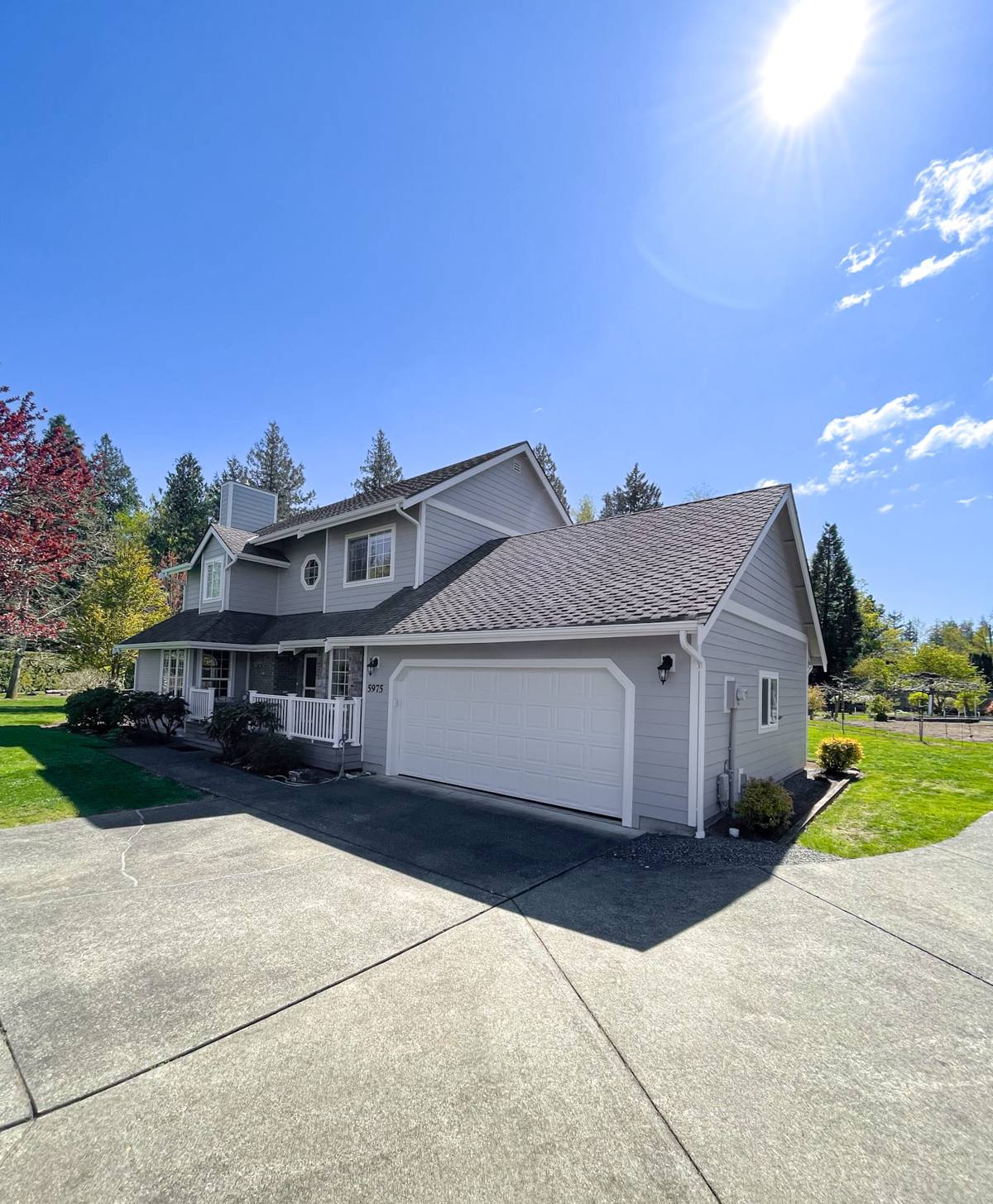
What La Conner Homes Actually Need From Their Siding
Moisture Management Over Everything
The single biggest factor in how long any siding job lasts in this area isn't the product — it's whether water is being managed correctly behind it. A weather-resistant barrier installed with the right lap sequence, properly flashed windows and doors, and a rainscreen gap where conditions call for it will outperform a premium product installed sloppily every time. La Conner's rain pattern — frequent, wind-driven, and often coming from multiple directions in a single storm — punishes shortcuts at penetrations and seams faster than a drier climate would.
Salt Air and Finish Durability
Homes closer to the channel and open water take more airborne salt than homes set back and inland, and that salt exposure is hard on paint film over time — it accelerates chalking, fading, and adhesion loss on field-painted wood products. A factory-applied finish that's baked on and warrantied against that kind of breakdown holds up dramatically better than a finish applied on site with a brush or sprayer.
Moss and Algae Resistance
Skagit County's damp season is long enough that any siding material with an organic component — real wood, primed wood composites — gives moss and algae something to feed on. Non-organic siding doesn't eliminate the need for periodic washing, but it removes the food source, which is a meaningful difference over a 20- or 30-year ownership period.
Why We Standardized on James Hardie
We made a deliberate decision years ago to install James Hardie fiber cement and nothing else — not vinyl, not LP SmartSide, not primed wood, not cedar. Each of those products has legitimate uses and reasonable people choose them, but none of them held up to the combination of coastal moisture, salt air, and long damp seasons the way we wanted to stand behind. Fiber cement is non-combustible, it doesn't swell or delaminate at cut edges the way engineered wood products can if moisture gets in, and it doesn't need the periodic repainting that field-finished wood siding requires. Standardizing on one product also means our crews aren't relearning installation details, flashing sequences, and manufacturer specs across five different siding systems — they install Hardie correctly because it's the only thing they do.
James Hardie Product Lines That Make Sense for This Area
James Hardie engineers its siding by climate zone, and this area of Washington falls into the HZ5 zone specification, which accounts for damp, marine-influenced conditions. Within that, the choice of product line is mostly about the look a homeowner wants — the performance backbone is the same across the lineup.
| Product Line | Typical Look | Where It Fits Well in La Conner |
|---|---|---|
| HardiePlank lap siding | Traditional horizontal lap, smooth or woodgrain | Most common choice; works on nearly any home style in town |
| HardieShingle | Staggered or straight-edge shingle panels | Popular for gable accents and cottage-style homes near the water |
| HardiePanel | Vertical board-and-batten | Fits waterfront and modern-farmhouse styles common in the area |
| HardieTrim | Fascia, corner boards, window trim | Matched trim system that won't rot the way wood trim can at joints |
All of these are available in ColorPlus Technology finishes — a factory-applied, baked-on finish backed by its own product warranty, which matters more here than in a drier climate because it's the finish, not the substrate, that's most exposed to salt air and UV.
What Correct Installation Actually Involves
James Hardie siding is only as good as the details behind it. A correct install in this climate includes:
- A continuous weather-resistant barrier with properly shingled (overlapped, not just taped) laps
- Flashing at every window, door, and roof-to-wall intersection, installed so water sheds outward and down, never inward
- Correct fastener type, spacing, and embedment per James Hardie's published fastening schedule for this exposure zone
- Manufacturer-specified gaps at butt joints and trim, caulked with a product rated for the movement and moisture cycling this area sees
- A rainscreen or drainage plane where wall assembly and orientation call for it, especially on walls facing prevailing wind and rain
- Field-cut edges primed or sealed per Hardie's cut-edge guidance before they're closed in
Skip any one of these and the siding can still look right for a year or two before problems show up behind it — which is exactly why installation quality matters more than which product line a homeowner picks.
Our Process for a La Conner Job
Assessment and Estimate
We start with a walk-around of the home, checking existing siding condition, trim, window flashing, and any moisture damage already present — this tells us if there's rot or sheathing repair to address before new siding goes on, which is common on older homes in this area that were never rainscreen-detailed.
Prep and Weather Barrier
Old siding comes off, sheathing is inspected and repaired as needed, and a new weather-resistant barrier goes on with correct lap sequencing before any Hardie product is installed.
Installation and Flashing
Windows, doors, and roof intersections get flashed first, then siding goes on to Hardie's fastening and clearance specs for our climate zone.
Finish and Walkthrough
Trim, caulking, and touch-up finish work close out the job, followed by a walkthrough so the homeowner understands what was done and how to maintain it.
Realistic Cost Factors
We don't publish fixed prices because every home is different, but these are the factors that actually move the number on a La Conner siding job:
| Factor | Why It Matters |
|---|---|
| Home size and wall complexity | More corners, gables, and dormers mean more cutting, flashing, and labor |
| Existing siding removal and disposal | Tear-off adds labor and disposal cost versus new construction |
| Sheathing or framing repair | Moisture damage found during tear-off has to be fixed before new siding goes on |
| Product line and profile | Lap, shingle, and panel styles have different material and labor costs |
| Trim scope | Full HardieTrim replacement costs more than reusing sound existing trim |
| Site access | Waterfront lots and tight in-town properties can affect staging and labor time |
Maintenance a La Conner Homeowner Should Actually Expect
- Rinse siding annually, more often on shaded or north-facing walls prone to moss and algae growth
- Inspect and re-caulk joints and trim intersections every few years, since sealant wears out well before the siding does
- Walk the exterior after major windstorms to check for loose trim or flashing, common after the driving rain events this area gets
- Keep vegetation and sprinklers from holding moisture against the bottom courses of siding
- Address any paint or finish concerns on trim promptly, since trim and siding age differently even on the same wall
Why Hiring a Crew That Already Works in La Conner Matters
Correct fiber cement installation isn't complicated in theory, but it's detail-heavy in practice, and those details change based on exposure — a wall facing open water and prevailing wind needs more attention than a sheltered inland wall on the same street. A crew that already works jobs throughout La Conner and the broader Skagit County area has already seen how local homes hold up over time, which walls take the worst weathering, and where past installations — by us or others — went wrong. That kind of local pattern recognition is hard to replace with a generalized install checklist, and it's the difference between siding that looks good at handoff and siding that's still performing correctly a decade later.
If you're planning a siding project in La Conner, we're happy to walk the property, look at what's there now, and give you a straight assessment of what it would take to do it right with James Hardie. There's no cost and no pressure — just fill out the form below to get a free estimate.