 Anacortes
 Why La Conner's Waterfront Climate Is Hard on Siding
La Conner sits right on the Swinomish Channel, and that waterfront position in Skagit County creates a specific kind of exposure that siding in more sheltered parts of the region doesn't have to deal with. Salt-laden air moves in off the water and settles on exterior surfaces day after day. Combined with the Pacific Northwest's driving, wind-blown rain and the long gray moss season that stretches from fall through spring, siding here goes through a wear pattern that's tougher than average.
The practical effect is that fasteners and metal trim corrode faster near the water, painted surfaces chalk and fade sooner, and any spot where moisture gets trapped behind the siding stays wet longer between dry spells. Homes just up the road in Anacortes see a milder version of the same thing. It's not that siding fails faster everywhere in La Conner — it's that the failure points are more predictable, and knowing where to look is half the job.
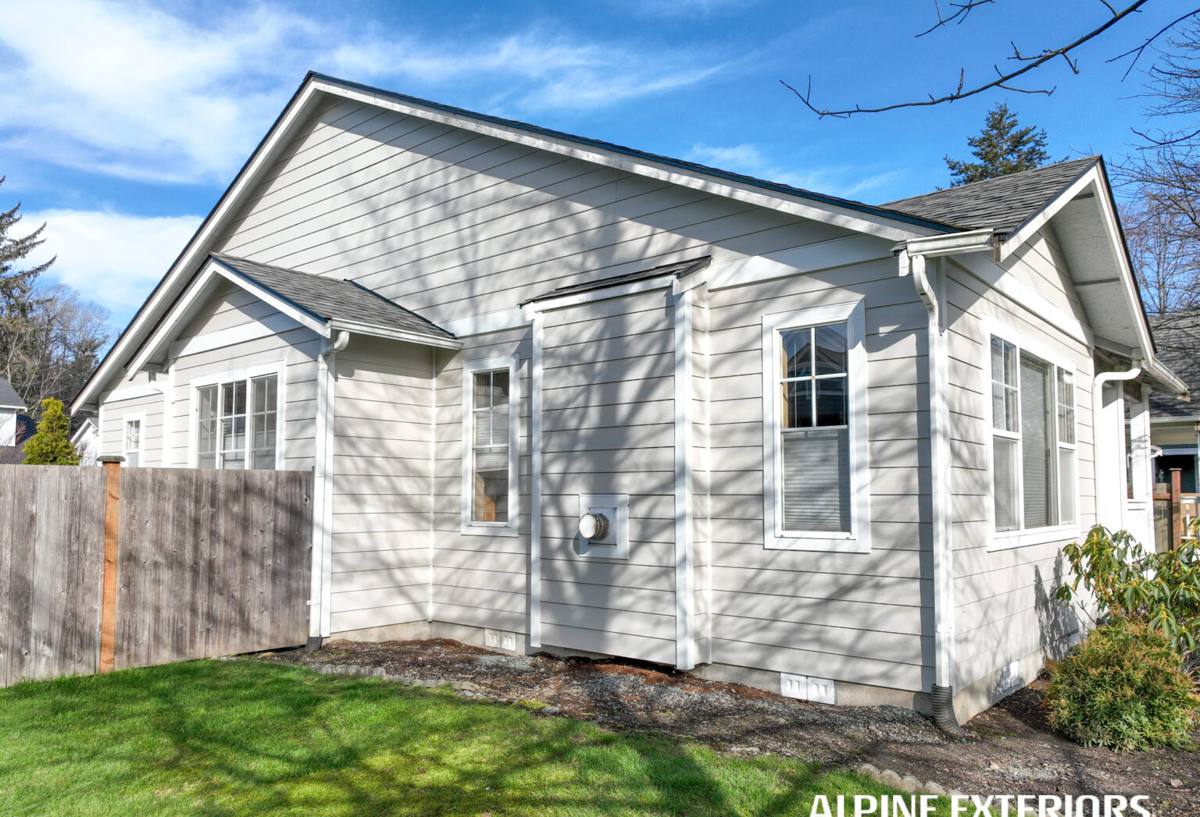
Signs Your La Conner Home Needs Siding Repair
Most siding repair calls start with something a homeowner noticed during a walk around the house, not a dramatic failure. Catching these early is what keeps a repair a repair, instead of turning into a bigger project.
- Soft or spongy spots when you press on the siding, especially near ground level, under windowsills, or where a deck or porch roof ties into the wall
- Dark staining or streaking running down from a seam, joint, or trim piece
- Paint or finish that won't hold no matter how recently it was redone
- Visible gaps, cracking, or separation at corner boards and window trim
- Bubbling, peeling, or discoloration near roof-to-wall transitions and chimney flashing
- Persistent moss or dark green growth on north-facing walls that never fully dries out
- A musty smell near an exterior wall inside the house, which usually means moisture has already worked its way past the siding
Any one of these on its own might be minor. Several showing up in the same area, or a homeowner noticing the same spot needs attention every year, is a sign the underlying cause hasn't actually been fixed yet.
What a Correct Siding Repair Actually Involves
A repair that just swaps out the damaged board and stops there is a repair that's likely to fail again. The visible siding is the last layer in a system — house wrap or building paper, flashing at windows and penetrations, proper overlaps, and the sheathing underneath all have to be checked before anything new goes back on.
Our approach on a repair call is to pull the damaged material back far enough to see what's underneath, take moisture readings on the surrounding sheathing and framing, and figure out where the water is actually getting in before closing anything back up. Sometimes the cause is obvious — a section of flashing that was never properly lapped, a gap at a trim joint that was caulked instead of flashed, a downspout dumping water against the wall. Sometimes it takes some investigation. Either way, replacing the board without addressing the entry point just delays the next repair call.
Common Root Causes We Find in This Area
Flashing details at window heads and deck ledgers that weren't installed to shed water correctly, grading or landscaping that pushes splashback onto lower siding courses, gutters that overflow onto the wall below during heavy rain, and caulk used as a substitute for proper flashing at trim joints. All of these show up more often on homes with direct water exposure, which describes a lot of La Conner.
Repair vs. Replacement: How We Decide
Not every problem area means the whole wall needs to come off. But it's also not honest to patch a small section when the siding around it is at the end of its useful life. We walk through these factors with the homeowner before recommending either path.
| Factor | Repair Usually Makes Sense | Full Replacement Usually Makes Sense |
|---|---|---|
| Extent of damage | Isolated to one or two sections | Multiple areas failing, or damage found in more places once we open it up |
| Age and condition of remaining siding | Siding is well within its service life elsewhere on the house | Siding is at or past its expected lifespan across most of the exterior |
| Moisture found behind the wall | Surface-level, contained to the damaged section | Sheathing or framing rot found in more than one location |
| Ability to match existing material | Product and color can still be matched closely | Existing siding is faded, discontinued, or a product we can't source a true match for |
| Homeowner's long-term plan | Planning a shorter stay or budgeting the fix in stages | Staying long-term and wanting one warranty covering the whole exterior |
There's no pressure toward one answer or the other. If a targeted repair genuinely solves the problem, that's what we recommend and price accordingly.
Why the Patch Material Matters as Much as the Labor
We install James Hardie fiber cement siding exclusively — we don't carry vinyl, LP SmartSide, Cemplank, Allura, or cedar on our trucks, including for repair work. That's a deliberate standard, not a limitation we work around. On new construction the reasoning is about long-term performance. On a repair, it shows up in a more immediate way: what goes back into that wall needs to hold up to the same salt air and rain that damaged the original section, and it needs to look right sitting next to what's already there.
Hardie's ColorPlus factory finish is baked on and consistent from batch to batch, which makes matching an existing wall far more realistic than trying to match hand-painted cedar or a faded vinyl panel that's been in the sun for a decade. Its HZ product lines are engineered specifically for wetter, cooler climates like the Pacific Northwest, and the material itself is non-combustible and dimensionally stable — it doesn't warp, cup, or absorb water the way wood-based products can when a repair area sits exposed during the project.
If the damaged section of a home is currently sided in something other than Hardie, we'll say so plainly. Sometimes a like-for-like patch in the original material is the right short-term call. Other times, especially if that product is already showing its age elsewhere on the house, we'll talk through what a phased changeover to Hardie would look like instead of chasing repairs on a product nearing the end of its run. That's a conversation, not a sales pitch — the goal is telling a homeowner what actually solves their problem.
Our Siding Repair Process in La Conner
- On-site inspection. We look at the problem area and the rest of the exterior, take moisture readings, and identify anything else worth flagging while we're there.
- Diagnose the cause. Before quoting a fix, we confirm where the water is getting in — flashing, grading, a gutter issue, or something else.
- Written scope. The homeowner gets a clear breakdown of what's being replaced, what's being re-flashed or resealed, and what the repair does and doesn't cover.
- Fix the source first. Correcting flashing, drainage, or the detail that let water in happens before any new siding goes back up.
- Install to manufacturer spec. Fastening, clearances, and flashing follow James Hardie's published installation requirements, not shortcuts.
- Clean up and walk-through. We haul away debris and go over the completed work with the homeowner before calling it done.
Living With Moss Season: Maintenance Between Repairs
Good repair work buys time, but siding in a marine, high-rainfall area still needs some upkeep to get the most out of it. None of this requires special equipment or a contractor visit — it's mostly about not letting moisture sit against the wall longer than it has to.
- Rinse siding and trim before the wet season sets in, paying extra attention to north-facing and shaded walls where moss takes hold first
- Keep gutters and downspouts clear so overflow doesn't run down the wall below
- Trim back shrubs, vines, and tree branches touching or shading the siding, since trapped foliage keeps surfaces damp far longer
- Check caulking at trim and window joints once a year and recaulk before it cracks and opens a path for water
- Watch for moss buildup on roofs and gutters, since runoff carrying moss spores is a common source of new growth lower on the wall
- Make sure sprinklers or irrigation aren't spraying directly on the siding
Why Hire a Crew That Already Works in La Conner
Siding exposure isn't uniform even within a small town. A wall facing the channel takes a different beating than one tucked behind a garage or shielded by neighboring trees, and a crew that's worked a number of properties in La Conner has already seen where problems tend to start on homes like this one. That familiarity shows up in faster, more accurate diagnosis — knowing to check a specific flashing detail or drainage pattern instead of treating every repair as a blank slate.
It also matters for follow-through. A repair done correctly the first time, with the actual cause addressed and material installed to spec, is what keeps a homeowner from calling back about the same spot next winter. That's the standard we hold repair work to, whether it's a single board or a larger section of wall.
If you're dealing with soft spots, staining, persistent moss, or siding that just isn't holding up the way it should, we're happy to take a look and give you a straight answer about what it needs. Reach out for a free, no-pressure estimate — the form below is the easiest way to get started.