 Anacortes
 Why Fidalgo Island Puts Extra Demands on a Roof
Fidalgo Island sits where saltwater, wind, and heavy tree cover all meet, and that combination is harder on a roof than most homeowners realize until they're dealing with the results. Salt-laden air off the water accelerates corrosion on anything metal that isn't rated for it. Storms roll in off the water with driving, wind-pushed rain that finds its way under poorly lapped or improperly fastened roofing. And the long, wet Skagit County winters keep roofs damp for months at a stretch, which is exactly the environment moss and algae need to take hold. A roof that would hold up fine in a drier inland climate can fail early here if it wasn't specified and installed with these conditions in mind.
None of this means a roof needs to be over-built or expensive to be right — it means the material, the fasteners, the flashing details, and the ventilation all need to match what Fidalgo Island actually throws at a house over a 30- or 40-year lifespan, not just what a spec sheet promises in ideal conditions.
Why Metal Roofing Fits This Environment
Metal roofing has real advantages on Fidalgo Island when it's the right system, correctly installed. It sheds water fast off a smooth, largely seamless surface, which matters when rain is coming in sideways off the strait. It doesn't absorb moisture the way asphalt shingles or wood shakes can, so it dries out faster between storms and gives moss and algae less to grip onto. And a quality metal roof simply lasts longer than most other roofing materials, which matters on a coastal property where re-roofing is disruptive and roofers aren't always around the corner.
What Metal Roofing Won't Fix by Itself
Metal is not a substitute for good roofing fundamentals. A metal roof with poor attic ventilation will still trap moisture underneath the panels. A metal roof with cheap or mismatched fasteners will still corrode at every screw head. A metal roof with lazy flashing at valleys, chimneys, and wall transitions will still leak — often faster and more visibly than a shingle roof would, because water finds the gap and has nowhere to hide. The material helps, but the installation is what actually determines whether it performs here.
Choosing the Right Metal System for a Fidalgo Island Home
Not all metal roofing is the same product wearing different clothes. The three systems homeowners on the island typically compare each have real trade-offs worth understanding before deciding.
| System | How It's Fastened | Coastal Suitability | Typical Lifespan |
|---|---|---|---|
| Standing seam | Concealed clips, no exposed fasteners on the field | Best — fewer penetration points for salt air and rain to attack | 40-60 years |
| Exposed fastener (5V, corrugated) | Screws driven directly through the panel | Good, but gaskets and screws age faster in salt air and need eventual re-tightening or replacement | 25-40 years |
| Stone-coated steel shingle/shake | Nailed, similar to traditional shingle install | Good — coating protects the steel, but cut edges need careful sealing | 30-50 years |
Standing seam tends to be the strongest fit for homes with direct salt air exposure or a lot of roof valleys, since there are no exposed screw heads working loose or corroding over time. Exposed-fastener panels cost less up front and are a reasonable choice on more sheltered lots, but they do require someone paying attention to fastener condition over the years. Stone-coated systems give a shake or tile look while keeping steel's durability, which some homeowners want for a more traditional Pacific Northwest exterior. There's no single right answer — it depends on the home's exposure, roof shape, and budget.
What a Correct Metal Roof Installation Actually Involves
A metal roof is only as good as what's underneath it and how it's detailed. On Fidalgo Island, a few of these steps matter more than they would somewhere drier and calmer.
- A synthetic underlayment rated for high-moisture climates, not a builder-grade felt that degrades under sustained dampness
- Ice-and-water shield or self-adhering membrane at eaves, valleys, and any low-slope transitions where wind-driven rain is likely to push water uphill
- Fasteners and flashing metal matched to the roofing material to avoid galvanic corrosion between dissimilar metals
- Properly lapped and sealed panel seams, with attention to the direction of prevailing wind and rain on that specific roof
- Balanced intake and exhaust ventilation so moisture doesn't collect in the attic under the metal
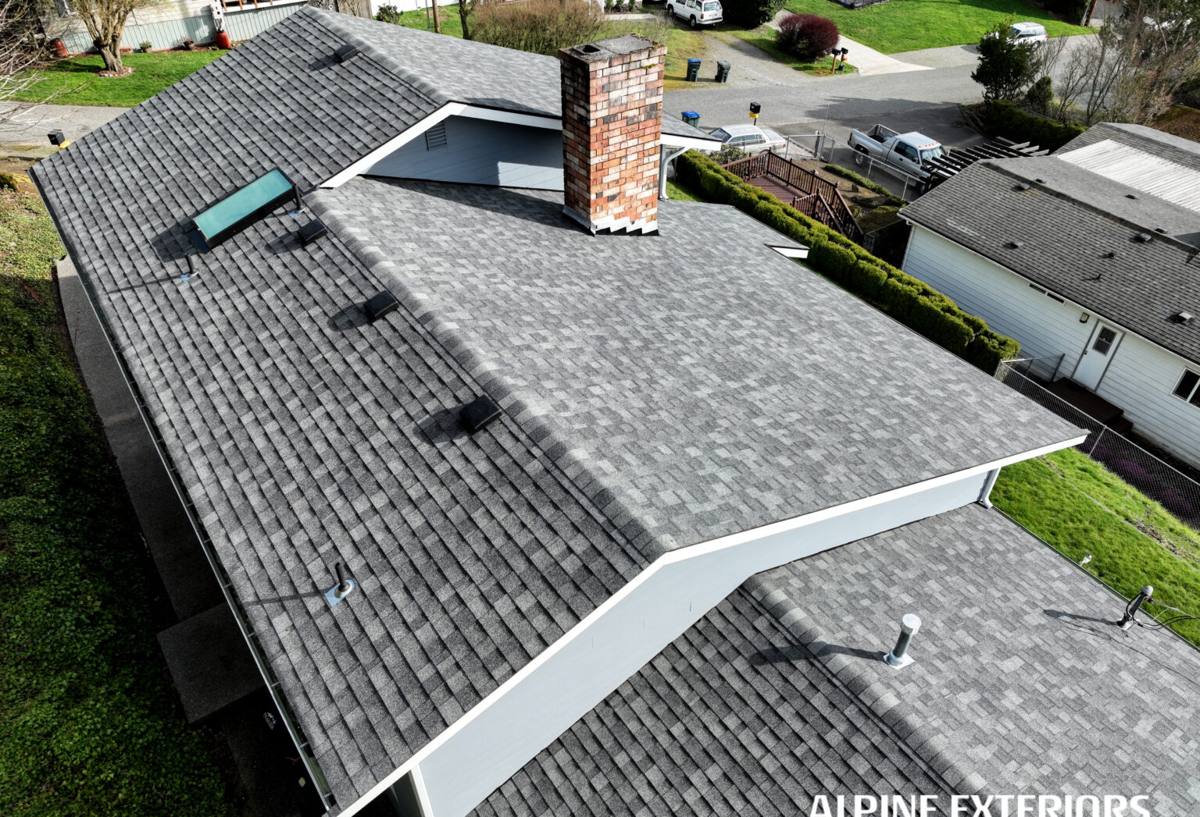
- Custom-formed flashing at chimneys, skylights, dormers, and wall intersections rather than generic stock pieces forced to fit
- Properly sized gutters and downspouts that can keep up with heavy winter rain volume without backing water up under the eave edge
Any one of these done wrong can undercut an otherwise good metal roof. This is where the difference between a fast install and a correct one shows up — not in year one, but in year eight or ten, when a corroded fastener or a shortcut flashing detail finally lets water in.
Salt Air and Coastal Corrosion: Getting the Metal and Fasteners Right
Salt air is the detail most out-of-area crews underestimate. It doesn't just affect homes right on the waterfront — airborne salt travels across Fidalgo Island and slowly attacks unprotected or mismatched metal anywhere on the roof. A few things matter here:
Coating quality. Steel and aluminum panels with a quality baked-on finish (the kind rated for long-term UV and coastal exposure) hold their color and corrosion resistance far longer than roofing with a thinner, budget-grade paint system. This is one area where paying a bit more up front avoids fading, chalking, and premature rust streaking down the line.
Galvanic compatibility. When two dissimilar metals touch and stay wet — say, the wrong type of screw against a steel panel, or copper flashing set directly against aluminum — one of them corrodes faster than it would on its own. A correct install uses fasteners, flashing, and trim that are all compatible with the panel material, which is a detail that's easy to get wrong if a crew isn't used to coastal work.
Fastener grade. On exposed-fastener systems especially, stainless or coated fasteners rated for coastal exposure are worth the modest upcharge over standard hardware, which can start showing rust at the screw head within a few years this close to the water.
Moss, Algae, and Long-Term Drainage
Anacortes' tree cover and long wet season give moss and algae plenty of opportunity, and a roof's drainage design matters as much as the material choice. Metal sheds water and dries faster than shingles, which already helps, but a few additional factors keep growth from taking hold on a metal roof:
Roof slope and panel profile affect how quickly water clears the surface — steeper slopes and smoother profiles give moss less time and less texture to establish itself. Valleys need to be wide and well-flashed enough to move heavy debris and needle litter through rather than letting it dam up and hold moisture against the panel. And where a roof sits under significant tree cover, keeping gutters and valleys clear becomes part of the roof's actual maintenance plan, not an afterthought — a metal roof still needs debris managed, even though it resists moss better than most materials.
Our Process for a Fidalgo Island Metal Roof
We start with an on-site inspection of the existing roof, decking, and ventilation, not just a measurement for panels. That tells us whether the deck underneath is sound, whether a tear-off is necessary, and whether the current ventilation is adequate for a metal system. From there, we walk through system options that fit the home's exposure, roofline, and budget rather than defaulting to one product for every job.
Installation follows the sequence that actually protects the home long term: deck repair where needed, proper underlayment, correctly detailed flashing at every penetration and valley, panel installation matched to the manufacturer's fastening pattern, and a final check of ventilation and gutter capacity. We clean the site thoroughly when the work is done, including magnetic sweeps for stray fasteners, since a dropped screw in the yard is a real hazard for bare feet and pets.
Why Local Experience on Fidalgo Island Matters
A crew that's already worked roofs on Fidalgo Island knows what an inland crew often has to learn the hard way: which exposures take the worst of the wind-driven rain, how much salt air exposure a given lot actually has, and which permitting steps apply through the City of Anacortes and Skagit County before work starts. That local familiarity shows up in the details — the flashing choices, the fastener spec, the way a roof is detailed to handle this specific climate rather than a generic one. It also means a real local presence if a warranty question or a storm-related concern comes up years down the road, instead of trying to track down a crew that did one job on the island and moved on.
If you're weighing a metal roof for a home on Fidalgo Island, we're happy to take a look and walk you through what makes sense for your roof, your exposure, and your budget — no pressure, no hard sell. Use the form below to request a free estimate.