 Anacortes
 Sedro-Woolley Roofs Wear Differently Than Coastal Roofs Do
Sedro-Woolley sits inland from Anacortes, tucked into the Skagit River valley at the foot of the Cascade foothills. That location changes what a roof actually has to survive. Homes right on the water in Anacortes deal with direct salt spray and wind-driven exposure. Sedro-Woolley doesn't get that same coastal salt load, but it trades one problem for another: heavier tree cover, more shade, and slower-drying roof surfaces. In a region that already sees a long, wet fall-through-spring stretch, shade and moisture together are what actually shorten a roof's life here.
The result is roofs that don't fail from wind damage or corrosion the way a waterfront home's might — they fail from moss, trapped moisture, and slow rot at the decking level. A correct roof installation in Sedro-Woolley accounts for that from the start: how the roof sheds water, how it dries out between storms, and how much shade it's going to sit under for the next 20-30 years.
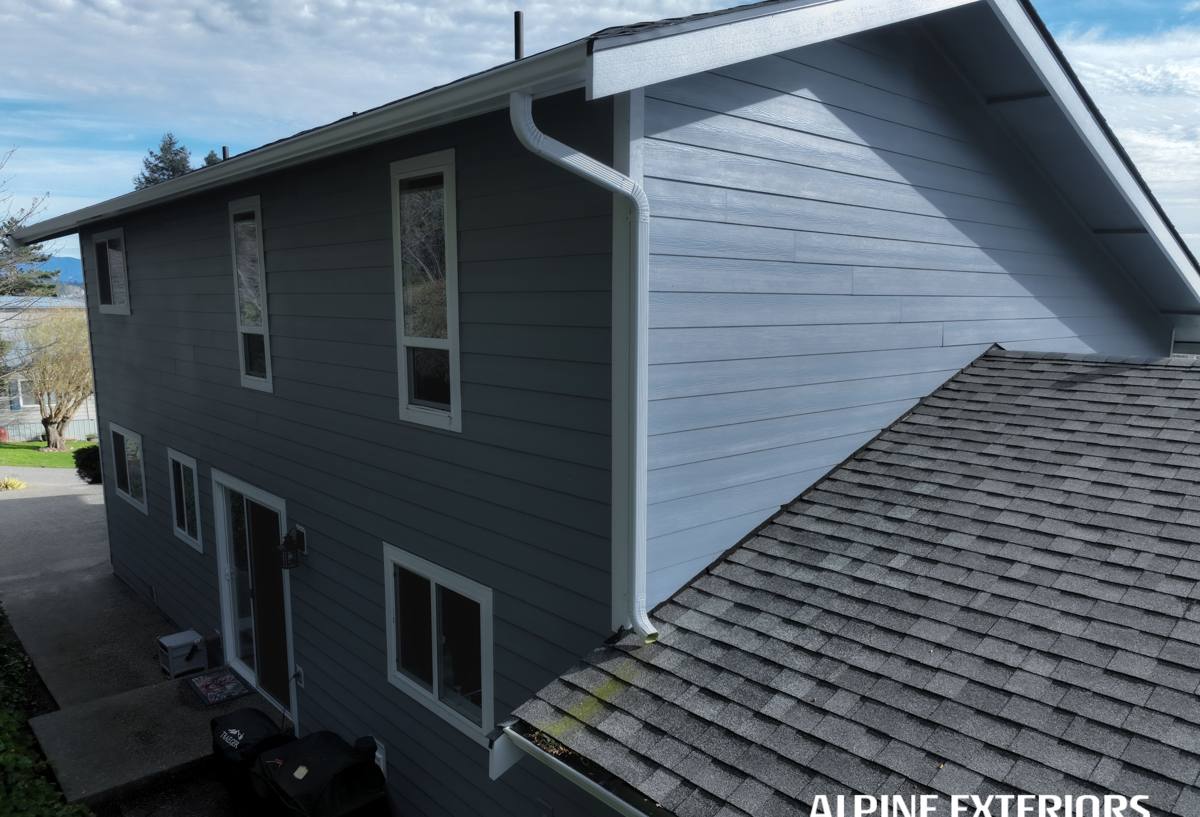
Signs a Sedro-Woolley Roof Needs Replacement, Not Another Patch
Skagit County's rain pattern is long, low-intensity, and constant rather than dramatic. That means roof damage here tends to show up gradually, and it's easy to keep patching a roof that's actually past the point where patching makes sense. A few honest signs it's time to talk replacement instead of repair:
- Moss established in mats rather than surface streaks, especially on north-facing or shaded slopes
- Granule loss heavy enough that you can see bare, shiny patches on asphalt shingles
- Soft spots or give underfoot when walked, which usually means the decking underneath is compromised
- Daylight visible through the roof deck from inside the attic
- Repeated leaks around the same valley, chimney, or skylight despite prior repairs
- Shingles curling, cupping, or cracking at the edges — a sign the mat has aged out
- Interior ceiling stains that reappear after each patch job
If you're seeing two or more of these, a patch is usually a short-term fix on a roof that's already telling you it's done.
What Moss and Shade Actually Do to a Roof
It's Not Just Cosmetic
Moss looks like a surface nuisance, but it causes real damage. As it grows, it lifts shingle edges and holds water against the roofing material long after the rest of the neighborhood has dried out. Under a shaded canopy, that dry-out window can be days longer than it is on an open, sun-exposed roof. Over years, that constant dampness works into fastener lines and seams, and eventually into the decking itself.
Why Pressure Washing Isn't the Answer
We don't recommend high-pressure washing to remove moss on an aging roof — it strips granules and shortens the life of whatever shingle life is left. On a new install, the better approach is prevention: proper ventilation, the right underlayment, and in some cases zinc or copper strips near the ridge that discourage regrowth over time.
Roofing Materials: What Actually Holds Up Here
There's no single "best" roofing material — the right choice depends on your home's slope, shade exposure, budget, and how long you plan to own the house. Here's how the common options compare for a shaded, wet-climate property like most in Sedro-Woolley:
| Material | Typical Lifespan | Moss/Moisture Behavior | Best Fit |
|---|---|---|---|
| Architectural asphalt shingle | 25-30 years | Needs good ventilation and algae-resistant granules to resist moss buildup under shade | Most homes; balances cost and performance |
| 3-tab asphalt shingle | 15-20 years | Thinner profile, sheds water fine but shows moss and wear sooner under heavy shade | Budget-driven projects, shorter hold periods |
| Standing seam metal | 40-50+ years | Sheds water and dries fast; moss struggles to gain a foothold on the smooth surface | Steep or heavily shaded roofs, long-term owners |
| Synthetic/composite shingle | 30-50 years | Resists moisture absorption well; performance varies by manufacturer | Homeowners wanting a shake or slate look without the maintenance |
For most Sedro-Woolley homes under a lot of tree cover, we lean toward architectural asphalt with proper ventilation as the practical middle ground, or metal where the roof sits under heavy, permanent shade and drying time is a real concern. We'll walk you through the actual trade-offs for your specific roof rather than pushing one product.
What a Correct Installation Actually Involves
A new roof is only as good as what happens before the new material ever goes down. On every tear-off, we check the decking for soft spots, delamination, and rot — not just where a leak was reported, but across the whole roof, since moisture travels sideways under shingles before it ever shows up inside the house.
- Full tear-off to the deck (we don't install over old layers — it traps moisture and voids most manufacturer warranties)
- Deck inspection and replacement of any damaged sheathing before anything else happens
- Ice-and-water shield at eaves, valleys, and around penetrations — the areas most exposed to standing water in a slow-draining climate
- Synthetic underlayment across the full deck for a secondary moisture barrier
- New flashing at chimneys, skylights, and sidewalls — reused old flashing is one of the most common causes of "new roof" leaks
- Balanced intake and exhaust ventilation, sized to the attic, not just a single ridge vent added as an afterthought
- Final material installation to manufacturer spec, including proper nailing pattern and exposure
- Cleanup and magnetic sweep for stray nails, plus a final walk-through with you
Ventilation Matters More Here Than in Drier Climates
In a climate with this much ambient moisture, an under-ventilated attic doesn't just shorten shingle life from below — it can cause condensation that rots decking from the inside, independent of anything happening on the roof surface. We size intake and exhaust together, not as separate line items, because one without the other does very little.
What Drives the Cost of a New Roof
Every roof is different, so we won't quote a number without seeing the property, but these are the factors that actually move the price up or down:
| Factor | Why It Matters |
|---|---|
| Roof size and number of planes | More square footage and complexity (valleys, dormers) means more material and labor time |
| Pitch and access | Steep roofs and roofs surrounded by trees require more safety setup and slow the work down |
| Tear-off layers | Removing multiple old layers costs more in labor and disposal than a single-layer tear-off |
| Decking condition | Rotted sheathing found during tear-off has to be replaced before installation continues |
| Material choice | Asphalt, metal, and synthetic products span a wide cost range per square |
| Permits and disposal | Skagit County permitting and dump fees are a fixed cost regardless of material |
Be cautious of any quote that's dramatically lower than the others — it usually means a layer being skipped, whether that's ice-and-water shield, proper flashing, or a full tear-off.
Why a Crew That Already Works Sedro-Woolley Matters
Roofing here isn't the same job as roofing in a dry inland climate, and it isn't identical to roofing a waterfront Anacortes property either. A crew that regularly works Skagit County knows how to schedule around the rain windows instead of guessing, knows which shaded, tree-heavy lots need extra ventilation attention, and has already been through the local permitting process enough times to not slow your project down with avoidable paperwork delays. That familiarity shows up in fewer surprises mid-project, not in a sales pitch.
We also treat every property as its own case. We're not going to tell a Sedro-Woolley homeowner they need salt-air-rated hardware they don't need, and we're not going to under-spec ventilation because a drier-climate crew defaults to it. The roof gets built for the conditions it actually sits in.
Protecting the Investment After Installation
A new roof still needs a little seasonal attention in this climate, and it's minor compared to the cost of premature replacement:
- Clear gutters and valleys of needles and leaf debris at least twice a year — clogged gutters back water up under shingles
- Have moss growth treated early rather than left to establish for a full season
- Trim overhanging branches that keep sections of the roof in permanent shade and slow drying
- Schedule a walk-through inspection every couple of years, especially after a heavy storm season
- Address any small leak immediately — in this climate, small leaks don't stay small for long
Get a Straight Answer on Your Roof
If you're not sure whether your Sedro-Woolley roof needs a full replacement or just targeted repair, we're happy to take a look and give you an honest answer either way. We offer free, no-pressure estimates — come see what your roof actually needs before you commit to anything, using the form below.