 Anacortes
 Building Decks for Oak Harbor's Marine Climate
Oak Harbor sits on Whidbey Island, across Deception Pass from our home base in Anacortes, and it takes the Salish Sea's weather straight on. Homes here deal with salt-laden air off the water, driving rain that comes in sideways during winter storms, and long stretches of gray, damp months where nothing on a wood surface dries out for days at a time. A deck built the way it might be built inland — standard hardware, a quick ledger attachment, whatever decking is on sale — will show problems within a few seasons. A deck built for this specific coastline holds up for decades. That difference comes down to material choices and construction details most homeowners never think to ask about, which is exactly why we walk through them here.
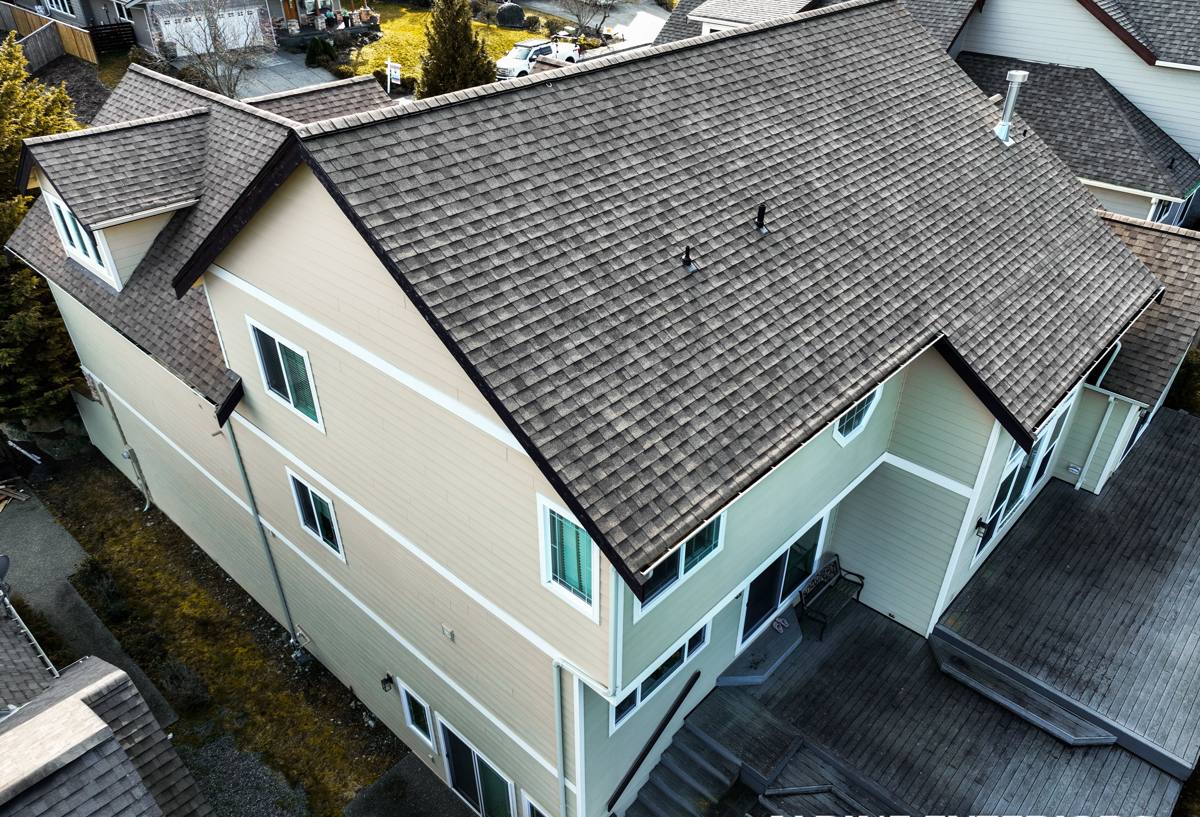
What Happens When a Deck Isn't Built for Salt Air and Rain
We get called out to a lot of decks that were installed correctly by inland standards but weren't built for a waterfront or near-waterfront environment. The failure patterns are consistent enough that we can usually spot the cause within a few minutes of looking underneath.
Corrosion Failures
Standard electro-galvanized screws and joist hangers hold up fine in a dry inland climate. Near salt water, that thin zinc coating breaks down faster than most people expect, and once it does, rust takes over. Streaking down the face boards is the visible symptom; the real problem is weakened structural connections you can't see from the top.
Moisture and Rot
Rain that never gets a chance to fully dry out is the other half of the problem. Ledger boards attached without proper flashing let water track behind the siding and into the house's rim joist. Posts set directly on concrete without a standoff base wick moisture up into the wood grain. Framing enclosed too tightly underneath never gets airflow to dry between storms. None of these show up on day one — they show up as soft spots, staining, and eventually structural sag two, five, or ten years later.
Choosing Decking Material for a Coastal Whidbey Island Lot
There's no single "best" decking material — the right choice depends on how exposed the lot is, how much shade it gets, and how much maintenance you actually want to do. Here's how the common options compare for a home dealing with salt air and a long wet season.
| Material | Moisture & Rot Resistance | Moss/Mildew Resistance | Maintenance | Cost Tier |
|---|---|---|---|---|
| Pressure-treated lumber | Good if detailed correctly; needs sealing | Fair — can trap moss in grain | Annual cleaning, periodic re-sealing | Budget |
| Cedar | Naturally decay-resistant, but surface still needs care | Fair to good | Regular oiling/staining to hold appearance | Mid-range |
| Capped composite | Excellent — won't rot or absorb water | Good — cap resists staining and growth | Occasional washing, no sealing | Mid to premium |
| PVC decking | Excellent — fully synthetic, no wood fiber | Very good | Lowest — soap and water | Premium |
Homeowners near open water or on shaded, north-facing lots tend to do best with capped composite or PVC, since they don't feed the moss and mildew that thrive on damp wood grain. For homes with more sun exposure and a sheltered lot, well-maintained cedar or treated lumber can still be the right call — it's a legitimate choice, not a downgrade, as long as the fastening and framing underneath are done right.
The Build Details That Actually Prevent Problems
Decking material gets most of the attention, but the parts you can't see after the job is done are what determine whether the deck lasts.
Ledger Flashing and Attachment
Where the deck ties into the house, proper step and ledger flashing has to shed water away from the rim joist rather than let it pool behind the siding. This is the single most common shortcut we find on failed decks, and it's the hardest one to fix after the fact without pulling boards.
Fasteners and Hardware
We use stainless steel or marine-rated hardware for structural connections — joist hangers, post bases, ledger bolts — in any Oak Harbor build. It costs more than standard galvanized hardware, but in a salt-air environment it's the difference between hardware that outlasts the decking and hardware that's rusting through in five years.
Footings and Ventilation
Post bases need a standoff that keeps wood off concrete so it isn't wicking ground moisture. Underneath the deck needs enough airflow to actually dry out between rain events — solid skirting that looks nice but seals off airflow is a common way homeowners unintentionally trap moisture against the framing.
- Ledger properly flashed and sealed at the house connection
- Stainless or marine-rated fasteners and structural hardware throughout
- Post bases set with a standoff, never wood-to-concrete contact
- Joist tops protected with tape or flashing before decking goes down
- Skirting or underdeck design that allows real airflow, not a sealed box
- Proper drainage grading beneath and around the structure
Design Choices That Fight Moss and Slip Risk
Oak Harbor's moss season runs long — fall through spring, and longer on shaded lots — and a deck surface that stays damp for weeks becomes a moss and algae magnet as well as a slip hazard on stair treads and low-traffic corners. Grooved or textured composite boards handle this better than smooth-faced boards because they shed water faster and give more traction underfoot. Board orientation and gaps matter too: consistent, code-correct spacing lets water drain through rather than sitting on the surface. On decks under tree cover or on the shaded side of a house, we'll sometimes recommend a slightly wider gap or a different board profile specifically to reduce standing moisture, since that lot is going to hold onto moss no matter what material goes down.
Our Process, From Design to Walkthrough
1. Site Visit and Design
We look at sun exposure, wind direction, drainage, and how close the lot is to open water, since a bluff-front deck on Whidbey Island needs different attention than a sheltered inland lot. Material and layout recommendations come out of that visit, not a generic template.
2. Engineering and Permitting
Footing depth, ledger attachment method, and guardrail height all need to meet current code, and elevated or waterfront-adjacent decks sometimes need additional engineering review. We handle the permit submission with the local jurisdiction so you're not the one chasing it down.
3. Build
This is where the details above get executed — flashing, fastener selection, footing standoffs, ventilation — in the order that actually protects the structure, not just the order that's fastest.
4. Final Walkthrough
We walk the finished deck with you, cover basic care for whatever material you chose, and make sure you know what a normal weathering pattern looks like versus something worth calling us about.
Permits and Local Code Considerations in Oak Harbor
Oak Harbor sits in Island County, and most new deck construction there requires a building permit, along with inspections at the footing and framing stages before decking goes down. Guardrails are required above a certain deck height and have to meet minimum height and baluster spacing requirements. None of this is unusual compared to other Puget Sound jurisdictions, but the specific submittal requirements and inspection scheduling are local, and getting them wrong causes real delays. We manage that process as part of the job rather than leaving it for the homeowner to figure out.
Why Hire a Crew That Already Works in Oak Harbor
Crossing Deception Pass for a job isn't a hassle for us — it's routine. We already know which lots along the water get hit hardest by wind-driven rain, which shaded, tree-lined properties fight moss no matter what you build, and which parts of Oak Harbor's building department paperwork trip up contractors who only come through once. That familiarity shortens the permitting timeline, avoids rework from guessing wrong on exposure conditions, and means the flashing, fastener, and ventilation details described above aren't an afterthought — they're just how we build a deck in this area by default.
Keeping Your Deck Looking Good Through the Moss Season
A well-built deck still needs some seasonal attention in this climate. None of it is complicated, but skipping it lets moss and grime get ahead of you.
- Sweep off standing leaves and debris regularly through fall — trapped organic material holds moisture against the surface
- Rinse or wash the deck surface once or twice a year, more often on shaded sections
- Check ledger flashing and fastener heads yearly for early rust or gaps in sealant
- Keep gutters and downspouts clear so roof runoff isn't dumping directly onto or under the deck
- Re-oil or re-stain wood decking on the schedule the product calls for — don't wait until it's visibly gray
- Trim back overhanging branches that keep sections of the deck shaded and damp longer than the rest
If you're thinking about a new deck or replacing one that's showing its age, we're happy to come take a look at your Oak Harbor property and put together a straightforward, no-pressure estimate — just fill out the form below.