 Anacortes
 Oak Harbor's Siding Problem Isn't Like Inland Skagit County's
Oak Harbor sits on Whidbey Island, a short drive from Anacortes across the Deception Pass Bridge, and it takes weather that inland Skagit County homes rarely see in the same combination. Homes here face salt-laden air coming off the Salish Sea, long stretches of driving rain pushed in off the water, and a moss and algae season that runs most of the year on shaded or north-facing walls. Any siding product installed in Oak Harbor has to handle all three at once, year after year, without babying.
That combination is why we treat Oak Harbor as its own job, not a copy-paste of a mainland install. The flashing details, fastener choices, and even the clearances we leave around the foundation all get adjusted for a coastal, moisture-heavy environment. This page walks through what that actually looks like when the product going up is fiber cement.
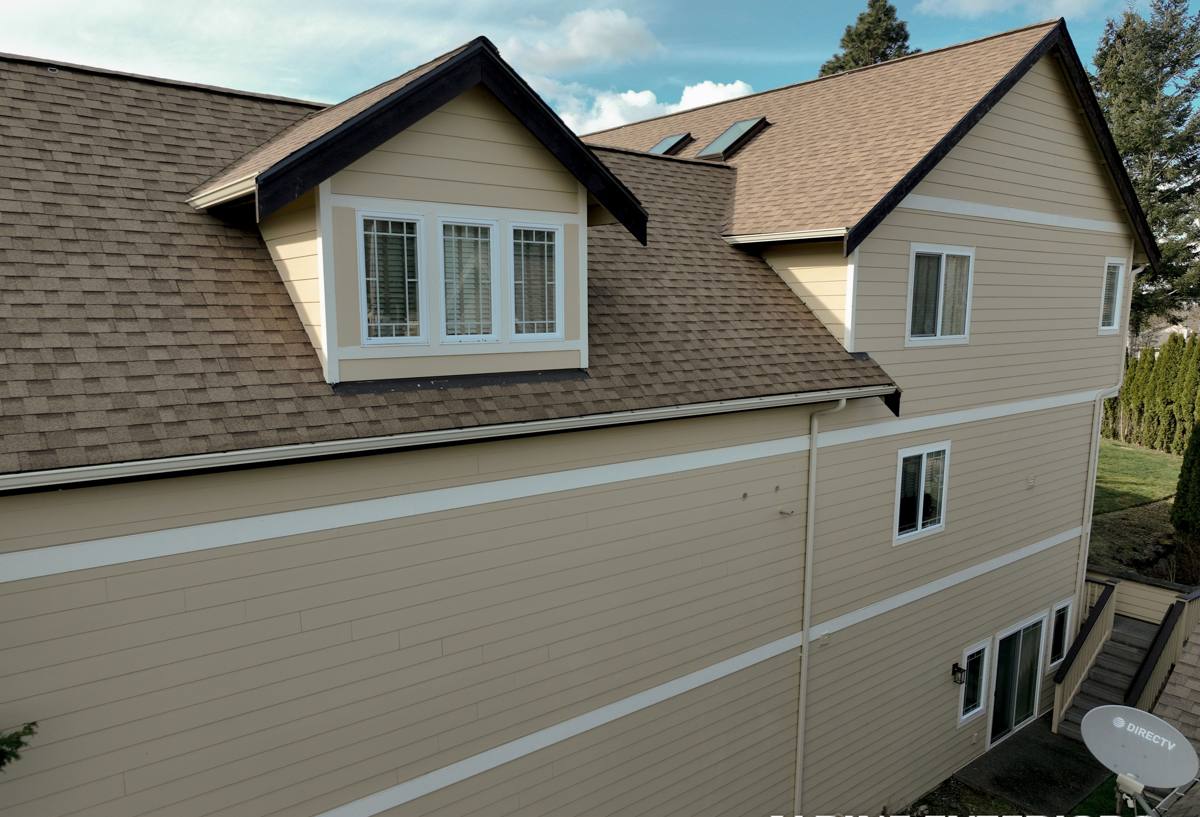
Why Salt Air, Rain, and Moss Wear Siding Down Faster Here
Salt Air and Fasteners
Airborne salt doesn't just sit on the surface of a wall — it works into seams, joints, and any exposed metal. Uncoated or poorly rated fasteners and trim pieces corrode faster near the water than they would ten or fifteen miles inland. Once a fastener starts rusting behind the cladding, the streaking and the structural weak point both show up on the outside of the house.
Driving Rain and Wall Assemblies
Wind off the Sound doesn't just fall as rain — it drives sideways into walls, especially on west- and southwest-facing elevations. That means water is pushed at seams and laps that would stay dry in a calmer climate. If the water-resistive barrier, flashing, and lap spacing behind the siding aren't done correctly, water finds its way behind the cladding instead of running off it.
Moss, Algae, and Shaded Lots
Many Oak Harbor properties sit under mature evergreens or have north-facing walls that stay damp for days after a storm. That's exactly the environment moss and algae need. Wood-based siding and some composite products give organic growth something to hold onto; the surface stays soft and porous even under a coat of paint. Over a few seasons that turns into streaking, soft spots, and paint that fails years ahead of schedule.
Why We Install James Hardie Fiber Cement Here — Not Other Brands
When we say "fiber cement siding" on this page, we mean James Hardie specifically. We don't install other fiber cement brands, and we don't install vinyl, LP SmartSide, or raw wood siding on any job, Oak Harbor included. That's a standard we apply company-wide, not a special rule for this area — but it happens to line up well with what this climate demands.
Hardie's fiber cement is non-combustible, dimensionally stable in wet-dry cycling, and comes with a factory-applied ColorPlus finish that resists fading and holds up better against moss and mildew growth than field-painted surfaces. Hardie also builds its boards to regional climate specifications — HZ5 for the colder, wetter zones that include western Washington — rather than shipping one generic product everywhere. For a marine climate like Oak Harbor's, that engineering matters more than it does in a drier region.
What a Correct Install Looks Like on an Oak Harbor Home
Flashing and Water Management First
Before a single piece of siding goes up, the wall needs a properly lapped water-resistive barrier, correctly flashed windows and doors, and kick-out flashing anywhere a roofline meets a wall. In a driving-rain climate, this hidden layer does more to keep a house dry over 30 years than the siding itself. Skipping or rushing it is the single biggest reason siding jobs fail early near the water.
Fasteners, Trim, and Metal Components
We use fasteners and trim rated for coastal exposure, not standard-grade hardware, and we follow Hardie's fastening specifications for lap spacing and nail placement. Corner boards, trim, and any exposed metal get matched to the same standard so one weak component doesn't undercut the rest of the wall.
Clearances and Ventilation
Fiber cement needs proper clearance from grade, roof lines, and decks, plus a rainscreen gap where the site calls for it, so bulk water and moisture vapor both have somewhere to go. On shaded, damp lots — common around Oak Harbor's tree-covered and waterside properties — that ventilation gap is what keeps moisture from sitting against the back of the board.
A quick checklist of what to expect from a correctly installed job:
- Water-resistive barrier lapped shingle-style, with all penetrations properly flashed
- Kick-out flashing at every roof-to-wall intersection
- Corrosion-rated fasteners and trim throughout, not just at visible seams
- Manufacturer-specified lap spacing and clearance from grade, decks, and roofing
- Rainscreen or ventilation gap on shaded and moisture-prone walls
- Factory-finished ColorPlus boards and trim, caulked and touched up per Hardie's spec, not generic paintable primer board
Our Process for Oak Harbor Jobs
Because Oak Harbor is across the water from our Anacortes base, we handle these jobs the same deliberate way we'd handle any coastal property: an in-person walk-around before we quote anything, so we can see the exposure, the existing siding condition, and any moisture damage that isn't visible from a photo. From there we scope the tear-off, confirm what's underneath (older Oak Harbor homes sometimes have layers of past repairs), and plan the water-resistive barrier and flashing work before we ever talk about color.
Material logistics get planned around ferry and bridge schedules so a job isn't waiting on a delivery truck, and we sequence work to avoid leaving a wall open ahead of a rain system whenever we can control it. None of that is unique to us — it's just what a crew that regularly works this side of Deception Pass plans for as a matter of course.
What Drives Cost on an Oak Harbor Fiber Cement Job
Every job is priced after a walk-around, but the same handful of factors move the number up or down on most Oak Harbor properties:
| Factor | Why It Matters Here |
|---|---|
| Existing siding to remove | Older homes near the water sometimes have multiple layers of past repairs or aging wood siding, adding tear-off time |
| Wall exposure and elevation | West- and southwest-facing walls facing open water often need more attention to flashing and sealing detail |
| Trim and architectural detail | Corner boards, window trim, and accent details add labor beyond flat wall panels |
| Moisture damage found during tear-off | Rot or water intrusion behind old siding needs repair before new siding can go on correctly |
| Home size and number of stories | More square footage and taller walls mean more material, staging, and labor |
| ColorPlus finish and accessory choices | Trim style and color selection affect material cost within Hardie's product lines |
We won't quote a number without seeing the house, but this is the short list of what typically moves an estimate.
Signs Your Current Siding Is Losing the Fight
Homeowners often wait until a problem is visible from the street, but there are earlier warning signs worth acting on:
- Green or black streaking on north-facing or shaded walls that comes back soon after cleaning
- Paint that's peeling, bubbling, or chalking noticeably faster than it should for its age
- Soft or spongy spots near the ground, around window sills, or below rooflines
- Visible gaps, warping, or cupping in individual boards
- Rust streaks below nail heads or trim fasteners
- A noticeable jump in heating bills, which can point to a wall assembly that's no longer sealing properly
Any one of these is worth a look. Several at once usually means the wall assembly, not just the paint, needs attention.
Why It Matters That We Already Work Oak Harbor
A contractor who treats Oak Harbor as an occasional out-of-town job will often use the same detailing they'd use on a sheltered inland property — because that's what they know. A crew that regularly works this stretch of the Salish Sea coastline has already seen which walls take the worst of the weather, which older homes tend to have hidden moisture damage behind the siding, and which fastener and flashing shortcuts fail first out here. That local pattern recognition is the difference between a siding job that looks right for a season and one that holds up for decades.
It also means straightforward logistics: we're not estimating travel time and material delivery on the fly, and we're not learning the local permitting and inspection expectations for the first time on your project.
Living With Fiber Cement Siding After Install
One of the practical advantages of Hardie's factory-finished ColorPlus boards in a climate like this is how little upkeep they ask for compared to field-painted wood or composite siding. There's no repainting cycle to plan around. That said, coastal homes still benefit from an occasional rinse to clear salt residue and debris out of laps and trim, and gutters should be kept clear so runoff isn't sheeting down a wall during heavy storms. Keeping tree branches and shrubs trimmed back from the siding also helps limit the shaded, damp conditions that moss prefers.
If your Oak Harbor home's siding is showing its age, or you're planning ahead of the next wet season, we're happy to walk the property with you and give you a straight, no-pressure estimate — no obligation, just an honest look at what your walls need.