 Anacortes
 Oak Harbor's Siding Problem Isn't Like Inland Washington's
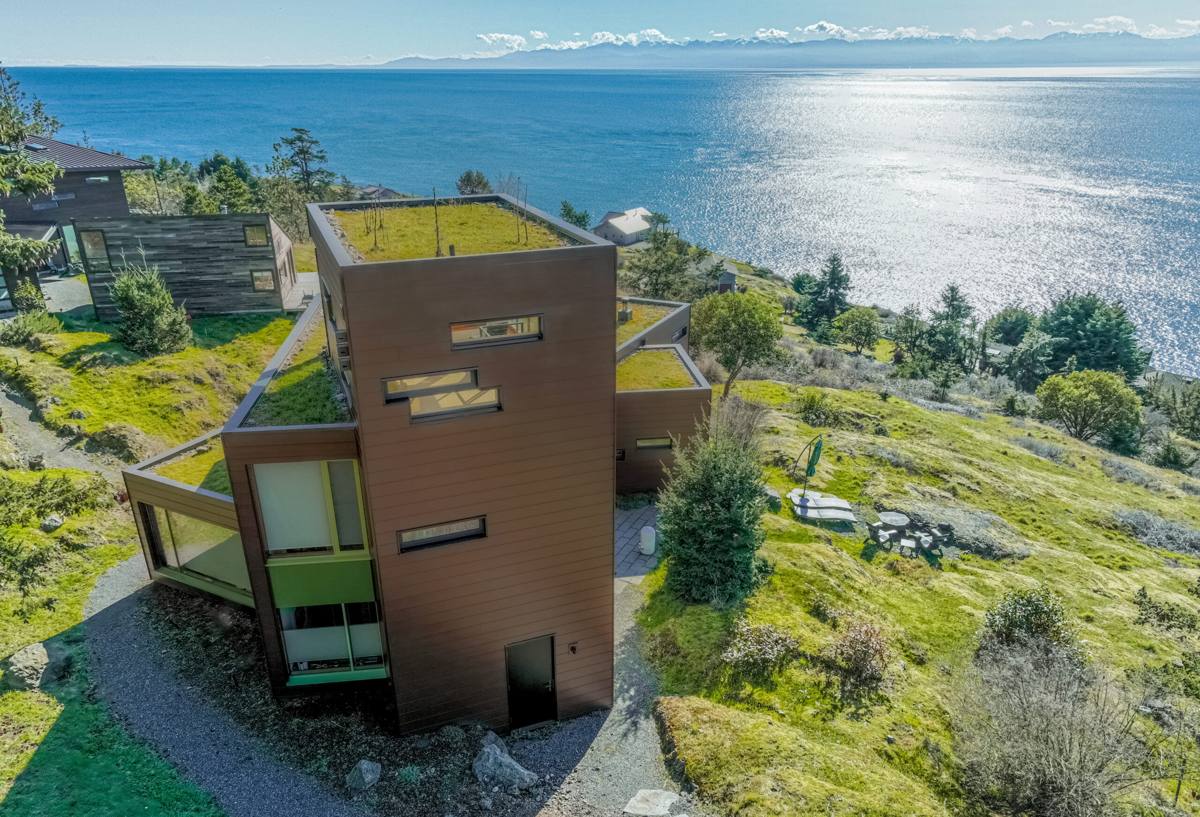
Homes near Oak Harbor sit close enough to open water that siding takes a different kind of beating than a house twenty miles inland. Salt-laden air off the Salish Sea works on fasteners, trim, and paint film year-round. Wind-driven rain off the Strait gets pushed sideways into wall assemblies during winter storms, not just straight down. And the long, gray, wet stretch from fall through spring gives moss and algae months to establish themselves on anything shaded or north-facing. Individually, none of these are dramatic. Together, over ten or fifteen years, they're what separates a wall that still looks sharp from one that's chalky, streaked, and soft at the bottom edge.
We work this corner of Skagit and Island County regularly, and the failure patterns we see on older siding are consistent enough to predict: corrosion around fastener heads and hose bibs, paint failure on south and west exposures that take direct salt spray and sun, and green-black staining creeping up from grade or down from gutters on shaded elevations. A siding choice and installation approach that ignores this is a shorter-lived siding job, full stop.
What Salt Air, Driving Rain, and Moss Actually Do to a Wall
Salt Air
Airborne salt is hygroscopic — it pulls moisture out of the air and holds it against whatever surface it lands on. On uncoated or poorly coated fasteners and metal trim, that means accelerated corrosion. On painted wood or engineered wood products, it means the paint film is under near-constant low-grade moisture stress, which shortens repaint cycles and can push moisture into the substrate at nail heads, laps, and cut edges.
Driving Rain
Rain that arrives at an angle, pushed by wind off the water, doesn't behave like rain falling straight down. It gets forced up under laps, into gaps around trim, and into any joint that isn't properly flashed or caulked. A siding system with generous, weather-tight laps and a water-management plan behind it handles this fine. A system installed with tight laps, missing flashing, or reliance on caulk as the primary water barrier does not — it's just a matter of which winter the leak shows up.
Moss and Algae
Skagit and Island County get enough overcast, damp days each year that anything shaded — north walls, areas under trees, spots that don't get afternoon sun — stays wet longer than it should. Organic material (wood, and to some extent the paper facings and paint chalk on lower-quality siding products) gives moss and algae something to root into. Once established, moss holds moisture against the wall surface even longer, which speeds up whatever decay or paint failure is already underway.
Why James Hardie Fiber Cement Is What We Put on Coastal Homes
We install James Hardie exclusively — not as a sales pitch, but because after years of doing exterior work on the water side of Skagit County, it's the product system that holds up to this specific combination of salt, rain, and moss without asking the homeowner to fight it every year.
It's Not Wood or Wood-Based
Hardie siding is fiber cement — cellulose fiber, sand, and cement, cured into a dense, stable board. It doesn't rot, and it doesn't feed moss or fungus the way wood or wood-fiber products can. That matters directly here: a shaded, damp north wall on a Hardie house stains on the surface, where it can be washed off. On a wood-based product, the same conditions can work into the material itself.
HZ5 Engineering for This Climate
James Hardie makes region-specific products, and the Pacific Northwest falls under their HZ5 (HardieZone 5) engineering, which accounts for wetter, cooler climates. It's not a marketing label — the formulation and testing behind it are built around exactly the freeze-thaw and moisture-cycling conditions this part of Washington sees.
ColorPlus Factory Finish
Most of what we install uses Hardie's ColorPlus finish — a baked-on, factory-applied coating that's more UV- and weather-stable than field-applied paint, with a longer warranty on the finish itself. In a salt-air environment where field-painted surfaces tend to chalk and fade faster, starting with a factory finish engineered for exterior durability is a real advantage, not a cosmetic one.
Non-Combustible
Fiber cement doesn't burn. That's less about coastal weather and more about the fact that wildfire smoke and ember exposure have become a real consideration for Western Washington homeowners in recent summers — it's a benefit that comes along with the product, not the reason we chose it, but worth knowing.
Siding Materials at a Glance
| Factor | James Hardie Fiber Cement | Vinyl | Untreated Wood / Cedar |
|---|---|---|---|
| Behavior in salt air | Stable; factory finish resists chalking and fading | Can become brittle, discolor over time | Prone to accelerated weathering, finish failure |
| Response to driving rain (properly installed) | Engineered lap system, moisture-resistant core | Water-managed but can warp, gap at seams | Absorbs moisture at joints, end grain, fasteners |
| Susceptibility to moss/algae | Low; surface can be cleaned, doesn't feed growth | Low growth risk, but staining shows on plastic surface | High; organic material holds and feeds moisture |
| Fire rating | Non-combustible | Melts, contributes fuel | Combustible |
| Typical repaint/refinish cycle | Long — factory finish rated in decades | Doesn't repaint well if it fades | Every 3-7 years in this climate |
What a Correct James Hardie Installation Involves Here
The product is only half the equation. Most siding failures we get called out to inspect — on any brand — trace back to installation shortcuts, not the material itself. In a driving-rain environment like Oak Harbor's, the details matter more than usual.
- Weather-resistive barrier installed correctly — lapped shingle-style, sealed at seams and penetrations, before siding goes on.
- Rainscreen or drainage gap where conditions call for it, so any water that does get behind the siding can drain and dry instead of sitting against the wall sheathing.
- Correct fasteners — corrosion-resistant, hand-driven or gun-set to Hardie's specified depth, never overdriven, which is one of the most common field mistakes and a real problem in salt air if the wrong fastener is used.
- Proper flashing at windows, doors, deck ledgers, and any horizontal trim — not caulk standing in for flashing.
- Correct lap and gap dimensions per Hardie's installation specs, which are stricter than "looks about right."
- Clearance from grade, roofing, and decks so siding isn't sitting in a moisture trap from day one.
- Caulking used as a secondary seal, not a primary water barrier — caulk fails first, and a wall that depends on it is a wall waiting to leak.
Hardie's own warranty terms are stricter about installation than most homeowners realize — get the fastening, flashing, or clearances wrong and you can end up with a product-level defect claim that goes nowhere. Following the spec isn't optional if you want the warranty to mean anything.
How We Approach an Oak Harbor Project
- On-site assessment. We look at exposure — which walls take direct wind-driven rain, which stay shaded and damp, where existing moss or staining is already showing, and what condition the sheathing and framing are in once old siding comes off.
- Water management plan first. Before a single piece of Hardie goes up, we confirm the weather-resistive barrier, flashing details, and drainage approach are right for that specific house and its exposure.
- Installation to Hardie's published spec. Fastener type and spacing, lap dimensions, clearances — done the way the manufacturer requires, not the way that's fastest.
- Trim and flashing details finished properly. Windows, corners, and penetrations are where most failures start, so these get the most attention, not the least.
- Final walk-through. We go over what was done, what maintenance to expect, and answer questions before we consider the job finished.
Living With Hardie Siding in a Salt Air, Moss-Prone Climate
Fiber cement is low-maintenance, not no-maintenance. A little attention keeps it looking like a new install for years longer:
- Rinse siding with a garden hose (not a pressure washer aimed directly at seams) once or twice a year, more often on shaded north walls where moss and algae show up first.
- Keep gutters clear and functioning — overflowing gutters are one of the most common causes of localized staining and moisture problems on any siding, and it's an easy fix.
- Trim back vegetation and tree cover that keeps a wall shaded and damp longer than the rest of the house.
- Check and refresh caulking at trim joints and penetrations periodically — it's a secondary seal, but a failed one is still worth catching early.
- Address any impact damage (a stray branch, equipment bump) promptly rather than letting a small chip become a moisture entry point.
Why It Matters to Hire a Crew That Already Works This Area
Siding installation isn't identical from one climate to the next, and a crew that mostly works drier inland areas doesn't always think in terms of wind-driven rain angles, salt exposure, or which elevations of an Oak Harbor home are going to fight moss for eight months a year. Knowing that going in changes real decisions — where extra flashing attention goes, whether a rainscreen gap makes sense for a given wall, which fastener spec actually holds up. A crew that's done this work up and down this stretch of water isn't guessing at those calls.
It also means fewer surprises during the job itself. Coastal-adjacent homes often have older assemblies underneath — sheathing, old flashing, sometimes moisture damage from a prior siding system that wasn't managing water correctly. A crew familiar with what's commonly found under siding in this area knows what to look for and how to address it before new Hardie siding goes over top of a problem instead of fixing it.
If you're planning a siding project for a home near Oak Harbor and want a straight answer about what your walls actually need, we're happy to take a look. Fill out the form below for a free, no-pressure estimate — no obligation, just an honest read on your home's exposure and what a correct James Hardie installation would involve.