 Anacortes
 Siding Installation Built for an Oak Harbor Address
Homes around Oak Harbor sit close to open water, which means the siding on them is doing a harder job than siding on a house forty miles inland. Salt-laden air, wind-driven rain that finds every gap in a wall assembly, and a moss season that can stretch from fall through spring all put steady pressure on exterior materials. A siding installation here isn't just about picking a color and nailing up panels — it's about building a wall system that can shed water, resist moisture intrusion, and hold up to salt exposure for decades without curling, rotting, or trapping water behind it.
We work throughout the greater Anacortes area, including Oak Harbor and the surrounding North Puget Sound coastline, and we've built our installation process around what actually happens to siding in this specific environment — not a generic national playbook.
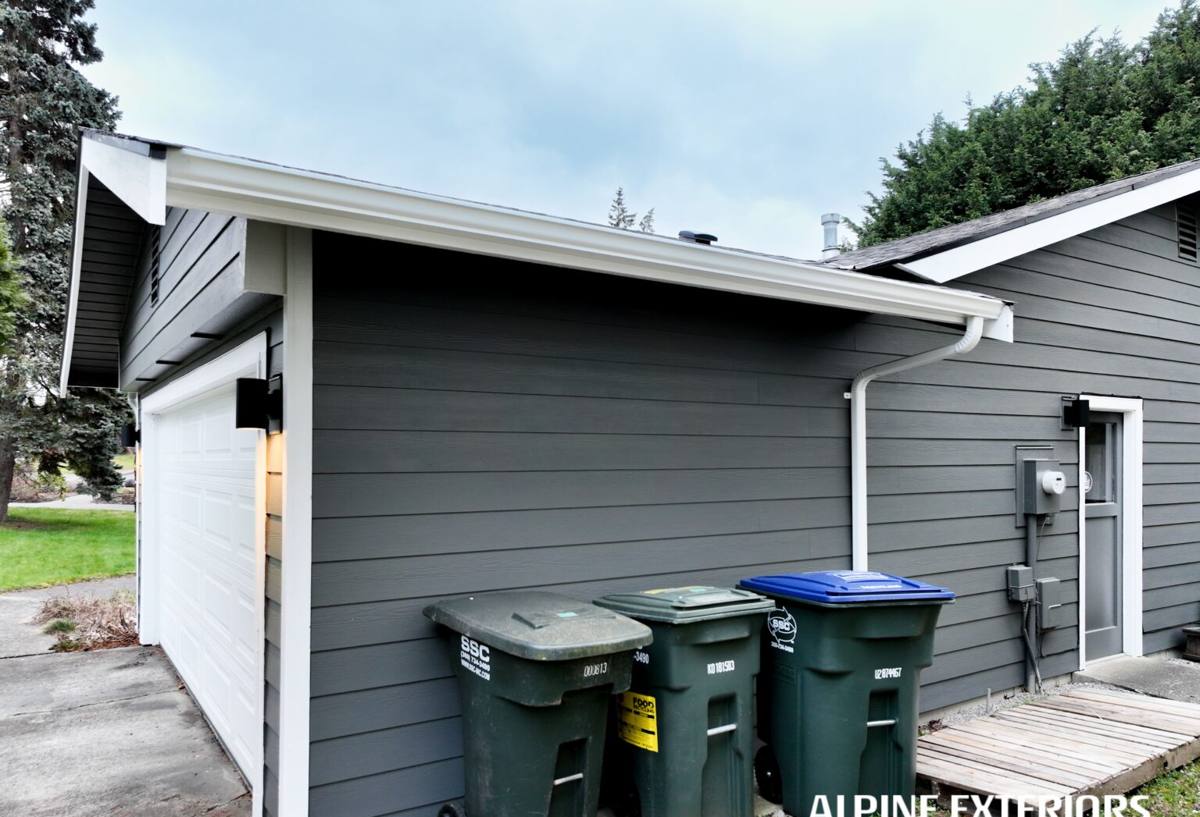
What Coastal Exposure Actually Does to Siding
It helps to understand the specific stresses at play before talking about the fix.
Salt Air
Airborne salt is corrosive to metal fasteners, flashing, and trim, and it accelerates the breakdown of finishes that aren't engineered to resist it. Over years, salt exposure can chalk, fade, or degrade lower-grade coatings and speed up corrosion on any exposed steel components.
Driving Rain
Storms coming off the water don't fall straight down — wind pushes rain sideways and up under laps, trim, and penetrations. A siding system that relies on caulk and paint alone to keep water out will eventually fail here. The wall needs a drainage plane and flashing details that assume water will get behind the cladding and give it a way back out.
Moss and Sustained Moisture
Cool, damp, shaded conditions for much of the year create ideal moss and algae growth on north-facing walls, under eaves, and anywhere air can't circulate. Moss holds moisture against the surface longer than open air would, which is hard on materials that swell, rot, or delaminate when they stay wet.
None of this means Oak Harbor is a bad place to own a home — it just means siding installation here has to account for water management first and cosmetics second.
What a Correct Siding Installation Actually Involves
A lot of what determines whether siding lasts 10 years or 40 happens before a single piece of cladding goes up. The visible panel is the last layer of a system, and every layer underneath it matters just as much.
- Tear-off and inspection: removing old siding to check the sheathing for rot, soft spots, or prior water damage before anything new goes on
- Sheathing repair: replacing any damaged OSB or plywood rather than covering it up
- Weather-resistive barrier: a properly lapped house wrap or building paper installed shingle-style so water drains down and out, not into the wall
- Flashing at every penetration: windows, doors, hose bibs, vents, and light fixtures each need integrated flashing, not just a bead of caulk
- Rainscreen or drainage gap where called for: a small air gap behind the siding lets bulk water drain and the wall dry out instead of staying saturated
- Correct fastening: the right fastener type, spacing, and depth for the specific siding product — over-driven or under-driven fasteners are one of the most common causes of early siding failure
- Manufacturer-specified clearances: proper gaps at grade, roof lines, decks, and trim so the bottom edge of the siding isn't sitting in standing water or snow
- Caulking and sealant only where the manufacturer calls for it — not as a substitute for flashing
Skipping or rushing any one of these steps is usually invisible on installation day and expensive five or ten years later, once water has had time to work behind the wall.
Our Installation Process
We keep the process straightforward and transparent from the first visit to the final walkthrough.
- On-site assessment: we look at your home's current siding, sheathing condition, trim, and any problem areas — particularly north- and west-facing walls that take the brunt of coastal weather
- Written estimate: a clear scope of work, product selection, and cost breakdown, with no pressure to decide on the spot
- Tear-off and sheathing check: removal of existing siding and repair of any compromised sheathing before house wrap goes on
- Weather barrier and flashing installation: the water-management layer that does most of the real work over the life of the siding
- Siding installation to manufacturer specification: correct fastener schedule, clearances, and joint treatment for the specific James Hardie product line being installed
- Trim, caulking, and paint touch-up: finishing details completed to match the ColorPlus or field-applied finish
- Final walkthrough: we go over the completed work with you and address anything before calling the job done
Why We Install Only James Hardie Fiber Cement
We made a decision as a company to install one siding system: James Hardie fiber cement. That's not a marketing angle — it's a standard we hold because of what we've seen coastal weather do to other materials over time.
Vinyl siding is affordable and low-maintenance in mild climates, but it can warp or distort under sustained heat exposure and can become brittle in cold snaps; more relevant here, it relies almost entirely on the drainage plane behind it because the panels themselves aren't a moisture barrier. Wood-based products like LP SmartSide or primed spruce and cedar look great when new, but they're organic materials, and organic materials are exactly what moss, algae, and sustained moisture are hardest on — any lapse in caulking or finish maintenance opens the door to swelling and rot. Fiber cement alternatives like Cemplank or Allura are closer to Hardie in composition, but we standardized on Hardie specifically for its HZ5 formulation (engineered for wetter, milder climates like ours), its factory-applied ColorPlus finish, and the strength of its transferable warranty.
Hardie fiber cement is non-combustible, doesn't rot, and doesn't provide a food source for moss and algae the way wood-based products can. It won't warp from heat or crack from cold the way vinyl can. That combination is why it holds up to salt air and driving rain better than most alternatives we could install instead.
Signs Your Oak Harbor Home's Siding Needs Attention
Homeowners often wait too long to address siding problems because early signs look cosmetic rather than structural. Watch for:
- Soft or spongy spots when you press on the siding, especially near the bottom courses
- Persistent moss or algae staining that comes back within weeks of cleaning
- Visible gaps, warping, or buckling in panels, particularly on walls facing prevailing wind and rain
- Paint that's peeling or bubbling in a pattern that suggests moisture trapped behind the surface, not just age
- Rising energy bills with no other explanation, which can point to a failing weather barrier letting in drafts and moisture
- Visible fastener corrosion or streaking below nail heads
Any one of these on its own isn't necessarily an emergency, but they're worth a professional look before the next wet season.
Comparing Siding Options for Coastal Exposure
This is a general comparison of how common siding materials tend to perform under the specific conditions Oak Harbor sees — salt air, driving rain, and long moss seasons. It's meant as a reference, not a sales pitch; every material has legitimate uses depending on budget and priorities.
| Material | Moisture/Rot Resistance | Salt Air Durability | Moss Resistance | Typical Lifespan |
|---|---|---|---|---|
| James Hardie fiber cement | High — non-organic, won't rot | High — engineered finish holds up well | High — no organic material for growth to feed on | 30+ years with proper install |
| Vinyl siding | Moderate — relies on drainage plane behind it | Moderate — can chalk or fade over time | Moderate — smooth surface but seams can trap debris | 20-30 years |
| Wood/LP SmartSide/cedar | Lower — organic material, needs consistent maintenance | Lower — finish maintenance is critical near salt air | Lower — organic surface can support growth if not maintained | 15-25 years with diligent upkeep |
The gap between materials widens the closer a home sits to open water and the less consistent the maintenance schedule. That's the core reason our installations lean on a material that doesn't depend on perfect upkeep to hold up.
Cost Factors for Siding Installation
Every home is different, but the same variables tend to drive cost up or down on most Oak Harbor projects:
| Factor | Why It Matters |
|---|---|
| Sheathing condition | Rot or water damage found during tear-off adds repair scope before new siding can go on |
| Home size and complexity | More corners, dormers, and trim detail mean more labor and material cuts |
| Siding profile chosen | Lap, shingle, and panel styles vary in material and install time |
| Story height and access | Multi-story walls and difficult access require more scaffolding or lift time |
| Trim and finish detail | Custom trim, corner treatments, and ColorPlus options affect final cost |
We give straightforward written estimates that break these factors down so you know exactly what you're paying for and why.
Why Local Experience Matters for This Job
Siding installation isn't a job you can do the same way everywhere and get the same result. A crew that mostly works drier, inland climates can do technically fine work and still get water management details wrong for a place like Oak Harbor, where wind-driven rain and salt air are constants rather than occasional weather events. Knowing which walls take the worst of the weather, how much drainage capacity a wall assembly actually needs here, and which flashing details matter most in this specific environment comes from doing this work locally, on homes like yours, season after season.
That local pattern recognition is part of what you're paying for when you hire a crew that already works this area — not just the labor to hang panels, but the judgment to build the wall assembly correctly the first time.
If your Oak Harbor home needs new siding or you're planning ahead for a project, we're happy to take a look and walk you through what your home specifically needs. There's no pressure and no obligation — just a straightforward, honest assessment and a written estimate you can take your time with.