 Anacortes
 Oak Harbor's Marine Climate Is Tough on Windows
Oak Harbor sits right on the water, just across Deception Pass from Anacortes, and that location cuts both ways. The views are hard to beat, but the same marine air that makes the area beautiful is steadily working against every window in the house. Salt-laden air off the Sound corrodes aluminum hardware, pits vinyl cladding over time, and accelerates rust on screws, hinges, and balance springs that a drier inland climate would barely touch.
Add in driving rain that comes in sideways during fall and winter storms, and you've got wind-driven water testing every seal, sill, and flashing detail on the house. Then there's moss season, which in this part of Western Washington isn't really a season at all — it's most of the year. Moss and algae hold moisture against wood trim, sills, and casings long after a normal rain would have dried out, which is exactly the kind of sustained dampness that leads to rot around window openings.
None of this means Oak Harbor homes need exotic solutions. It means window replacement here has to account for salt exposure, wind-driven rain, and near-constant moisture in a way that a generic install job often doesn't.
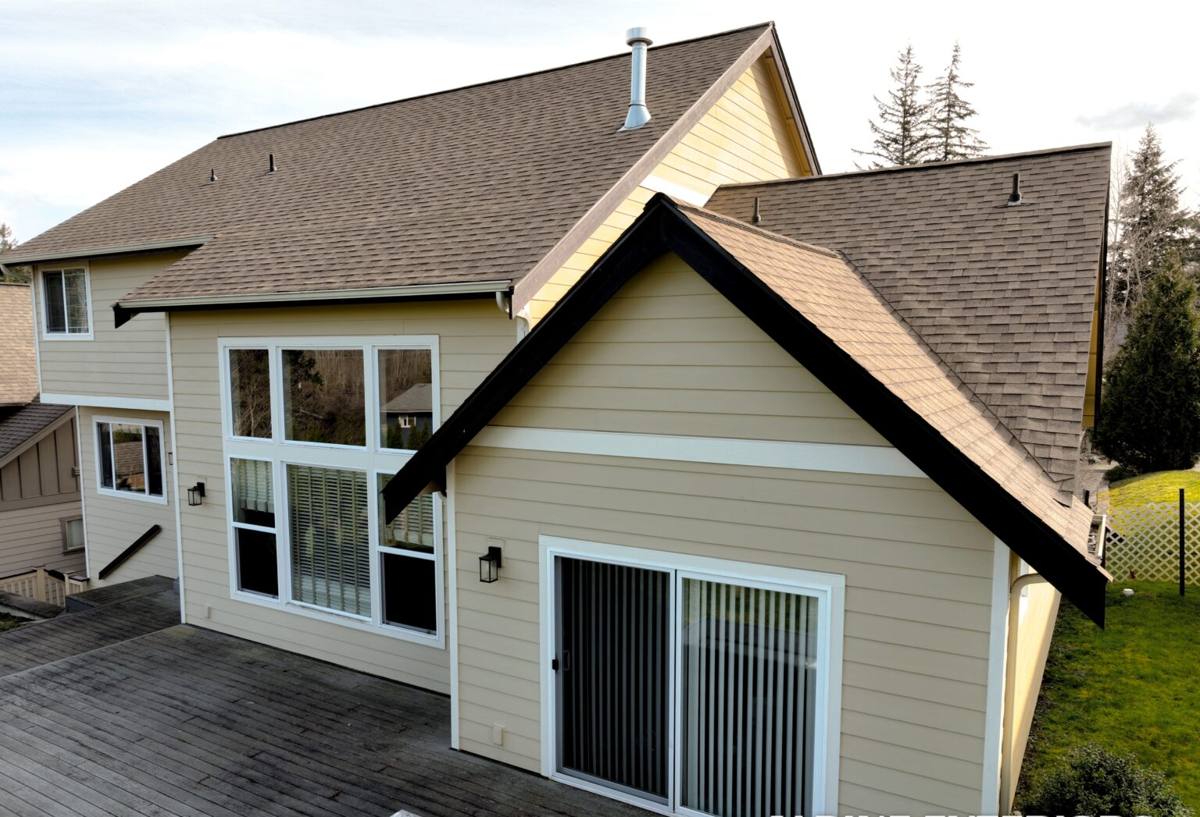
Signs Your Oak Harbor Home Needs Window Replacement
Windows rarely fail all at once. They fail slowly, and homeowners often adjust to the drafts, the sticking sash, or the foggy glass without realizing it's a sign of a bigger problem underneath.
- Fogging or a permanent haze between panes of double-glazed glass (the seal has failed and the gas fill is gone)
- Windows that are hard to open, close, or lock — often a sign the frame has racked or the balance mechanism has corroded
- Visible gaps, drafts, or a cold wall around the window frame during winter or storms
- Soft, discolored, or spongy wood on the sill, jamb, or exterior trim
- Paint that keeps failing on the trim no matter how often it's redone
- Persistent condensation on the inside of the glass, especially in colder months
- Visible moss or dark staining creeping onto the window trim from the roofline or siding above
Any one of these on its own might just need a repair. Several of them together, especially on a home more than 20 years old, usually mean it's time to talk about replacement rather than patching.
Why Waiting Costs More Here
In a drier climate, a failing window can sit for a season or two without much consequence. In Oak Harbor's climate, a gap around a window frame is an invitation for wind-driven rain to get behind the trim and into the wall assembly. Once water is tracking behind siding or trim, the damage is happening where you can't see it, and by the time it shows up as a soft spot or a stain, the repair has usually grown from "replace a window" to "replace a window and rebuild the framing around it."
What a Correct Window Replacement Job Actually Involves
A window replacement is only as good as the parts nobody sees once the trim goes back on. The window unit itself matters, but in this climate the installation details matter just as much, if not more.
Flashing and Weather-Resistive Barrier
Every opening needs to be flashed so that any water that does get past the window sheds down and out, never inward. That means proper sill pan flashing, correctly lapped side and head flashing, and integration with the house's weather-resistive barrier — not just a bead of caulk around the edge. This is the single biggest difference between a window that lasts 20+ years in a coastal climate and one that starts leaking within a few winters.
Sealing and Insulation
The gap between the window frame and the rough opening needs to be sealed and insulated correctly, using materials that won't compress, sag, or trap moisture over time. Overfilling with the wrong expanding foam can actually bow window frames and cause operational problems, so this step takes some judgment, not just a can of spray foam.
Fastening and Hardware
Given the salt exposure here, fastener and hardware selection matters more than it would inland. Corrosion-resistant screws and properly rated hardware cost a little more up front and save a lot of headaches down the road when hinges and locks are still working smoothly after a decade of salt air.
Choosing the Right Window for a Coastal, Wet Climate
There's no single "best" window material for every home, but some perform more predictably than others in salt air and constant moisture. Here's how the common options generally compare for this specific climate.
| Frame Material | How It Handles Salt Air & Rain | Maintenance |
|---|---|---|
| Vinyl | Won't rust or rot; UV and salt exposure can cause gradual fading over many years | Low — occasional cleaning, no painting |
| Fiberglass | Very stable dimensionally, resists moisture and corrosion well | Low — durable finish, rarely needs attention |
| Aluminum | Strong but prone to corrosion and pitting in salt air unless well-coated; conducts cold, which can increase condensation | Moderate — coatings need monitoring over time |
| Wood / Wood-Clad | Handsome, but exterior wood is the most vulnerable to the region's rain and moss exposure without diligent upkeep | High — regular painting/sealing and moisture monitoring |
We don't install every material on that list, and that's a deliberate call rather than a knock on any manufacturer. Bare exterior wood asks for a level of upkeep that most owners here don't want to sign up for given how much of the year this area stays damp, and uncoated or lower-grade aluminum can start showing corrosion issues faster than most homeowners expect. We focus on materials that hold up with reasonable, ordinary maintenance in a marine climate — we'll walk through the honest trade-offs for your specific home rather than pushing one option across the board.
Full-Frame vs. Insert Replacement
There are two general approaches to replacing a window, and which one is right depends on the condition of what's already there.
Insert (Pocket) Replacement
The new window is built to fit inside the existing frame, which stays in place. It's faster and less invasive, and it works well when the existing frame, sill, and surrounding structure are still sound and dry.
Full-Frame Replacement
The old window and its frame come out entirely, exposing the rough opening down to the framing. This is the right call when there's any sign of rot, water damage, or a frame that's already out of square — which, given the climate here, is more common on older Oak Harbor homes than owners often expect. Full-frame replacement costs more and takes longer, but it's the only way to actually address hidden moisture damage instead of building a new window on top of it.
Part of our job on the initial visit is figuring out honestly which approach your home actually needs — not defaulting to the faster, cheaper option if the wall behind the window doesn't support it.
Our Window Replacement Process
- On-site assessment: We look at each window individually — frame condition, signs of moisture intrusion, and how the current windows are performing — rather than quoting from a photo or a phone call.
- Honest scope and options: We walk through insert vs. full-frame needs window by window, and explain material trade-offs in plain terms.
- Written estimate: Clear scope, materials, and timeline before any work starts — no surprise change orders for things we could have caught up front.
- Removal and flashing: Old units come out carefully, any hidden damage gets addressed, and every opening is flashed correctly before the new window goes in.
- Installation and sealing: New units are set plumb and square, insulated and sealed with materials suited to this climate.
- Trim and cleanup: Exterior and interior trim finished to match the home, site cleaned up, and old units hauled away.
- Final walkthrough: We check operation on every window with you before calling the job done.
What Affects the Cost
Every home is different, so exact pricing comes from an on-site look, but the main variables that move the number are consistent from job to job.
| Factor | Why It Matters |
|---|---|
| Insert vs. full-frame replacement | Full-frame involves more labor and often exposes framing repairs |
| Frame material and glass package | Fiberglass and upgraded glass (low-E, additional panes) cost more than basic vinyl |
| Number and size of windows | Larger openings and whole-house jobs have different labor and material needs than a single window |
| Hidden moisture or rot repair | Damaged framing found once the old window is out adds material and labor |
| Trim and exterior finish work | Matching existing siding or trim details takes more time than a standard cap |
As a very rough starting point, most single-window replacements on homes in this area fall somewhere in the low-to-mid hundreds to around a thousand dollars per window installed, with full-frame work and larger or specialty windows running higher. Treat that as a general planning range, not a quote — the only way to get an accurate number is a walkthrough of your specific windows.
Why a Crew That Already Works Oak Harbor Matters
Window replacement isn't just a product install — it's a judgment call, window by window, about flashing details, moisture history, and how a given wall assembly is likely to behave in this specific climate. A crew that regularly works homes in Skagit and Island County has already seen how salt air, wind-driven rain, and long wet stretches actually play out on real houses in this area, not just in a training manual.
That familiarity shows up in small but important ways: knowing to check certain sill areas more closely on homes of a certain age, recognizing early moss and moisture staining before it becomes a structural issue, and not being surprised by what's behind the trim once a window comes out. It also means showing up prepared for the weather instead of losing days to conditions a crew unfamiliar with the area might not have planned around.
After Installation: Keeping New Windows Performing
New windows correctly installed should need very little from you, but a few habits go a long way in this climate.
- Rinse accumulated salt residue off frames and glass periodically, especially on sides facing open water or prevailing wind
- Keep gutters and downspouts clear so roof runoff isn't sheeting down across window heads
- Trim back vegetation or moss growth that's holding moisture against trim or siding near window openings
- Operate each window a few times a season, even ones you rarely open, to keep hardware moving freely
- Watch for any new condensation, drafts, or sticking, and address it early rather than waiting
If your windows are drafty, fogged, hard to operate, or showing soft trim, it's worth having someone take an honest look before another wet season adds to the damage. We offer free, no-pressure estimates for Oak Harbor homeowners — use the form below to get a straightforward assessment of what your windows actually need.