 Anacortes
 Ship Harbor Sits Right at the Edge of the Weather
Homes near Ship Harbor face a different set of conditions than houses a few miles inland in Anacortes. Being close to the water on Fidalgo Island means more direct exposure to salt-laden air, steadier wind off the Strait, and driving rain that hits siding sideways instead of falling straight down. Add the shade from mature evergreens common in this part of Skagit County, and you get long stretches where exterior walls simply don't dry out between storms. That combination — salt, wind-driven moisture, and shade — is exactly the kind of environment that separates siding materials that hold up for decades from siding that starts failing within a handful of years.
This page focuses specifically on fiber cement siding for Ship Harbor properties: what the climate demands of it, what a correct installation actually involves, and why we only install James Hardie products rather than the cheaper alternatives you'll see marketed for coastal homes.
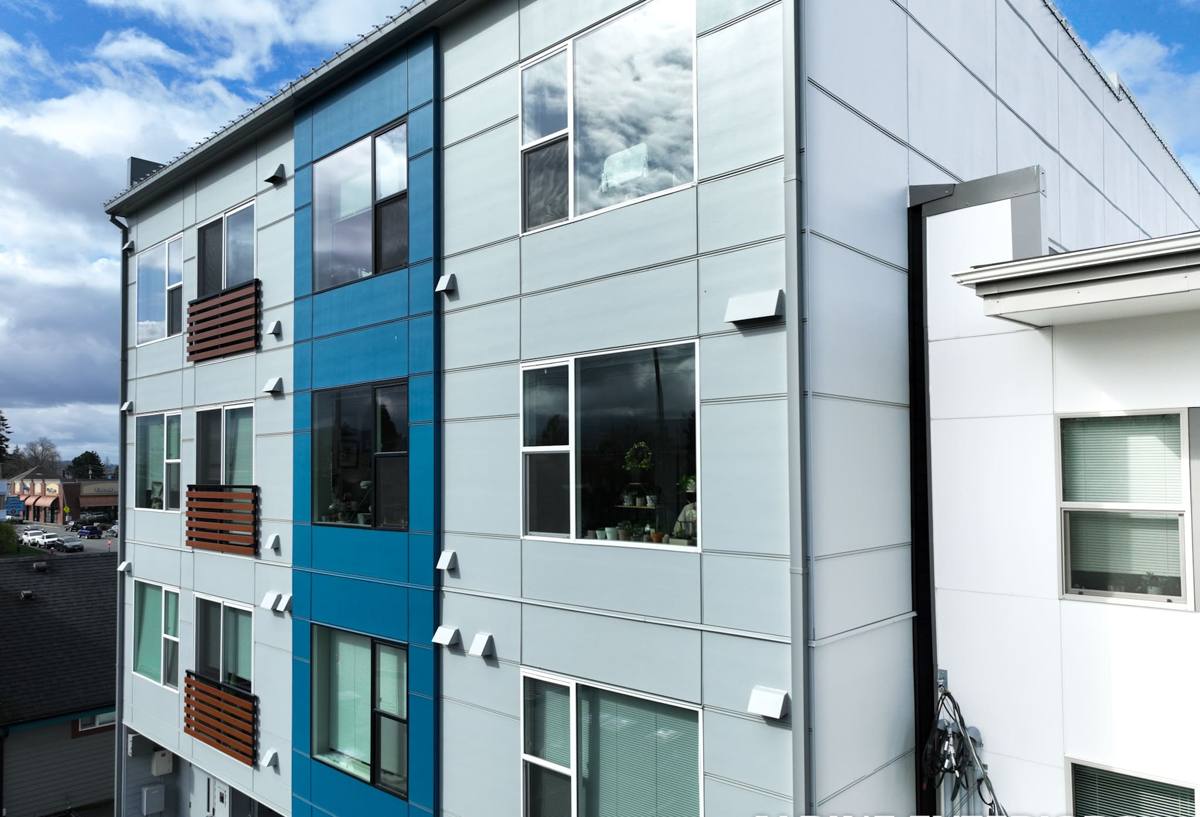
What Marine-Adjacent Siding Actually Has to Withstand
Salt Air and Corrosion
Airborne salt doesn't just affect metal — it accelerates the breakdown of paint films, caulking, and lower-grade composite materials over time. Fasteners, trim, and any exposed edges take the brunt of it. Materials that aren't engineered for coastal exposure tend to show chalking, fading, and edge deterioration noticeably faster near the water than they would a few miles inland.
Moss and Algae in Shaded, Damp Areas
North-facing walls and anything shaded by trees near Ship Harbor stay damp far longer after a storm than sun-exposed sides of the same house. That extended dampness is exactly what moss and algae need to take hold. Once organic growth establishes itself on a wall, it holds moisture against the surface constantly, which accelerates rot in wood-based products and stains lower-quality siding in ways that pressure washing only partially fixes.
Wind-Driven Rain
Wind off the water doesn't let rain fall straight down — it pushes it sideways and up under laps, trim, and penetrations. Siding systems that rely on gravity alone to shed water, or that have loose-fitting laps and gaps, let moisture work its way behind the cladding. Once water gets behind the siding, the problem usually isn't visible until it's already caused damage to sheathing or framing.
Why We Install Only James Hardie Fiber Cement
We don't install vinyl, LP SmartSide, cedar, primed spruce, or other fiber cement brands. That's a deliberate standard, not a sales pitch. In a marine-adjacent environment like Ship Harbor, the material differences that are easy to overlook inland become the difference between siding that lasts and siding that needs early repair:
| Material | How it holds up near salt air and moisture |
|---|---|
| Vinyl | Doesn't rot, but can warp or become brittle with temperature swings, and seams/laps can loosen over time, letting wind-driven rain track behind panels |
| LP SmartSide (engineered wood) | Wood-based core is vulnerable to moisture intrusion at cut edges and joints; consistent dampness from shade and salt air increases that risk |
| Cedar / primed spruce | Natural wood requires ongoing sealing and maintenance; damp, shaded conditions accelerate rot and repainting cycles |
| Other fiber cement brands | Fiber cement as a category resists moisture and pests well, but factory finish quality, warranty structure, and climate-specific product engineering vary by manufacturer |
| James Hardie fiber cement (ColorPlus) | Non-combustible, engineered for regional climate exposure, factory-baked finish resists fading and moisture better than field-applied paint |
James Hardie is the only manufacturer we've standardized on because their fiber cement is engineered specifically for climate zones, their ColorPlus factory finish process holds color and resists moisture better than paint applied on-site, and their warranty is structured to transfer with the home — which matters to homeowners who may sell within the product's lifespan.
What Correct Installation Requires in This Climate
Fiber cement siding is only as good as the installation behind it. In a wind-driven-rain environment, the details that get skipped on a rushed job are exactly the details that cause failures a few years later.
Flashing and Water Management
Every window, door, and penetration needs properly lapped flashing so water is directed out and down, never trapped behind the cladding. Kickout flashing where roof lines meet walls is a detail that's easy to miss but critical near a coastline — without it, roof runoff gets funneled directly into the wall assembly instead of into the gutter.
Drainage Gap Behind the Siding
A ventilated gap between the siding and the water-resistive barrier gives any moisture that does get past the outer layer a path to drain and dry out, rather than sitting against the sheathing. This matters more in a shaded, damp microclimate like parts of Ship Harbor than it would on a dry, sun-exposed lot.
Fastening and Fit
James Hardie specifies fastener type, placement, and spacing for a reason — under-driven or over-driven nails, or the wrong fastener material, create weak points where moisture and salt air do the most damage. Panels and planks also need correct gaps at butt joints and trim to allow for expansion without forcing water into seams.
Caulking and Sealant Practices
Not every joint should be caulked — some are designed to be left open as part of the drainage plane. Sealing the wrong joints traps moisture; leaving the wrong joints open lets wind-driven rain in. Knowing which is which is a detail that separates an experienced installer from one just following a generic checklist.
James Hardie Product Lines Suited to Coastal Skagit County
James Hardie engineers its HardieZone system for specific climate exposure levels, and installation specs (fastener types, clearances, finishing details) are matched to the zone a home sits in. For a property near Ship Harbor, that means choosing and installing to the specification that accounts for higher moisture and salt exposure rather than a generic inland spec. We walk homeowners through:
- Which HardieZone specification applies to their specific lot and exposure
- Plank profile options (lap siding widths and reveals) that fit the home's style
- ColorPlus factory finish color options versus primed-for-paint boards
- Trim and accent options (HardieTrim) for a consistent, finished look
- What the manufacturer's warranty covers and what correct installation is required to keep it valid
Our Process for Ship Harbor Projects
- On-site assessment — we look at sun/shade exposure, wind direction relative to the house, existing moisture or moss damage, and the condition of the current siding and sheathing.
- Tear-off and sheathing inspection — old siding comes off and we check the sheathing and water-resistive barrier underneath for hidden rot or moisture damage before anything new goes up.
- Moisture barrier and flashing work — this is where most long-term failures start or get prevented; we install or repair the water-resistive barrier and flashing before the visible siding goes on.
- Fiber cement installation — planks or panels installed to James Hardie's fastening, clearance, and joint specifications for the applicable climate zone.
- Trim, caulking, and finish detail — the finish details that determine how the house sheds water for the next several decades.
- Final walkthrough — we review the completed work with the homeowner and explain basic care specific to a shaded or waterfront lot.
Cost Factors for Ship Harbor Homes
Every fiber cement project is priced around the specifics of the house, but the factors that most commonly move the number in this area are:
| Factor | Why it affects cost |
|---|---|
| Extent of hidden moisture/rot found at tear-off | Damaged sheathing found behind old siding has to be replaced before new siding goes on |
| Home shape and trim complexity | More corners, windows, and roof-to-wall transitions mean more flashing and cutting |
| Access and site conditions | Tree cover, slope, and proximity to the water can affect staging and scaffolding needs |
| Product selection | ColorPlus factory-finished boards versus primed-for-paint, and plank profile chosen |
| Full replacement vs. partial/repair | A full re-side lets us correct drainage and flashing details throughout; partial repairs are more limited in what they can fix |
We give straightforward estimates after seeing the specific house — we don't quote sight-unseen numbers that don't hold up once we're actually on the wall.
Signs Your Current Siding Is Losing the Battle
Homeowners near Ship Harbor should keep an eye out for these warning signs, especially on shaded or water-facing walls:
- Persistent moss, algae, or dark streaking that comes back quickly after cleaning
- Soft spots, bubbling, or visible warping in the siding surface
- Paint that's peeling or bubbling rather than just fading evenly
- Gaps opening up at seams, corners, or around trim
- Musty smell or visible staining on interior walls that back up to exterior siding
- Fastener heads showing rust or backing out of the surface
Any of these can mean moisture has already gotten past the surface layer, which is worth having looked at before it spreads to the framing underneath.
Why Hiring a Crew That Knows This Area Matters
Siding installation isn't one-size-fits-all across Anacortes. A crew that mainly works dry, inland lots may not think twice about kickout flashing or drainage gap details that matter far more on a shaded, water-adjacent property like those near Ship Harbor. Local experience means we already know which orientations take the worst weather, where moss tends to establish first, and how Skagit County's coastal exposure should shape the installation details — not just the product choice. That's the difference between siding that's technically installed and siding that's installed to actually perform where it's going.
If you're weighing a siding replacement or repair for a home near Ship Harbor, we're happy to take a look and walk you through what we'd recommend for your specific exposure. Reach out for a free, no-pressure estimate using the form below.