 Anacortes
 Metal Roofing Built for Similk Beach's Waterfront Climate
Similk Beach sits close enough to the water that homes here take a harder hit from the weather than properties a few miles inland in Anacortes. Salt-laden air moves in off the bay, wind-driven rain works sideways under poorly flashed edges, and the shaded, damp stretches of the neighborhood grow moss for a good chunk of the year. A roof that would hold up fine in a drier part of Skagit County can wear out early here if it wasn't specified and installed with this exposure in mind.
Metal roofing has become a popular answer for homeowners in this area, and for good reason. Done correctly, it sheds water fast, doesn't give moss the foothold that shingles do, and stands up to salt air far longer than most other roofing materials — but "done correctly" is doing a lot of work in that sentence. A metal roof is only as good as its flashing, fastening, and underlayment. This page covers what that actually means for a home in Similk Beach specifically.
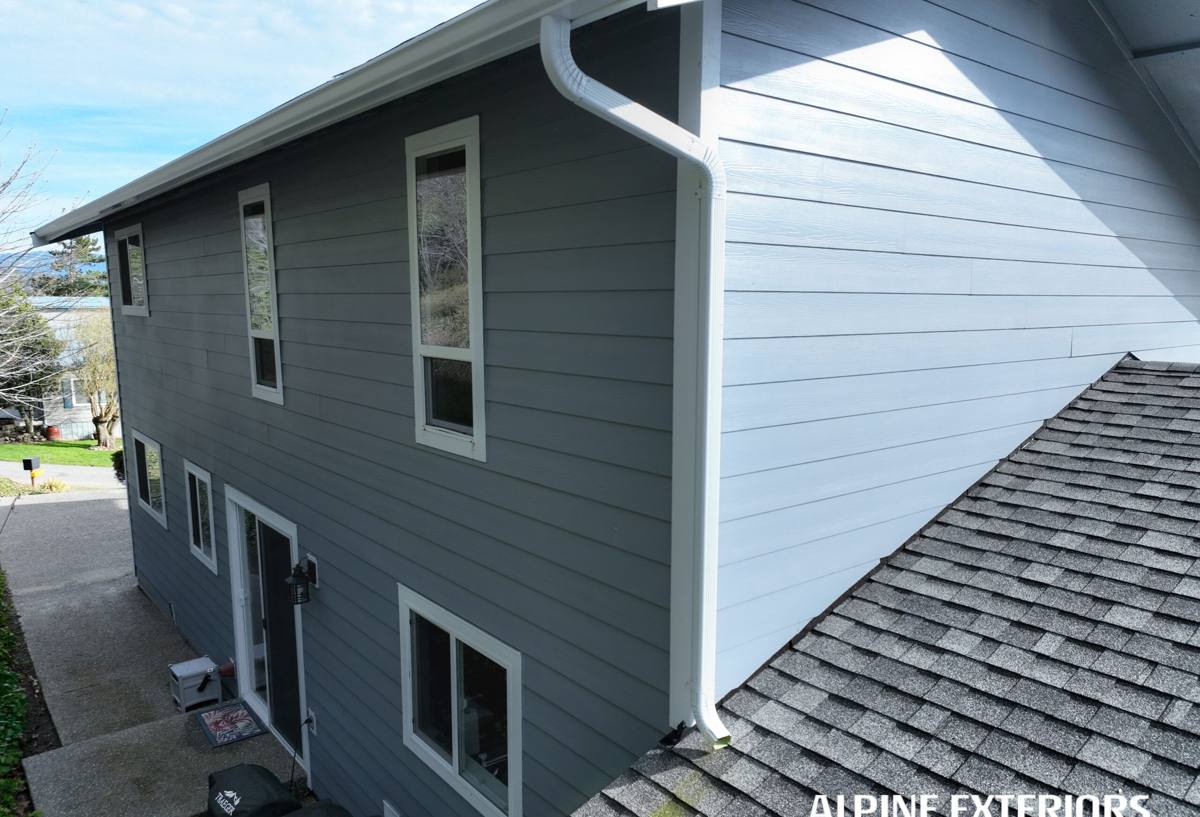
What Salt Air, Driving Rain, and Moss Season Do to a Roof
Salt air
Airborne salt accelerates corrosion on any exposed metal — fasteners, flashing, gutter hangers, even the cut edges of panels if they weren't sealed properly. Over years, this shows up first at the small, overlooked details: exposed screw heads, unsealed panel ends, and bare metal at cut lines. It rarely shows up as failure of the panel itself.
Driving rain
Wind off the water doesn't just fall on a roof, it pushes rain sideways and up under laps, around chimneys, and along wall-to-roof transitions. A roof system that relies on gravity alone at these details — rather than proper flashing, underlayment, and lap sequencing — will eventually leak, usually at the same handful of predictable spots: valleys, penetrations, and where the roof meets a wall or dormer.
Moss season
Anacortes and the surrounding Skagit County shoreline stay damp and shaded for much of the fall through spring, which is exactly what moss needs to establish. On shingle roofs, moss roots into the surface and lifts granules, shortening the roof's life. Metal doesn't give moss the same texture to grab onto, but moss and debris can still build up in valleys, at panel laps, and in gutters, holding moisture against the roof longer than it should sit there.
Why Metal Makes Sense for This Location
Metal roofing isn't the right fit for every home or budget, but for a property exposed to bay winds and persistent moisture, it solves several problems at once: steep water shedding, minimal surface for moss to colonize, and a material that — with the right coating and fastener choice — resists salt corrosion far better than bare steel or untreated fasteners. It's also a long-term investment; a well-installed metal roof in this climate can outlast two or three shingle roof cycles, which matters when you factor in how much labor and disruption a roof replacement involves on a waterfront lot.
Comparing Metal Roofing Options for a Coastal Home
| Panel Type | How It's Fastened | Best Fit | Coastal Considerations |
|---|---|---|---|
| Standing seam | Concealed clips, no exposed fasteners on the field | Homes wanting the longest service life and cleanest look | No exposed screw heads to corrode; best option directly facing prevailing wind and rain |
| Exposed fastener panel | Screws driven through the panel face | Budget-conscious projects, outbuildings, shops | Fasteners need periodic inspection and eventual replacement as gaskets age in salt air |
| Stone-coated steel | Interlocking panels, fastened through overlaps | Homeowners who want the profile of shingle or tile with metal's durability | Textured surface can trap more moisture and debris in shaded, moss-prone areas — needs regular clearing |
For most homes right along the water in Similk Beach, we lean toward standing seam because it eliminates the weak point exposed fasteners create over time. That said, exposed fastener systems are a legitimate, lower-cost option for detached garages, shops, and secondary structures where a slightly shorter maintenance-free interval is an acceptable trade-off.
What a Correct Metal Roof Installation Actually Involves
The panels themselves get most of the attention, but the details underneath and around them are what determine whether a metal roof performs in this climate for twenty-plus years or starts leaking in five. On every metal roofing job in this area, we treat the following as non-negotiable:
- Full synthetic underlayment as a secondary water barrier, not just an afterthought under the panels
- Ice-and-water shield or equivalent membrane at valleys, eaves, and any low-slope transitions
- Properly lapped and sealed flashing at every wall intersection, chimney, and roof penetration
- Fasteners and clips rated for coastal/marine exposure, matched to the panel metal to avoid galvanic corrosion
- Correct panel overlap and seam direction relative to prevailing wind and water flow
- Ventilation that keeps the roof deck dry from the inside, not just the outside
- Clean, sealed panel cut ends — no bare exposed edges left to rust
Skipping any one of these doesn't usually cause an immediate problem. It shows up two, five, or ten years later as a leak that's hard to trace back to its real cause — which is exactly why the installation details matter more than the roofing material's marketing.
Our Process, Start to Finish
We keep the process straightforward and give you a clear picture of the work before anything starts:
- On-site inspection. We walk the roof and attic where accessible, check the deck condition, look at existing flashing and ventilation, and note anything specific to your home's exposure to wind and water.
- Written estimate. You get a clear scope of work and pricing before we schedule anything — no surprise add-ons once the tear-off starts.
- Tear-off and deck check. We remove the existing roofing and inspect the deck for any moisture damage that needs repair before new roofing goes down — a step that's easy to skip and expensive to regret.
- Underlayment and flashing. This is where most of the long-term performance is decided, and we don't rush it.
- Panel installation. Panels go on with attention to seam direction, fastening pattern, and clean terminations at every edge.
- Final walkthrough. We review the finished roof with you, including care and maintenance specific to your home's setting.
Maintenance That Actually Matters Near the Water
Metal roofing is low-maintenance compared to shingles, but "low-maintenance" isn't the same as "no maintenance," especially this close to the bay. A few habits go a long way:
- Clear valleys and gutters of needles, leaves, and moss buildup at least twice a year, more often under overhanging trees
- Have flashing and sealant at penetrations checked every few years — sealant is the first thing to age out, not the metal
- Rinse accumulated salt film off the roof and gutters periodically if the home faces open water directly
- Watch for any staining or rust bleed around fastener heads, which signals a coating or fastener issue worth addressing early
- Keep overhanging branches trimmed back to reduce shade and debris, which slows how fast moss and algae can take hold
What Drives the Cost
| Factor | Why It Matters |
|---|---|
| Panel type (standing seam vs. exposed fastener) | Concealed-fastener systems cost more upfront but need less long-term upkeep |
| Roof complexity | Valleys, dormers, and multiple roof planes mean more flashing and labor |
| Deck condition | Any rot or moisture damage found during tear-off adds repair scope |
| Access | Steep pitches or difficult site access near the shoreline can affect labor time |
| Ventilation and underlayment upgrades | Bringing an older roof system up to current moisture-management standards |
We don't quote a job over the phone for this reason — an accurate number depends on what we find on your roof, not a generic per-square rate. What we can say honestly is that metal roofing costs more upfront than asphalt shingles, and for a home exposed to Similk Beach's weather, that upfront cost is usually offset by a much longer service life and far less repair work over time.
Why It Matters to Hire a Crew That Already Works This Area
Roofing crews who mostly work drier, inland parts of Skagit County don't always plan for the details that matter right on the water — the extra attention to flashing, the fastener spec, the underlayment upgrade at valleys. It's not that the work is more complicated, it's that the margin for error is smaller when wind-driven rain and salt air are part of daily conditions instead of an occasional event.
We work throughout Anacortes and the surrounding Skagit County shoreline, including Similk Beach, and we build every metal roof to handle that exposure as the standard, not an upgrade. That means the same attention to sealed cut ends, marine-rated fasteners, and proper flashing sequencing on every job, whether it's a full home or a detached shop.
Get a Straightforward Estimate
If your roof is showing its age, growing moss faster than it used to, or you're planning ahead for a home this close to the water, we're happy to take a look and give you an honest read on your options. Use the form below to request a free, no-pressure estimate for metal roofing in Similk Beach — we'll walk the roof, answer your questions, and give you a clear, written quote before any work begins.