 Anacortes
 Why Decks in Skyline Wear Out Faster Than You'd Expect
Skyline sits up where the wind and weather off the water reach a home more directly than they do in more sheltered pockets of Anacortes. That exposure is part of why homes here were built with a view in mind, but it's also why decks in this neighborhood take a beating that a deck twenty minutes inland simply doesn't face. Salt-laden air corrodes fasteners and hardware from the inside out, long stretches of driving rain push moisture into joints and end grain, and Skagit County's mild, damp winters give moss and algae months to establish themselves on any surface that doesn't drain and dry quickly.
None of that means a deck can't last in Skyline — it means the deck has to be built and detailed for these specific conditions, not just built to a generic plan. We've replaced enough decks in this part of Anacortes to know exactly where the shortcuts show up first: fastener corrosion, ledger rot, and framing that never gets the chance to dry out between storms.
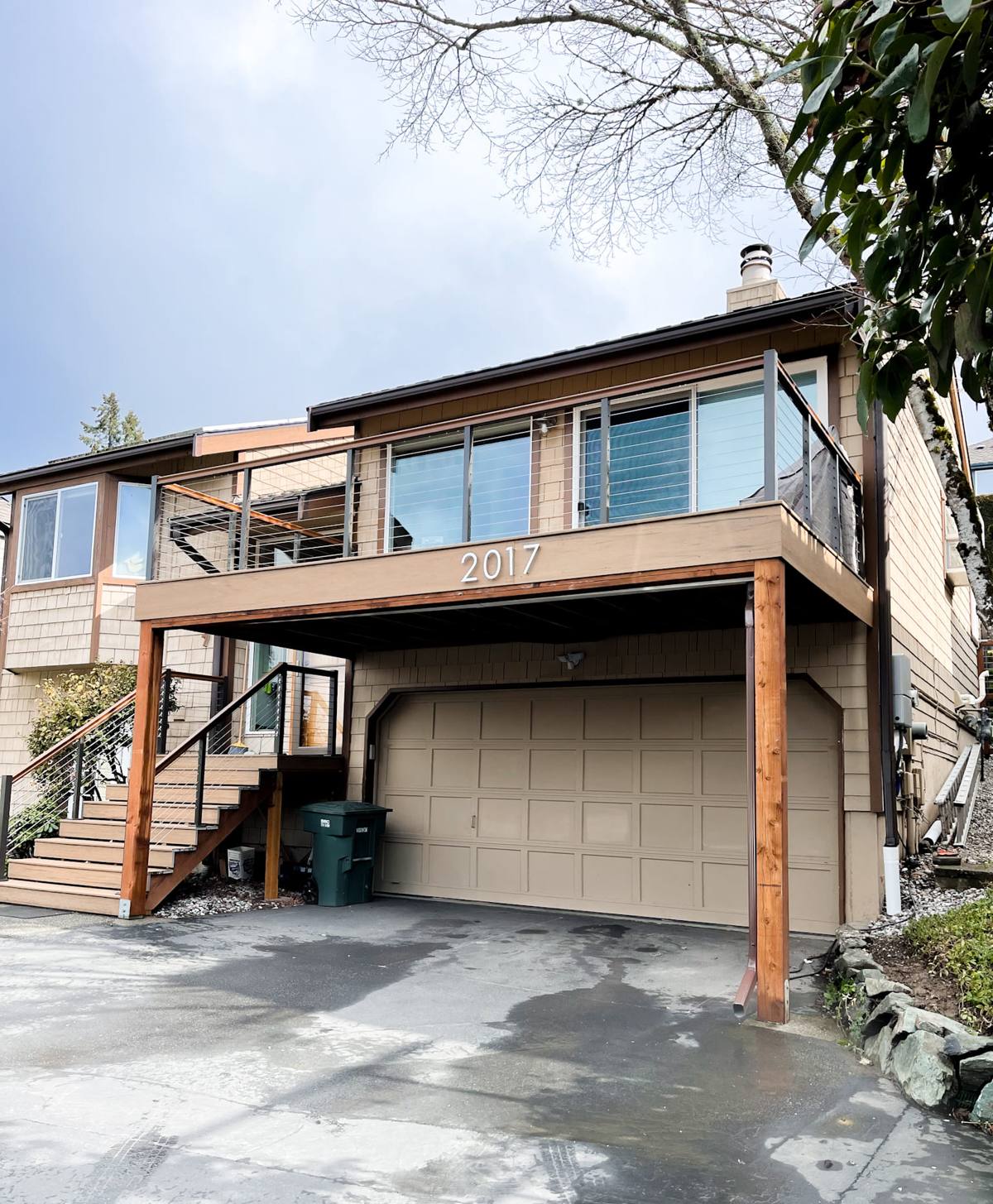
Signs a Skyline Deck Needs Replacement, Not Another Repair
Homeowners often call us wanting a few boards swapped, and sometimes that's genuinely all that's needed. But in this climate, surface problems are frequently a symptom of something happening underneath. Before we recommend a full replacement, we look for these warning signs:
- Soft, spongy, or bouncy spots in the decking or at the stair treads
- Rust staining bleeding out around fastener heads or joist hangers
- Persistent moss or black-green staining that returns within weeks of cleaning
- Gaps opening up at the ledger board where the deck meets the house
- Visible cupping, splitting, or checking across multiple boards, not just one or two
- Railing posts that flex or feel loose when pushed
Any one of these on its own might be repairable. Several together, especially combined with a deck that's already 15-20+ years old, usually means the structure has absorbed more moisture cycling than it can shed, and patching individual boards just delays the real conversation.
Why "Just the Boards" Isn't Always Honest Advice
It's tempting to replace only the decking surface and leave the framing alone, since it's cheaper and faster. But if the joists, beams, or ledger connection have already been compromised by years of moisture exposure, new boards on top of a weakened frame just hide the problem for another season or two. Part of doing this job right is being upfront with a homeowner about which approach actually fits the condition of what's underneath.
What a Correct Deck Replacement Actually Involves
A deck replacement isn't just pulling up old boards and screwing down new ones. In a climate that drives moisture into every gap it can find, the details that don't show up in a photo are the ones that determine whether the new deck lasts 10 years or 25.
Structure First
We inspect and, where needed, replace the ledger board, joists, beams, and posts before any new decking goes down. The ledger connection to the house is one of the most common failure points on older decks in this area, since it's where wall moisture and deck moisture meet — proper flashing here is not optional.
Flashing and Drainage
Every ledger gets flashed to shed water away from the house framing, not into it. Joists get protective tape or coating on their top edges so standing water from driving rain doesn't sit and soak in year after year. Post bases and any ground-contact connections are detailed so water drains away instead of wicking upward.
Fasteners and Hardware
In salt air, the wrong fastener can start rusting and staining within a single wet season. We use corrosion-rated structural hardware and fasteners rated for coastal or treated-wood exposure throughout — not just on the visible top surface.
Decking Material Options for This Climate
There's no single "best" decking material — there's a best fit for how a family uses the deck, what upkeep they're willing to do, and how much moss and moisture exposure the site gets. Here's how the common options compare for a Skyline application:
| Material | Upfront Cost | Maintenance | Moss/Moisture Behavior | Realistic Lifespan Here |
|---|---|---|---|---|
| Pressure-treated wood | Lowest | Annual cleaning, periodic staining/sealing | Absorbs moisture; needs regular sealing to resist moss and rot | 10-15 years |
| Cedar | Moderate | Regular sealing to hold color and resist moisture | Naturally rot-resistant but still needs upkeep in constant damp | 15-20 years |
| Composite decking | Higher | Occasional washing, no staining/sealing | Doesn't absorb water or feed rot, but surface moss/algae still needs washing off | 25-30 years |
| PVC decking | Highest | Lowest — occasional washing only | Fully moisture-resistant board; moss stays surface-level and rinses off easily | 25-30+ years |
We install all of these depending on the homeowner's budget and priorities. Our job is to lay out the honest trade-offs — wood costs less upfront but asks for consistent maintenance to hold up in this climate, while composite and PVC cost more initially but shed moisture and resist moss with far less annual work.
Our Deck Replacement Process
- On-site evaluation — we inspect the existing deck, ledger connection, framing, and footings to determine the actual scope, not just the visible surface condition.
- Clear scope and pricing — you get a written plan covering what's being replaced, what materials are involved, and why, before any work starts.
- Demo and structural assessment — once old decking is off, we confirm the framing plan and flag anything that changes scope before proceeding.
- Framing, flashing, and hardware — the structural work that determines long-term durability happens here, out of sight but not out of mind.
- Decking, railing, and finish work — final surface, railings, stairs, and any trim details are installed to spec.
- Final walkthrough — we go over the finished deck together and cover any care specific to the material you chose.
Railings, Fasteners, and Hardware That Actually Hold Up Near Salt Air
Railings take a specific kind of abuse in this environment — they're handled constantly, they're exposed on all sides, and any hardware that starts corroding becomes both an appearance problem and eventually a safety one. We spec railing systems and connection hardware rated for coastal exposure, and we avoid mixing incompatible metals that accelerate corrosion when they're in contact with each other. It's a small detail that a lot of decks get wrong, and it's usually the first place rust streaks show up.
Permits and Code Considerations
Deck replacement work in Anacortes and unincorporated Skagit County typically requires a permit, particularly when structural elements like ledgers, footings, or railings are being replaced rather than simply refinished. Requirements can also depend on deck height and proximity to property lines. We handle the permitting conversation as part of the project so you're not left figuring out city or county requirements on your own, and so the finished deck meets current code for railing height, guard spacing, and structural attachment.
Maintenance Checklist for a New Skyline Deck
Whatever material you choose, a little seasonal attention goes a long way in this climate. We walk every homeowner through care specific to their new deck, but in general:
- Sweep debris and needles off the deck regularly — trapped organic matter is what feeds moss growth
- Rinse or wash the surface at least once or twice a year to stay ahead of algae and moss before it takes hold
- Check railings and stair connections annually for any looseness
- For wood decks, plan on resealing or restaining on the schedule recommended for your specific product
- Keep gutters and downspouts near the deck clear so runoff isn't dumping extra water onto or under it
- Address any soft spots or staining early rather than waiting for the next dry season
Why Hiring a Crew That Already Works Skyline Matters
A deck built to a generic spec sheet can look right on install day and still fail early once it meets a real Anacortes winter. We've worked on decks throughout Skyline and the surrounding Anacortes area long enough to know which details matter most here — the flashing at the ledger, the fastener grade, the drainage path under the framing — because we've seen what happens when those details get skipped. That local experience shows up in how the deck performs five, ten, and twenty years down the road, not just how it looks the week it's finished.
If your deck in Skyline is showing signs of wear, or you're just planning ahead, we're happy to take a look and give you a straightforward, no-pressure estimate. Use the form below to get started.