 Anacortes
 Siding Built for Skyline's Waterfront Exposure
Skyline sits on Anacortes' west side, close enough to the water that homes here take a different kind of weathering than houses further inland in Skagit County. Salt-laden air drifts off the water year-round, wind-driven rain hits west- and south-facing walls at an angle instead of straight down, and shaded, moisture-holding areas around trees and fence lines stay damp long enough to grow moss for much of the year. None of that is exotic — it's just the normal cost of living near Puget Sound. But it means siding that would hold up fine in a drier, more sheltered part of the county can fail early here if it isn't matched to the exposure.
The three things that do the most damage to siding in Skyline are the same three things that make the neighborhood desirable in the first place: the water, the wind, and the tree cover. Salt air accelerates corrosion on fasteners, trim coil, and any exposed metal. Driving rain finds every gap in flashing and caulk that a calmer climate would never test. And a long moss season means organic growth sits against exterior walls, holding moisture where it shouldn't be, far longer than in sunnier inland neighborhoods.
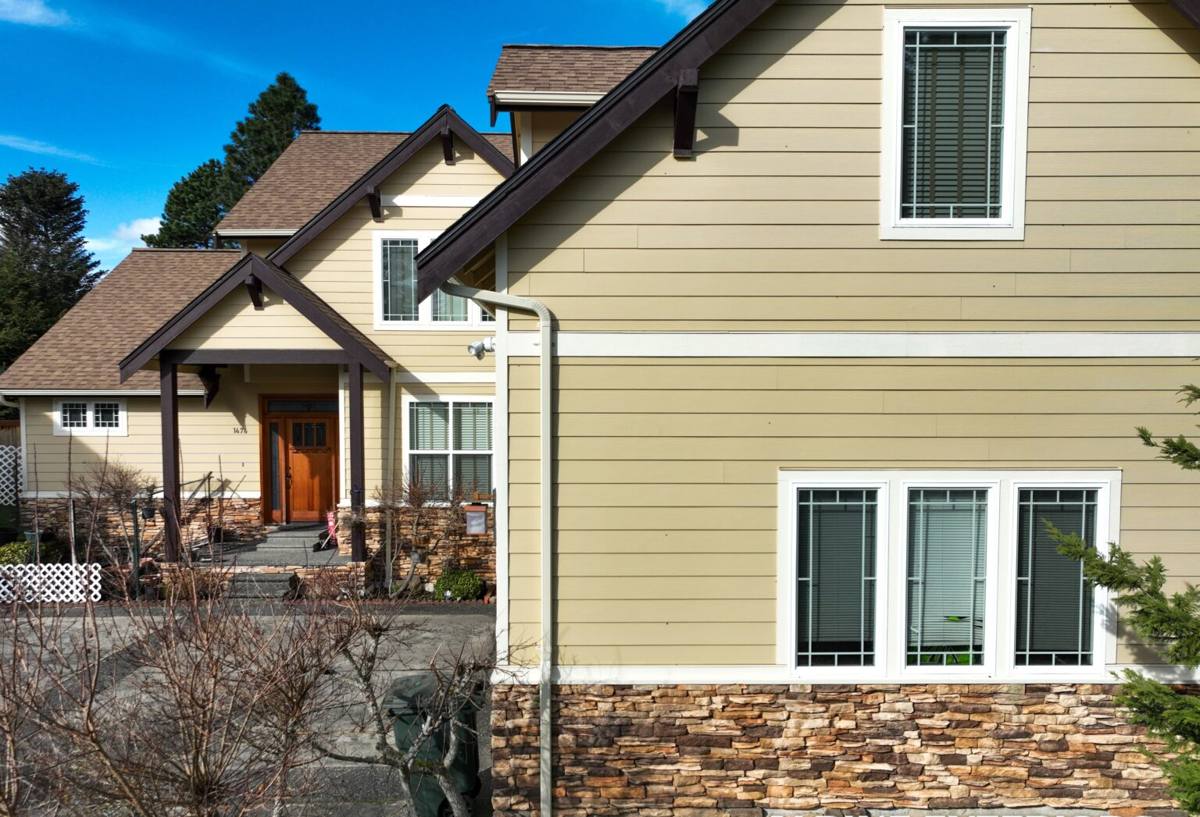
What a Correct Siding Job Has to Account For
Water Management Comes Before the Siding Itself
Most siding failures we get called out to inspect in this area aren't really siding failures — they're water management failures that show up as siding damage. A weather-resistive barrier installed with the wrong lap direction, house wrap taped incorrectly at seams, or flashing that terminates behind trim instead of over it will eventually let wind-driven rain behind the cladding no matter how good the siding itself is. In a home exposed to driving rain off the water, these details aren't optional extras — they're the difference between siding that lasts decades and siding that has to be pulled off in ten years to fix rot no one can see from the street.
Fastener and Trim Choices Matter More Near the Water
Salt air is hard on ordinary fasteners and trim hardware. Installations in Skyline need corrosion-resistant fasteners rated for the exposure, and any exposed metal trim or flashing should be a material that won't streak, pit, or fail years before the siding around it does. This is a detail that's invisible on installation day and very visible five or ten years later.
Clearance and Airflow Reduce Moss and Mildew
Because moss season runs long here, siding installed too close to grade, decking, or planting beds stays damp longer than it should. Proper clearance at the bottom of the wall, and keeping siding from being buried under mulch or overgrown shrubs, gives the surface a chance to dry between rain events instead of holding moisture against the substrate.
Why We Install Only James Hardie Fiber Cement
We don't install vinyl, LP SmartSide, Cemplank, Allura, or bare cedar or primed spruce siding — not because those products have no legitimate use anywhere, but because we've made a standard for what we're willing to put our name behind on a coastal Skagit County home, and Hardie fiber cement is what meets it.
Fiber cement doesn't feed moss, mold, or insects the way wood-based products can, which matters directly in a neighborhood with a long moss season. It's non-combustible, which is a real consideration anywhere in Western Washington with dry summer stretches. And Hardie's ColorPlus factory-applied finish is baked on and warranted against fading, so homeowners aren't repainting a full exterior every several years just to keep ahead of UV and salt air exposure. Hardie also engineers specific product lines (HZ5, for example) for harsher climate zones, which is a more honest match for a waterfront exposure than a one-size-fits-all product.
None of this means every alternative product is a bad choice everywhere. It means that for the specific combination of salt air, driving rain, and moss pressure that Skyline homes deal with, we think fiber cement is the more defensible long-term investment, and we'd rather install one product correctly and stand behind it than install several and hedge.
How Siding Options Actually Compare in This Exposure
| Factor | James Hardie Fiber Cement | Vinyl | Wood / LP SmartSide |
|---|---|---|---|
| Moisture & moss resistance | Does not absorb water or feed organic growth | Doesn't absorb water, but seams and J-channels can trap moisture | Wood-based core is vulnerable to moss, mildew, and rot if moisture gets in |
| Salt air / coastal durability | Engineered climate-specific lines (e.g., HZ5) for coastal exposure | Can become brittle and discolor faster with UV and salt exposure | Needs diligent sealing and paint maintenance to resist coastal wear |
| Finish & repainting | Factory ColorPlus finish, warranted against fading | Color molded in, but fades and chalks over time | Field-painted or primed; repainting cycle needed to maintain protection |
| Fire resistance | Non-combustible | Can soften, warp, or melt under heat | Combustible, wood-based composition |
| Typical lifespan when installed to spec | Multiple decades | Decades, variable with UV exposure | Shorter than fiber cement without consistent maintenance |
None of these differences show up on day one. They show up in year eight or year fifteen, which is exactly when the installation quality and the product choice both start to matter more than the price on the original bid.
Our Installation Process for Skyline Homes
- On-site assessment — we look at wall exposure, drainage, existing moisture damage, and any moss or mildew pattern on the current siding before quoting anything.
- Tear-off and substrate check — old siding comes off and we inspect sheathing for hidden rot before anything new goes up, since covering existing damage guarantees a callback later.
- Weather-resistive barrier and flashing — installed and lapped correctly for this climate, with particular attention to window, door, and penetration flashing, which is where driving rain finds its way in.
- James Hardie installation to manufacturer spec — correct fastener type and spacing, proper clearances at grade and trim, and joints sealed per Hardie's published requirements, not shortcuts.
- Final walkthrough — we go over the finished work with the homeowner and point out anything they should keep an eye on going forward.
Signs a Skyline Home Needs Siding Attention Now
- Moss or dark streaking that keeps returning to the same section of wall after cleaning
- Soft or spongy spots when you press on the siding, especially near the bottom courses
- Paint or finish that's peeling, bubbling, or chalking faster on one side of the house than the others
- Visible gaps or separation at seams, trim, or corner boards
- Rising exterior repainting costs with no real improvement in how the siding looks a year later
- Musty smell near exterior walls, which can point to moisture trapped behind the siding
Any one of these on its own might be minor. Two or three together, especially on a wall that takes the brunt of the wind and rain, are worth having looked at before they become a full replacement instead of a repair.
What Happens After Installation
James Hardie siding installed correctly asks very little of homeowners going forward. It doesn't need repainting on the schedule that wood siding does, and it isn't feeding moss the way a wood-based product can. That said, no siding maintains itself completely for free in a marine climate. A periodic rinse to clear salt residue and organic buildup, keeping gutters clear so water isn't sheeting down the wall, and trimming back vegetation that shades and dampens a wall long-term all go a long way toward getting the full lifespan out of the installation.
Why Hiring a Crew That Already Works in Skyline Matters
A contractor who only occasionally works this close to the water can install siding correctly on paper and still miss the details that matter here — the flashing detail that handles driving rain angled off the water, the fastener spec that holds up against salt air, the clearance that keeps a shaded wall from staying wet through moss season. A crew that regularly works Anacortes and the rest of Skagit County has already seen what goes wrong when those details are skipped, because they've been called back to homes where a generic installation didn't hold up to the actual local exposure.
That local familiarity also means a more accurate quote the first time. We're not guessing at what a Skyline exposure requires — we know which walls on which orientations tend to take the worst of the weather, and we plan the installation around that instead of treating every wall the same.
If your Skyline home's siding is showing wear, or you're planning ahead of a repaint cycle you'd rather not repeat, we're happy to come take a look and give you a straight answer about what it needs. There's no pressure and no charge for the estimate — just a clear picture of what correct James Hardie installation would look like on your home.