 Anacortes
 Storm Damage in Edison: What Skagit County Weather Does to Roofs
Edison sits out on the open, low farmland along Samish Bay in Skagit County, and that location matters more than most homeowners realize when it comes to roofing. There's nothing between the water and your roof to slow down wind-driven rain — no hills, no dense city blocks, just open fields and sloughs that let storms hit a roof straight-on. When a system moves through with sustained wind and heavy rain, it doesn't just get things wet. It finds every loose nail, every worn seal, every spot where flashing has started to pull away, and it pushes water into places a dry-weather inspection would never catch.
Most storm damage in this area isn't dramatic. It's rarely a roof torn completely off. It's a corner of shingles lifted just enough to let water track under the course below, a piece of ridge cap cracked from wind flex, or a vent boot that's been slowly failing and finally gives way during a heavy blow. Left alone, that kind of damage doesn't heal — it gets worse with the next storm, and the one after that.
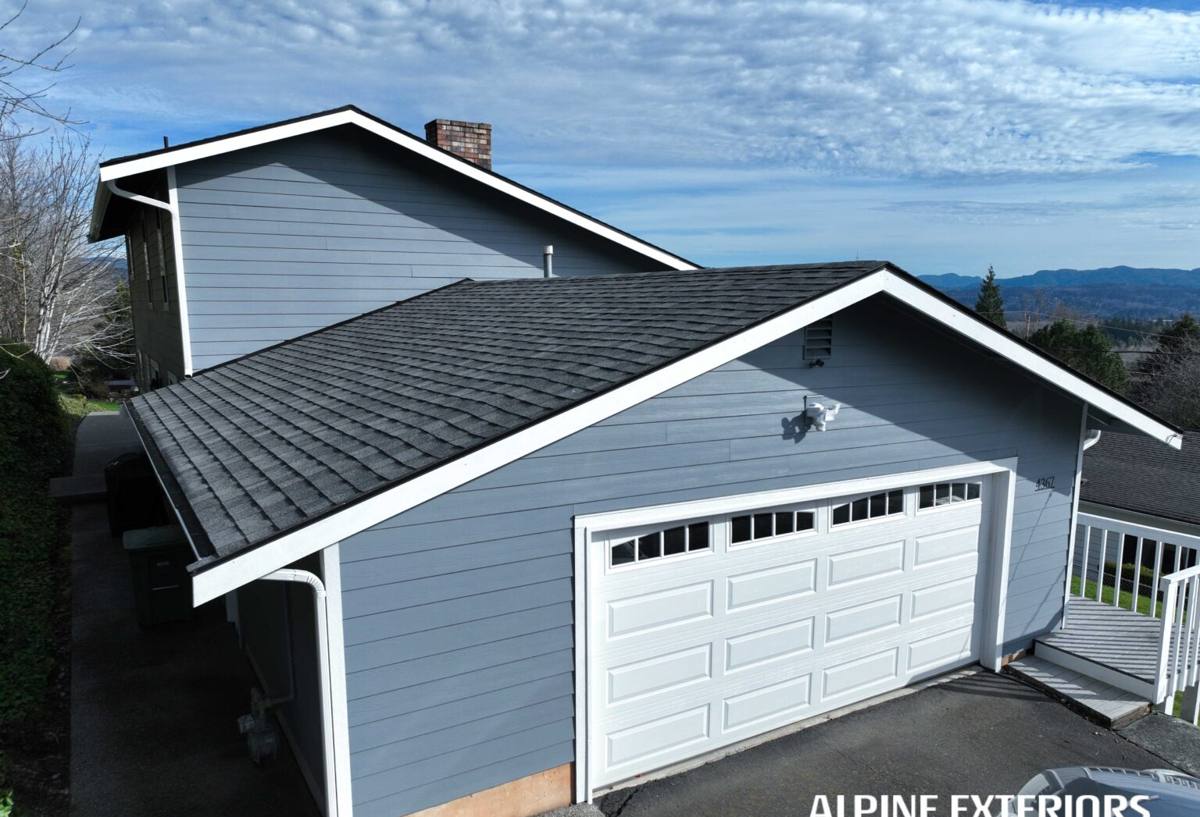
Signs Your Edison Roof Has Storm Damage
After a windstorm or a stretch of heavy rain, it's worth walking the property and looking for the early warning signs rather than waiting for a leak to show up inside the house. Some damage is visible from the ground; some you'll only notice once you know what to look for.
- Shingles that look lifted, curled, or out of alignment with the rest of the field
- Granules collecting in gutters or at downspout outlets after a storm
- Bent, loose, or missing flashing around chimneys, vents, and roof-to-wall transitions
- Cracked or displaced ridge cap shingles along the roof's peak
- New or expanding ceiling stains, especially near exterior walls or the attic hatch
- A musty smell in the attic that wasn't there before the storm
None of these on their own means you need a new roof. But each one is a sign that water has found a way in, or is about to, and that the roof needs a real look rather than a guess.
Why Salt Air, Rain, and Moss Make Edison Roofs Different
Three things work against roofs in this part of Skagit County at the same time, and each one makes the others worse. Salt-laden air off Samish Bay accelerates corrosion on exposed metal — nail heads, flashing, and fasteners that would last decades further inland can start to weaken years earlier here. Driving rain, especially with wind behind it, doesn't just fall straight down; it gets pushed sideways and upward under shingle edges and around flashing laps that were only ever designed to shed water moving one direction.
Then there's moss. Shaded rooflines near trees and sloughs stay damp long after the rest of the neighborhood has dried out, and Western Washington's mild, wet winters give moss months to establish itself. Once moss takes hold, it doesn't just sit on top of the shingles — it works its rhizoids under the shingle edges, lifts them slightly, and holds moisture against the roof deck around the clock. A roof that's already been lifted or cracked by wind is far more vulnerable to that kind of moss intrusion than an undamaged one, which is why storm damage and moss problems so often show up together on the same roof.
Older Farmhouses vs. Newer Construction
Edison has a real mix of housing stock — older farmhouses with roof framing and ventilation built to a different era's standards, alongside newer homes with more modern decking and underlayment. Storm damage repair looks different on each. Older roofs often need extra attention to deck condition and ventilation while we're up there; newer roofs are usually more about correcting a specific failure point without disturbing a system that's otherwise performing well.
What a Correct Storm Damage Repair Involves
A storm damage repair that's done right goes beyond swapping out the shingles that are obviously missing or torn. Wind and rain rarely damage just the one spot you can see from the driveway.
- Inspecting the roof deck underneath the damaged area for soft spots, rot, or water staining — not just replacing what's visible on the surface
- Checking flashing at every penetration near the damaged section, since wind that lifted shingles often stressed nearby flashing too
- Matching shingle type, weight, and color as closely as possible so the repair blends rather than standing out as a patch
- Confirming the underlayment beneath the repair area is intact and properly lapped, not just covered back over
- Re-securing or replacing ridge vent and other ventilation components affected by the storm
Skipping any of these steps doesn't save real money — it just moves the cost of the job forward to the next storm, when the same section fails again, usually worse.
Our Storm Damage Repair Process
1. Inspection and Documentation
We start by getting on or over the roof to see the full extent of the damage, not just the piece that's visible from below. We photograph what we find — this matters both for giving you an honest picture of the work needed and for supporting an insurance claim if you're filing one.
2. Temporary Protection, If Needed
If a storm has left an active leak or exposed decking, our first priority is stopping water intrusion — tarping or covering the affected area so the situation doesn't get worse while repairs are scheduled.
3. A Clear, Written Plan
Before any work starts, you get a straightforward explanation of what's damaged, what needs to be repaired versus replaced, and what it will cost. No pressure tactics, no inflated scope.
4. The Repair Itself
We remove and replace damaged materials down to sound decking, correct any flashing or underlayment issues we found during inspection, and match materials as closely as the market allows.
5. Cleanup and Final Check
We clear debris, check gutters near the repair area for granules or displaced material, and do a final walk-through so you know exactly what was done.
Repair vs. Replacement: How We Decide
Not every storm-damaged roof needs to come off. But some do, and pretending otherwise to sell a cheaper repair does you no favors when the same roof fails again in two years. Here's generally how the decision breaks down:
| Factor | Points Toward Repair | Points Toward Replacement |
|---|---|---|
| Roof age | Under roughly 10-12 years, or a newer roof entirely | Already near or past its expected service life |
| Extent of damage | Isolated to one section or a handful of spots | Widespread across multiple slopes |
| Deck condition | Sound decking under the damaged shingles | Rot or soft spots found in more than one area |
| Moss and prior wear | Minimal moss history, roof otherwise healthy | Long-standing moss damage layered under the new storm damage |
| Material availability | Matching shingles still available or close enough | Discontinued product with no reasonable match |
Most storm calls we go on in Edison end up being repairs. Full replacement usually only makes sense when the storm damage exposed a roof that was already near the end of its life anyway.
Working with Insurance on Storm Damage Claims
Many storm damage repairs in this area involve a homeowner's insurance claim, and the process goes a lot smoother when the documentation is solid from the start. We provide clear photos and a straightforward written description of the damage and cause — what a storm did, versus what's ordinary wear or a maintenance issue, since insurers distinguish between the two. We're glad to walk an adjuster through what we found on the roof, but we won't stretch a claim to cover work that isn't storm-related. That honesty protects you if the claim is ever reviewed, and it's simply how we'd want a contractor to handle it if it were our own roof.
Why Hire a Crew That Already Works in Edison
Storm damage repair isn't a job where general roofing knowledge alone gets you the right answer. A crew that already works this part of Skagit County knows which roof types in the area tend to fail where, how moss and salt exposure typically interact with wind damage here, and what a normal repair timeline looks like once a storm has passed through and everyone in the area is calling roofers at once.
That local familiarity also means fewer surprises. We're not guessing at how Edison's mix of open exposure and shaded, damp lots affects a given roof — we've seen the pattern before on homes nearby. And because we're not driving in from far outside the area, we can usually get eyes on storm damage faster, which matters when there's active water intrusion.
Protecting Your Roof Between Storms: A Maintenance Checklist
The best storm damage repair is the one you never need. A little seasonal attention goes a long way toward keeping wind and rain from finding a weak spot in the first place.
- Clear moss buildup before it has a chance to lift shingle edges, especially on shaded slopes
- Keep gutters and downspouts clear so storm runoff doesn't back up under roof edges
- Trim back tree branches that overhang the roof, which reduce airflow and keep sections damp
- Have flashing around chimneys, vents, and skylights checked periodically, since these are the first points salt air and wind tend to work loose
- Walk the exterior after any significant windstorm and note anything that looks out of place, even if there's no leak yet
- Address small repairs promptly rather than waiting for the next storm to make them worse
If a recent storm has left you with missing shingles, a new leak, or just a nagging feeling that something on the roof isn't right, we're glad to take a look. Reach out for a free, no-pressure estimate — we'll give you an honest read on what's actually going on and what it will take to fix it right.