 Anacortes
 Why Storms Hit Fidalgo Island Roofs Harder Than People Expect
Fidalgo Island sits out in the weather. Homes here take wind off the surrounding marine waters, long stretches of driving rain, and a wet season that runs far longer than most of the country ever deals with. None of that is dramatic on its own — Anacortes doesn't see the hurricane-force events that make national news — but the combination of salt-laden air, sustained wind, and near-constant moisture is exactly the mix that finds every weak point in a roof system. A roof that would coast along fine in a dry inland climate can start failing here within a few seasons if it wasn't built or repaired with this environment in mind.
Storm damage repair on Fidalgo Island isn't just "patch what blew off." It's understanding how wind, rain, and moss interact with roofing materials that are already under more stress than they'd face almost anywhere else in Skagit County. That's the lens we bring to every repair call out here.
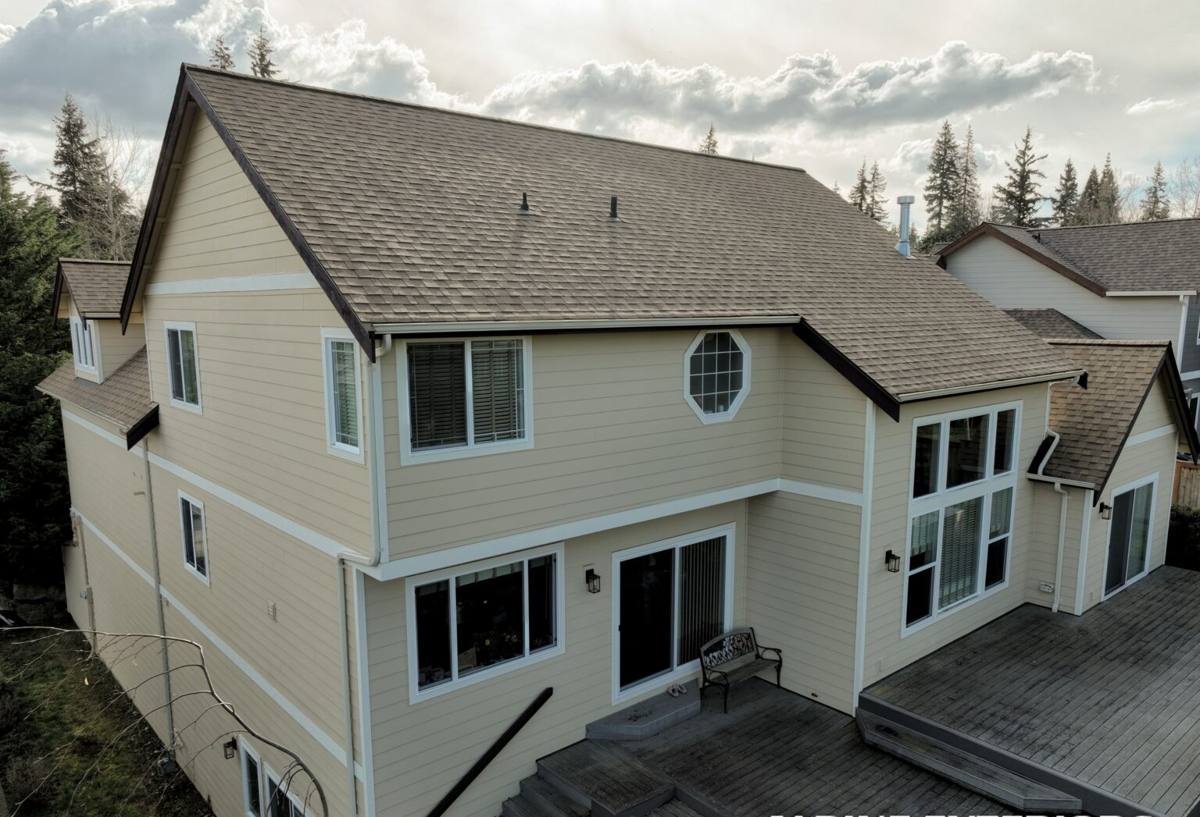
What Actually Counts as Storm Damage
Wind Damage
Sustained wind and gusts don't need to be extreme to do damage. Repeated flexing loosens shingle tabs, breaks the seal strips that hold shingles down, and works fasteners loose at ridges, hips, and edges — the places where wind uplift concentrates. Sometimes the damage is obvious: missing shingles, lifted ridge cap, a section peeled back. Often it's not visible from the ground at all until it's already let water in.
Wind-Driven Rain Intrusion
This is the damage type most homeowners miss. Rain that comes in sideways during a storm doesn't behave like rain falling straight down — it gets pushed up under shingle edges, around vents, and into any flashing that's even slightly compromised. A roof can look intact after a storm and still have water working its way into the decking through a dozen small entry points. This is one of the most common ways storm damage on Fidalgo Island turns into a bigger repair than it needed to be, simply because the intrusion wasn't caught early.
Impact and Debris Damage
Falling limbs, wind-blown debris, and occasionally hail can crack shingles, dent metal flashing or gutters, and puncture underlayment. Impact damage is usually easier to spot, but the real question is always whether the impact broke the weatherproofing underneath — not just the visible surface layer.
Salt Air and Moss: The Two Forces That Change the Repair Math
Salt Air
Airborne salt is corrosive to exposed metal — fasteners, flashing, drip edge, and gutter hardware all age faster here than they would inland. When we're repairing storm damage on Fidalgo Island, we're not just replacing what the wind or rain damaged; we're checking the metal components around the repair area, because salt exposure often means nearby flashing or fasteners are further along in their wear than the shingles themselves suggest. Using standard-grade fasteners or unprotected metal in a repair here is a shortcut that shows up again in a year or two.
Moss and Trapped Moisture
Anacortes' moss season runs long, and moss doesn't just sit on top of a roof looking bad — it holds moisture directly against the shingle surface, works its way under tabs and edges, and can lift shingles enough to give wind and rain an easier entry point. A roof with heavy moss growth going into a storm is already compromised before the storm ever arrives. Part of a proper storm damage assessment out here is looking at moss and organic growth as a contributing factor, not a separate cosmetic issue to deal with later.
What a Correct Storm Repair Actually Involves
A storm repair done right goes beyond swapping out the shingles that are obviously missing or broken. Here's what we check and address on every storm damage call:
- The decking underneath the damaged area — soft or delaminated decking needs to be replaced, not covered over
- Underlayment condition in and around the repair zone, since a torn or saturated underlayment defeats the point of new shingles on top
- Flashing at any nearby penetration — vents, chimneys, skylights — since flashing failure is a leading cause of "mystery leaks" that show up weeks after a storm
- Fastener condition on the surrounding shingles, especially on a roof that's already a few years into salt air exposure
- Matching shingle type, color, and exposure so the repair blends in rather than creating a visible patch
- Ventilation in the repaired section, so trapped moisture doesn't undo the repair from the inside
Skipping any of these turns a proper repair into a temporary fix — one that looks fine from the driveway but leaves the underlying problem in place.
Repair or Replace? How We Help You Decide
Not every storm-damaged roof needs a full replacement, and not every roof that "just needs a patch" should get one. The honest answer depends on a handful of factors we walk through with you during the inspection:
| Factor | Leans Toward Repair | Leans Toward Replacement |
|---|---|---|
| Age of roof | Under 10-12 years, otherwise in good shape | Nearing or past its expected service life |
| Extent of damage | Isolated to one or two sections | Spread across multiple slopes or the whole roof |
| Decking condition | Dry, solid decking under the damaged area | Soft, stained, or delaminated decking found in multiple spots |
| History of moss/moisture | Minor, recently addressed | Long-term moss buildup with signs of trapped moisture |
| Prior repairs | Few or none | Roof already has multiple patch repairs stacked on it |
We'll always tell you honestly which side of that table your roof falls on. A repair-focused business only survives on trust, and a roof that needs replacing doesn't get fixed by another patch.
Our Process for Fidalgo Island Storm Calls
1. Inspection
We get on the roof (not just a look from the ground) and check the damage itself along with the surrounding areas most likely to be affected — flashing, valleys, penetrations, and any spots with existing moss or wear.
2. Documentation
We photograph and note the damage clearly, which matters if you're filing an insurance claim. Good documentation at this stage tends to make the claims process smoother, though the claim itself is always between you and your insurer.
3. A Clear Repair Plan
You get a straightforward explanation of what's damaged, what needs to happen to fix it correctly, and a written estimate — no vague scopes, no surprise add-ons once work is underway.
4. The Repair Itself
We match materials to your existing roof where possible, address the root cause (not just the visible symptom), and leave the area protected against the next round of Skagit County weather, not just patched until the next storm.
What to Do in the First 48 Hours After a Storm
What you do right after a storm affects how much damage a small problem turns into. If your roof took a hit:
- Check your attic or top-floor ceilings for staining, dampness, or a musty smell — early signs of intrusion before it shows up as a visible leak
- Look around the yard and gutters for granules, shingle pieces, or flashing that came loose — a clue something's missing up top
- Avoid getting on the roof yourself, especially in wet or windy conditions right after a storm
- Take photos from the ground of anything visibly out of place, dated and time-stamped if possible
- Get a professional inspection promptly — the gap between "small leak" and "soaked decking and insulation" is often just a matter of a few more rain events
- Call your insurer if the damage looks significant, and keep any documentation the inspection provides
Why a Local Anacortes Crew Matters More Here Than Elsewhere
After any storm, it's common to see traveling repair crews going door to door in affected areas, offering fast fixes and pressuring for quick decisions. We'd rather you hear this from us directly: a crew that doesn't know Fidalgo Island's wind exposure, salt air corrosion patterns, or moss season isn't equipped to tell you whether a repair will actually hold up here — and won't be around next year if it doesn't. We work Anacortes and the surrounding Skagit County area year-round, which means the repair we do this month is one we stand behind next storm season, not after we've moved on to the next town.
Materials and Workmanship: Our Standard for Storm Repairs
On a coastal island climate, we lean toward corrosion-resistant fasteners and flashing, proper underlayment for wind-driven rain exposure, and shingle products with solid wind ratings rather than whatever is cheapest to source quickly. That's not about upselling a storm repair — it's about not doing the same repair twice. A repair that uses standard materials in a non-standard climate is a repair that's likely to need redoing sooner, and that costs you more over time than doing it right the first time. Repair costs vary a lot based on scope — a single-section shingle and flashing repair is a modest job, while damage that's reached the decking or spans multiple roof planes runs higher — and we'll walk you through exactly what's driving the number on your estimate before any work starts.
If a recent storm left your roof looking rough — or you're just not sure whether what you're seeing is real damage or normal wear — we're glad to take a look. Fill out the form below for a free, no-pressure estimate from a crew that already knows what Fidalgo Island roofs are up against.