 Anacortes
 Deck Repair Built for West Anacortes Conditions
West Anacortes sits close enough to the water that decks here take a different kind of beating than decks twenty miles inland. Salt-laden air corrodes fasteners and hardware faster than manufacturers' ratings assume. Driving rain off the Sound finds every gap in flashing and every unsealed end cut. And Skagit County's long wet season — often stretching from fall through spring with barely a dry week in between — keeps wood decks damp for months at a time, which is exactly the condition moss, algae, and rot organisms need to take hold. A deck repair here isn't just patching what's broken; it's addressing why it broke in the first place, so the fix actually holds.
We work on decks throughout West Anacortes regularly, which means we've seen how the local combination of marine exposure and shade patterns from mature trees plays out on real structures — not in a manual, but on ladders and knee pads. That local pattern recognition is what separates a repair that lasts from one that reopens in two winters.
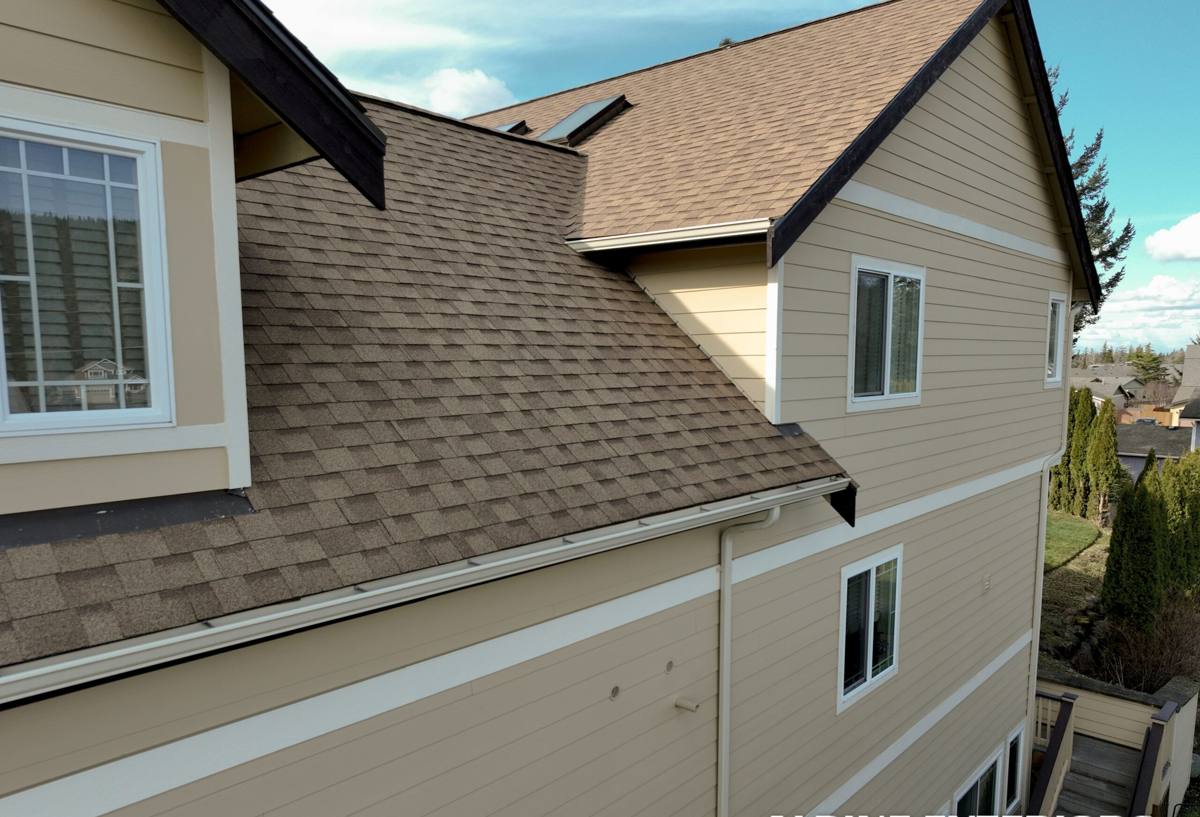
What West Anacortes' Climate Does to a Deck
Salt Air and Metal Fatigue
Even homes several blocks from the shoreline get salt-bearing air moving through on a regular basis. Over years, that air accelerates corrosion on nails, screws, joist hangers, and structural bolts. Corroded fasteners lose holding strength long before they look obviously rusted from the surface — the damage often starts where the metal meets damp wood, out of sight. A deck can look structurally fine and still have weakened connections underneath.
Driving Rain and Water Intrusion
Wind-driven rain doesn't fall straight down — it gets pushed sideways into ledger connections, under railing posts, and into any seam where flashing was installed a little short or a fastener wasn't sealed. Water that gets behind a ledger board or into a post base doesn't dry out quickly in our climate, and that's where rot typically starts: not on the exposed top of a board, but in the hidden connection points.
Moss, Algae, and the Long Wet Season
Anacortes doesn't get a short rainy season followed by months of dry heat the way some regions do — the wet stretch is long, and shaded or north-facing sections of a deck may barely dry out between storms. Moss and algae take hold on surfaces that stay damp, and beyond being a slip hazard, they hold moisture against the wood surface, which speeds up surface decay and makes boards slicker and softer over time.
Signs a West Anacortes Deck Needs Repair, Not Just Cleaning
- Soft or spongy spots when you press on decking boards, especially near the house or along the rim joist
- Railings or posts that flex or wiggle more than they used to
- Rust streaks running down from screw heads or bolt connections
- Gaps opening up where the deck meets the house (ledger board area)
- Persistent green or black growth that comes back within weeks of cleaning
- Stair stringers that feel less solid underfoot, or visible splitting at stair connections
- Fasteners backing out or visibly corroded heads
- A musty smell coming from underneath the deck
Any one of these on its own might be minor. Several together, especially combined with a deck that's a decade or more old, usually means it's time for a proper inspection rather than another round of pressure washing.
What a Correct Deck Repair Actually Involves
Inspection Before Anything Else
We start by checking the structural bones — ledger attachment, post bases, joist hangers, and framing — before looking at the surface. A deck can have new-looking boards on top of a compromised frame, and the reverse is also true: solid framing under boards that just need refinishing. You can't tell which situation you're in without getting underneath and probing the wood.
Isolating Rot, Not Just Covering It
Rotted wood needs to be cut back to solid material and replaced — sistering a joist, replacing a section of ledger, or swapping out individual boards. Painting or sealing over soft wood doesn't stop decay; it just hides where it's happening while the damage continues underneath.
Fastener and Hardware Upgrades
Given the salt air exposure here, repairs are a good opportunity to upgrade to corrosion-resistant fasteners and connectors rated for coastal or treated-lumber use, even if the original hardware wasn't. Mixing metals (the wrong screw in the wrong hanger) accelerates corrosion through galvanic reaction, so matching hardware correctly matters more here than it would in a dry inland climate.
Flashing and Water Management
Ledger board flashing is one of the most common failure points on any deck attached to a house, and it's often the actual root cause behind rot that shows up somewhere else. Correcting flashing details — so water sheds away from the house rather than behind the ledger — is frequently the difference between a repair that lasts and one that's back on our schedule in a few years.
Surface Restoration
Once the structure is sound, that's when board replacement, sanding, and refinishing make sense. Sealing or staining a deck before structural issues are resolved is wasted labor and material — it looks good for a season and doesn't address what's actually failing.
Repair vs. Replacement: How We Help You Decide
| Factor | Repair Often Makes Sense | Replacement Often Makes Sense |
|---|---|---|
| Framing condition | Solid, with isolated rot at joists or ledger | Widespread soft framing or repeated rot in multiple areas |
| Age of structure | Under 15-20 years, built to a reasonable standard | Older deck nearing or past typical service life |
| Fastener condition | Isolated corrosion, structure otherwise sound | Widespread corrosion throughout connections |
| Design/layout | Layout still works for how you use the space | Undersized, poor drainage design, or doesn't fit current needs |
| Cost comparison | Repair cost is a fraction of full replacement | Repair scope approaches or exceeds a meaningful share of replacement cost |
We'll give you an honest read on which side of that line your deck falls on. There's no benefit to us in over-selling a replacement when a repair will genuinely hold, and no benefit to you in patching a deck whose framing is fundamentally compromised.
Materials: What Holds Up Locally
For repairs, we generally match or upgrade from the original material rather than mixing incompatible products, since different decking and framing materials expand, contract, and age differently — patching wood decking with composite, for example, creates a maintenance and appearance mismatch down the line. Where we do recommend a material change, it's based on how that section performs in our specific conditions: sun exposure, shade, proximity to the water, and how the area drains.
Pressure-Treated Framing
Still the standard for structural framing in most repairs. What matters more than the wood itself is the fastener and connector selection, and making sure cut ends and drilled holes get properly treated before they're closed up, since factory treatment doesn't penetrate a fresh cut.
Decking Surface Options
Whether we're replacing boards in wood or composite, the honest trade-off is maintenance versus upfront cost: wood needs periodic sealing and is more forgiving to spot-repair, while composite costs more initially but handles our damp climate with less recurring maintenance. Either can work well in West Anacortes — the right choice depends on your budget and how much upkeep you want to take on.
Our Repair Process
- On-site inspection of the full structure — framing, connections, decking, and railings
- Written assessment of what's failing and why, including root cause where we can identify it
- A clear repair scope and estimate before any work starts
- Removal and replacement of compromised material, with framing addressed before surface work
- Hardware and flashing corrections where the original installation is contributing to the problem
- Final walkthrough so you can see exactly what was done and why
Why a Locally Established Crew Matters Here
A deck repair crew that regularly works in West Anacortes has already seen how salt exposure, shade patterns, and Skagit County's wet season interact on real structures in this specific area — which framing details tend to fail first, which fastener choices hold up and which don't, and where water tends to find its way in on homes built to older or coastal-adjacent standards. That's different from general deck experience picked up somewhere drier or further from the water. We also stay reachable for follow-up if a repair needs a look after a hard winter, rather than being a crew that did one job and moved on to another region.
If you're seeing soft spots, rust stains, wobbly railings, or a deck that just doesn't feel as solid as it used to, we're happy to take a look and give you a straight answer — no pressure, no upsell. Reach out using the form below for a free estimate on your West Anacortes deck repair.