 Anacortes
 Building New in West Anacortes? The Window Install Stage Matters More Than People Think
If you're framing a new home or an addition in West Anacortes, the window installation stage is one of the few points in the build where a mistake gets sealed inside the wall for good. New-construction windows aren't dropped into an existing opening the way a replacement window is — they're integrated into the house while the studs, the weather-resistive barrier, and the sheathing are still open and accessible. Get that sequencing right and the window will perform for decades. Get it wrong, and you won't see the problem until there's a stain on the drywall two winters from now.
West Anacortes sits close enough to the water that homes here take a different kind of weathering than inland Skagit County construction. That's the piece we focus on with every new-construction window job in this neighborhood.
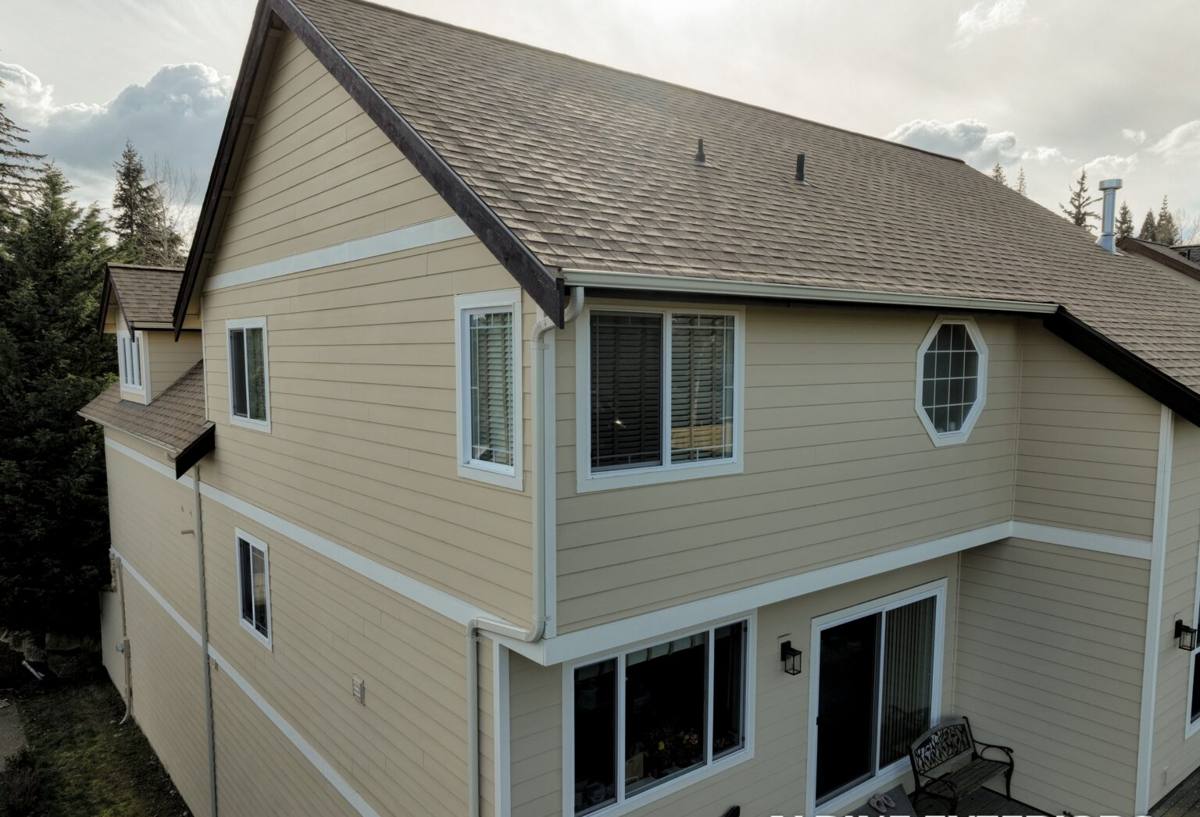
Why West Anacortes Punishes a Sloppy Window Install
West Anacortes homes face a combination that's tougher on building envelopes than most people expect:
- Salt air: proximity to the water means airborne salt settles on and around window frames, hardware, and fasteners — it accelerates corrosion on the wrong metals and can degrade some sealants faster than inland exposure.
- Driving rain: wind off the water frequently drives rain sideways into west- and south-facing walls, which means it hits window flanges and trim at an angle instead of falling straight down. Flashing details that would be "fine" on a sheltered lot aren't good enough here.
- Long moss season: the wet, mild stretch of the year that runs from fall through spring keeps siding, trim, and window sills damp for extended periods. Anything installed without a clear drainage path will hold moisture instead of shedding it.
None of this means new construction here is riskier than anywhere else in Skagit County — it just means the margin for error on flashing, fastener choice, and sealant selection is smaller. A window install that would pass on a dry, inland lot can fail on a west-facing wall a few blocks from the water.
What "Correct" Actually Looks Like Before the Window Even Goes In
Most of the work that determines whether a new-construction window lasts happens before the window is set. A correct sequence looks like this:
- Rough opening checked square, level, and sized to the manufacturer's tolerance — not just "close enough."
- Weather-resistive barrier (WRB) cut and folded into the opening so water is directed out, not trapped inside the wall cavity.
- A sloped sill pan installed at the bottom of the opening — this is the single most-skipped step on budget installs, and it's the one that matters most in a driving-rain climate.
- Window set, shimmed plumb and square, and fastened through the nail fin per the manufacturer's schedule (not "a screw every foot or so").
- Flashing tape applied in the correct shingle-lap order — sides first, then the top — so every layer overlaps the one below it.
- Sealant applied at the specified points only — sealing the wrong spots can trap water instead of keeping it out.
Material and Glass Choices That Make Sense for This Location
New construction gives you a real choice of window material and glass package, since you're not constrained by an existing frame. For a West Anacortes lot with water exposure, we typically walk homeowners through these trade-offs rather than pushing one product:
| Frame Material | How It Handles Salt Air & Moisture | Maintenance |
|---|---|---|
| Vinyl | Won't corrode; performs well in salt air; can expand/contract with temperature swings | Low — occasional cleaning |
| Fiberglass | Very stable dimensionally, holds paint well, strong resistance to moisture-driven warping | Low |
| Aluminum-clad wood | Attractive interior wood look, but cladding seams and exposed fasteners need good detailing near salt air | Moderate — watch seams and caulking |
| Bare wood | Requires the most protection and upkeep in a wet, salt-air climate; we generally steer clients away from this for west-facing, water-exposed elevations | High |
On glass, most new builds in this area benefit from a double-pane, low-E unit with argon fill as a baseline — it manages the region's mild-but-damp temperature swings and cuts down on condensation on cold mornings. For rooms facing the water directly, some homeowners opt for a slightly heavier-duty glass package for wind load and sound; that's a conversation worth having with your builder before the windows are ordered, since it affects rough opening sizing.
Hardware and Fasteners: The Detail Salt Air Actually Attacks
Corrosion doesn't usually start at the glass or the frame — it starts at fasteners, hinges, and cranks. In a salt-air environment we specify corrosion-resistant fastener types for the nail fin and use hardware finishes rated for coastal or marine exposure where the manufacturer offers it. It's a small line item on a quote, but it's the difference between hardware that still operates smoothly in ten years and hardware that seizes or streaks rust down the siding in three.
Our Process for New-Construction Window Jobs in West Anacortes
1. Plan Review and Rough Opening Coordination
We work from the framing plans (or coordinate directly with your builder) to confirm rough opening sizes before windows are ordered — a mismatch here causes delays that ripple through the whole schedule.
2. Site Walk During Framing
We like to see the openings while the wall is still open. It's the only time we can confirm WRB lap direction, sheathing condition, and header height without opening anything back up.
3. Sill Pan and Flashing Installation
This is where we slow down. Every sill pan is sloped to drain, every flashing layer is lapped correctly, and every opening gets photographed before the window goes in — not for show, but so there's a record of what's behind the wall if a question ever comes up.
4. Window Set and Fastening
Windows are shimmed plumb, level, and square, then fastened per the manufacturer's schedule — which is also what keeps the warranty intact if you ever need to use it.
5. Final Seal and Exterior Trim
Sealant goes where it's supposed to go, exterior trim is set to shed water away from the opening, and we walk the job with you (or your builder) before we consider it done.
What to Check Before You Sign Off on a New-Construction Window Install
Whether you're using us or comparing quotes, this is the short list worth confirming on any West Anacortes new-build window job:
- Is there a sloped sill pan at every opening, or just sealant and hope?
- Does the flashing tape overlap in the correct shingle-lap order (sides before top)?
- Are fasteners rated for coastal/salt-air exposure, or just whatever was on the truck?
- Is the window fastened per the manufacturer's schedule (this affects your warranty)?
- Will the crew document the opening before it's closed up, in case a question comes up later?
- Does the glass package match the elevation's actual sun and wind exposure, not a one-size-fits-all spec?
Why It's Worth Hiring a Crew That Already Works in This Neighborhood
A window crew that mostly works inland doesn't think about salt-air fastener corrosion or wind-driven rain angles by default — it's not part of their normal routine. A crew that regularly works West Anacortes and the rest of Fidalgo Island builds those details into every job without being asked, because they've seen what happens on the water-facing walls that skip them. That familiarity also speeds up coordination with builders on rough openings, inspection timing, and scheduling around Skagit County's weather windows, which in this area means working around the wetter stretch of fall through spring rather than fighting it.
New Construction vs. Replacement: A Quick Distinction
Homeowners sometimes ask why we treat "new-construction" as its own service rather than lumping it in with window replacement. The short answer: they're different jobs with different failure points.
| New Construction | Replacement | |
|---|---|---|
| Access | Open stud wall, full access to WRB and sheathing | Existing siding and trim usually stay in place |
| Flashing | Built into the wall assembly from scratch | Tied into existing flashing, which may already be compromised |
| Fastening | Nail fin through sheathing into framing | Often a flush-fin or block-frame approach depending on existing opening |
| Timing pressure | Tied to the builder's overall schedule | Standalone, scheduled around the homeowner |
Both require real skill, but new construction rewards careful sequencing more than anything else — there's no old flashing to blame later, only the work that goes in now.
Get a Straight Answer on Your Project
If you're building or adding on in West Anacortes and want windows installed the way this climate actually requires — sloped sill pans, correct flashing laps, salt-air-appropriate hardware, and a crew that documents the work before it's closed up — we're glad to take a look at your plans. Fill out the form below for a free, no-pressure estimate; we'll tell you honestly what your project needs, not just what's easiest to sell.