 Anacortes
 Roofing in Burlington's Climate Is Its Own Challenge
Burlington sits in the lowland stretch of Skagit County, close enough to Puget Sound and the tidal flats that salt-laden air is a constant factor on any roof in the area. Add in the region's long wet season, driving rain off the water, and the shade and dampness that let moss take hold on north-facing slopes for months at a time, and you have a set of conditions that will find every weak point in a shingle roof faster than most manufacturers' installation guides account for. A roof that would last two decades in a dry inland climate can start showing granule loss, moss intrusion, or flashing failure well before that here if it wasn't installed with this specific climate in mind.
That's the core issue with a lot of asphalt shingle roofing in this area: the shingles themselves are usually fine. What fails is everything around them — underlayment choices, ventilation, flashing details, and how the roof was tied into moss and moisture control from day one. We install and repair asphalt shingle roofs for homes in Burlington with those local realities built into the plan, not treated as an afterthought.
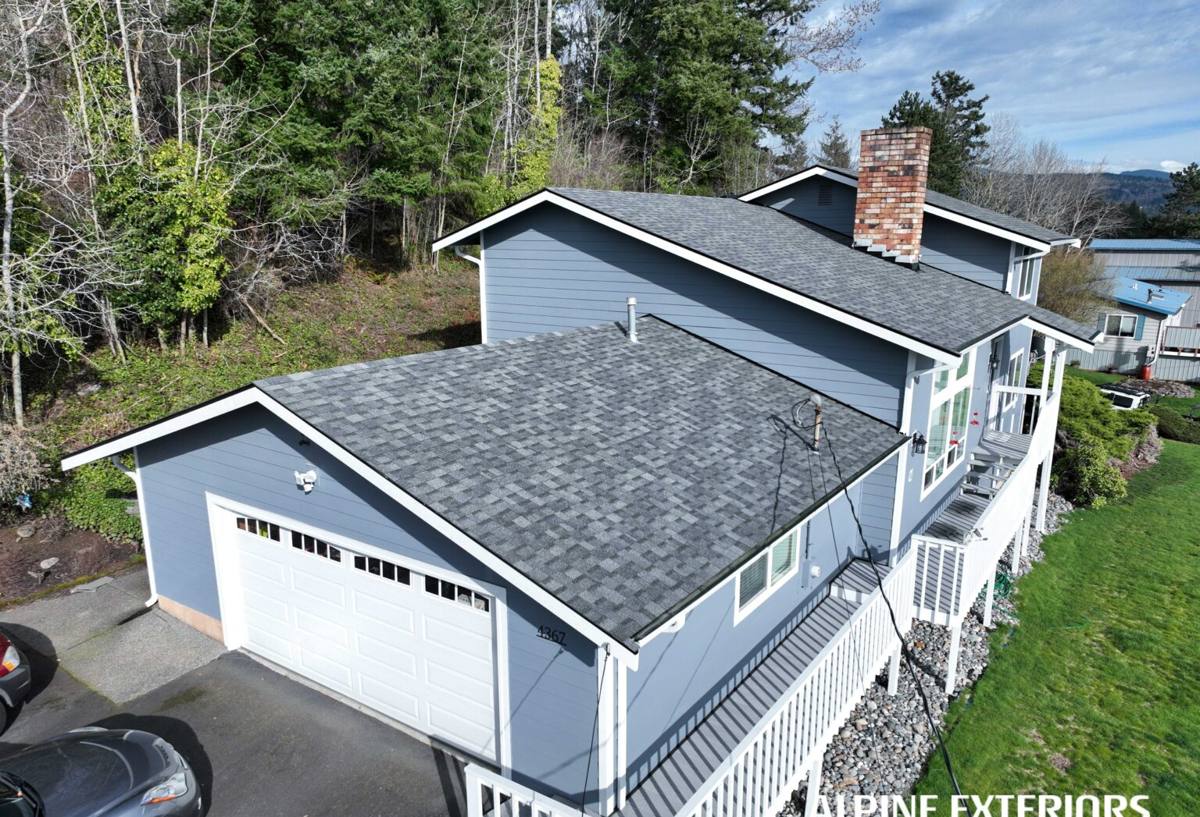
What Salt Air, Rain, and Moss Actually Do to a Shingle Roof
Salt Air
Airborne salt doesn't just affect homes right on the water. It travels inland on wind and settles on roofing, siding, and metal components across the Burlington area. On a shingle roof, the concern is mostly with metal flashing, nail heads, gutters, and vents — salt exposure speeds up corrosion on lower-grade metal, which is why flashing and fastener quality matter more here than in a dry, inland climate.
Driving Rain
Wind-driven rain doesn't fall straight down — it gets pushed sideways and upward under shingle tabs, around vent boots, and into any gap in flashing that a calm-weather installation might get away with. A roof system that only relies on gravity to shed water, rather than layered underlayment and properly lapped flashing, is going to leak here eventually, even if the shingles themselves look intact.
Moss Season
Shaded, north-facing, or heavily tree-covered roof sections in this part of Skagit County can stay damp for weeks at a stretch during the fall and winter. Moss doesn't just sit on top of shingles — it works down into the granule layer, lifts shingle edges, holds moisture against the roof deck, and creates channels for water to travel sideways instead of running off. Left unaddressed, moss growth is one of the most common reasons we see otherwise-sound asphalt shingle roofs fail early in this region.
Signs a Burlington Roof Needs Attention
- Moss or dark algae streaking on shingles, especially on shaded or north-facing slopes
- Granules collecting in gutters or at downspout outlets
- Curling, cupping, or cracked shingle tabs, particularly on south- and west-facing exposures
- Rust staining or visible corrosion around flashing, vent boots, or valleys
- Soft spots, sagging, or discoloration on interior ceilings below the attic
- Daylight visible through the roof deck from inside the attic
- Shingles that look intact from the ground but feel spongy or lift easily by hand at the edges
Any one of these on its own may just call for a repair. Several at once, or moss combined with granule loss, usually means the roof is further along than it looks from the driveway.
What a Correct Asphalt Shingle Installation Actually Involves
A shingle roof is a system, not a single product. In a climate like Burlington's, every layer underneath the visible shingles matters as much as the shingles themselves.
Deck Inspection and Repair
Before anything goes down, the roof deck gets checked for soft spots, rot, or delamination — especially around valleys and eaves, where past moisture problems tend to concentrate. Installing new shingles over a compromised deck just hides the problem and shortens the life of the new roof.
Ice and Water Barrier at Vulnerable Points
Eaves, valleys, and areas around chimneys and skylights get a self-adhering waterproof membrane underneath the underlayment. These are the spots where wind-driven rain and ice-dam-style backup (which does happen during cold snaps here) are most likely to force water past a standard felt underlayment alone.
Full-Coverage Synthetic Underlayment
We use synthetic underlayment across the full roof deck rather than relying on the shingles as the primary water barrier. It holds up better than old-style felt in wet, humid conditions and gives the roof a second line of defense if wind or moss ever compromises a shingle.
Proper Flashing at Every Penetration
Chimneys, vent pipes, skylights, and roof-to-wall transitions are where most leaks originate — not out in the open field of shingles. Step flashing, counter-flashing, and vent boots need to be correctly lapped with the underlayment and shingles, not just caulked and hoped for.
Manufacturer-Spec Nailing
Underdriven, overdriven, or misplaced nails are a leading cause of shingle blow-off in wind and rain events. Correct nail placement and count, per the shingle manufacturer's specification, is what keeps a roof intact when weather off the Sound picks up.
Attic Ventilation Tied Into the Roof
Intake and exhaust ventilation needs to work together to keep the underside of the roof deck dry. In a damp climate, poor ventilation traps moisture in the attic, which shortens shingle life from underneath — a failure mode you can't see from the ground until the damage is already done.
Choosing the Right Shingle for This Climate
Not every asphalt shingle product handles a wet, moss-prone, salt-air climate equally well. The table below outlines the general trade-offs we walk homeowners through when picking a product for a Burlington home.
| Shingle Type | Typical Lifespan | Moss/Algae Resistance | Best Fit |
|---|---|---|---|
| 3-Tab Asphalt | 15-20 years | Standard granules only; needs algae-resistant option | Budget-conscious re-roofs, simple roof lines |
| Architectural (Laminate) Asphalt | 25-30+ years | Usually available with algae-resistant granules | Most Burlington homes; better wind and impact performance |
| Algae-Resistant Upgrade (either type) | Same as base shingle | Copper-infused granules resist streaking and slow moss/algae growth | Shaded lots, north-facing slopes, heavy tree cover |
| Premium/Designer Asphalt | 30+ years | Typically includes algae-resistant granules | Homeowners prioritizing appearance and longer warranty |
We generally steer homeowners in shaded or heavily wooded parts of Burlington toward algae-resistant shingles as close to a standard recommendation rather than an upsell — the cost difference is modest, and the moss and streaking resistance matters more here than in drier climates where that upgrade is more optional.
How Our Process Works
- On-site inspection. We look at the existing roof, attic ventilation, decking condition, and any moss or moisture patterns specific to your lot and tree cover.
- Honest scope and options. You get a clear explanation of what's actually needed — full replacement, partial re-roof, or repair — along with shingle and underlayment options suited to your home's exposure.
- Written estimate. No vague allowances. You know what's included before work starts.
- Deck prep and repair. Any rot, soft spots, or damaged sheathing gets addressed before new materials go down.
- Underlayment, flashing, and ventilation installed to spec. This is where most of the roof's actual weather resistance comes from.
- Shingle installation per manufacturer nailing and exposure requirements. Correct installation is what protects your warranty coverage.
- Final walkthrough. We go over the finished roof, cleanup, and any maintenance recommendations specific to your property's moss and drainage exposure.
Ventilation and Moisture: The Part You Can't See
A shingle roof can look perfect from the street and still be failing from underneath if the attic isn't breathing correctly. In a climate as damp as Skagit County's, trapped attic moisture leads to sheathing rot, mold, and premature shingle deterioration from the underside — none of which shows up until it's a bigger repair than a ventilation fix would have been. Balanced intake (usually at the eaves) and exhaust (ridge or roof vents) is a standard part of how we approach any full re-roof, and it's worth checking even if you're only having repairs done.
Maintenance That Actually Matters Here
Asphalt shingle roofs in this region need a different maintenance rhythm than the same roof would in a dry climate. A short annual routine goes a long way toward avoiding early failure:
- Clear gutters and downspouts before the fall rains set in, so water isn't backing up under the eaves
- Remove moss buildup on shaded slopes before it works under shingle edges — done carefully, without pressure-washing the granules off
- Check flashing around chimneys, skylights, and vents annually for gaps or corrosion
- Trim back overhanging branches to reduce shade, debris, and the moisture that feeds moss growth
- Look at the attic once a year for signs of moisture, staining, or daylight through the deck
- Address small leaks or lifted shingles promptly — driving rain will find and exploit a small gap quickly
Homeowners who stay ahead of moss and gutter maintenance routinely get more years out of the same shingle product than those who let it go unchecked.
Repair, Partial Re-Roof, or Full Replacement?
Not every roofing issue in Burlington calls for a full tear-off. The right call depends on the age of the roof, how widespread the damage is, and whether the underlying deck and ventilation are still sound.
| Situation | Likely Approach | Key Factor |
|---|---|---|
| Isolated leak, roof under 10-15 years old | Targeted repair | Deck and surrounding shingles still in good condition |
| Moss on one shaded slope, rest of roof sound | Moss removal + spot repair | Catching it before granule loss or lifted shingles spread |
| Widespread granule loss, curling shingles, roof 20+ years old | Full replacement | Shingle material has reached the end of its service life |
| Multiple past leaks, soft decking found during inspection | Full replacement with deck repair | Underlying structure needs to be corrected, not covered |
We'll always tell you honestly when a repair is the right call and a full replacement isn't necessary yet — and just as honestly when patching a roof that's already at the end of its life is a short-term fix that will cost more over time.
Why a Crew That Already Works Burlington Matters
Roofing crews that mainly work drier, inland climates don't always plan for moss, salt air, or the volume of driving rain that comes through this part of Skagit County in a normal winter. That shows up later as flashing that wasn't detailed for wind-driven rain, ventilation that wasn't sized for a wet climate, or a shingle choice that wasn't suited to a shaded lot. Working in and around Burlington regularly means we're already accounting for those conditions in the estimate, the material choices, and the installation details — not learning about them after a callback.
It also means straightforward answers about what your specific roof needs, without a generic pitch that doesn't account for your lot's sun exposure, tree cover, or how close you are to prevailing wind and weather patterns off the Sound.
If you're dealing with moss, an aging roof, or just want an honest read on where your shingle roof stands, we're glad to come take a look. Reach out for a free, no-pressure estimate — use the form below to get started.