 Anacortes
 Roofing in Bow Has to Work Harder Than a Roof Inland
Bow sits close enough to Samish Bay and the greater Skagit County shoreline that a roof here deals with a different combination of stresses than a roof twenty miles inland. Salt-laden air moves in off the water and settles on every exposed surface, driving rain comes in sideways during winter storms, and the shaded, damp conditions common to this part of Skagit County keep moss and moisture active on rooflines for much of the year. None of that is unusual for western Washington, but it does mean a roof installed without those specific conditions in mind will show problems years before it should.
A correctly installed new roof in Bow isn't just about laying shingles or panels in straight lines. It's about choosing materials that tolerate salt exposure, building in ventilation that keeps moisture from getting trapped under the roof deck, and detailing the edges, valleys, and penetrations so wind-driven rain has nowhere to get in. That's the standard we hold every new roof installation to in this area.
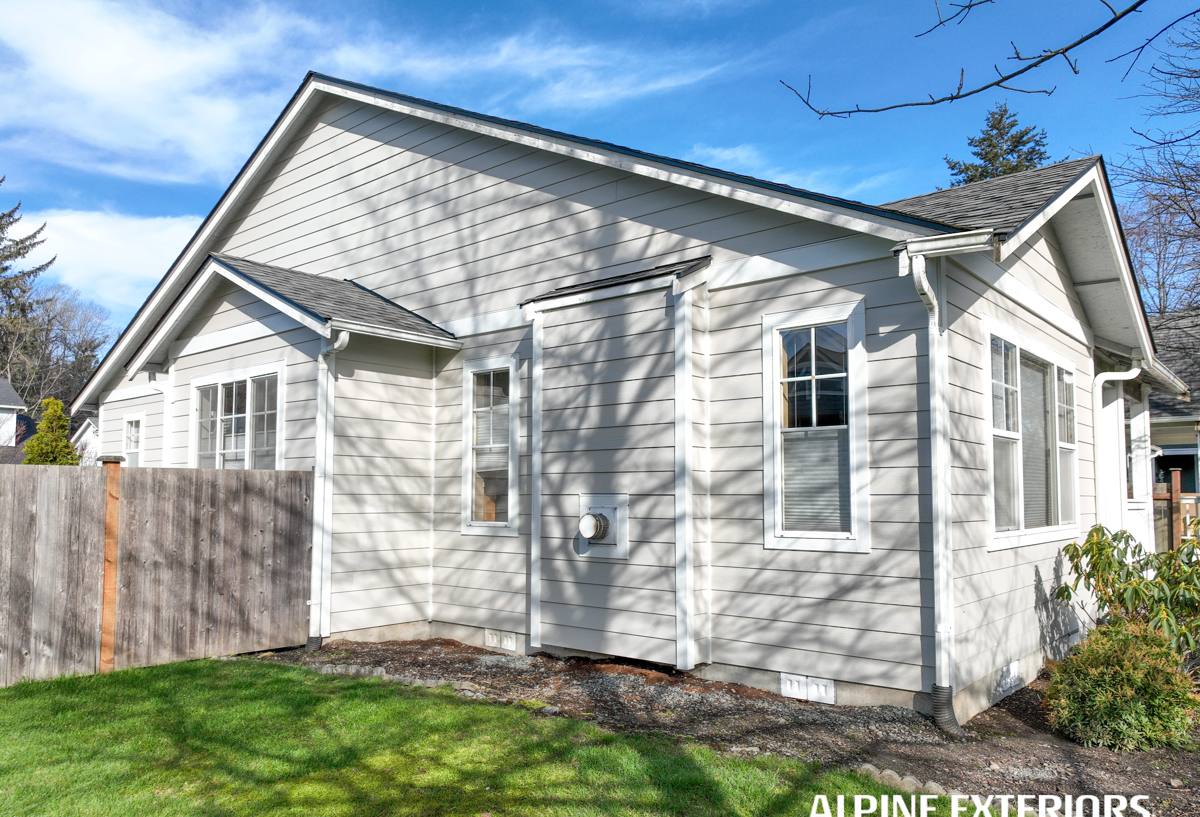
What Salt Air, Rain, and Moss Actually Do to a Roof
Salt Air and Metal Fasteners
Salt-carrying air corrodes unprotected or poorly coated metal faster than it would further inland. Roofing nails, flashing, and fasteners that aren't rated for coastal exposure can start rusting years ahead of schedule, which weakens the roof's grip on itself long before the shingles or panels themselves wear out. This is one of the most overlooked factors in roof failures near the water, because the visible roofing material can still look fine while the fasteners underneath are failing.
Driving Rain and Wind-Driven Water
Rain that comes in mostly straight down is a much easier problem to solve than rain that's being pushed sideways by wind off the water. Driving rain finds weaknesses at ridge caps, valleys, and anywhere two roof planes meet. If underlayment, flashing, and shingle overlap aren't installed with that wind direction in mind, water gets pushed uphill under the roofing material instead of running off it.
Moss and Extended Dampness
Skagit County's tree cover and marine-influenced climate mean roofs here stay damp longer after a rain than roofs in drier parts of the state, and shaded sections are especially prone to moss and moisture retention. Moss holds water directly against the roofing surface, which accelerates wear on asphalt shingles and can lift shingle edges as it grows. Left unmanaged over several seasons, it also degrades the granule surface that protects shingles from sun and weather.
What a Correct New Roof Installation Involves
A new roof is a system, not a single layer of material. Every component below plays a role in how the roof performs against Bow's climate specifically:
- Tear-off and deck inspection: Removing the old roofing down to the deck lets us check for soft spots, rot, or water damage that's been hidden — common on older Skagit County homes with a history of moss or ice dam issues.
- Ice and water shield at vulnerable points: Eaves, valleys, and anywhere water tends to pool or back up get a self-adhering waterproof membrane, not just standard felt.
- Synthetic underlayment across the field: A durable, water-resistant layer under the roofing material adds a second line of defense if wind-driven rain gets past the surface layer.
- Corrosion-resistant fasteners and flashing: Given the salt air in this area, we don't cut corners on fastener quality — it's one of the cheapest parts of the job to do right and one of the most expensive to fix later.
- Balanced attic ventilation: Intake at the eaves and exhaust at the ridge keep air moving through the attic, which controls moisture buildup and helps prevent the trapped dampness that feeds moss and accelerates shingle aging from underneath.
- Proper valley and penetration detailing: Every pipe boot, skylight curb, and valley is a place where a roof is most likely to leak. These get more attention, not less, because they're where driving rain does its damage.
Choosing Roofing Materials for a Bow Home
There isn't one right roofing material for every home — it depends on your roof's pitch, sun and shade exposure, budget, and how the house looks. What matters most is understanding the trade-offs for this specific climate before deciding.
| Material | How It Handles Local Conditions | Maintenance Considerations |
|---|---|---|
| Architectural asphalt shingles | Good performance and value; needs proper ventilation and moss management to reach full lifespan in shaded, damp spots | Periodic moss/debris removal recommended, especially on north-facing or tree-shaded slopes |
| Metal roofing | Sheds moisture quickly and resists moss growth well; requires marine-grade or properly coated fasteners and flashing to handle salt air long-term | Low ongoing maintenance once installed correctly; installation quality matters more than with shingles |
| Composite/synthetic shingles | Resistant to moisture absorption and rot; performs steadily across wet seasons | Generally low maintenance; check manufacturer warranty terms for coastal/marine exposure |
We'll walk through these trade-offs with you directly rather than pushing one product — the right call depends on your roof's specific exposure and what you want out of the next 20-plus years.
Our Installation Process
1. On-Site Assessment
We look at your current roof's condition, ventilation setup, flashing points, and any signs of moss, moisture staining, or past repairs. We also talk through your goals — budget, material preference, and how long you plan to stay in the home.
2. Straightforward Proposal
You get a clear breakdown of materials, scope, and cost — no vague allowances or surprise add-ons discovered halfway through the job.
3. Tear-Off and Deck Repair
Old roofing comes off completely so we can inspect and repair the deck itself. Skipping this step is how new roofs end up sitting on a compromised base.
4. System Installation
Underlayment, flashing, ventilation components, and the roofing material go in as a coordinated system, with extra attention at valleys, penetrations, and edges where driving rain and wind put the most pressure.
5. Final Walkthrough
We review the finished roof with you, confirm ventilation and drainage are working as intended, and make sure you know what routine upkeep — if any — the new roof needs.
Why Hire a Crew That Already Works in Bow
Roofing crews that mainly work drier, inland regions don't always account for marine air corrosion, moss cycles tied to Pacific Northwest shade patterns, or the wind-driven rain that comes through Skagit County in the winter months. Working regularly in Anacortes, Bow, and the surrounding communities means we see how roofs actually perform here over time — which fastener choices hold up, which ventilation setups keep moss from coming back, and which details matter most where the coastline meets driving rain. That local track record shapes how we spec and install every roof, not just the ones near the water.
Signs Your Bow Home May Need a New Roof Rather Than a Repair
- Shingles that are curling, cracking, or missing granules across large sections rather than one isolated spot
- Persistent moss growth that returns quickly after cleaning, especially on shaded slopes
- Daylight visible through the attic roof deck or consistent moisture staining on attic sheathing
- Rusting fasteners, flashing, or vent boots visible from the ground or attic
- A roof approaching or past the upper end of its material's expected lifespan, combined with rising repair frequency
- Multiple past repairs in different areas rather than one contained problem
If you're only seeing one or two of these, a repair may still be the right call — we'll tell you honestly if that's the case rather than pushing a full replacement you don't need yet.
What Affects the Cost of a New Roof
Roofing costs vary by home, and we won't quote a number without seeing the actual roof, but a few factors consistently drive cost up or down in this area:
- Roof size and pitch: Steeper roofs take longer to work safely and require more material overlap.
- Number of layers being removed: Tearing off multiple old layers adds labor and disposal cost.
- Deck condition: Rot or soft spots found during tear-off require repair before new roofing goes on.
- Material choice: Asphalt, metal, and composite options carry different material and installation costs.
- Complexity of the roofline: Valleys, dormers, skylights, and multiple roof planes all add detailing time.
- Ventilation upgrades: Adding or improving ridge and soffit ventilation is a smart investment on older homes but adds to the scope.
If your roof in Bow is showing its age or you're planning ahead rather than waiting for a leak, we're happy to take a look and give you a straight assessment. Reach out for a free, no-pressure estimate using the form below.