 Anacortes
 Burlington Roofs Face Weather Most Roofing Crews Don't Fully Respect
Burlington sits close enough to the water and the lowland fog belt of Skagit County that its roofs live through a different set of stresses than roofs further inland get. Salt-laden air off the Sound works on exposed fasteners and thin coatings year after year. Driving rain, pushed sideways by winter storms, finds every gap in flashing that wasn't detailed correctly the first time. And a long, wet moss season keeps organic growth working at shingles, valleys, and anything with a rough surface for it to grip. Metal roofing, installed correctly, handles those three pressures better than most other roofing materials available to homeowners here. Installed poorly, it fails in the same predictable places any roof does: at the seams, the penetrations, and the edges.
We're based out of Anacortes and have worked throughout Skagit County, including Burlington, long enough to know which failure points tend to show up first on metal roofs in this specific climate. This page covers what that means for your roof, what a correct installation actually involves, and how we handle the job from estimate to final walk-through.
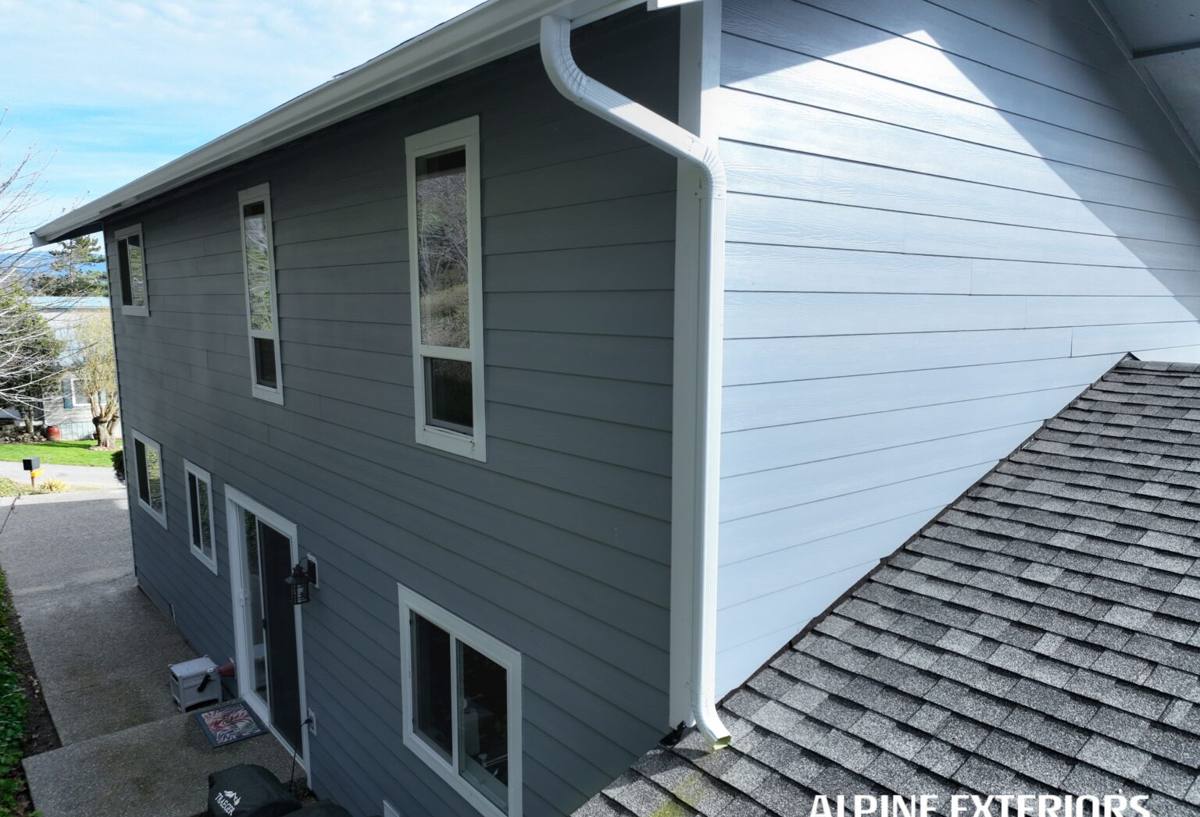
What Salt Air, Rain, and Moss Actually Do to a Roof
Coastal Salt Exposure
Salt air doesn't need to be blowing hard to matter. It settles as a fine residue on exposed metal and speeds up corrosion, especially at cut panel edges, exposed screw heads, and any spot where a protective coating has been scratched or worn thin during handling or installation. That's why fastener quality and finish grade matter more on a roof near the water than they would fifty miles inland.
Driving Rain and Wind-Driven Water
Storms coming off the water tend to push rain sideways instead of straight down, which means water finds its way under laps, around chimneys, and behind step flashing that would stay dry in a calmer climate. A metal roof is almost always only as watertight as its flashing details — the panels themselves rarely leak. Leaks show up at transitions, not in the field of the roof.
Moss and Sustained Moisture
Skagit County's long wet season keeps roofing surfaces damp for extended stretches, which is exactly what moss and algae need to establish. Moss holds moisture against a roof, works into seams over time, and on materials with any texture or granulation it can take hold within just a few seasons. Smooth metal panels give moss far less to grip onto than shingles or shakes, which is one practical reason metal has become a common upgrade for homeowners in this area who are tired of re-treating moss every year.
Why Metal Roofing Fits This Climate
Metal roofing isn't the right fit for every home or every budget, and we'll say so plainly if that's the case on yours. But for the specific conditions Burlington deals with, it has real practical advantages. A properly finished panel sheds moss and organic debris instead of collecting it. Fewer exposed seams and a smooth deck mean fewer places for wind-driven rain to work its way in over time. A quality steel or aluminum panel with a factory-applied coating holds up to salt air far longer than bare or lightly coated metal, and it doesn't absorb water the way wood-based materials can. And because a correctly installed metal roof sheds snow and rain quickly, it spends less time saturated — which matters in a climate where roofs rarely get a long dry stretch to recover in.
None of that makes metal roofing maintenance-free. It still needs the right underlayment, the right flashing, and periodic attention, which we cover below.
Panel Types and Finishes We Work With
Not all metal roofing is the same product wearing different colors. The panel style and fastening method affect how the roof performs in wind-driven rain and how much upkeep it needs over its life. Here's how the two most common options compare for a home in this area:
| Factor | Standing Seam | Exposed-Fastener (Ribbed/Corrugated) |
|---|---|---|
| Fasteners | Concealed under interlocking seams | Screws driven through the panel face |
| Water resistance in driving rain | Higher — no exposed penetrations for wind-driven water to exploit | Good, but relies on gaskets and washers staying intact |
| Long-term maintenance | Minimal; no fasteners to re-torque or replace | Fastener washers typically need checking and occasional replacement over the roof's life |
| Upfront cost | Higher | Lower |
| Best fit | Homes prioritizing lowest long-term maintenance and best wind-driven rain performance | Homes with tighter budgets, or secondary structures like shops and garages |
Both options can perform well in Burlington's climate when installed correctly. We'll walk you through which one makes sense for your roof's pitch, exposure, and budget rather than defaulting to one product for every job.
What a Correctly Installed Metal Roof Actually Includes
Most metal roof problems we get called out to inspect trace back to shortcuts taken during the original install, not a failure of the metal itself. A correct installation on a home in this climate should include:
- Synthetic underlayment rated for the panel type, not just whatever was on hand
- Ice-and-water barrier at eaves, valleys, and any low-slope transitions where wind-driven rain and debris tend to collect
- Proper fastener type and spacing matched to the panel manufacturer's specifications, not a generic screw pattern
- Correctly formed and sealed flashing at every penetration — chimneys, vents, skylights, and wall transitions
- Closure strips at eaves and ridges to block wind-driven rain and pests without blocking airflow
- Ridge and soffit ventilation sized for the attic, so moisture doesn't get trapped under the deck
- Panel layout planned to minimize seams running against the prevailing wind and rain direction
Skip any one of those and the roof can still look right for a season or two before a problem shows up — usually at the worst possible time, mid-storm.
How We Approach a Burlington Metal Roofing Project
The process is straightforward, but we don't rush the parts that matter:
- Inspection and estimate. We look at the existing roof, the deck condition, ventilation, and how the roof is exposed to weather and salt air on your specific lot before recommending a panel type.
- Tear-off or overlay decision. Metal can sometimes go over an existing roof in limited situations, but in most cases in this climate we recommend a full tear-off so we can inspect and repair the deck underneath — hidden rot or old water damage is common on roofs that have been through several wet seasons.
- Deck prep and repair. Any soft, rotted, or damaged decking gets replaced before underlayment goes down. Installing a new roof over a compromised deck just hides the problem.
- Underlayment and flashing first. This is the layer that actually keeps water out; the panels are the second line of defense, not the first.
- Panel installation. Panels go on in a sequence planned around your roof's geometry and prevailing weather exposure, not just started at whichever edge is easiest to reach.
- Final details and cleanup. Trim, closures, and flashing get finished, the site is cleared of debris and fasteners, and we walk the roof with you before calling the job done.
Cost Factors on a Burlington Metal Roof
We don't publish blanket prices because two roofs of the same square footage can cost very different amounts depending on their condition and complexity. These are the factors that actually move the number:
| Factor | Why It Matters |
|---|---|
| Panel type and finish | Standing seam and premium coatings cost more upfront but need less attention over time |
| Roof complexity | Steep pitches, multiple valleys, and lots of penetrations mean more flashing work and labor time |
| Tear-off vs. overlay | Removing an old roof adds labor and disposal cost, but lets us inspect and fix the deck underneath |
| Deck condition | Rot or water damage found during tear-off requires repair before panels can go on |
| Ventilation and accessory work | Adding or upgrading ridge vents, gutters, or trim adds to the scope but improves long-term performance |
Metal roofing generally costs more upfront than asphalt shingles, and less over the full life of the roof — but the honest number for your home depends on the factors above. We'll give you a real, itemized number after we've actually looked at your roof, not a phone estimate.
Living With a Metal Roof in This Climate: Maintenance That Actually Matters
Metal roofing is low-maintenance, not no-maintenance. In a salt-air, moss-season climate like Skagit County's, a few habits go a long way:
- Keep gutters, valleys, and low-slope transitions clear of needles and debris so water doesn't sit against the panel or trim
- Rinse the roof periodically if it's shaded or tucked near trees, since standing organic debris is what gives moss a foothold even on metal
- Avoid pressure washing directly against seams, fasteners, or coatings — it can drive water where it shouldn't go and strip finish over time
- Have fasteners on exposed-fastener panels checked periodically, since washers and gaskets are the component most affected by sun and salt exposure
- After major windstorms, a quick visual check of flashing and trim catches small issues before a winter of driving rain turns them into leaks
Why Hiring a Crew That Already Works Burlington Matters
A metal roof installed by a crew unfamiliar with this specific climate can still look fine going up. The problems show up later — undersized ventilation that traps moisture, flashing details that weren't built for sideways rain, or a coating that wasn't rated for salt exposure. Working regularly in Skagit County means we already know the wind and rain patterns this area deals with, the local permitting requirements, and which panel finishes actually hold up here versus which ones look good on a sample chart and struggle in real conditions.
It also means we're not disappearing after the job is done. If a fastener needs a look after a few years, or a storm knocks something loose, we're still working in Burlington and reachable — not a crew that came through once from out of the area.
If you're weighing a metal roof for a home in Burlington, we're happy to take a look and give you a straight answer on what it needs and what it would cost — no pressure, no sales script. Reach out for a free estimate and we'll walk the roof with you.