 Anacortes
 Roof Repair Built for Burlington's Weather, Not a Generic Fix
Burlington sits in the Skagit Valley, close enough to Fidalgo Island and the Salish Sea that the same weather patterns that wear on Anacortes roofs reach homes here too. Moist marine air moves inland, driving rain comes in sideways during winter storms, and the valley holds fog and dampness longer than roofs further from the water. A roof repair here isn't just patching a hole — it's addressing a system that's fighting moisture and organic growth nearly year-round. We approach every Burlington repair call the same way: figure out what's actually failing, why it failed, and fix that root cause instead of just covering the symptom.
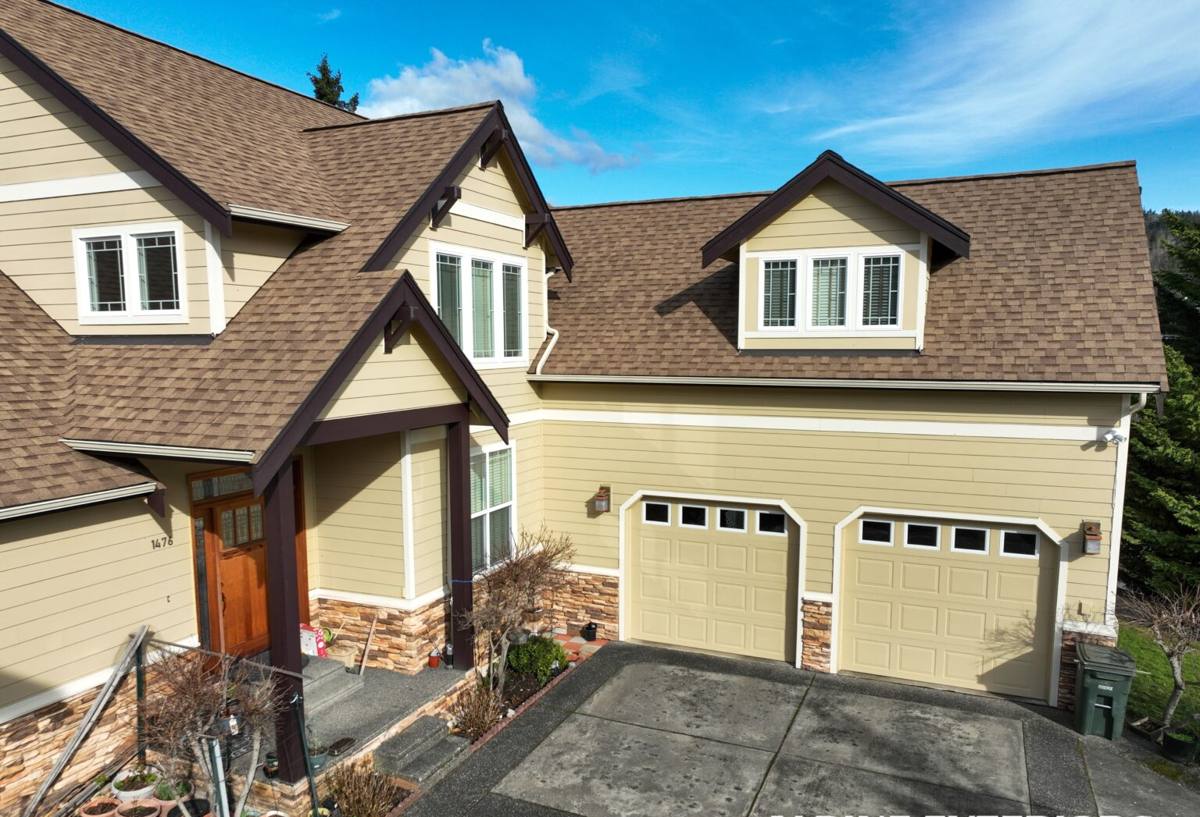
What Skagit County Climate Does to a Roof
Three things drive most of the repair calls we get in this part of Skagit County:
- Moisture-laden air that never fully dries out roofing materials between rain events, especially on north-facing slopes and shaded sections near trees.
- Driving rain that gets pushed under shingles, shakes, and flashing at an angle instead of falling straight down — this is what turns a small flashing gap into an active leak.
- A long moss season, often running from fall through spring, where moss and algae take hold on any roof that isn't shedding water and drying quickly.
None of this means Burlington roofs fail faster than roofs anywhere else in Western Washington. It means they need repairs that account for sustained moisture exposure, not repairs designed for a drier climate. A patch that would hold up fine in an arid region can fail here within a season if it doesn't account for how water actually moves across a wet roof.
Why Moss Is More Than Cosmetic
Moss on a roof isn't just an appearance issue. As it spreads, it holds water against the roofing surface, lifts shingle edges as it grows, and creates a spongy layer that keeps the deck damp longer after rain. Over a few seasons, that constant moisture exposure degrades shingles, breaks down underlayment, and can work its way into fastener holes and flashing laps. Any repair that doesn't also address moss growth on and around the repaired area is treating half the problem.
Common Roof Problems We See on Burlington Homes
Most repair calls in this area fall into a handful of categories. Recognizing which one applies to your situation helps set expectations for the scope of work:
- Flashing failures around chimneys, skylights, dormers, and roof-to-wall transitions — usually the first thing to fail, since flashing takes the most direct hit from driving rain.
- Valley leaks where two roof planes meet and water volume concentrates, especially if the valley material has thinned or the underlayment beneath it has degraded.
- Moss-related shingle damage where lifted or granule-stripped shingles have started to let water through.
- Nail pops and wind-lifted shingles from winter storm systems that move through the valley.
- Clogged or damaged gutters and downspouts that back water up under the roof edge instead of carrying it away.
- Aging pipe boots and vent seals where rubber gaskets crack from years of wet-dry cycling.
Most of these show up as a stain on a ceiling or ceiling tile long before they're visible from the ground, which is why a proper inspection has to go up on the roof, not just around the yard.
What a Correct Repair Actually Involves
A roof repair done right isn't just sealing whatever is visibly cracked or missing. It follows a sequence:
- Find the real entry point. Water often travels along the underlayment or decking before it shows up as a stain, so the visible damage indoors and the actual failure point on the roof aren't always in the same spot.
- Check the decking underneath. If plywood or sheathing has absorbed water, it needs to dry out or be replaced before new material goes over it — sealing over wet decking just traps the moisture.
- Match materials correctly. Shingles, underlayment, and flashing all need to be compatible with what's already on the roof, both in type and in how they're installed, so the repair doesn't create a new weak point at the seam.
- Rebuild flashing details properly, with correct laps and fasteners, rather than relying on caulk or roofing cement to bridge a gap that should be mechanically flashed.
- Confirm drainage — valleys, gutters, and roof edges all need to be clear and correctly pitched so water leaves the roof instead of pooling near the repair.
Skipping steps in this sequence is how a "fixed" leak comes back within a year. Sealant applied over a symptom without addressing the underlying flashing or decking issue is a temporary cover, not a repair.
Our Process for a Burlington Repair Call
When we get a call for a roof repair in Burlington, the process is straightforward:
- Inspection first. We get on the roof, not just in the attic or on a ladder from the ground, to see the actual condition of shingles, flashing, and moss coverage.
- A clear explanation of what we find — what's failing, why, and what it will take to fix it, including whether a repair is the right call or whether the roof's overall condition points toward replacement instead.
- A written estimate that spells out the scope of the repair, the materials involved, and what's included, so there's no ambiguity about what you're paying for.
- The repair itself, done to match the existing roofing system's materials and installation method wherever possible.
- A final check of drainage and surrounding areas so we're not leaving a secondary problem (like a clogged gutter feeding water back under the new flashing) to undo the work.
Repair or Replacement? How to Tell the Difference
Not every roof problem needs a full replacement, and not every leak can be permanently solved with a patch. The honest answer depends on the roof's overall age, how widespread the damage is, and how many times it's already been repaired. Here's a general guide:
| Situation | Repair Usually Makes Sense | Replacement Usually Makes Sense |
|---|---|---|
| Leak source | Isolated to one flashing detail, vent, or valley | Multiple leak points across different areas of the roof |
| Roof age | Well within its expected service life | At or near the end of its material's typical lifespan |
| Shingle condition | Surrounding shingles are still flexible and intact | Shingles are brittle, cracked, or losing granules broadly |
| Decking | Dry and structurally sound under the damaged area | Soft, delaminating, or water-damaged in multiple spots |
| Repair history | First or second repair on this roof | Recurring repairs to the same general area |
We'll always tell you honestly which side of that table your roof falls on. There's no advantage to us in talking a homeowner into a full replacement when a targeted repair will genuinely hold — and no advantage in patching a roof that's going to keep generating callback repairs every wet season.
Materials and Workmanship Standards
Whatever roofing material your home has — composition shingle, cedar shake, or metal — the repair only holds if the materials and technique match what the rest of the roof needs to perform correctly in this climate. That means using underlayment and flashing rated for sustained moisture exposure, not just whatever is cheapest to source, and installing it with the laps and fastening pattern that manufacturers spec for high-moisture regions. Skagit County's rain load isn't unusual for Western Washington, but it's a real design factor — details like ice-and-water shield at eaves and valleys, and properly lapped step flashing at walls, matter more here than they would in a drier climate. We treat those details as standard practice on every repair, not an upsell.
Moss and Debris: Ongoing Maintenance After the Repair
A repair is only as good as the maintenance around it. Once we've fixed the active problem, the single best thing a homeowner can do to protect that repair — and the rest of the roof — is stay ahead of moss and debris buildup. That generally means:
- Keeping gutters and downspouts clear so water isn't backing up under roof edges.
- Removing overhanging branches that shade the roof and keep sections of it perpetually damp.
- Treating or manually removing moss before it spreads across a wider area, rather than waiting until it's visible from the street.
- Scheduling a roof check at least once a year, ideally before the wettest months set in, so small issues get caught while they're still small.
None of this replaces a proper repair when something has actually failed, but it significantly extends how long a repair — and the roof around it — holds up.
Why It Matters to Hire a Crew That Already Works Burlington
Roofing techniques that work in a dry climate don't always translate directly to Skagit County conditions. A crew that regularly works Burlington and the surrounding Anacortes area already knows how driving rain behaves on local roof pitches, how fast moss re-establishes itself in this climate, and which flashing details tend to fail first on homes exposed to marine air moving in off the Sound. That's not a marketing distinction — it changes what gets prioritized on the roof and what materials get specified for a repair that's meant to actually last through the next several wet seasons, not just look fixed until the next storm.
Signs You Should Get a Roof Looked At Now
- A ceiling stain that appears, disappears, and reappears after heavy rain.
- Visible moss buildup, especially in valleys or on north-facing slopes.
- Granules collecting in gutters or at downspout outlets.
- Daylight visible through the attic at roof boards or flashing points.
- Shingles that look lifted, curled, or are missing after a windstorm.
- Soft spots underfoot when walking the attic near the roof deck.
If any of these sound familiar, it's worth having a roof looked at before the next wet stretch rather than after water has already made its way into the attic or ceiling.
If you're seeing signs of a leak, moss buildup, or storm damage on a Burlington roof, we're happy to take a look and give you a straightforward, no-pressure estimate — no obligation, just an honest read on what's going on and what it would take to fix it. Use the form below to get started.