 Anacortes
 Deck Building in Conway: Built for the Skagit Valley, Not a Catalog Photo
Conway sits low in the Skagit Valley, close to the river and not far from the tidal reaches of Skagit Bay. That combination of proximity to water, low elevation, and the long gray stretch of Pacific Northwest winter means a deck here works harder than a deck in a drier inland town. Salt-tinged air moves up the valley, driving rain finds its way into every joint and fastener hole, and a good chunk of the year stays damp enough that moss and algae get a real foothold on any horizontal surface that doesn't drain or dry quickly.
None of that means you can't have a good deck in Conway. It means the deck has to be built with those conditions in mind from the framing up, not just finished with a coat of stain and hoped for the best. This page covers what we look at, what we recommend, and how we build decks that hold up to a Skagit County winter.
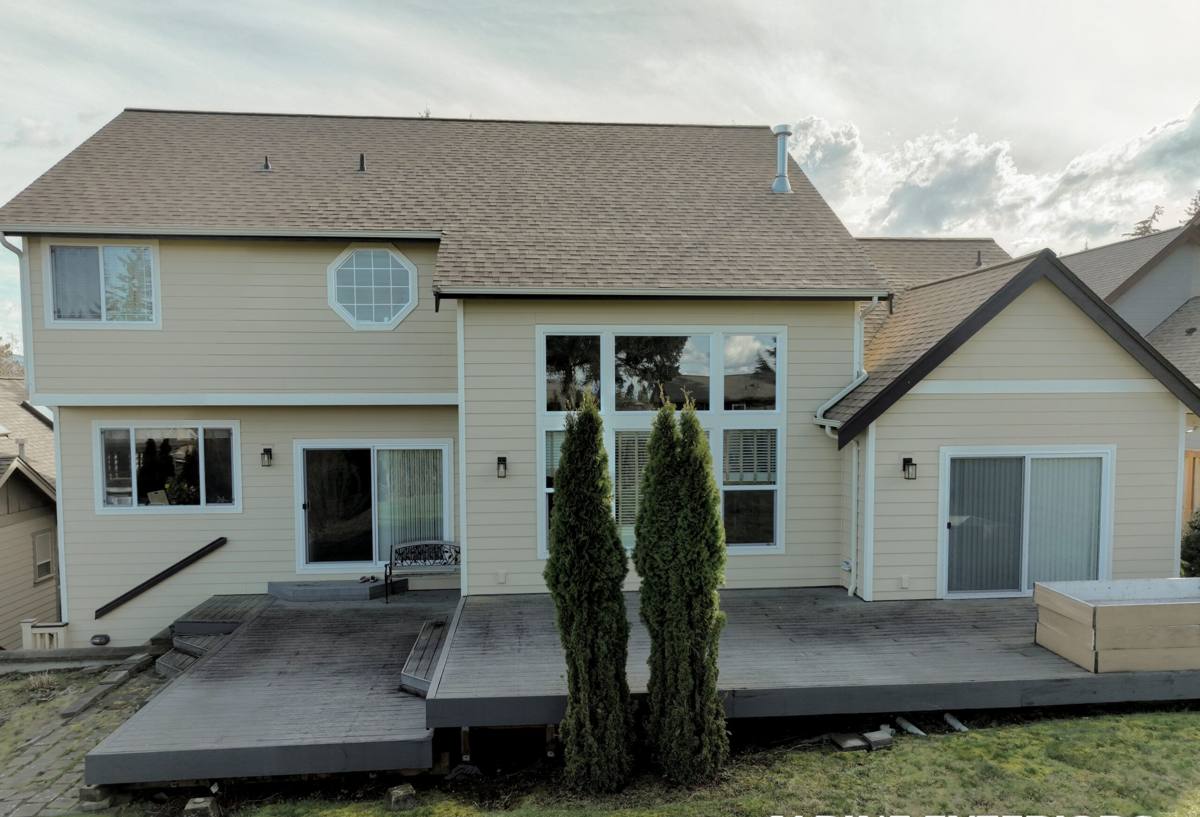
What Conway's Climate Actually Does to a Deck
Moisture from Every Direction
Low-lying ground near the river valley tends to hold moisture in the soil and air longer than higher, better-drained sites. That means deck posts, footings, and any structural wood close to grade need to be detailed for near-constant dampness, not occasional rain. Ground contact rot and post-base corrosion show up faster here than they would on a well-drained hillside lot.
Salt Air and Fasteners
Being close to the bay means airborne salt is part of the mix, even a few miles inland. Salt air accelerates corrosion in fasteners, connectors, and cheaper hardware. It's one of the reasons we don't cut corners on the metal that holds a deck together — it's the least visible part of the job and the most expensive to fix later.
Moss, Algae, and a Long Damp Season
Skagit Valley winters are long and wet, and decking surfaces that stay shaded or don't drain well grow moss and algae readily. Beyond looking bad, a mossy deck surface gets slick and holds moisture against the boards, which shortens the life of the material underneath. Surface selection, drainage, and gap spacing all affect how much of a maintenance problem this becomes.
What a Correctly Built Deck for Conway Actually Involves
Footings and Posts
In damp, low ground, footing depth and post-base hardware matter more than usual. We use post bases that hold the post fully off the concrete — not resting directly on it — so water doesn't wick up into the end grain. Footings are sized and placed to account for local soil conditions rather than a one-size-fits-all approach.
Ledger Attachment and Flashing
The ledger board — where the deck attaches to the house — is the single most common failure point on decks anywhere, and driving rain makes it worse here. Proper flashing, correct fastener type and spacing, and a real gap or drainage plane behind the ledger are non-negotiable. This is the detail that, done wrong, causes hidden rot behind siding that isn't discovered for years.
Framing and Fastener Grade
We frame with lumber rated for ground contact or exterior exposure where it matters, and we use fasteners and structural connectors rated for the corrosive, damp environment this region delivers — not the cheapest box at the hardware store. It costs a little more up front and saves a full rebuild later.
Drainage and Airflow Underneath
A deck that can't breathe underneath stays damp longer after every rain. Grading, gapping, and joist spacing are all part of getting air moving under the structure so it actually dries out between storms instead of staying wet all winter.
Choosing Decking Material for Conway Conditions
There's no single "best" decking material — there's a best material for your budget, your maintenance appetite, and how much shade and moisture your specific site gets. Here's how the common options actually compare in a climate like this one.
| Material | Moisture Behavior | Moss/Algae Resistance | Maintenance |
|---|---|---|---|
| Pressure-treated wood | Good if properly sealed and gapped; absorbs water at cut ends and fastener holes if untreated | Needs regular cleaning; moss takes hold in shaded, damp spots | Annual cleaning, periodic sealing/staining |
| Cedar | Naturally moisture-resistant but still needs finish maintenance in wet climates | Better than pine-based PT wood but still needs cleaning | Regular cleaning and re-staining to hold appearance |
| Composite decking | Doesn't absorb water like wood; performance varies by brand and board design | Some capped composites resist algae better than others; still needs periodic washing | Low — occasional cleaning, no staining |
| PVC/vinyl decking | Fully moisture-resistant, doesn't rot | Smooth capped surfaces generally shed moss and algae better | Lowest — mostly rinsing and occasional scrubbing |
We'll talk through these tradeoffs honestly for your specific deck — how much sun and shade it gets, how it's oriented to prevailing wind and rain, and what you're comfortable maintaining. A well-built wood deck with the right upkeep can look great for decades; a composite or PVC deck trades a higher material cost for a lot less seasonal maintenance. Neither is automatically the "right" answer for every home.
Our Deck Building Process
- On-site assessment — we look at grade, drainage, sun/shade exposure, and how the deck ties into the house before we talk materials or design.
- Design and material selection — layout, railing style, and decking material chosen based on your budget and how much maintenance you want to take on.
- Permitting — we handle the Skagit County permit process for the project, including any setback or floodplain-related requirements that apply to the site.
- Footings and framing — footings, posts, ledger attachment, and structural framing built to hold up under wet, salt-exposed conditions.
- Decking and railing installation — surface material and railing installed with attention to gapping, fastening, and drainage.
- Final walkthrough — we go over care and maintenance expectations specific to the material you chose, so there are no surprises the first wet winter.
Living With a Deck Through a Skagit Valley Winter
Even a well-built deck needs some seasonal attention in this climate. Gutters and downspouts near the deck should be kept clear so runoff isn't dumping directly onto the structure. Debris — leaves, needles, moss buildup — should be cleared from between boards periodically so water keeps draining instead of pooling. Wood decks need their finish checked annually; composite and PVC decks need less, but periodic washing keeps algae from getting a foothold in shaded corners.
None of this is unusual maintenance — it's just what a deck in a damp river valley climate needs to keep performing the way it should.
Permits and Site Considerations in Conway
Deck projects in unincorporated Skagit County typically require a building permit, and depending on the specific parcel, there can be additional considerations tied to proximity to the river, setbacks, or floodplain regulations. We handle this process as part of the job rather than leaving it to the homeowner to sort out, and we won't cut corners on permitting to save time — it's not worth the risk to you if the work ever needs to be inspected, insured, or disclosed at sale.
Why a Crew That Already Works in Conway Matters
Deck building isn't just carpentry — it's carpentry that has to survive a specific climate. A crew that's built decks around here already knows how the moisture and moss patterns behave through a Skagit Valley winter, which flashing details actually keep water out of a ledger board, and which hardware holds up against salt air over the long run instead of just looking fine on installation day. That local experience shows up years later, in the joints and connections you never see.
What to Check Before You Hire a Deck Builder Here
- Do they pull permits for deck work in Skagit County, or suggest skipping it?
- Do they use corrosion-resistant fasteners and connectors suited to a damp, salt-exposed climate?
- Can they explain ledger flashing and attachment in plain terms, unprompted?
- Do they talk honestly about maintenance tradeoffs between wood, composite, and PVC decking rather than pushing one product?
- Do they account for drainage and airflow underneath the deck, not just the visible surface?
- Are footings and post bases specified for local soil and moisture conditions?
If a contractor can't speak plainly to these points, it's worth asking more questions before signing anything.
If you're planning a new deck or replacing one that's showing its age, we're happy to take a look and talk through what makes sense for your home in Conway. Fill out the form below for a free, no-pressure estimate.