 Anacortes
 Building Decks for La Conner's Marine Climate
La Conner sits right on the Swinomish Channel, and that waterfront location shapes everything about how a deck should be built there. Homes in this part of Skagit County deal with salt-laden air off the channel, long stretches of driving rain through fall and winter, and a moss season that can run from October well into spring. A deck that's built the way it might be in a drier, inland climate simply won't hold up the same way here. Fasteners corrode faster near the water, moisture sits in shaded or north-facing spots longer, and any wood surface that isn't detailed correctly will grow moss and algae within a season or two.
We're an Anacortes-based crew, and La Conner is well within our regular service area — we're not driving in from out of county to bid a job we've never built for before. We know which details matter for decks in this specific stretch of coastline, and we build to that standard from the start rather than fixing it later.
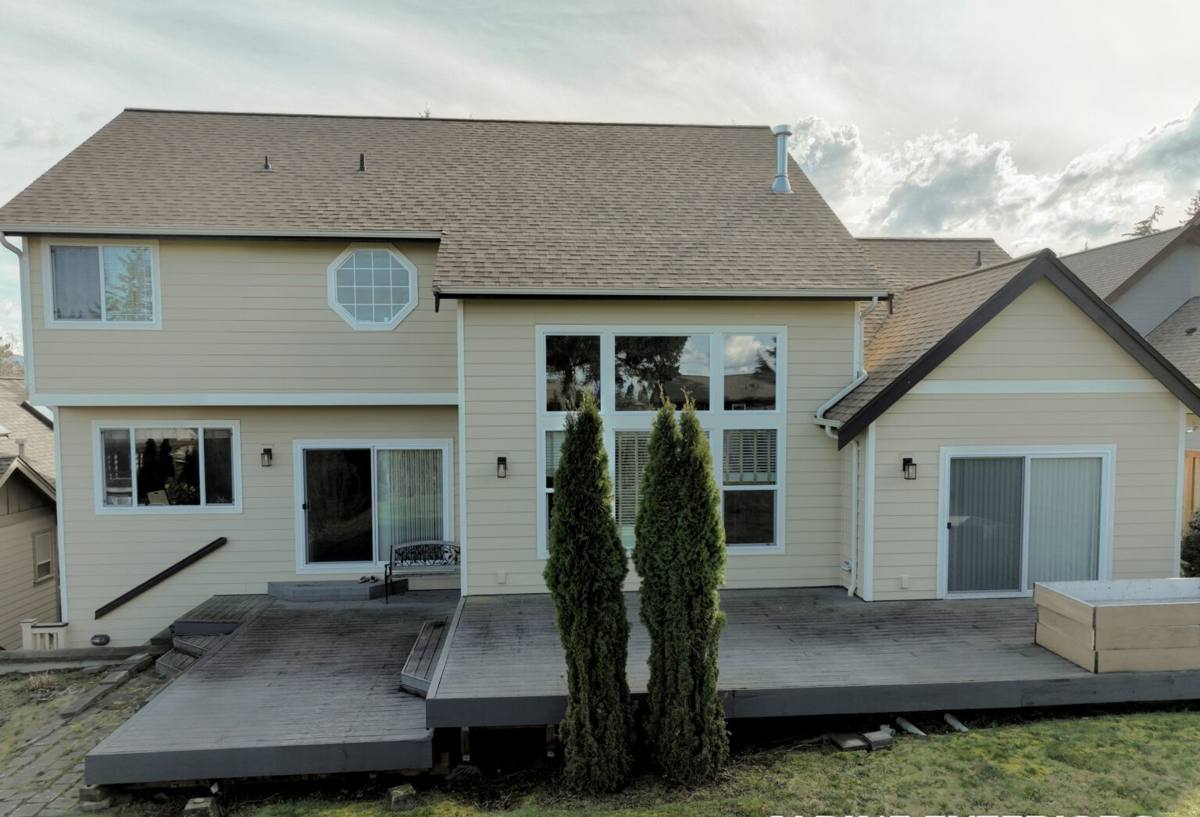
What La Conner Homes Need From a Deck
Most of the decks we build or replace in La Conner fall into a few categories: waterfront or near-waterfront homes with direct channel exposure, homes on the bluffs or flats around town with more general Pacific Northwest weather exposure, and older properties where the original deck was never built with today's materials or fastening standards in mind. Each of these has a slightly different risk profile.
- Waterfront and channel-facing decks take the most direct salt air exposure and need corrosion-resistant hardware from day one.
- Shaded decks under trees or on the north side of a house hold moisture longer and need better airflow underneath and between boards.
- Older decks built with standard construction-grade fasteners often show hidden corrosion at the ledger board and joist hangers well before the surface boards show wear.
- Decks near ground level or with limited underside ventilation are the most prone to moss, algae, and slow rot in this climate.
None of this means a deck in La Conner has to be high-maintenance or short-lived. It means the build has to account for the environment instead of ignoring it.
The Ledger Board Is Where Most Failures Start
The single most common point of failure we see on older decks isn't the decking surface — it's the ledger board where the deck attaches to the house. Improper flashing, or flashing installed without the right lap sequence against the siding's water-resistive barrier, lets water track behind the ledger and into the rim joist. In a climate with as much driving rain as Skagit County gets, that's not a small risk. Every custom deck we build ties into proper ledger flashing and correct integration with the home's existing weather barrier, not just a lag-bolted board and a bead of caulk.
Choosing the Right Decking Material for the Salt Air
There's no single "best" decking material for every La Conner home — it depends on how close the home is to the water, how much sun the deck gets, and how much maintenance the homeowner actually wants to do. We walk through the honest trade-offs with every customer rather than pushing one product line.
| Material | Salt Air Performance | Moss/Algae Resistance | Maintenance |
|---|---|---|---|
| Cedar or other natural wood | Good, if fasteners and finish are correct | Needs regular cleaning and re-treatment | Highest — staining/sealing every 1-2 years |
| Pressure-treated fir/pine | Fair — depends heavily on fastener quality | Prone to moss without upkeep | Moderate to high |
| Composite decking | Very good — won't corrode or rot | Better than wood, still needs periodic washing | Low — no staining, occasional cleaning |
| PVC/capped polymer | Excellent — fully sealed surface | Best resistance to staining and growth | Lowest — soap and water is usually enough |
Composite and capped polymer decking have become popular for waterfront and near-waterfront properties in this area specifically because they don't absorb moisture the way wood does, which matters when a deck sits in salt-influenced air for months at a time. Natural wood still has a place — it's often the right call on a covered deck or a property where matching an existing wood aesthetic matters — but we're upfront that it comes with a real maintenance commitment in this climate, not an occasional one.
Framing and Fasteners: Where Decks Actually Fail Here
The decking surface is what homeowners see, but the framing and fasteners underneath are what determine how long a deck actually lasts near the water. Standard galvanized fasteners can start showing corrosion within a few years in a salt-air environment, especially at the coated cut edges where the protective layer is thinnest. We build with stainless steel or heavy-duty coated fasteners rated for coastal and treated-lumber use, and we use joist hangers and structural connectors rated for the same exposure — not just whatever is cheapest at the yard.
Framing lumber choice matters too. Pressure-treated framing is standard, but the grade and the way it's detailed — proper gaps for drainage, correct joist spacing for the decking span, flashing tape on top of joists — makes a bigger long-term difference than most homeowners realize until a deck starts sagging or the boards start cupping.
Our Custom Deck Process
- On-site assessment. We look at sun exposure, wind and rain direction, drainage, and how the deck ties into the existing structure and siding.
- Design and material selection. We walk through decking, railing, and framing options based on your budget, maintenance preference, and how exposed the site is.
- Permitting. Most new decks and many deck replacements require a permit through the applicable local jurisdiction — we handle this as part of the project scope.
- Ledger, flashing, and framing. This is the structural core of the build and where we spend the most care, since it's the part that determines long-term durability.
- Decking, railing, and finish work. Surface installation, railing systems, stairs, and any lighting or fascia detailing.
- Final walkthrough. We go over the finished deck with you, including what maintenance (if any) it needs going forward.
Railings, Fasteners, and Hardware for Coastal Durability
Railing systems take a lot of abuse in a marine climate — they're handled constantly, they're exposed to rain and salt air on all sides, and metal components are often the first thing to show corrosion. Aluminum and powder-coated steel railings tend to hold up better than uncoated metal alternatives near the water, and cable or glass-panel systems need hardware rated specifically for coastal exposure, not just general outdoor use. Wood railings need the same fastening standard as the rest of the deck — this isn't a place to cut corners with standard hardware store screws.
Maintenance Realities: Moss Season and Beyond
Every deck in this part of Skagit County needs some seasonal attention — the difference between a low-maintenance deck and a high-maintenance one is how much and how often. Here's a realistic maintenance checklist for a La Conner deck:
- Clear leaves, needles, and debris from between boards and off the surface regularly through fall, before they trap moisture underneath.
- Sweep or gently power-wash moss and algae buildup before it gets a foothold, especially on shaded sections.
- Check fastener heads and railing hardware annually for early signs of corrosion or loosening.
- Keep gutters and downspouts near the deck clear so runoff isn't draining directly onto or under it.
- Re-stain or re-seal natural wood decking on the manufacturer's recommended schedule — don't wait until it's visibly weathered.
- Confirm underdeck ventilation isn't blocked by storage, planters, or landscaping that traps moisture against the framing.
Composite and PVC decking cut most of this list down significantly, which is a big part of why they've become the default recommendation for lower-maintenance builds in this area.
Permitting and Local Considerations
Depending on the property, a new or replacement deck in the La Conner area may fall under either Town of La Conner or Skagit County permitting requirements, along with any applicable shoreline or setback regulations for properties near the water. Requirements vary by lot and project scope, so we confirm what applies to your specific property before work starts rather than assuming. Handling this correctly upfront avoids delays and makes sure the finished deck is actually compliant, not just built.
Why Hire a Crew That Already Works in La Conner
A deck built by someone unfamiliar with this specific coastal environment can look fine on day one and still develop problems within a few years — corroding fasteners, moss taking hold in the wrong spots, a ledger board that was flashed for a drier climate. We're based in Anacortes and work throughout Skagit County, including La Conner, on a regular basis, which means we're not guessing at what this environment does to a deck over time — we're building around it from the first framing decision. That local, repeated experience is what separates a deck that looks good at handoff from one that's still solid ten winters later.
If you're planning a new deck or replacing one that's showing its age, we're happy to come out, take a look at your site, and put together a straightforward, no-pressure estimate. Use the form below to get started.