 Anacortes
 Edison Decks Work Harder Than Most
Edison sits low in the Skagit County flats, close enough to Samish Bay and Padilla Bay that salt-laden air is just part of daily life. Add the long, wet Pacific Northwest winters and the moss season that follows every fall, and you've got a climate that's genuinely rough on exterior wood structures. A deck built the same way in Wenatchee or Spokane would age very differently than one sitting outside an Edison farmhouse or waterfront cabin.
We're not talking about occasional rain here. It's the combination that does the damage: salt air that accelerates corrosion in fasteners and hardware, near-constant humidity that keeps wood fibers from ever fully drying out, and moss and algae that take hold on shaded or north-facing deck boards by late fall and don't let go until late spring. Decks in this part of Skagit County need repair work that accounts for all three, not just a patch job aimed at the visible problem.
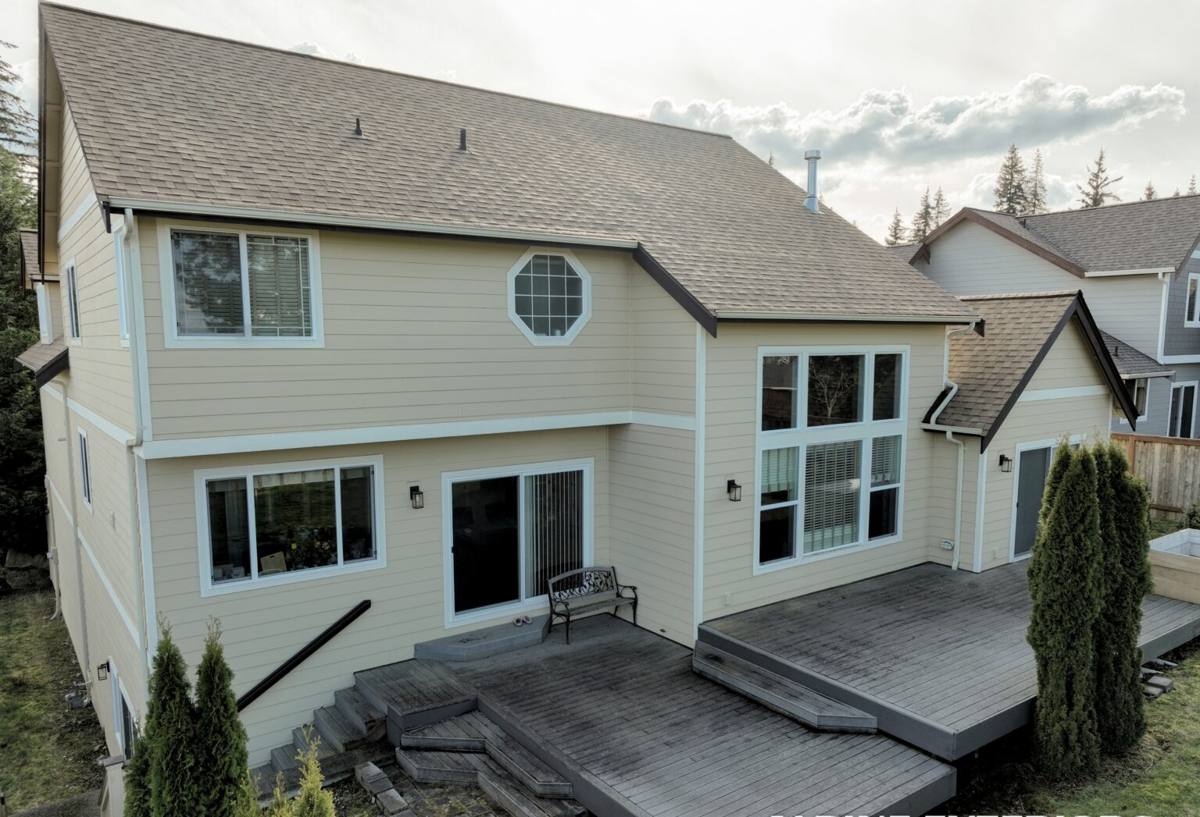
The Deck Problems We See Most Often in Edison
Ledger Board and Framing Rot
The ledger board — where the deck attaches to the house — is the single most common failure point we find on repair calls in this area. If the original flashing was undersized, missing, or improperly lapped with the house's water-resistive barrier, water gets behind the ledger and sits there. Because it's hidden, this rot often goes unnoticed until the deck feels spongy or starts to pull away from the house slightly. By then, the joists nearest the ledger are usually compromised too.
Fastener and Hardware Corrosion
Salt air speeds up corrosion on anything metal — nails, screws, joist hangers, post bases, and structural screws. We regularly find decks where the boards look fine but the hardware underneath is badly rusted, streaking the wood and losing holding strength. This matters more here than it would twenty miles inland, and it's one of the reasons we don't reuse old fasteners during a repair even when a homeowner is hoping to save a few dollars.
Moss, Algae, and Slick Surfaces
Moss on a deck isn't just a slip hazard, though that's reason enough to deal with it. Moss and algae hold moisture directly against the wood surface for months at a time, which softens fibers, feeds rot, and stains boards in ways that pressure washing alone won't fix. Decks with heavy shade from trees or the house itself are especially prone to this, and it tends to come back every year unless the underlying moisture and airflow problem is addressed, not just the surface growth.
Flashing and Post Base Failures
Post bases sitting in standing water, missing or corroded flashing at stair stringers, and gaps where deck boards meet the house are all places we find water intrusion starting. None of these are dramatic on their own, but driving rain off the bay finds every one of them over time.
Signs Your Edison Deck Needs Attention Now
- Soft, spongy, or bouncy spots when you walk across the deck
- Visible gaps opening up between the ledger board and the house
- Rust streaks bleeding out from screws, nails, or joist hangers
- Moss or dark green-black staining that returns within weeks of cleaning
- Railings or stair posts that wiggle or feel less solid than they used to
- Boards that stay damp long after the rest of the deck has dried
- Cracked, split, or checked boards near stair treads or high-traffic areas
Any one of these on its own might just need a straightforward fix. Several at once usually means water has been getting into the structure for a while, and it's worth having someone look at the framing, not just the surface.
What a Correct Deck Repair Actually Involves
A repair that only replaces what's visibly damaged often misses the cause. Before we touch a board, we check the parts of the deck that actually keep it standing and keep water out:
- Ledger board attachment and flashing — is water actually being shed away from the house, or just directed behind it
- Joist and beam condition, especially near the ledger and at any point where boards have been replaced before
- Post bases and footings — corrosion, movement, or standing water at the base
- Joist hangers and structural fasteners — condition and whether they're rated for exterior/ground-contact use
- Guardrail and stair railing security, which matters for both safety and code compliance
- Board spacing and airflow underneath the deck, which affects how fast moss and mildew come back
Where a deck was originally built without adequate flashing or with undersized framing, we address that as part of the repair rather than just replacing boards on top of the same underlying problem. That's the difference between a repair that lasts a couple of seasons and one that holds up through another Skagit County winter.
Repair or Rebuild? How We Make That Call
Not every deck problem calls for a full rebuild, and not every deck is worth saving as-is. The table below covers the factors that usually decide it.
| What We Find | What It Usually Means | Typical Path |
|---|---|---|
| Surface moss, staining, a few worn boards | Cosmetic and maintenance issue, framing likely sound | Board replacement, cleaning, and re-sealing |
| Soft spots limited to one area near the ledger | Localized flashing failure or water intrusion | Targeted framing and flashing repair |
| Rusted hardware throughout, multiple soft joists | Widespread hardware failure across the structure | Reframe with new hardware, keep sound posts/footings if possible |
| Undersized or missing footings, major structural movement | Deck wasn't built to current structural standards | Full rebuild from the footings up |
| Deck is 20+ years old with recurring problems | Cumulative wear across framing, hardware, and decking | Rebuild usually costs less long-term than repeated repairs |
As a rough guide, straightforward board and hardware repairs on an otherwise sound deck often run in the low thousands of dollars, while structural framing repairs or a full rebuild climb from there depending on size and access. We'll always tell you honestly which category your deck falls into before any work starts.
Choosing Decking Material for This Climate
Material choice matters more here than in drier parts of the state, mostly because of how each option handles constant moisture and moss pressure.
| Material | Moisture & Moss Resistance | Maintenance | Typical Lifespan |
|---|---|---|---|
| Cedar | Naturally rot-resistant but still needs sealing | Annual cleaning and periodic re-staining or sealing | 15-20 years with upkeep |
| Pressure-treated fir/hem-fir | Good with proper sealing; end cuts need extra attention | Sealing every 1-2 years, moss cleaning as needed | 15-20 years with upkeep |
| Composite decking | Won't rot; surface can still grow moss/algae if shaded | Periodic washing, no sealing or staining required | 25-30 years, varies by product |
We don't push homeowners toward composite for every job — it costs more upfront and some people simply prefer the look and feel of real wood. What we do explain honestly is the maintenance trade-off: wood decking in this climate needs consistent upkeep to keep moss and moisture from getting ahead of you, while composite trades a higher material cost for less ongoing work. Either can be the right call depending on your budget, how the deck is used, and how much shade and moisture exposure it gets.
Our Repair Process
- On-site inspection of decking, framing, hardware, flashing, and footings — not just the parts you can see from the surface
- A written explanation of what we found, what's causing it, and which repair path fits your situation and budget
- Removal of damaged boards, framing, or hardware down to sound material
- Repair or replacement of flashing, joists, hangers, and fasteners as needed, using hardware rated for exterior and ground-contact exposure
- Installation of new decking material, properly spaced and fastened for drainage and airflow
- Final check of railings, stairs, and structural connections before we call the job done
Why It Matters to Hire a Crew That Already Works in Edison
Deck repair standards don't change from town to town, but the conditions they need to hold up against do. A crew that regularly works decks in Edison and the surrounding Skagit County lowlands knows what moisture off the bay does to a ledger board over ten winters, how fast moss comes back on a shaded north wall, and which hardware actually holds up against salt air instead of just looking fine when it's installed. That's knowledge you don't get from a crew that mostly works dry-side jobs and treats every deck the same.
It also means fewer surprises during the work itself. Local crews plan around the region's wet stretches, know how to sequence a repair so framing isn't left exposed to rain any longer than necessary, and are familiar with how older homes in this area were typically built, which speeds up diagnosing problems instead of guessing at them.
Get an Honest Look at Your Deck
If your deck in Edison is showing soft spots, rust streaks, stubborn moss, or just doesn't feel as solid as it used to, it's worth having someone take a real look before winter rains make it worse. We offer free, no-pressure estimates — we'll tell you plainly what we find and what it would take to fix it, whether that's a simple repair or something more involved. Use the form below to get started.