 Anacortes
 Deck Replacement for Oak Harbor Homes
If you own a home in Oak Harbor and you're staring at a deck that's gone soft, gray, or spongy underfoot, you're not imagining things. Decks here take a beating that decks in drier inland climates simply don't. Salt-laden air off the water, long stretches of driving rain through fall and winter, and a moss season that seems to start earlier every year all work against wood and fasteners at the same time. We're an Anacortes-based crew that works this stretch of Skagit and Island County waters regularly, and Oak Harbor's decks are a big part of that work. This page is about what a proper deck replacement looks like for a home in this specific environment — not a generic rebuild.
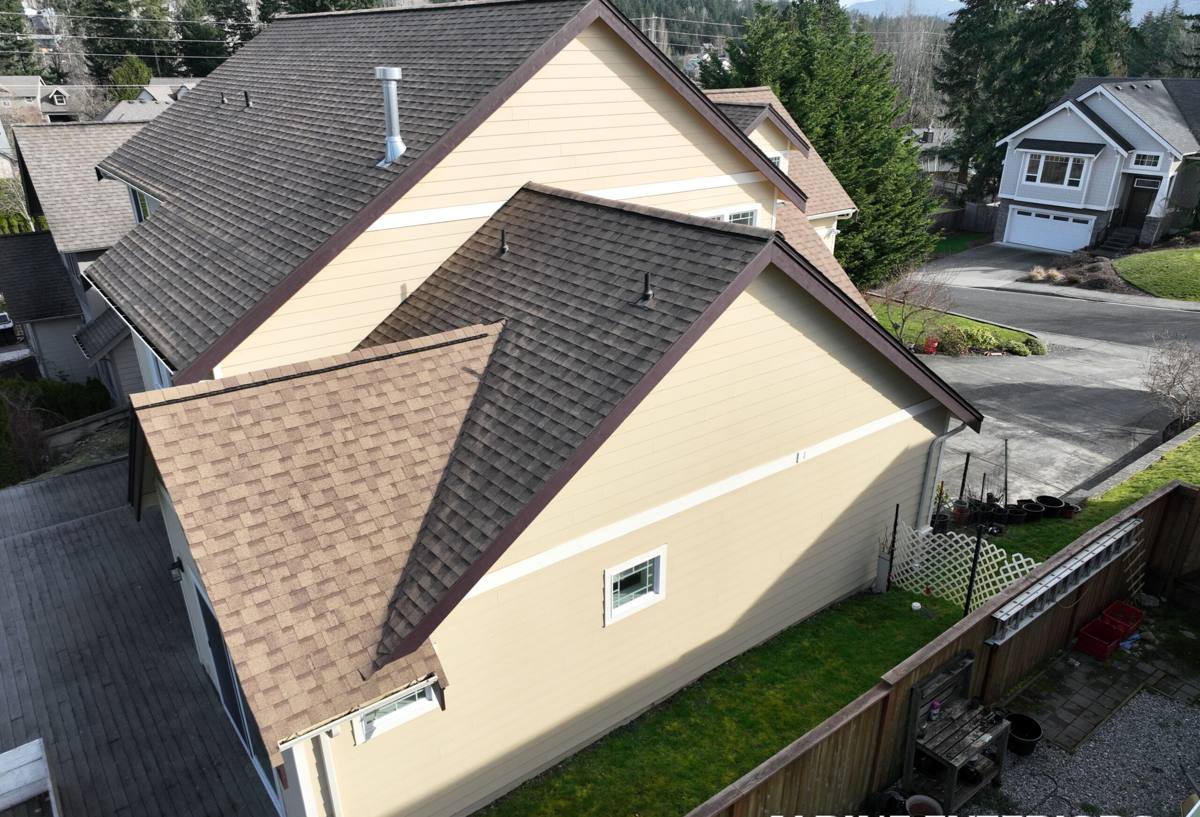
Why Oak Harbor's Climate Is Hard on Decks
Oak Harbor sits close enough to the water that salt air is a constant factor, not an occasional one. Salt accelerates corrosion in fasteners, joist hangers, and any metal connector that isn't rated for it. Combine that with our regional rain pattern — long, low-intensity soakings rather than short heavy storms — and you get wood that stays damp for days at a stretch, especially on the north or shaded side of a house.
Then there's moss. Moss doesn't just look bad; it holds moisture against the deck surface and fasteners long after the rest of the yard has dried out. On a deck with poor drainage or tight board spacing, moss can establish itself in the first year and start trapping water against the frame underneath. Over several seasons, that's exactly the combination — salt, standing moisture, and organic growth — that rots ledger boards, corrodes hardware, and softens joists from below where you can't see it until it's serious.
What This Means for Materials and Design
It means we don't treat a deck replacement here the same way we would for a home fifty miles inland. Fastener corrosion resistance, drainage slope, ventilation underneath the deck, and moss-resistant surface choices all get more weight in the decision than they would in a drier climate.
Signs Your Deck Needs Replacement, Not Repair
Not every deck problem means a full tear-out. But there are signs that point toward replacement rather than patching, especially once the substructure is involved:
- Joists or ledger board feel spongy or give when pressed with a screwdriver
- Multiple deck boards are cupping, splitting, or have visible rot rather than just surface graying
- Fasteners are rusted, bleeding orange stains into the wood, or backing out on their own
- The ledger board connection to the house shows gaps, staining, or soft wood — a structural safety issue, not cosmetic
- Persistent moss or algae returns within weeks of cleaning, suggesting a drainage or shade problem built into the design
- Railings or posts wobble at the base, which often means post rot below the surface
If it's just surface-level graying or a few loose boards on an otherwise sound frame, repair or refinishing may be the honest answer — we'll tell you that instead of selling a full replacement you don't need.
What a Correct Deck Replacement Involves Here
Substructure First
The frame matters more than the decking surface. We check ledger board attachment, joist spacing and condition, post footings, and how the whole structure is flashed against the house. A deck that's beautiful on top but poorly flashed at the ledger will let water into the house's rim joist over time — that's a much more expensive problem than the deck itself.
Fasteners and Hardware
Given the salt air here, we use corrosion-resistant fasteners and structural connectors rated for coastal exposure, not standard interior-grade hardware. This is one of the areas homeowners can't easily inspect once the deck is built, and it's also one of the first places a lower-grade job fails.
Drainage and Airflow Underneath
Standing water and trapped moisture under a deck are what feed rot and moss. We look at grading beneath the deck, gaps between boards, and whether the structure allows air to move underneath. A deck that can't breathe stays wet longer after every rain, which in this climate is often.
Surface Material Choice
We'll walk through the honest trade-offs between wood and composite decking for your specific situation — sun exposure, budget, and how much maintenance you're willing to keep up with.
Wood vs. Composite Decking in a Coastal Climate
| Factor | Wood Decking | Composite Decking |
|---|---|---|
| Moss/algae resistance | Lower — porous surface holds moisture, needs regular cleaning and treatment | Higher — denser surface sheds water faster, though still needs occasional cleaning in shaded, damp spots |
| Maintenance | Annual cleaning, sealing, or staining recommended in this climate | Periodic washing; no sealing or staining required |
| Upfront cost | Generally lower | Generally higher |
| Appearance over time | Natural look, but graying and weathering happen faster near salt air | Color holds longer, more consistent appearance year over year |
| Repairability | Individual boards easy to replace | Individual boards replaceable, though color matching aged boards can be harder |
Neither option is wrong — it depends on how much upkeep you want to do and how the deck sits relative to sun, shade, and prevailing weather. We'll give you our honest read on your specific deck rather than pushing one product line.
Cost Factors for a Deck Replacement
We don't quote firm numbers without seeing the site, but the main factors that move a deck replacement estimate up or down are consistent:
- Deck size and shape — square footage plus how many corners, stairs, and railing runs are involved
- Height off the ground — taller decks need more substantial framing and post footings
- Substructure condition — whether joists, posts, and the ledger connection need full replacement or are salvageable
- Material choice — wood versus composite, and grade within each category
- Access to the site — tight side yards or limited equipment access can add labor time
- Permitting and inspection requirements, which apply to most structural deck work in this area
A broad range for a full replacement on a typical residential deck runs from a modest few-thousand-dollar job for a small, simple deck up to well into five figures for a large, elevated, or multi-level deck in composite material. The only way to get a number that means anything is a look at the actual structure.
Our Process for Oak Harbor Deck Jobs
- On-site assessment — we inspect the ledger, framing, posts, and footings, not just the surface boards, and check for the corrosion and moisture patterns specific to this area
- Honest scope decision — repair, partial rebuild, or full replacement, explained in plain terms with the reasoning behind it
- Written estimate — materials, fastener grade, and labor spelled out so there are no surprises mid-project
- Permitting — we handle the structural permit requirements that apply to deck replacement work
- Demolition and disposal — old decking and framing removed and hauled off
- Rebuild — framing, flashing, corrosion-resistant hardware, and surface material installed to hold up to coastal exposure
- Final walkthrough — we go over the finished deck with you before calling the job done
Why a Crew That Already Works Oak Harbor Matters
Deck replacement isn't a one-size-fits-all trade. A crew that mostly builds decks in dry inland climates may not think twice about fastener grade or ledger flashing detail, because in their normal working conditions it doesn't fail as fast. Working this coastal stretch of Washington — Anacortes, across Deception Pass into Oak Harbor, and the surrounding water-adjacent communities — means we see the failure patterns caused by salt air, sustained rain, and moss firsthand, on a regular basis. That shapes how we spec hardware, how we detail drainage, and what we flag during an inspection that a less locally-experienced crew might miss.
It also means we're not guessing about your specific conditions. Skagit County's marine climate isn't identical from block to block — sun exposure, tree cover, and proximity to the water all change how fast a deck deteriorates — and a crew that works this region regularly has seen enough variation to spot what matters on your property specifically.
Maintaining Your New Deck Once It's Installed
Whatever material you choose, a few habits go a long way in this climate:
- Sweep debris and standing water off the surface regularly, especially in shaded areas prone to moss
- Clean moss and algae promptly rather than letting it establish — the longer it sits, the more moisture it traps
- Check fastener heads and railing connections once a year for early signs of corrosion or loosening
- Keep gutters and downspouts near the deck clear so runoff isn't draining directly onto or under the deck structure
- If you chose wood, plan on a cleaning and sealing cycle appropriate to your specific species and finish
If your Oak Harbor deck is showing its age, we're happy to take a look and give you a straight answer on whether it needs a full replacement or just some targeted repair. The estimate is free, there's no pressure, and you can use the form below to get started.