 Anacortes
 Deck Replacement for Sedro-Woolley Homes
A deck in Sedro-Woolley works harder than most homeowners realize. Between the tree cover along the Skagit River valley, the long stretch of wet months, and the moss that finds its way into every shaded corner of a yard, decking here takes a steady beating that drier inland climates never see. When a deck starts to sag, feel spongy underfoot, or show soft spots around the posts, the question isn't just whether it needs a few new boards — it's whether the structure underneath is still sound. That's the judgment call we make on every Sedro-Woolley deck replacement, and it's why a patch job on a failing deck often costs more in the long run than doing the replacement correctly the first time.
This page covers what deck replacement actually involves in this part of Skagit County, what tends to go wrong with decks built without our climate in mind, and how our process works from the first walk-through to the final inspection.
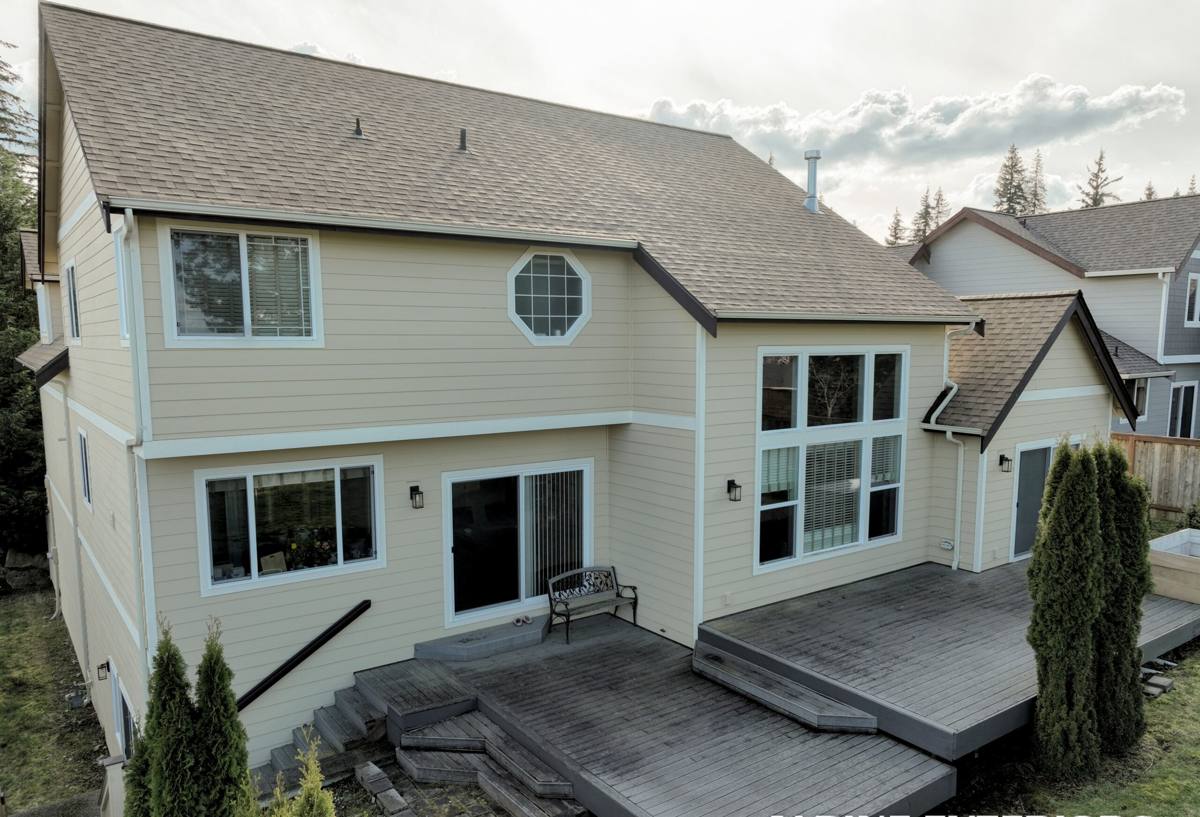
Signs a Sedro-Woolley Deck Needs Replacing, Not Just Repair
Not every tired-looking deck needs to come out. But there's a point where board replacement and spot repairs stop making sense, and pushing past that point usually means throwing money at a structure that's still going to fail. Here's what we look for during an assessment:
- Soft, spongy, or bouncy decking — usually a sign moisture has reached the joists, not just the surface boards
- Visible rot or dark staining where the deck attaches to the house (the ledger board)
- Posts that have shifted, leaned, or show rot at the base where they meet the ground or a footing
- Rust streaks around fasteners, which usually means the hardware wasn't rated for a wet climate to begin with
- Persistent green or black growth that comes back within weeks of cleaning, even after the deck has been power-washed
- Railings that flex or feel loose — a safety issue, not a cosmetic one
- A deck older than 20-25 years that was never properly flashed where it meets the house
If you're only seeing one or two of these, repair may still be a reasonable option. If several show up together, that's usually a sign the structure has been absorbing moisture for years and a full replacement will save you from repeating the same repair every couple of seasons.
What Skagit County Weather Does to a Deck Over Time
Decking material fails in fairly predictable ways once you understand what it's up against here. Skagit County sees long stretches of driving rain that doesn't just fall straight down — wind-driven rain gets pushed sideways into ledger boards, under railings, and into any gap where end grain is exposed. Combine that with the shade and moisture that shaded lots and tree-lined yards hold onto, and you get an extended moss season that can run most of the year in the right conditions. Moss doesn't just look bad; it holds water against the wood or composite surface long after the rain has stopped, which is exactly the environment rot and mildew need.
Salt-influenced air moving in off the surrounding waters also plays a role in fastener and hardware corrosion throughout this part of the county, even on properties that aren't right on the water. Screws, joist hangers, and structural connectors that aren't rated for coastal-influenced moisture will corrode faster here than the same hardware would in a dry inland climate — and a corroded joist hanger is a structural problem, not a cosmetic one. Any deck we build uses fasteners and connectors rated for this kind of exposure, not generic hardware pulled off a shelf.
Freeze-thaw cycling
Skagit County doesn't get extreme cold most winters, but it does get repeated freeze-thaw swings — cold snaps followed by rain and thaw. Water that's worked its way into a crack or a poorly sealed joint expands when it freezes, widening that crack a little more each cycle. Over several winters, that's enough to split boards and loosen fastener holes that started out tight.
Choosing Decking Material for This Climate
There's no single "best" decking material — the right choice depends on how much maintenance you want to take on, your budget, and how much shade and moss exposure your specific yard gets. Here's how the common options actually perform in a wet, mossy climate like this one:
| Material | How It Handles Rain & Moss | Maintenance | Typical Lifespan |
|---|---|---|---|
| Pressure-treated wood | Prone to moss growth in shaded areas; needs sealing to resist moisture absorption | Annual cleaning and re-sealing recommended | Roughly 10-15 years before major repairs, longer with diligent upkeep |
| Cedar | Naturally rot-resistant but still needs protection from standing moisture and moss | Periodic cleaning and staining/sealing | Roughly 15-20 years with maintenance |
| Capped composite | Resists moisture absorption well; surface sheds moss more easily than wood | Occasional washing, no sealing or staining | Often 25-30 years, backed by manufacturer warranties |
| PVC decking | Fully synthetic, doesn't absorb water, very moss-resistant | Low — occasional washing | Often 25+ years, backed by manufacturer warranties |
We install both wood and composite/PVC systems and will tell you honestly which one fits your situation. If your deck sits under heavy tree cover, we'll usually steer you toward a composite or PVC surface simply because it holds up better against constant moss and shade without the yearly maintenance commitment. If you want the look and feel of real wood and are willing to stay on top of sealing and cleaning, cedar remains a solid choice — we just want you to know what the upkeep actually looks like before you decide, not after the first mossy winter.
What a Correct Deck Replacement Actually Involves
A deck that lasts in this climate isn't just about the surface boards — most of what determines how long a deck holds up is invisible once the project is done. The parts that matter most:
Ledger board and flashing
Where the deck attaches to the house is the single most common failure point we see on old decks. If the ledger board wasn't properly flashed to shed water away from the house framing, moisture works its way behind it year after year — and by the time it's visible, there's often already rot in the rim joist behind the siding. Correct flashing detail here isn't optional in a climate with this much driving rain.
Footings and posts
Footings need to be sized and set to current code depth, not just poured to match whatever was there before. Posts need proper post bases that keep the wood off the concrete and away from standing water, rather than being buried directly in it.
Joist spacing and hardware
Joist spacing has to match the load requirements of the decking material you choose — composite and PVC boards often call for tighter joist spacing than solid wood. Every hanger, screw, and structural connector should be rated for exterior, corrosion-prone use, not general-purpose hardware.
Railings and stairs
Railing height, baluster spacing, and stair geometry all fall under code, and they're also the parts of a deck most directly tied to safety. We build these to current code regardless of what the old deck had.
Fastening method
Hidden fastener systems give a cleaner look and eliminate exposed screw heads where water and moss like to collect, but they need to be installed correctly and matched to the specific decking product — not every hidden fastener system works with every board.
Our Deck Replacement Process
Here's what to expect from the point you call us to the day we hand the deck back to you:
- On-site assessment. We walk the existing deck, check the ledger, posts, and framing for rot or movement, and give you an honest read on whether replacement is actually necessary.
- Material and design conversation. We talk through decking material options for your specific yard — how much shade it gets, how exposed it is to wind-driven rain, and what maintenance level you're comfortable with.
- Permit handling. We handle the permit application and inspection scheduling for the jurisdiction your property falls under, so you're not chasing paperwork.
- Demolition and disposal. The old deck comes out, including any rotted framing members, and debris is hauled off — you're not left with a pile of old lumber to deal with.
- Framing and flashing. New footings, posts, joists, and ledger flashing go in to code, built for the moisture load this climate puts on a structure.
- Decking, railing, and stairs. Surface material, railings, and stairs are installed per manufacturer specs where applicable, so warranties stay intact.
- Final walkthrough and inspection. We walk the finished deck with you, and it passes required inspections before we call the job done.
What Affects the Cost of a Deck Replacement
Every deck is different, so we won't give you a number until we've actually seen the site — but these are the main factors that move the price up or down:
| Factor | Why It Matters |
|---|---|
| Deck size and shape | Multiple levels, angles, or curves take more material and labor than a simple rectangle |
| Decking material | Composite and PVC cost more upfront than pressure-treated wood but need far less long-term maintenance |
| Framing and footing condition | If posts, footings, or the ledger area need full rebuilding rather than reuse, that adds labor and material |
| Height and access | Elevated decks with stairs, or decks with difficult site access, take more time to frame and finish safely |
| Railing style | Cable, glass, and composite railing systems cost more than standard wood or metal balusters |
| Permit and inspection requirements | Some jurisdictions and deck heights require engineering review, which adds time to the project |
As a broad range, full deck replacements in this region commonly run from the low tens of thousands for a simple wood deck up to considerably more for a large, elevated composite deck with custom railing — but the only way to get a real number is a site visit, since size, framing condition, and material choice move that range significantly.
Why a Crew That Already Works Sedro-Woolley Matters
A deck built to a generic spec sheet doesn't always hold up to this specific climate. Crews who work regularly throughout Skagit County — including Sedro-Woolley, Anacortes, and the communities between them — see the same failure patterns repeat: ledger flashing that wasn't detailed for driving rain, hardware that wasn't rated for the moisture and salt-influenced air moving through the region, and decking chosen without accounting for how much shade and moss a specific lot actually gets. That local pattern recognition is what separates a deck that needs attention again in five years from one that holds up for decades.
We also know the permitting and inspection process for jobs in this part of the county, which keeps the project moving instead of stalling on paperwork you didn't know you needed.
Protecting Your New Deck After Installation
However well a deck is built, a little seasonal attention keeps it performing the way it should. A short checklist we give every customer:
- Sweep leaves and debris off the surface regularly, especially in fall — trapped leaves hold moisture and feed moss
- Clean the deck surface at least once a year to knock back early moss and mildew growth before it takes hold
- Check that gaps between boards stay clear so water can drain through rather than pooling
- Re-seal or re-stain wood decking on the schedule the product calls for — don't wait until it looks obviously weathered
- Inspect railings and stair connections once a year for any looseness
- Keep gutters and downspouts near the deck clear so roof runoff isn't dumping extra water onto or under the structure
None of this is complicated, but skipping it is how a well-built deck ends up with the same moisture problems as the one it replaced.
If your Sedro-Woolley deck is showing signs of rot, movement, or persistent moss that won't clean off, we're happy to take a look and give you a straight answer on repair versus replacement. Use the form below to request a free, no-pressure estimate.