 Anacortes
 Decks in Edison Take a Different Kind of Beating
Edison sits close to Samish Bay, out on the low farmland and tidal flats that make this stretch of Skagit County so distinctive — and so hard on exterior wood. A deck here isn't just dealing with normal Pacific Northwest rain. It's dealing with salt-laden air moving in off the bay, long stretches of damp shade from surrounding trees and farmland, and a moss season that can run from October well into May. That combination corrodes fasteners faster, keeps wood surfaces wet longer, and pushes moss and algae into every joint and gap where two boards meet.
We've replaced enough decks around Anacortes and the smaller communities near it — Edison included — to know that a deck built to a generic spec, without accounting for salt air and standing moisture, tends to fail years before it should. This page covers what actually matters when replacing a deck in this specific environment.
Signs a Deck Needs Replacing, Not Just Patching
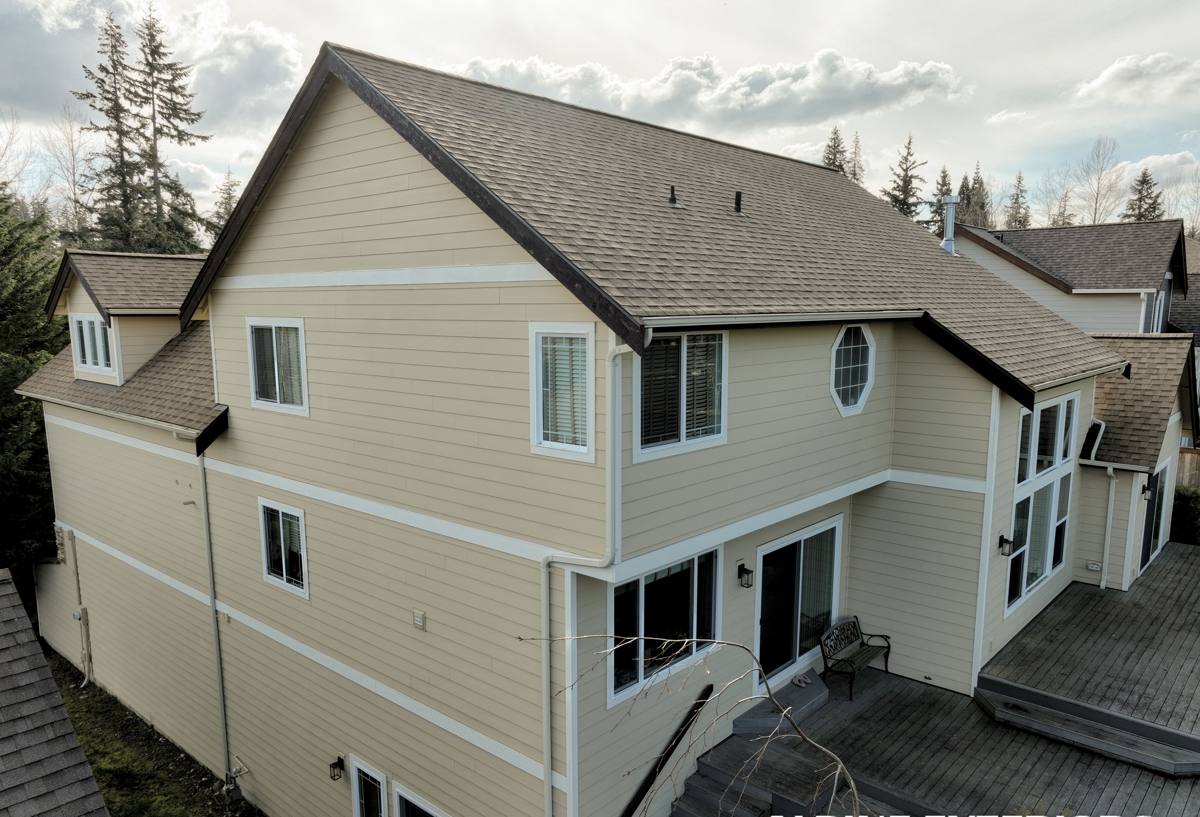
Homeowners often call us for a repair and end up needing a full replacement once we get underneath the surface. Some problems are cosmetic. Others mean the structure underneath has already been compromised. Here's how to tell the difference before you spend money on the wrong fix.
- Soft or spongy decking when you walk across it, especially near the house or in shaded corners
- Rust streaking below fastener heads or around joist hangers — a sign the coating on the hardware has already failed
- Gaps opening up between the ledger board and the house, or visible daylight where the deck meets the siding
- Moss or black-green staining that comes back within weeks of cleaning, no matter how it's scrubbed
- Posts or footings that feel loose, or a deck that visibly sways under normal foot traffic
- Structural members (joists, beams, posts) that are more than 15–20 years old and have never been inspected from underneath
Surface graying or a few loose screws don't necessarily mean replacement. But rot at the ledger connection or in the joists is a safety issue, not a cosmetic one, and it's the most common reason we recommend starting over rather than patching around it.
What a Correct Deck Replacement Actually Involves
It starts with the ledger and the framing, not the decking
The part of a deck most likely to fail first in this climate is where it attaches to the house — the ledger board. If that connection wasn't flashed correctly the first time, water has likely been getting behind the siding and into the rim joist for years, invisible until the boards on top start to sag. A proper replacement means pulling the old decking and framing back far enough to inspect and correctly flash that connection, not building a new deck surface on top of a compromised structure.
Footings and posts matter more here than people expect
The soil around Edison tends to hold water — it's low, flat farmland near tidal flats, and drainage is slower than it is on higher ground closer to Anacortes proper. Footings that were poured too shallow, or posts set directly in soil without a proper standoff, are common failure points we find when tearing out old decks in this area. We check footing depth and post-to-concrete connections as part of every replacement, not just the visible decking above.
Joist protection is not optional
Even with good decking on top, untreated joist tops trap moisture underneath the boards where it can't dry out — that's where hidden rot usually starts. We treat or cap joist tops during every replacement so the structure underneath lasts as long as the surface material on top.
Choosing Decking Material for Salt Air and Long Wet Seasons
There's no single "best" decking material — there's a right choice for your budget, your maintenance appetite, and how exposed your deck is to bay-driven salt air and shade. Here's how the common options actually compare in this specific environment, not in a generic climate.
| Material | Behavior in salt air & rain | Moss/algae resistance | Maintenance |
|---|---|---|---|
| Pressure-treated wood | Good if fasteners and hardware are corrosion-rated; the wood itself handles moisture well when it can dry | Low — needs regular cleaning and sealing to resist growth | Highest — re-seal every 1–2 years |
| Cedar | Naturally rot-resistant, but softer and more sensitive to standing water and salt spray over time | Moderate — still needs periodic cleaning | Moderate to high — re-stain every 2–3 years |
| Composite decking | Handles moisture and salt air well; doesn't absorb water like wood | Moderate — surface texture can hold moss spores if boards stay shaded and wet | Low — occasional washing |
| PVC/capped composite | Best moisture and salt resistance of the group; fully sealed surface | Best — least hospitable surface for moss and algae | Lowest — mostly rinsing |
For decks that sit in full shade or catch moisture off the bay directly, we generally steer homeowners toward composite or capped composite — not because wood is a bad product, but because the maintenance burden of keeping real wood clean and sealed in this specific microclimate is higher than most homeowners want to keep up with year after year. If you want the look and feel of real wood and are willing to maintain it, cedar or treated lumber done correctly is a completely legitimate choice — it just needs a realistic maintenance plan behind it.
Hardware and Fasteners: The Detail Most Decks Get Wrong
Salt-laden air accelerates corrosion on standard fasteners and joist hangers faster than it would further inland. We use stainless steel or heavy hot-dip galvanized hardware rated for coastal exposure on every deck replacement in this area — not because code always requires it, but because we've seen too many "code minimum" fastener jobs rust through in under a decade this close to the bay. The hardware is one of the cheapest parts of a deck relative to the whole job, and one of the most expensive to fix later once it's buried under decking.
Permits, Guardrails, and Code Requirements
Deck replacements in Skagit County typically require a building permit once you're replacing structural framing, not just surface boards — and any deck more than 30 inches above grade needs a compliant guardrail and, where applicable, code-compliant stair stringers and handrails. We pull the necessary permits and build to current code as part of the job, which matters both for your safety and for resale — an unpermitted deck rebuild can become a real problem when you go to sell the house.
Designing Against Moss Before It Starts
You can't eliminate moss risk entirely in a place with Edison's rain and shade patterns, but you can design a deck that resists it far better than one that ignores the problem. That means proper board spacing for airflow and drainage, avoiding designs that trap standing water in corners or against the house, and choosing surface materials and finishes that don't hold moisture against the wood grain. A deck built with drainage and airflow in mind will need moss treatment maybe once a year instead of every few months.
Our Deck Replacement Process
- On-site inspection of the existing deck, including checking under the decking where possible, to determine whether framing and footings can be reused or need replacing
- A written scope and estimate that separates decking material cost from structural work, so you know exactly what you're paying for and why
- Tear-off and disposal of the old deck, with framing and ledger connection inspected and corrected before anything new goes on
- Rebuild or reinforcement of footings, posts, beams, and joists as needed, with corrosion-rated hardware throughout
- Installation of new decking, guardrails, and stairs to current code
- Final walkthrough so you know what maintenance (if any) your specific decking material needs going forward
What Drives the Cost of a Deck Replacement
| Factor | Why it matters |
|---|---|
| Deck size and height | Larger decks and taller decks (more guardrail, longer posts) require more material and labor |
| Structural condition | Rotted framing, footings, or ledger connections add rebuild scope beyond surface decking |
| Decking material chosen | Pressure-treated, cedar, composite, and PVC span a wide price range per square foot |
| Access and site conditions | Sloped yards, tight side-yard access, or wet ground can add time to demolition and footing work |
| Permit and code upgrades | Older decks often need guardrail or stair updates to meet current code, which adds scope |
Maintenance Checklist to Extend Deck Life in This Climate
- Sweep debris and standing leaves off the deck surface regularly through fall and winter
- Clean moss and algae growth at the first sign of it rather than waiting until it's established
- Check fastener heads and hardware for rust staining once a year
- Keep gutters and downspouts near the deck clear so runoff isn't draining directly onto it
- Re-seal or re-stain wood decking on the schedule appropriate to the product — don't wait until it's visibly gray
- Have the structure inspected from underneath every few years, especially around the ledger connection
If your deck is showing any of the signs above, or you're just planning ahead before it becomes a safety issue, we're happy to come take a look. Use the form below to request a free, no-pressure estimate for your Edison property.