 Anacortes
 Fidalgo Island Sits in a Tougher Climate Than Most Siding Gets Designed For
Fidalgo Island homes take a different kind of weather beating than a house twenty miles inland. Between the marine air coming off Rosario Strait and Guemes Channel, the near-constant humidity, and long stretches of the year where surfaces barely get a chance to dry out, the siding on an Anacortes-area home works harder than most manufacturers assume when they write their installation manuals. Salt-laden air accelerates corrosion on fasteners and trim. Driving rain off the water finds gaps that would stay dry in a more sheltered spot. And the moss and algae season here runs long — often eight or nine months out of the year on north-facing walls and anything shaded by trees or a neighboring structure.
None of that is a reason to panic about siding. It's a reason to be specific about what you install and how it goes on. We install James Hardie fiber cement siding exclusively, and on Fidalgo Island in particular, the reasons for that standard show up in ways that are easy to see once you know what to look for.
What Salt Air, Rain, and Moss Actually Do to a Wall System
Salt Air and Metal Components
Salt doesn't just sit on the surface — it works into fastener heads, flashing seams, and any exposed metal trim over time. Untreated or poorly matched hardware corrodes faster near the water than it would twenty miles inland. This is why fastener selection matters as much as the siding product itself in a coastal install: the wrong nail or screw becomes a rust streak and, eventually, a loose board.
Driving Rain and Wind-Driven Moisture
Fidalgo Island gets storms that push rain sideways, not just down. That changes how water behaves at every horizontal joint, window head, and butt seam. A siding system that relies on paint film alone to keep water out will eventually let moisture behind the cladding, where it can sit against sheathing that doesn't dry quickly in our climate.
Moss, Algae, and Prolonged Dampness
Shaded walls, north exposures, and anywhere airflow is limited stay damp longer here than most of the country experiences. That damp window is when moss spores and surface algae get their foothold. Porous or absorbent siding materials hold that moisture at the surface, which feeds the growth cycle. A dense, factory-finished material sheds water and dries faster, which starves that cycle instead of feeding it.
Why We Install Only James Hardie — and Not the Alternatives
We don't install LP SmartSide, vinyl, Cemplank, Allura, primed spruce, or cedar. That's a deliberate standard, not a lack of options. Each of those products has legitimate uses somewhere — but for what a Fidalgo Island exterior needs to survive, they each carry a trade-off we're not willing to put on a customer's home without saying so plainly.
| Material | Where it struggles in our climate | Why we pass on it |
|---|---|---|
| Vinyl siding | Can warp/deform in temperature swings, seams allow water intrusion, colors fade under UV over years | Doesn't hold up structurally or aesthetically over the long haul near the water |
| Cedar | Absorbs moisture, needs regular refinishing, attractive to moss/algae in shaded damp zones | High ongoing maintenance burden in a climate that punishes any lapse |
| Primed spruce | Wood substrate behind a thin primer coat; prone to swelling and paint failure with repeated wet cycles | Moisture sensitivity doesn't match our rain and humidity pattern |
| LP SmartSide | Engineered wood strand product; performs reasonably if perfectly maintained, but any breach lets moisture into the substrate | Less forgiving of installation gaps or maintenance lapses than fiber cement |
| Cemplank / Allura | Also fiber cement, and reasonable products — but we've standardized our crews, warranty process, and factory-finish system on one manufacturer | Consistency of install quality and warranty support matters more than brand-switching for marginal differences |
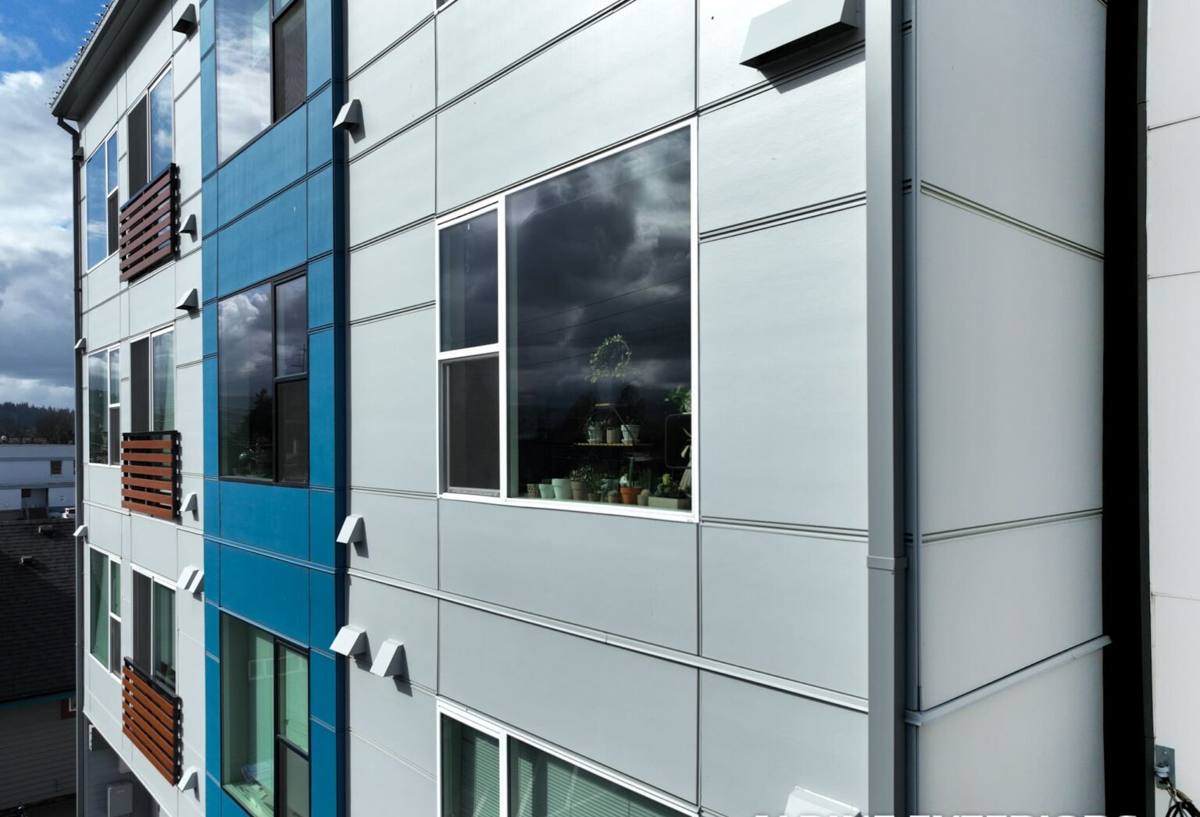
James Hardie's fiber cement is non-combustible, dimensionally stable across our wet-dry cycles, and comes with a factory-applied ColorPlus finish that's engineered to resist fading and moisture intrusion at the surface — which directly addresses the moss and algae problem, since a harder, denser painted surface gives organic growth less to hold onto and dries faster after rain.
The HZ5 Product Line: Built for Where We Actually Are
James Hardie engineers its siding in climate-specific formulations called HZ (HardieZone) products. The Pacific Northwest, including Skagit County and Fidalgo Island, falls into the zone where moisture resistance and freeze-thaw performance matter more than pure heat or UV load. That means the boards installed on an Anacortes home are formulated differently than what goes on a house in Arizona or Florida — denser composition, engineered for repeated wet cycles without swelling or delaminating. This isn't a marketing distinction; it's the reason a Fidalgo Island installation should never use a generic, non-climate-matched product line.
What a Correct Installation Looks Like on Fidalgo Island
The product only performs as designed if the install matches it. This is where a lot of siding jobs — regardless of brand — fall short, especially on a coastal property where the margin for error is smaller.
Water Management Behind the Cladding
Every correct Hardie install starts with a drainage plane: house wrap or weather-resistive barrier, properly lapped and taped, with a rainscreen gap in many cases to let any moisture that does get behind the siding drain and dry instead of sitting against the sheathing. On a site that gets driving rain off the water as often as Fidalgo Island does, skipping or shortcutting this layer is the single biggest cause of the moisture problems people blame on "bad siding" years later.
Flashing at Every Penetration
Windows, doors, hose bibs, light fixtures, and vents all need proper flashing detail — not just caulk. Caulk fails; correctly lapped flashing sheds water by design and keeps working even after the caulk eventually ages out.
Fastener Selection and Placement
Corrosion-resistant fasteners, driven to the manufacturer's specified depth and pattern, matter more here than in a drier inland climate. Overdriven or underdriven fasteners compromise the board's ability to move slightly with temperature and moisture changes, which over time shows up as cracking or popped nail heads.
Proper Clearances
Hardie specifies minimum clearances from grade, roof lines, and decks so the bottom edge of the siding isn't sitting in a moisture trap. On a lot with limited drainage or grading challenges — common on parts of Fidalgo Island — getting this clearance right is what keeps the bottom courses from being the first thing that fails.
Caulking and Joint Treatment
Butt joints, trim intersections, and any place two pieces meet need the right sealant, applied correctly, as a secondary defense behind the primary water management layer — not as the only thing keeping water out.
Our Process, Start to Finish
- On-site assessment. We look at your home's specific exposure — which walls face the water and prevailing wind, where shade and moss pressure are worst, and the condition of the existing wall assembly underneath the current siding.
- Substrate check. Before any new siding goes up, we check for water damage, rot, or compromised sheathing from years of prior moisture exposure. Covering a problem instead of fixing it just hides it for a few more years.
- Water barrier and drainage plane installation. This is the layer most homeowners never see and most lower-bid jobs shortcut. We don't.
- Flashing at every window, door, and penetration. Done before siding goes on, not patched afterward.
- Hardie panel or lap installation to manufacturer spec. Correct fastener spacing, clearances, and joint treatment throughout.
- Final detail and walkthrough. Trim, caulking, and a review of the finished work with you before we consider the job done.
Why Hiring a Crew That Already Works Fidalgo Island Matters
Siding installation isn't uniform across regions, and a crew that mostly works drier inland climates doesn't always carry the same instincts about water management that a coastal Skagit County job demands. A contractor who already works Fidalgo Island and greater Anacortes knows:
- Which walls on a typical island lot take the worst wind-driven rain and need the most conservative flashing detail
- How local permitting and inspection expectations run in the City of Anacortes and unincorporated Skagit County
- What the moss and algae pattern looks like on shaded, north-facing, or tree-adjacent walls specific to this area
- How salt air exposure varies even within a few miles depending on how directly a property faces open water
- What existing wall assemblies on older island homes typically need addressed before new siding goes on
That local pattern recognition is the difference between a siding job that looks right on installation day and one that's still performing correctly ten and twenty years later.
Maintenance: What Fidalgo Island Homeowners Should Actually Expect
Correctly installed James Hardie siding is low-maintenance, not zero-maintenance. A realistic expectation for this climate:
| Task | Frequency here | Why it matters locally |
|---|---|---|
| Rinse down exterior walls | 1-2 times per year, more on shaded/north walls | Removes early moss and algae growth before it establishes |
| Inspect caulking at joints and trim | Annually | Salt air and UV cycling age sealant faster than inland climates |
| Check fastener heads for corrosion | Every 2-3 years | Coastal air accelerates any weak-point corrosion |
| Repaint (if ever needed) | Well beyond typical repaint cycles, ColorPlus finish is factory-baked | Reduces the maintenance burden that wood and vinyl carry in this climate |
Compare that to cedar, which typically needs refinishing every few years in a climate this damp, or vinyl, which can't be repainted at all once it fades or chalks. The upfront installation quality is what makes this lower-maintenance profile real — a poorly installed Hardie job will still have moisture problems no matter how good the material is.
Cost Factors Specific to a Fidalgo Island Project
Every home is different, so we won't quote a number without seeing your property, but the factors that move the price on an island job are worth knowing upfront:
- Existing substrate condition — whether sheathing repair or replacement is needed before new siding goes on
- Wall exposure and complexity — more corners, windows, and penetrations mean more flashing and detail work
- Access — waterfront and hillside lots common on the island can affect staging and equipment access
- Siding profile choice — lap siding, panel systems, and trim details each carry different material and labor costs
- Removal and disposal — what's coming off the house factors into the scope
Get a Straight Answer for Your Home
If you're weighing a siding replacement on Fidalgo Island — whether the current siding is showing moss, cracked caulk, corroded fasteners, or just age — we'll walk your property, look at what's actually happening with your walls, and give you a straight assessment of what it needs. No pressure, no inflated scare tactics about your current siding. Reach out for a free estimate and we'll tell you honestly what we see.