 Anacortes
 Old Town Anacortes: A Different Kind of Exposure
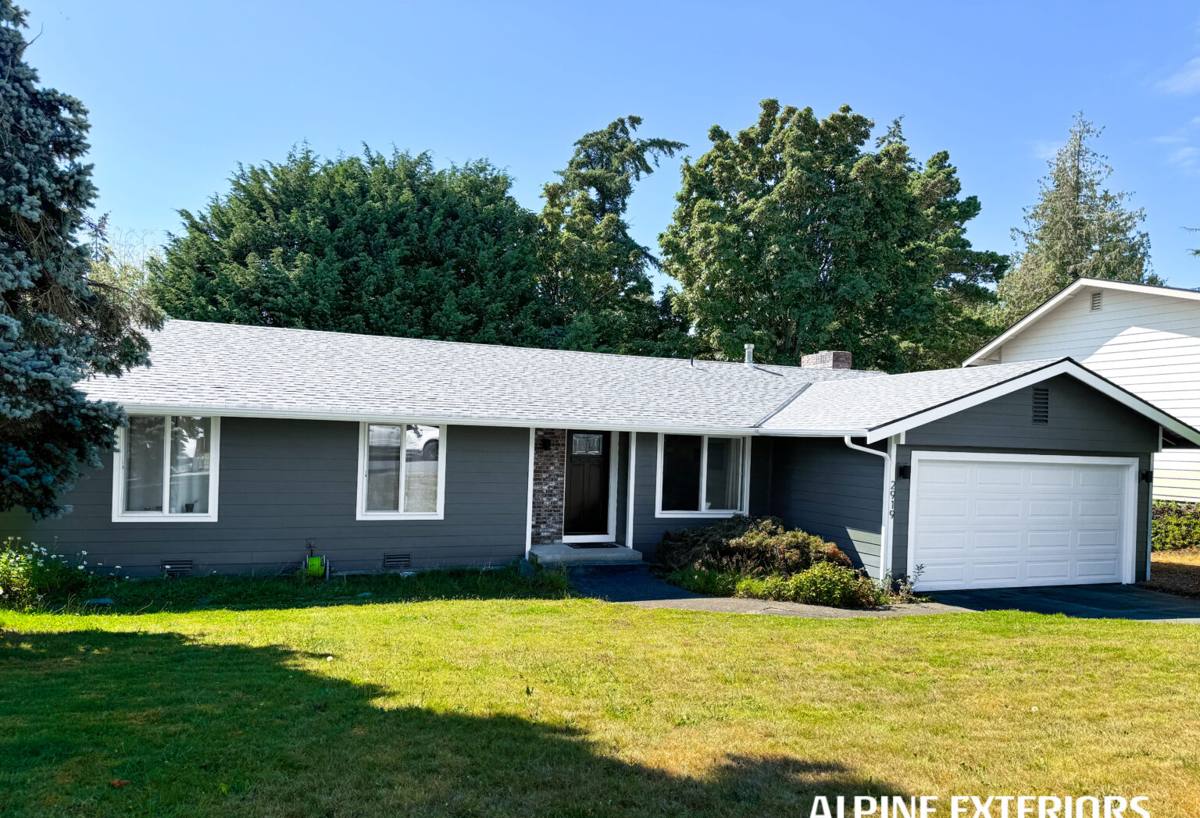
Old Town Anacortes sits close to the water, and that proximity shapes everything about how a house ages here. Many of the homes in this part of Anacortes were built well before modern weather-resistive barriers, engineered fastener patterns, or factory-cured siding finishes existed. That's not a knock on the neighborhood — it's just the reality of a housing stock that predates the products we now know are needed to survive a marine environment long-term. Add in mature tree cover on many lots, narrower setbacks between homes, and the kind of persistent dampness that comes with being this close to Fidalgo Bay and the surrounding waterways, and you get a set of conditions that are noticeably harder on exterior materials than what a house a few miles inland in Skagit County might face.
When we talk to homeowners in this neighborhood about siding, the conversation is rarely abstract. It's usually prompted by something they can see or feel: a north wall that never seems to dry out, moss creeping up from the foundation line, paint that won't hold, or siding that's started to soften at the bottom edge. Those are symptoms of a climate mismatch between the original siding material and what this specific location actually demands.
What Salt Air, Driving Rain, and Moss Actually Do to Siding
Salt Air and Metal Components
Airborne salt doesn't just sit on a wall — it works its way into fastener heads, trim joints, and any exposed metal flashing. Over years, that accelerates corrosion in the wrong fasteners and finishes, which shows up as rust streaking, loosened boards, and finish failure around nail heads long before the siding material itself would otherwise be due for replacement.
Wind-Driven Rain and Wall Assemblies
Anacortes gets its share of fall and winter storms pushing rain sideways off the water. Siding that relies on a tight, unbroken paint film to stay watertight — rather than a system engineered to shed and drain moisture — is vulnerable the moment that film cracks, chalks, or gets punctured. On an older Old Town home, that often means water finds its way behind the cladding at trim joints, butt seams, or old nail penetrations that were never properly sealed to begin with.
Moss, Shade, and Moisture Retention
Shaded, damp walls in this neighborhood grow moss and algae readily, especially on north- and west-facing elevations that don't get much direct sun. Beyond the cosmetic issue, a mossy wall stays wet longer after every rain event, which extends the amount of time the material underneath is exposed to moisture — a real problem for any siding that can absorb water or swell at the edges.
Why We Install Only James Hardie Fiber Cement
We made a deliberate decision to install James Hardie fiber cement siding exclusively — not vinyl, not engineered wood products like LP SmartSide, not Cemplank or Allura, not primed spruce or cedar. That's not a marketing position; it's a standard we hold because of what we've seen play out on homes in exactly this kind of coastal, high-moisture environment.
A Non-Combustible, Dimensionally Stable Core
Fiber cement is made primarily from cement, sand, and cellulose fibers, which makes it non-combustible and dimensionally stable across temperature and moisture swings. It doesn't expand and contract the way wood-based products do, which matters on a wall that's cycling between soaked and dry through an entire Pacific Northwest winter.
ColorPlus Factory Finish
James Hardie's ColorPlus finish is baked on in a controlled factory setting and backed by its own finish warranty, rather than depending on a field-applied paint job to hold up against salt air and UV exposure. That matters directly here: a factory finish is far less likely to be the first point of failure that lets moisture behind the wall.
HZ5: Engineered for This Climate Zone
James Hardie manufactures its siding in different formulations for different climate zones, and the HZ5 product line is engineered for regions like ours that see sustained moisture, freeze-thaw cycling, and marine exposure. That's a meaningful distinction from a one-size-fits-all siding product — the material itself is formulated with this kind of weather in mind, not just rated to tolerate it.
What a Correct Installation Looks Like on an Old Town Home
The siding material is only part of the equation. On an older home in this neighborhood, the install details matter as much as the product — sometimes more, since we're frequently working over wall assemblies that were never built with a drainage plane or modern flashing in mind.
A correct James Hardie installation on an Old Town Anacortes home typically involves:
- Removing the old siding down to the sheathing and inspecting for hidden rot, especially at window sills, corner boards, and the bottom few feet of wall closest to grade
- Installing a code-compliant weather-resistive barrier, with special attention to lapping and taping at every seam and penetration
- Adding a rainscreen or drainage gap where the wall assembly and budget call for it, so any moisture that does get past the cladding can drain and the wall can dry
- Flashing every window, door, and roof-to-wall transition individually rather than relying on caulk alone
- Using corrosion-resistant fasteners rated for the exposure, driven to Hardie's specified pattern and depth
- Sealing and priming any field-cut edges so the factory-finished protection isn't compromised at cuts
- Maintaining Hardie's specified clearances from grade, roof lines, and decks so the bottom edge of the siding never sits in standing water or constant splash-back
Skip any one of these steps and you can end up with a wall that looks right for a season or two but starts showing moisture problems well before it should — regardless of how good the siding material itself is.
How Siding Options Compare in This Environment
Homeowners often ask us to explain, plainly, why we don't offer alternatives. Here's how the common options stack up specifically against the conditions Old Town Anacortes homes face — salt air, wind-driven rain, and extended damp/shade periods.
| Material | Salt Air / Moisture Behavior | Fire Resistance | Maintenance Burden | Typical Field Longevity Here |
|---|---|---|---|---|
| James Hardie fiber cement | Dimensionally stable, factory finish resists salt and UV | Non-combustible | Occasional wash, no repainting for finish life | Decades when installed to spec |
| Vinyl | Can warp/fade with UV and temperature swings; seams can allow water intrusion | Combustible, can melt/deform near heat sources | Low, but limited repair options once faded or cracked | Variable; earlier failure at seams and fasteners in coastal exposure |
| LP SmartSide (engineered wood) | Wood-based core is moisture-sensitive if finish or flashing fails | Combustible | Requires diligent caulk/paint upkeep to prevent edge swelling | Shorter than fiber cement if moisture gets behind the finish |
| Cedar / primed spruce | Absorbs moisture, prone to rot and moss growth in shaded, damp areas | Combustible | Regular refinishing, sealing, and rot inspection | Shortest of the group in this climate without heavy upkeep |
This isn't a claim that other products fail on day one — it's an honest read of how each material's core behaves once it's exposed, over years, to the specific combination of salt, rain, and shade that defines this neighborhood.
Our Process for Old Town Anacortes Projects
Every project here starts with a walk-around assessment of the specific elevation exposures on that lot — which walls take the worst of the driving rain, where moss and shade are already a problem, and where the existing siding is showing the earliest signs of moisture damage. On older homes, we pay particular attention to what's happening at the sheathing once the old siding comes off, since hidden rot from decades of an undersized or failed weather barrier is common in this part of town.
We also account for the character of the neighborhood itself. Old Town has a mix of older architectural styles, and where a homeowner wants to preserve a specific trim profile, reveal, or color palette that fits the house's age, we work with James Hardie's range of plank widths, panel options, and ColorPlus colors to match that intent rather than defaulting to whatever's easiest to install.
Maintenance After Installation
James Hardie siding installed correctly is genuinely low-maintenance, but "low" isn't "none" — especially this close to the water. We recommend an annual rinse to clear salt residue and any early moss or algae growth before it takes hold, a quick visual check of caulking at trim and penetrations, and prompt attention if a gutter or downspout starts overflowing onto a wall. None of this is heavy lifting, but staying ahead of it is what lets the siding reach its full service life instead of fighting an uphill moisture battle.
Why Hiring a Crew That Already Works This Neighborhood Matters
Anacortes isn't a large city, but conditions can vary block to block depending on tree cover, elevation, and how directly a wall faces the water. A crew that's already worked on homes in Old Town knows which elevations tend to hold moisture, which older wall assemblies are more likely to have hidden rot, and how to sequence a tear-off so a home isn't left exposed during one of Skagit County's unpredictable rain windows. That local pattern-recognition doesn't show up on a spec sheet, but it shows up in how few surprises come up mid-project and how the finished wall performs five and ten years down the road.
If you're weighing a siding replacement on an Old Town Anacortes home, we're happy to take a look and walk you through exactly what your walls need. Reach out for a free, no-pressure estimate — we'll assess your specific exposure and give you a straight answer, not a sales pitch.