 Anacortes
 Building Decks for March Point Homes
March Point sits on its own peninsula along Fidalgo Bay, tucked between the water and the industrial waterfront that gives the area its distinct character. Homes here face a mix of conditions that inland Anacortes and Skagit County properties don't deal with in the same combination: near-constant exposure to salt-laden air off the bay, driving rain that comes in sideways during fall and winter storms, and a moss season that can stretch from October well into May. A deck built here needs to be planned around those realities from the first design conversation, not patched later once problems show up.
We've worked on homes throughout March Point and the surrounding Anacortes waterfront, and the decks that hold up best are the ones where the fastener choice, the ledger flashing, the board spacing, and the substructure were all selected with this specific microclimate in mind. A deck design that works fine in a dry inland neighborhood can fail early out here if it's not adapted.
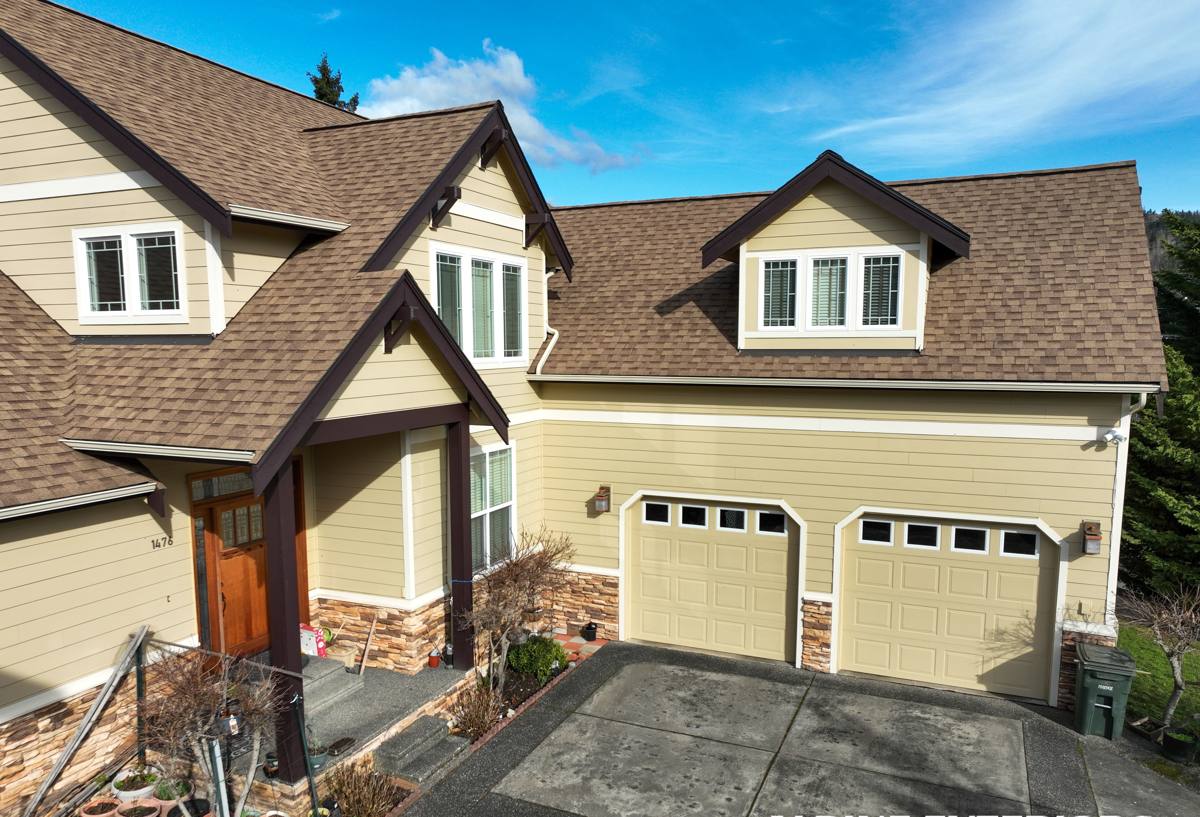
What Salt Air Does to a Deck
Salt air is corrosive, and it doesn't take a direct ocean view for it to matter — March Point's position on Fidalgo Bay puts every exposed metal component on a deck within reach of salt spray carried on the wind, especially during winter storms. Over time, unprotected or poorly rated fasteners, brackets, and hardware corrode faster than they would even a few miles inland. Once a fastener starts to rust, it weakens, stains the surrounding wood or composite, and eventually needs replacement — often before the decking material itself is due for attention.
Why Fastener and Hardware Choice Matters More Here
For March Point decks we spec stainless steel or marine-grade coated fasteners and structural hardware rather than standard exterior-rated products. It costs more up front, but replacing corroded joist hangers or ledger bolts on a finished deck is disruptive and expensive compared to getting the hardware right the first time. The same logic applies to railing hardware, post bases, and any exposed screws on fascia boards — anything left exposed to the weather gets the corrosion-resistant treatment.
Driving Rain and Water Management
Anacortes gets its share of Pacific storms, and on the exposed western side of March Point, rain frequently comes in at an angle rather than falling straight down. That changes how water moves across and around a deck. Wind-driven rain gets up under railings, behind fascia boards, and against ledger connections in ways that calmer rain doesn't, so the flashing and drainage details at those points carry more of the workload than they would on a sheltered inland lot.
Ledger Flashing Is Not Optional
The ledger board — where the deck attaches to the house — is the single most common failure point on decks in wet climates, and it's almost always a flashing problem rather than a decking problem. We install proper metal flashing with a drip edge and correctly lapped house wrap or building paper behind it, so water sheds away from the wall structure instead of tracking behind the ledger and into the rim joist or framing. This is invisible once the deck is finished, which is exactly why it's worth asking a contractor how they handle it before work starts.
Board Spacing and Substructure Drainage
Consistent gapping between deck boards lets water drain through instead of pooling on the surface, and that gap needs to stay consistent through wood movement over the seasons. Underneath, the substructure needs enough airflow that the framing can dry out between storms rather than staying damp for days at a time, which is when rot and fungal growth take hold.
Moss Season and Surface Maintenance
A long, damp moss season is part of life anywhere in Skagit County, but the constant humidity coming off Fidalgo Bay keeps March Point's shaded and low-airflow areas wet longer than more open, sun-exposed sites. Moss and algae growth on a deck surface isn't just cosmetic — a mossy deck surface holds moisture against the boards, and on wood decking it becomes slippery and genuinely dangerous underfoot, especially on stairs.
Design Choices That Reduce Moss Buildup
- Orienting board runs and railing placement to avoid trapping standing water in corners
- Keeping the deck surface graded slightly to shed water rather than sitting flat
- Avoiding tight, unventilated skirting that traps humid air against the underside
- Trimming site lines with the homeowner so nearby vegetation isn't shading the deck year-round where it can be reasonably avoided
- Selecting a decking material with a surface texture that sheds moss more easily and doesn't require chemical treatment to stay clean
None of these eliminate moss entirely — nothing does in this climate — but they reduce how often a homeowner has to get out there with a brush or a wash to keep the deck safe and looking right.
Choosing the Right Decking Material
Material choice matters more here than it does in a drier climate, because the deck spends more of the year wet than dry. We walk every March Point homeowner through the real trade-offs rather than pushing one product.
| Material | How It Handles This Climate | Maintenance Reality |
|---|---|---|
| Pressure-treated wood | Good structural performance if properly sealed and maintained; more prone to moss and surface graying without upkeep | Needs re-sealing every 1–2 years in this climate to perform well |
| Cedar | Naturally resists some decay, holds up well to salt air, ages to a silver-gray patina many homeowners like | Periodic cleaning and optional staining; softer surface than composite |
| Composite decking | Doesn't absorb water the way wood does, resists rot at the board level, but still needs the substructure and drainage handled correctly | Low maintenance on the surface, but requires periodic washing to keep moss and algae from taking hold |
There's no single "best" answer — a homeowner who wants the lowest possible upkeep usually leans composite, while homeowners who prefer a natural material and don't mind periodic maintenance often stick with cedar or well-sealed pressure-treated lumber. We give an honest read on what each option means for upkeep given this specific site before any decision gets made.
Our Process for a March Point Deck Project
Every deck starts with a site visit, not a generic quote. We look at sun exposure, prevailing wind direction, drainage across the yard, and how close the build site sits to the bay-facing side of the property, since that changes how much weather protection the hardware and finish need.
- Site assessment — grading, drainage paths, sun and wind exposure, proximity to salt air and existing moss problem areas
- Design and material selection — sizing, layout, railing style, and an honest conversation about decking material trade-offs for this specific lot
- Permitting — Anacortes and Skagit County have specific requirements for deck size, height, and railing code depending on the project; we handle that paperwork
- Foundation and framing — footings sized for the soil conditions on site, with corrosion-resistant hardware throughout
- Ledger flashing and waterproofing — done correctly at the house connection before any decking goes down
- Decking installation — consistent spacing, proper fastening, and attention to drainage and airflow underneath
- Railing and finish work — code-compliant railing height and spacing, final fastener checks, and a walkthrough with the homeowner
What We Check Before Calling a Job Done
- All structural hardware is rated for coastal/salt-air exposure
- Ledger flashing is properly lapped and sealed against the house
- Board gaps are consistent and allow proper drainage
- Substructure has adequate airflow and ground clearance
- Railings meet current Anacortes/Skagit County code for height and baluster spacing
- Stairs and landings are stable and slip-conscious given the moss risk
Repair, Rebuild, or New Build?
Not every March Point deck problem calls for a full rebuild. If the framing underneath is still sound and the issue is surface-level — worn decking, a failing railing, or moss buildup that's outpaced maintenance — a repair or resurfacing can extend the deck's life for a fraction of the cost of starting over. But if the ledger flashing was never installed correctly, or the substructure has been absorbing wind-driven rain for years without adequate drainage, patching the surface just delays a bigger repair. We'll tell a homeowner honestly which situation they're in rather than defaulting to the more expensive answer.
Why Local Experience on March Point Specifically Matters
A contractor who mainly builds decks on sheltered, inland lots elsewhere in Skagit County will design differently than one who has worked the exposed, salt-air conditions along Fidalgo Bay. The difference shows up years later — in whether the hardware is still solid, whether the ledger connection is still dry, and whether the homeowner is fighting moss every spring or just doing normal upkeep. We've built and repaired decks across the Anacortes area long enough to know which details actually matter out here versus which ones are just extra cost with no real benefit for this specific site.
If you're planning a new deck in March Point, or dealing with an existing one that's showing its age faster than it should, we're happy to take a look and give you a straightforward assessment — no pressure, no upsell, just what the deck actually needs. Reach out for a free estimate using the form below.