 Anacortes
 Why March Point Roofs Wear Differently Than Roofs Inland
March Point sits out on the water, exposed on more sides than a typical inland Skagit County lot. That exposure changes what a roof has to survive year after year. Salt-laden air off the water accelerates corrosion on anything metal — nails, flashing, vent caps, and hardware. Wind comes across open water with fewer trees and buildings to slow it down, which puts more uplift stress on shingles and ridge lines than a sheltered roof a few miles inland ever sees. And the long gray stretch of Pacific Northwest fall, winter, and spring means roofs here spend more days wet than dry, which is exactly the condition moss and algae need to take hold.
None of this means a March Point roof needs to be exotic or overbuilt. It means the ordinary parts of a roofing job — fastener choice, flashing detail, underlayment, ventilation — matter more here than they would somewhere drier and calmer. A replacement done to a generic spec will wear out faster on this stretch of Anacortes coastline than the same roof would in a more protected neighborhood.
Salt Air and Metal Components
Salt air oxidizes exposed steel and aluminum faster than it does the same materials a few miles from the water. On a roof, that shows up first in fasteners, drip edge, step flashing, and vent flashing — the small metal parts that keep water out at every roof penetration and edge. When those parts corrode, they don't fail all at once; they weaken quietly until a storm finds the gap. Material choice and fastener grade matter more on a March Point roof than they would on a similar house set back from the water.
Wind Exposure and Uplift
Open water exposure means gusts hit a March Point roof with less interruption than they would in a tree-lined neighborhood. Shingle uplift almost always starts at the edges — eaves, rakes, and ridge — where wind gets underneath a tab or cap and works it loose. Proper starter strip, edge fastening, and ridge cap installation aren't optional upgrades here; they're the difference between a roof that holds through a winter storm and one that loses shingles in the first hard blow.
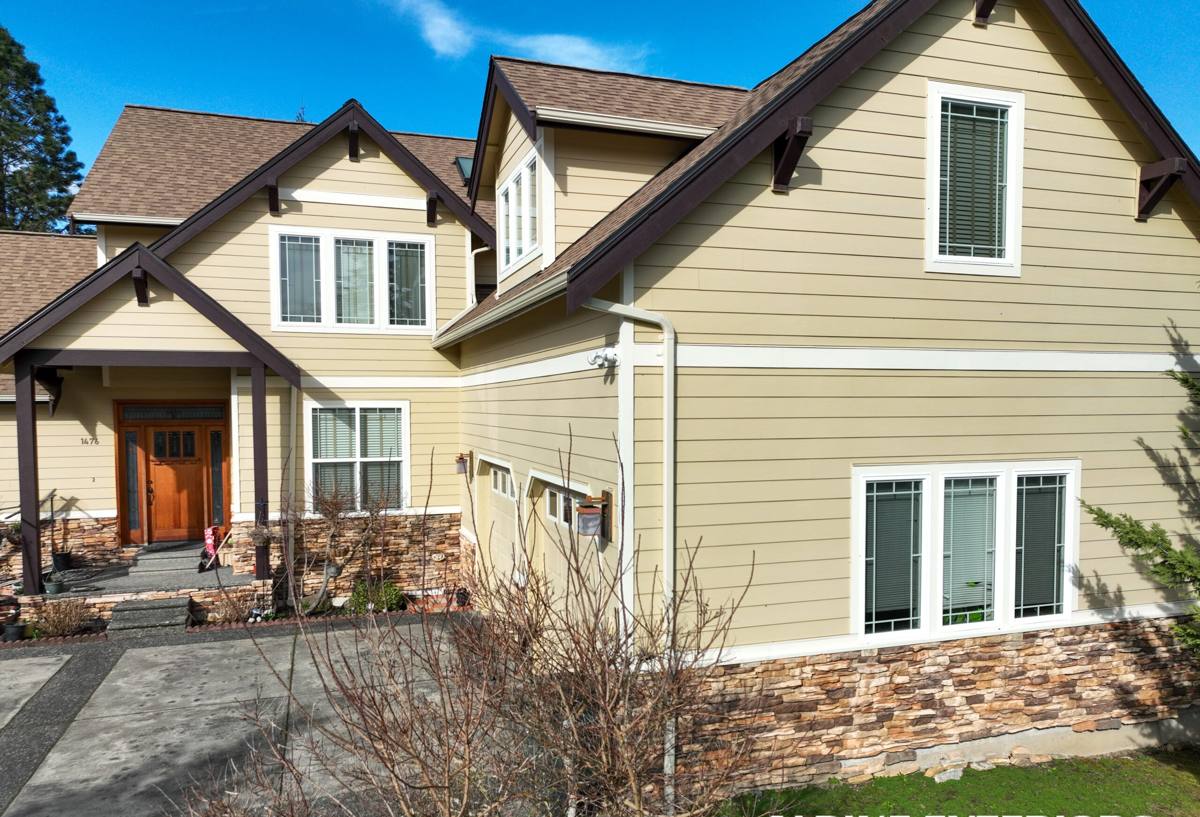
Signs a March Point Roof Needs Replacement, Not Another Repair
Roof repair makes sense when a problem is localized — a cracked pipe boot, a handful of wind-lifted shingles, a flashing leak at a chimney. Replacement makes sense when the roofing material itself has reached the end of its useful life, even if it isn't leaking yet. The signs below are worth a professional look, especially on a home exposed to the salt air and moss pressure March Point sees.
- Shingles that are cupping, curling at the edges, or losing their granules in patches rather than just at the drip edge
- Moss established in the shingle mat itself, not just sitting on the surface — this holds moisture against the roofing material and speeds up granule loss
- Metal flashing showing visible rust, pitting, or streaking stains running down the roof plane
- Multiple repair visits in the last few years for different leaks in different spots, rather than one recurring issue
- Soft or spongy decking felt underfoot in the attic, or daylight visible through the roof deck at any point
- A roof that's simply reached or passed the expected service life of its material — even without visible leaks yet
- Granules collecting in gutters in noticeably increasing amounts each year
What a Correct Roof Replacement Involves
A roof replacement is more than swapping old shingles for new ones. Done right, it's a full system: decking, underlayment, flashing, ventilation, and the roofing material itself, all working together. Skipping any one of these to save time shows up as a problem within a few years, usually right when the marine weather returns for the season.
Full Tear-Off and Deck Inspection
We remove the old roofing down to the deck rather than layering new shingles over old — layering hides deck problems and voids most manufacturer warranties. Once the deck is exposed, we check for soft spots, delamination, or water staining and replace any damaged sheathing before anything new goes down. This is the point in the job where hidden moisture damage from years of exposure actually gets found and fixed, not covered up.
Underlayment and Water Management
Underlayment is the roof's backup plan for the water that gets past the shingles — and on a roof exposed to driving, wind-blown rain, that happens more often than on a calmer site. We use synthetic underlayment across the field and self-adhered ice-and-water membrane at the vulnerable spots: eaves, valleys, and around penetrations like vents and chimneys. That membrane matters even without ice dams being a major local concern, because it seals around fasteners and stops wind-driven water from finding its way sideways under a shingle edge.
Flashing and Fasteners
Given the corrosion pressure from salt air, we pay particular attention to flashing and fastener quality on March Point jobs — corrosion-resistant materials at valleys, chimneys, skylights, and wall intersections, and proper fastener patterns at every edge and ridge to resist wind uplift.
Ventilation
A roof that can't breathe traps moisture in the attic, which shortens the life of the decking and encourages the same moss and algae growth we're trying to keep off the shingles above. Balanced intake and exhaust ventilation keeps attic temperature and humidity closer to outdoor conditions, which reduces condensation risk and helps shingles last through their full rated life instead of failing early from the underside.
Comparing Roofing Materials for a Marine, Moss-Prone Climate
There's no single "best" roofing material for every March Point home — it depends on budget, roof pitch, architectural style, and how much maintenance a homeowner wants to take on. The table below lays out honest trade-offs for the materials we're most often asked about in this climate.
| Material | Moss/Algae Resistance | Wind Performance | Maintenance | Typical Lifespan |
|---|---|---|---|---|
| Architectural asphalt shingle | Good, especially with algae-resistant granules | Strong when properly fastened and rated | Periodic moss treatment and gutter care | 25–30+ years |
| Standard 3-tab shingle | Fair — thinner mat holds less algae-resistant coating | Lower wind rating than architectural shingle | More frequent moss/algae attention | 15–20 years |
| Standing seam metal | Excellent — smooth surface sheds moss and moisture well | Excellent when installed with proper clip spacing | Low; occasional coastal-grade fastener check | 40–50+ years |
| Cedar shake | Poor without diligent upkeep — organic material holds moisture | Moderate, depends on installation and exposure | High; regular treatment needed in this climate | 20–30 years with upkeep |
We're honest with clients about cedar shake specifically: it's a beautiful, traditional look, but an organic wood product sitting in a climate this wet and moss-prone requires a real ongoing maintenance commitment to perform well. That's not a knock on the material — it's a maintenance-burden trade-off worth knowing before you choose it, not after.
What Drives the Cost of a March Point Roof Replacement
Every roof is priced individually after an on-site look, but the factors that move the number up or down are consistent. Knowing them ahead of time helps a homeowner budget realistically and compare estimates apples-to-apples.
- Roof size and complexity — square footage plus the number of valleys, hips, dormers, and penetrations
- Pitch and accessibility — steeper roofs and homes with limited equipment access take longer and require more safety setup
- Layers of existing roofing — tearing off multiple old layers costs more than removing one
- Decking condition — hidden rot or delamination found during tear-off adds material and labor
- Material choice — architectural shingle, metal, and cedar carry different material and labor costs, as shown above
- Ventilation and flashing upgrades — bringing an older roof's ventilation or flashing up to current standards
We'd rather walk a roof and give a real number than throw out a broad range that doesn't hold up once we're actually up there. A written estimate should account for your specific roof, not a generic square-footage formula.
Our Process, Start to Finish
- On-site inspection. We walk the roof and the attic, note the deck condition, ventilation setup, and any problem areas, and take measurements.
- Written estimate and material selection. We go over material options and their trade-offs for your home specifically, and provide a clear, itemized estimate.
- Scheduling and permitting. We handle the permit process with the relevant local authority and schedule the job around weather windows — timing matters in a climate that doesn't always cooperate.
- Tear-off and deck repair. Full removal of the old roofing, deck inspection, and replacement of any damaged sheathing before anything new is installed.
- Installation. Underlayment, flashing, ventilation components, and roofing material installed to manufacturer specification and matched to the wind and moisture demands of your site.
- Cleanup and final walkthrough. Full site cleanup including a magnetic sweep for stray fasteners, followed by a walkthrough so you can see the finished work and ask questions before we consider the job done.
Why a Crew That Already Works March Point Makes a Difference
Roofing crews that mostly work inland, sheltered neighborhoods don't always think about the extra corrosion resistance or wind-edge detailing a water-exposed roof needs — because they don't have to, most of the time. A crew that regularly works March Point and the rest of the Anacortes waterfront has already made those judgment calls on other roofs nearby and knows which fastener grades, flashing details, and material choices actually hold up out here, rather than which ones look fine on paper.
Local familiarity also means fewer surprises in scheduling and permitting. We know the local permitting process for the City of Anacortes and unincorporated Skagit County, and we plan around the weather patterns that actually affect this part of Fidalgo Island, rather than a generic seasonal calendar.
Protecting Your New Roof After Installation
A correctly installed roof still benefits from basic seasonal upkeep, especially in a climate that grows moss as reliably as this one does.
- Keep gutters clear so water isn't backing up under the eaves during heavy rain
- Trim back overhanging branches to cut down on shade, debris, and moss spores landing on the roof
- Have moss treated before it establishes in the shingle mat, not after — a light annual treatment is far cheaper than remediation
- Walk the attic once a year (or have it checked) for any signs of moisture, staining, or ventilation blockage
- Schedule a professional inspection after any major windstorm, even if nothing looks obviously wrong from the ground
If you're weighing a repair against a full replacement, or just want an honest read on where your roof stands, we're happy to come take a look. The estimate is free, there's no pressure attached to it, and you'll get a straight answer about what your roof actually needs — simply fill out the form below to get started.