 Anacortes
 Why March Point's Exposure Changes the Window Equation
March Point sits out past the edge of town, with water on multiple sides, which means homes here take a more direct hit from conditions that are already demanding throughout Skagit County. The salt-laden air coming off the water accelerates corrosion on anything metal in a window assembly — hinges, balance mechanisms, screen frames, even the small fasteners holding trim in place. Add in driving, wind-driven rain that doesn't just fall straight down but gets pushed sideways into wall assemblies, and a moss season that can run from early fall well into spring, and you've got three separate stresses acting on every window opening at once: corrosion, water intrusion, and prolonged surface moisture.
A window that performs fine on a sheltered, inland lot elsewhere in the county can fail years sooner out here if it wasn't specified and installed with this exposure in mind. "Correct" for a March Point home isn't the same as "correct" for a more protected part of Anacortes — what's adequate on a calm inside street is undersized for a home that catches weather off open water on a regular basis. That difference shows up first at the windows, because they're the weakest point in an otherwise solid wall assembly.
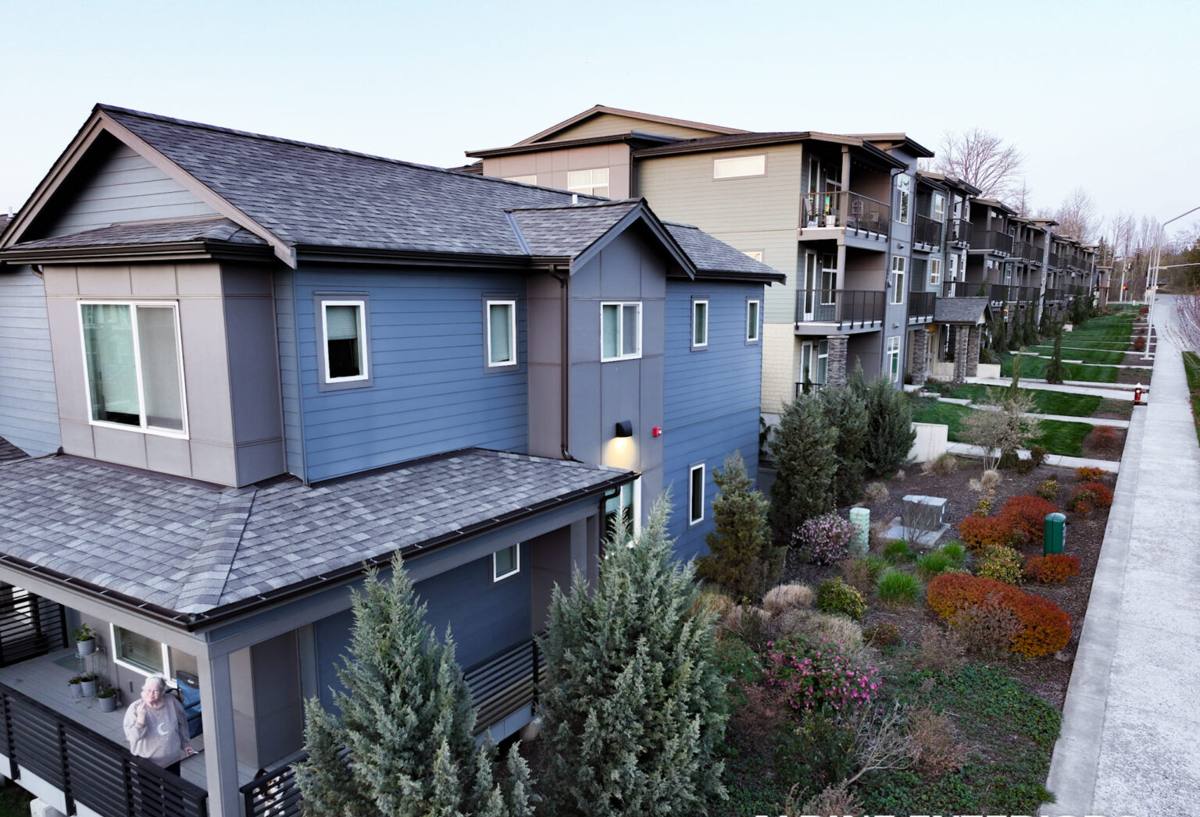
Signs Your March Point Home's Windows Are Overdue
Most homeowners don't wake up one day and decide they need new windows — it's a slow accumulation of small annoyances that eventually add up to a real problem. Watch for these:
- Drafts you can feel near the frame even with the window fully latched
- Fogging or a hazy film trapped between the panes — a sign the seal has failed
- Wood trim or sills that feel soft, look discolored, or crumble when pressed
- Windows that are hard to open, close, or lock, or that stick in damp weather
- Visible gaps or daylight showing around the frame from the inside
- Green or black growth on sills or exterior trim that comes right back after cleaning
- A noticeable jump in heating costs with no other clear explanation
- Condensation collecting on interior glass or frames during cold snaps
Any one of these on its own might just need a repair or a re-caulk. But two or three showing up together — especially fogging combined with soft wood or persistent drafts — usually points to failed seals and compromised framing underneath, which means a full replacement is the more honest recommendation, not a patch that buys you another season or two.
What a Correct Window Replacement Job Actually Involves
Removal and a Real Rot Check
Pulling the old window is the easy part. What matters is what happens next: checking the framing and sheathing behind it for hidden rot. In a climate with this much sustained moisture, it's common to find soft or damaged wood behind a window that looked fine from the outside — especially if the original flashing details weren't built for wind-driven rain. Skipping this step and just dropping a new window into a compromised opening only hides the problem for a little while longer.
Water Management Comes Before the Window Itself
The single most important part of the job isn't the window — it's how water is directed around it. That means sill pans to catch anything that gets past the exterior, flashing tape integrated with the home's water-resistive barrier in proper shingle-lap fashion so water sheds outward and down, never inward. This is the step most likely to get shortcut by a crew that doesn't regularly work in exposed coastal conditions. A beautiful, well-built window installed without correct flashing will leak — it's just a matter of time and how many wind-driven rain events it takes.
Insulation, Air Sealing, and the Interior Side
Around the perimeter, we use low-expansion foam or backer rod and sealant rather than packing the gap too tightly, which can bow the frame and affect how the window operates. On the interior, trim and casing get sealed as well, which controls both drafts and the interior condensation that shows up on cold, damp mornings when warm indoor air meets a poorly sealed frame.
Finish Work: Trim, Caulking, and Capping
Exterior trim choices matter more here than in a drier climate. Capping wood trim with metal coil stock, for example, reduces how much exposed wood is left to absorb moisture and cuts down on repainting down the road. Caulk selection matters too — it needs to stay flexible through the temperature swings and constant damp that come with a maritime climate, or it cracks and opens a path for water within a year or two.
Choosing a Window Material for a Marine Climate
Frame material has a bigger impact on long-term performance here than in a lot of inland climates, because salt air and sustained moisture punish some materials much faster than others.
| Material | Salt Air & Moisture Behavior | Maintenance | Trade-offs |
|---|---|---|---|
| Vinyl | Doesn't corrode; unaffected by salt air | Low — occasional cleaning | Frame can expand/contract with temperature swings, though that's less of an issue in this mild coastal climate than inland |
| Fiberglass | Dimensionally stable, resists moisture-driven swelling, doesn't corrode | Low | Higher upfront cost than vinyl |
| Wood, clad exterior | Attractive and warm on the interior; exterior cladding protects the wood core if installed correctly | Moderate — cladding-to-sill joints need periodic checking | If the cladding is ever compromised, trapped moisture can rot the wood core out of sight |
| Bare aluminum | Most vulnerable to pitting and corrosion in salt air; conducts cold, which contributes to interior condensation | Higher — may need refinishing over time | Not our default for a site this exposed unless it's part of a heavier commercial-grade system |
For most March Point homes, our standard recommendation is vinyl or fiberglass, based on corrosion resistance and a lower long-term maintenance burden — not because other materials are inferior products, but because they demand more upkeep than most homeowners want to keep up with this close to the water.
Glass and Performance Options Worth Considering
Low-E Coatings and Gas Fills
Low-E coatings help manage heat loss during the long stretch of cool, damp months that define this climate, without the extreme summer heat load you'd see elsewhere. Argon gas fill between panes adds a modest incremental improvement to insulation — worth having, but not a dramatic transformation on its own. The coating and the overall seal quality matter more than any single spec on a data sheet.
Tempered and Laminated Glass Where It Matters
Building code requires tempered glass in certain locations — near doors, close to the floor, in wet areas — and we follow that regardless of the project. Laminated glass is also worth a conversation if road noise or added security is a priority for a particular opening. To be clear, this region doesn't require the kind of impact-rated glazing used in hurricane zones; a properly built and installed window handles our wind and rain exposure without needing to be over-specified for a threat that doesn't apply here.
What Drives the Cost of a Window Replacement
Every project is different, and we don't like giving firm numbers before we've actually looked at the openings — but these are the factors that consistently move the price up or down:
| Factor | Why It Matters |
|---|---|
| Number of windows being replaced | Larger jobs spread crew mobilization and setup costs across more units |
| Frame material chosen | Material costs vary meaningfully between vinyl, fiberglass, and clad-wood options |
| Size and configuration | Larger picture windows or multi-panel units need more glass, more hardware, and more careful handling |
| Access and height | Second-story or hard-to-reach openings require staging and more labor time |
| Hidden rot found during tear-out | Framing repairs can't be priced accurately until the wall is actually opened up |
| Trim and capping scope | Full exterior trim replacement adds labor beyond simply swapping the window unit |
| Insert vs. full-frame replacement | Insert replacement is faster and less costly, but only appropriate when the existing frame is still sound |
That last line deserves a bit more explanation. An insert (or "pocket") replacement fits a new window into the existing frame and is the quicker, less invasive option — but it only makes sense when that existing frame has no rot and was flashed correctly to begin with. A full-frame replacement removes everything down to the rough opening, which costs more but is the only honest option when we find water damage or flashing that was never done right in the first place. This is exactly why a real quote requires someone to look at your actual windows, not just take measurements over the phone.
Our Process From First Call to Final Walkthrough
- Initial visit and assessment — we walk the exterior and interior, check for signs of rot or past leaks, and measure every opening.
- Written proposal — scope of work, our material recommendation and the reasoning behind it, a realistic timeline, and clear cost information.
- Ordering and lead time — custom-sized windows are built to order, which takes several weeks; we schedule installation around the weather rather than against it.
- Removal and prep — tear-out, inspection for hidden rot, repair of anything found before the new unit goes in, and protection of your interior finishes.
- Installation — setting the window, sealing for air and water, insulating the perimeter, and securing it properly.
- Exterior finish work — trim, caulking, and capping done to hold up to this climate, not just look good on install day.
- Cleanup and walkthrough — every window gets tested for smooth operation, the site is left clean, and we go over your warranty paperwork together.
Why Hire a Crew That Already Works in March Point
Experience specific to this area shows up in details a generalist crew might miss. That includes knowing the City of Anacortes permitting expectations for exterior alterations, understanding which side of a given lot typically catches the worst of the wind-driven rain, and recognizing the flashing shortcuts common to certain eras of construction found throughout this part of Skagit County. It also means sourcing materials that are appropriately rated for this exposure — not over-building for conditions that don't exist here, and not under-building for the ones that do. A crew that's replaced windows on other homes nearby has already seen how the local exposure plays out over the following winters, and that experience shapes better decisions on your job before problems ever start.
Maintaining Your New Windows in a Salt-Air Climate
New windows installed correctly still benefit from a little upkeep in this environment. Rinsing frames and hardware periodically clears salt residue before it has a chance to work on metal components. Checking caulk lines once a year, ideally before the wet season sets in, catches small cracks before they become leaks. Keeping moss and organic debris cleared off sills and tracks prevents the kind of trapped moisture that shortens the life of even good materials, and an occasional drop of lubricant on hardware keeps everything opening and closing the way it should.
If you're noticing any of the warning signs above, or you just want an honest read on where your windows stand, we're happy to take a look. Request a free, no-pressure estimate using the form below and we'll walk your home in person before recommending anything.