 Anacortes
 Windows Built for the Skagit Valley, Not Just "Installed"
Mount Vernon sits in a river valley that stays damp for most of the year. Between the marine air that rolls in off the Salish Sea and the moisture the Skagit River holds in the ground, homes here deal with more sustained humidity than a lot of inland towns ever see. Add in the driving rain that comes sideways during fall and winter storms, and a long, gray moss season that keeps north-facing surfaces wet for weeks at a time, and you've got a climate that is genuinely hard on windows. Not dramatic — just relentless.
A window doesn't have to face a hurricane to fail early. It just has to sit in a wet frame pocket for a few winters with poor flashing behind it. That's the failure pattern we see most often on older Mount Vernon homes: not a bad window, but a window that was never sealed and flashed correctly for this climate in the first place. Custom window work here is as much about water management as it is about glass and frames.
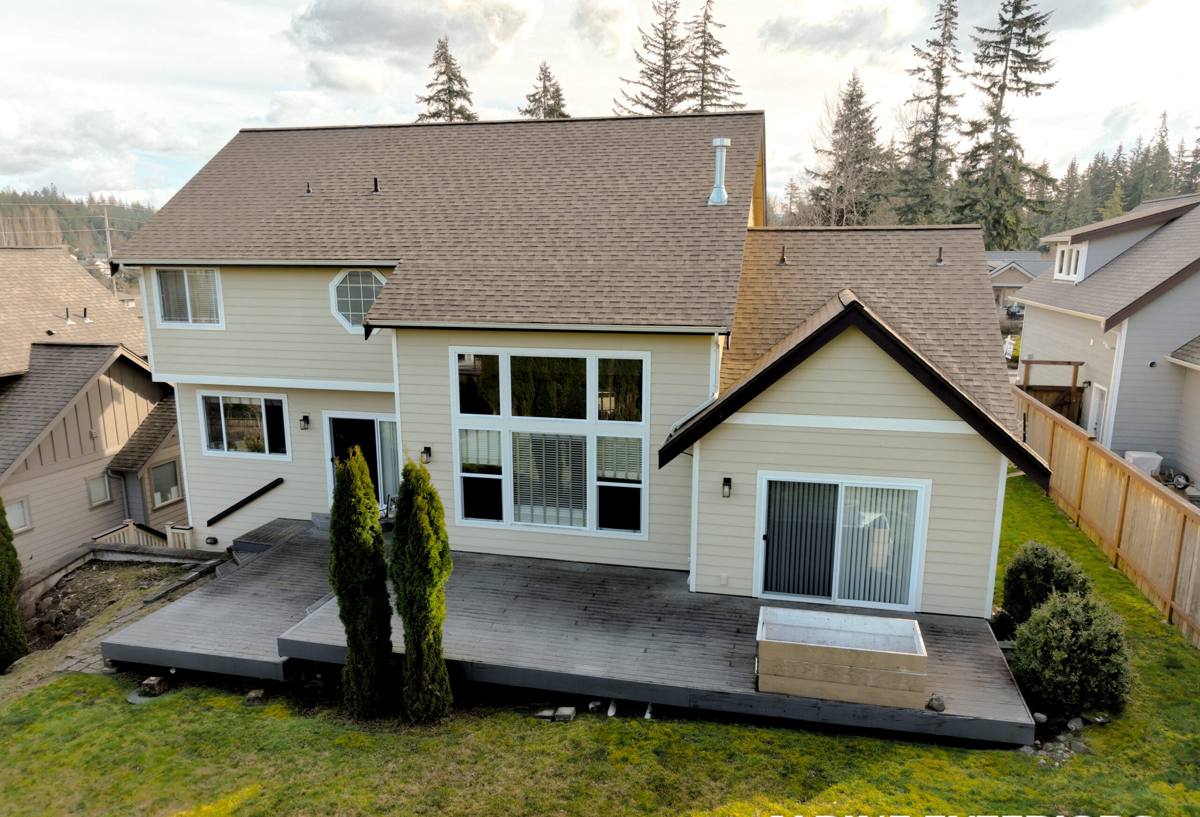
What "Custom" Actually Means for Your Home
"Custom windows" gets used loosely in this trade, so it's worth being specific about what we mean.
Exact-Fit Replacement
Most Mount Vernon homes we work on — especially older farmhouses and mid-century houses in and around town — don't have standard modern rough openings. Walls have settled, framing has shifted a little, and original openings were often built to whatever lumber was on hand at the time. A custom window is measured and built to that actual opening, not forced into a stock size with extra trim to hide the gaps.
Full-Frame vs. Insert Replacement
There are two honest ways to replace a window: a pocket insert that fits inside the existing frame, or a full-frame replacement that pulls the old frame out down to the rough opening. Insert replacement is faster and less invasive, and it's the right call when the existing frame is still sound and dry. Full-frame is the right call when we find rot, soft wood, or old flashing that's already failed — which, given how much moisture this area sees, is more common than homeowners expect once we get the trim off.
Shape, Size, and Style Matching
Custom also covers non-standard shapes — arched tops, odd bay configurations, larger openings for more natural light in a valley that doesn't get a lot of direct sun in winter. We build the window to the opening and the look of the house, not the other way around.
The Real Enemy Is Moisture, Not Cold
Homeowners usually call about drafts or fogged glass and assume the fix is just a newer, better-insulated window. Insulation matters, but in this climate the bigger risk is what's happening behind the frame. Skagit County's damp, mild winters mean wood can sit wet for months without ever fully drying out, which is exactly the condition that lets rot and mold take hold unseen.
Two moisture problems show up again and again on custom window jobs here:
- Failed or missing flashing. Water gets behind the siding and the window flange and has nowhere to go but into the wall cavity.
- Condensation on interior glass. Common in older single-pane or poorly sealed windows once indoor humidity is trapped by tighter modern insulation elsewhere in the house.
Both are solvable, but only if they're diagnosed correctly instead of papered over with caulk and a new sash.
Frame Material Comparison for This Climate
There's no single "best" window material — there's the right material for the exposure, the budget, and how the house is used. Here's how the common options actually perform in a wet, mild, moss-prone climate like Mount Vernon's.
| Material | Moisture Resistance | Maintenance | Relative Cost | Best Fit |
|---|---|---|---|---|
| Vinyl | Very good — won't rot, but seals and welds matter | Low | Budget-friendly | Rentals, additions, value-focused replacements |
| Fiberglass | Excellent — stable in wet/dry cycles, doesn't warp | Low | Mid to upper range | Full-frame replacements on exposed walls |
| Wood-Clad | Good if detailed correctly, higher risk if not | Moderate to high | Premium | Historic-style homes where interior wood look matters |
| Aluminum | Fair — prone to condensation without thermal breaks | Low | Mid-range | Limited use; mostly commercial or specific styles |
We don't install every product on that list on every house. If a homeowner wants a wood-clad look on a wall that takes heavy weather, we'll say so plainly and talk through the trade-off rather than let a nice interior finish hide a maintenance problem down the road.
How We Approach a Custom Window Job
- On-site assessment of each opening, including a check behind existing trim for hidden rot or old flashing failures.
- Precise measurement of every window individually — no assuming openings match, even on homes where they look identical from the curb.
- Material and glass package recommendation based on that wall's sun and weather exposure, not a one-size answer for the whole house.
- Removal of the old window and inspection of the rough opening and sheathing before anything new goes in.
- Installation of a proper weather-resistive barrier and flashing sequence — sill pan, jamb flashing, head flashing, integrated with the house wrap so water sheds outward at every layer.
- Setting and shimming the new window plumb, level, and square, then sealing with the correct sealants for the material.
- Interior and exterior trim work finished to match the home.
- Final walkthrough and cleanup.
That flashing sequence in step five is where most shortcuts happen industry-wide, and it's the step that determines whether a window lasts fifteen years or thirty in this climate.
Mistakes We Regularly Find on Older Installs
When we're called out to a Mount Vernon home for a leak, drafts, or a window that's suddenly hard to open, a few patterns show up over and over:
- Caulk used as the primary water barrier instead of proper flashing — it fails long before the window does.
- New windows set into openings without a sill pan, so any water that gets in has no way back out.
- Trim reinstalled tight against siding with no drainage gap, trapping moisture against the frame.
- Mismatched sealant that doesn't bond properly to vinyl or fiberglass, cracking within a couple of seasons.
- Undersized or missing head flashing above the window, letting driving rain track straight down behind the trim.
None of these are visible from the sidewalk. They show up two, five, or ten years later as soft trim, peeling paint, or a musty smell near the window — usually after the moss has already had a chance to establish itself on the sill and casing.
Energy Performance in a Mild, Wet Climate
Skagit County doesn't get brutal winters, so the energy conversation here is less about surviving deep cold and more about comfort and condensation control. A well-sealed, correctly installed window keeps the glass surface temperature closer to room temperature, which cuts down on interior fogging and the cold-draft feeling near windows on damp winter evenings. Low-E glass coatings help manage both heat loss and the glare of the low winter sun angle typical of this part of Washington. Beyond a certain point, chasing the highest-rated glass package matters less than making sure the installation itself doesn't undo the window's performance with air leaks around the frame.
What to Ask Before You Hire Someone
Window work is easy to do badly and look fine for a year or two. Before you hire anyone for custom window installation in Mount Vernon, it's worth asking directly:
- Do you install a sill pan and full flashing sequence, or rely mainly on caulk and sealant?
- Are you licensed and bonded to do exterior and window work in Washington State?
- Will you inspect the rough opening for rot before installing, and what happens if you find it?
- What's the written warranty on both the product and your labor, and who do I call if something leaks?
- Can you explain, in plain terms, why you're recommending one frame material over another for my specific walls?
A contractor who's done this work around Mount Vernon and greater Skagit County for a while should be able to answer all five without hesitating.
Why Local Experience on This Job Actually Matters
Window installation isn't regionally exotic — the mechanics are similar everywhere. What differs is judgment: knowing that a north-facing wall in this valley stays wet longer, that certain older Mount Vernon home styles hide rough openings that don't match modern stock sizes, and that a flashing detail that's fine in a dry climate isn't good enough here. We work throughout Skagit County out of Anacortes, and that means we see the same weather patterns, the same housing stock, and the same failure points repeatedly — which is exactly the kind of pattern recognition that keeps a custom window job from becoming a callback two winters later.
If you're weighing custom windows for a Mount Vernon home, we're glad to take a look and give you a straightforward, no-pressure estimate — just fill out the form below.