 Anacortes
 Roofing on March Point Isn't the Same Job as Roofing Inland
March Point sits out on the water, and that location changes what a roof has to deal with day in and day out. Homes here take on salt-laden air off Fidalgo Bay and Padilla Bay, wind-driven rain that doesn't fall straight down, and a long, damp moss season that stretches from fall through spring in Skagit County. A roofing system that holds up fine twenty minutes inland can wear out faster out here if it wasn't built with those conditions in mind.
That's the difference between a generic new roof installation and one done specifically for a March Point address. The materials, the fastener choices, the flashing details, and the ventilation plan all shift a little when the roof has to shed salt spray and standing moisture instead of just ordinary Pacific Northwest rain.
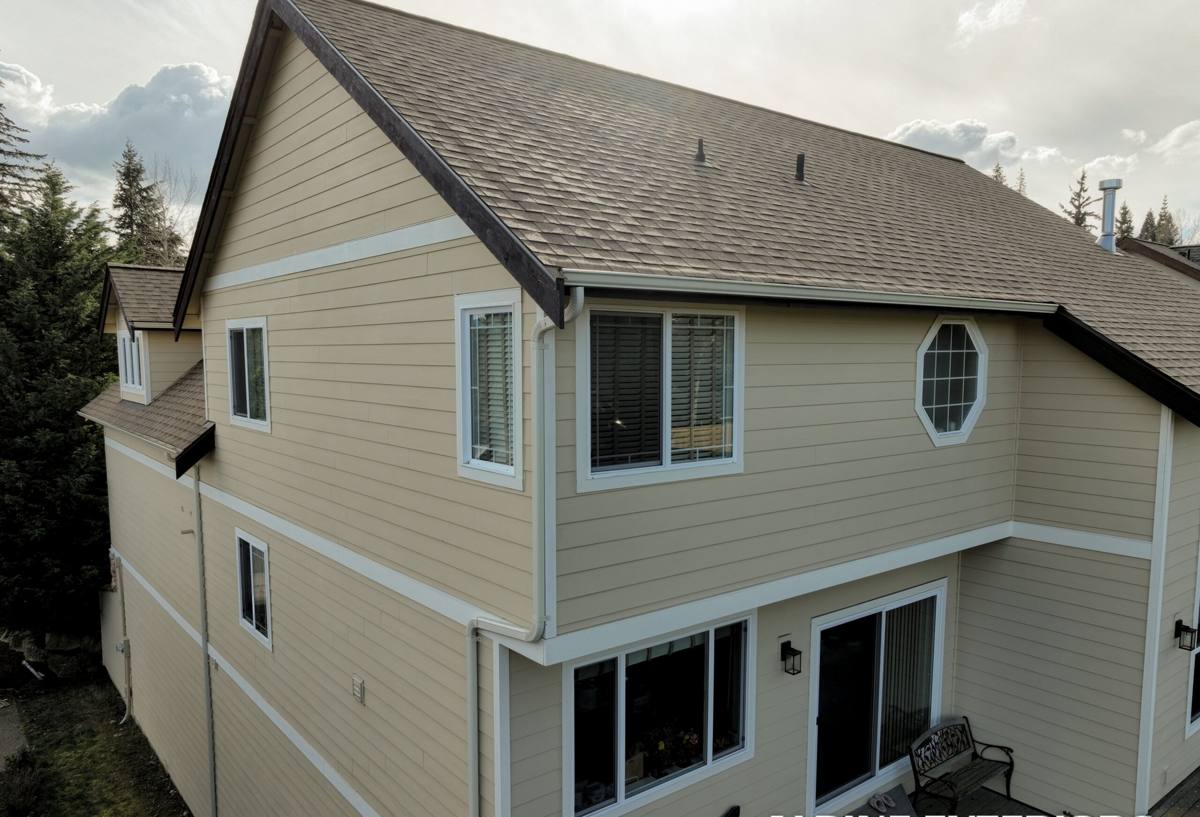
What Salt Air, Driving Rain, and Moss Actually Do to a Roof
Salt Air
Airborne salt accelerates corrosion on anything metal — nails, flashing, vent stacks, gutter hardware. Standard galvanized fasteners can start showing rust streaks years before they would on a home further from the water. It's not dramatic, but it's steady, and it's the kind of wear that shows up as small leaks around penetrations long before the shingles themselves fail.
Driving Rain
Wind off the water pushes rain sideways, not just down. That means water gets tested against every seam, every piece of flashing, and every edge detail on the roof — spots that would stay dry in a calm, straight-down rain. Underlayment quality and flashing technique matter more here than they would on a sheltered inland lot.
Moss
Shade, moisture, and mild temperatures are exactly what moss wants, and Skagit County gives it all three for most of the year. Moss holds water against the roof surface, works its way under shingle tabs, and lifts edges over time. On a north-facing slope or a roof with tree cover, moss can shorten the useful life of a roof by years if it's never addressed.
Signs a March Point Home Needs a New Roof, Not Another Repair
Repairs make sense for isolated problems. A full replacement makes sense once the roofing system as a whole is past its useful life. Here's what tends to point toward replacement rather than another patch:
- Granule loss heavy enough that shingles look patchy or bald in spots, especially on south- and west-facing slopes
- Shingles that are cupping, curling at the edges, or cracking when you touch them
- Moss growth that comes back within a season of cleaning, or moss established under the shingle tabs themselves
- Rust staining or visible corrosion around flashing, vent boots, and valleys
- Daylight visible through the roof deck from the attic, or damp insulation after a storm
- A roof at or past the manufacturer's expected lifespan, especially if it's never had proper ventilation
- Multiple past repairs in different areas — a sign the underlying materials are failing broadly, not locally
If you're only seeing one or two of these and the roof is otherwise sound, a repair may still be the right call. We'll tell you that honestly during an inspection — a new roof is a real investment, and we don't recommend one unless the roof actually needs it.
Choosing a Roofing Material for a March Point Property
There's no single "best" roofing material — the right choice depends on your home's exposure, roof pitch, budget, and how much upkeep you want to take on. Here's how the common options stack up specifically against salt air, wind-driven rain, and moss:
| Material | Salt Air Resistance | Moss Resistance | Maintenance |
|---|---|---|---|
| Architectural asphalt shingle | Good, with corrosion-resistant fasteners and flashing | Moderate — benefits from zinc/copper strips | Periodic moss treatment recommended |
| Standing seam metal | Very good with coated/marine-grade fastener systems | Very good — moss struggles to hold on smooth metal | Low |
| Composite/synthetic shake | Good | Good — resists moisture absorption | Low to moderate |
| Cedar shake | Fair — needs regular treatment near salt exposure | Poor without upkeep — organic material invites growth | High |
Metal roofing tends to perform best against the specific combination of salt air and moss that March Point sees, but it's also the highest upfront cost. Architectural asphalt with the right accessory materials remains a solid, more affordable choice for most homes here, and it's what we install most often on this stretch of Skagit County.
Why We're Cautious About Cedar Shake This Close to the Water
Cedar has real appeal and we understand why homeowners want it. Our concern near the water isn't the wood itself — it's maintenance burden. Untreated or under-maintained cedar absorbs moisture, holds it against the deck, and gives moss an organic surface to establish on. If you want the look, we'll talk through a realistic maintenance schedule up front rather than let you find out later.
What a Correct Installation Actually Involves
A new roof is more than shingles nailed to a deck. For a property exposed to wind-driven rain, the details underneath and around the shingles are what actually keep water out:
- Tear-off and deck inspection — full removal of the old roofing so the deck can be checked for rot, soft spots, or delamination before anything new goes down.
- Deck repair — any damaged sheathing gets replaced, not covered over. Roofing over a bad deck just hides a problem that gets more expensive later.
- Ice-and-water shield at vulnerable points — eaves, valleys, and any low-slope transitions get a self-adhering waterproof membrane, not just felt, since these are exactly the areas driving rain and wind can exploit.
- Synthetic underlayment across the field — a durable, water-resistant layer that acts as your backup barrier if wind ever drives water under a shingle.
- Corrosion-resistant flashing and fasteners — around chimneys, vents, and valleys, using materials chosen to hold up to salt exposure rather than standard-grade hardware.
- Balanced ventilation — intake at the eaves and exhaust at the ridge, sized correctly for the attic volume, so moisture doesn't get trapped under the deck and feed rot or mold.
- Shingle or panel installation — installed to manufacturer spec for nail pattern and exposure, which is what keeps the warranty valid and the roof performing in high wind.
- Final walk-through — checking edges, penetrations, and gutter tie-ins before we consider the job done.
Skipping or rushing any one of these steps is usually where the leaks that show up two or three years later come from. It's rarely the shingle brand — it's the flashing, the underlayment, or the ventilation that got shortcut.
Ventilation and Moss Prevention Built Into the Job
A roof that isn't ventilated correctly traps warm, moist air against the underside of the deck. In a climate as damp as Skagit County's, that trapped moisture speeds up deck rot from the inside and creates ideal conditions for moss and algae to take hold on the outside. When we install a new roof, we size and balance intake and exhaust ventilation as part of the job, not as an afterthought — and on north-facing or shaded slopes, we'll talk with you about zinc or copper strips near the ridge, which release trace metals that discourage moss regrowth as rain washes over them.
None of this eliminates moss forever — nothing does in this climate — but it meaningfully extends the time between cleanings and reduces the chance of moss working its way under shingle edges.
What It Costs — and What Drives the Price
Every roof is different, and we won't quote a number without seeing the property, but here's what typically moves the price up or down for a March Point home:
| Factor | Effect on Cost |
|---|---|
| Roof size and number of planes | More area and more cuts mean more material and labor |
| Roof pitch and accessibility | Steep or hard-to-access roofs take longer and require more safety setup |
| Deck condition | Rot or soft sheathing discovered at tear-off adds repair cost |
| Material choice | Asphalt shingle is generally most affordable; metal costs more upfront but less upkeep |
| Number of penetrations | Chimneys, skylights, and vents each need individual flashing work |
| Tear-off layers | Removing multiple old roofing layers adds labor and disposal cost |
As a broad range, a full asphalt shingle replacement on an average single-family home in this area commonly falls somewhere in the mid five figures, with metal roofing running higher. We'll give you an exact number, in writing, after we've actually looked at your roof.
Why a Crew That Already Works March Point Matters
A roofing crew that regularly works this specific stretch of Anacortes and Skagit County already knows what the salt exposure does to fasteners here, which slopes tend to hold moss the longest, and how the wind typically drives rain on a peninsula lot versus a sheltered one. That's knowledge you don't get from a crew that mostly works subdivisions twenty miles inland and treats every roof the same.
There's also a practical side: local permitting familiarity, faster response if weather interrupts a project, and a crew that isn't guessing at material choices because they've installed and later re-inspected roofs on comparable March Point and Anacortes homes. That track record is what lets us recommend a material or a ventilation plan with confidence instead of a generic default.
Our Process, Start to Finish
We keep the process straightforward:
- On-site inspection of the current roof, attic ventilation, and deck condition
- Honest assessment of whether you need replacement or repair — we'll say so if repair is enough
- Written estimate covering material options and what's actually included
- Scheduled installation with deck repair handled as part of the job, not a surprise change order
- Final walk-through so you know exactly what was done and how to maintain it
If you're a March Point homeowner dealing with an aging roof, active leaks, or heavy moss that keeps coming back, we're happy to take a look and give you a straight answer — no pressure, no upsell. Use the form below to request a free estimate.