 Anacortes
 Building New in Oak Harbor: What the Windows Have to Handle
Oak Harbor sits on Whidbey Island, across Deception Pass from our home base in Anacortes and Skagit County. It's close enough that we run crews there regularly, but it's a different exposure than a lot of inland Puget Sound building sites. Homes here face open water on more than one side, which means salt-laden air, wind-driven rain that comes in sideways rather than straight down, and a wet season that runs long enough to grow moss on anything that stays damp too long. New-construction windows are one of the few building components that get one real chance to be installed correctly before they're buried behind siding, trim, and interior finish work — so getting the install right the first time matters more here than in a drier climate.
When we're brought onto a new build in Oak Harbor, our job isn't just to set glass in a rough opening. It's to make sure the window becomes part of a continuous water-management system that will hold up to decades of coastal weather without anyone having to think about it again.
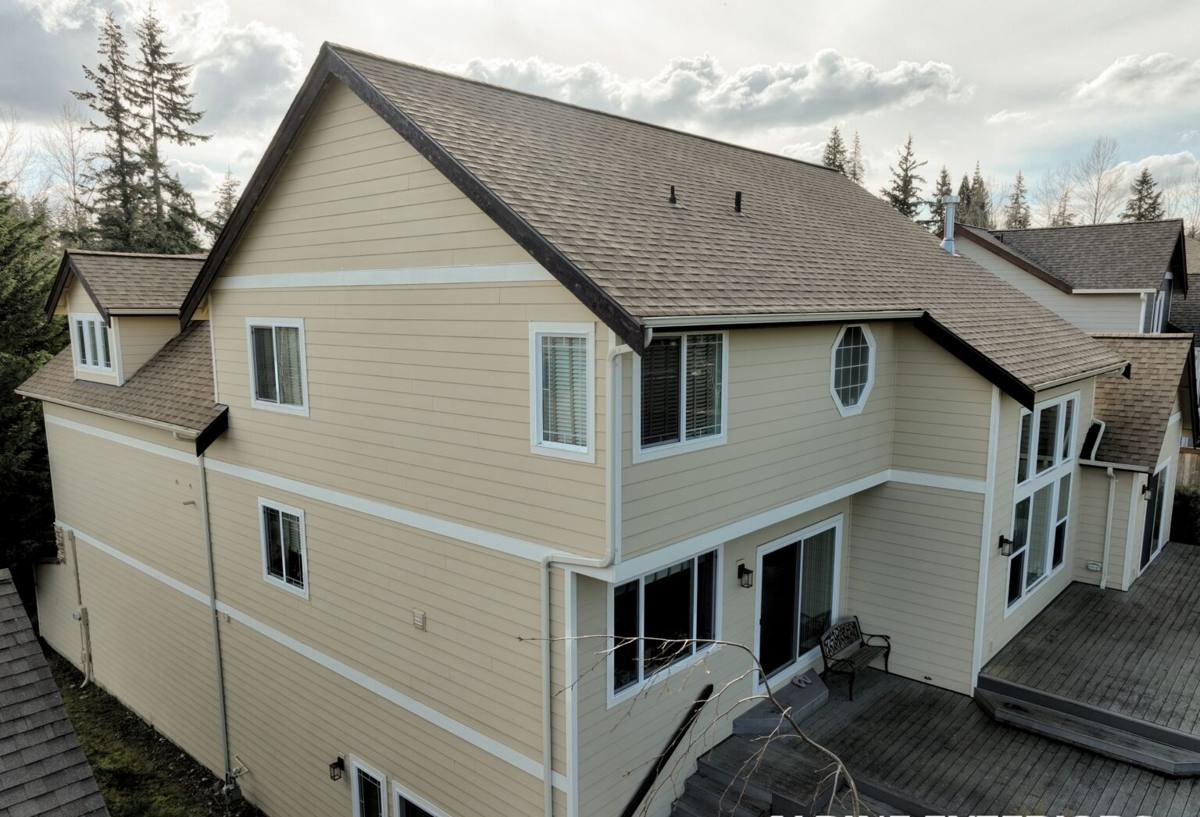
New-Construction Windows vs. Replacement: Why the Install Method Is Different
New-construction windows have a nailing fin around the perimeter of the frame that gets fastened directly to the wall sheathing before siding goes on. That's different from a replacement (pocket) window, which gets inserted into an existing frame after the fact. The nail-fin approach gives us access to build proper flashing layers around the window before anything covers them up — which is exactly the advantage you want to use on a site that's going to take on a lot of wind-driven rain over its life.
The trade-off is timing. New-construction windows have to go in at the right point in the build sequence — after the weather-resistive barrier (house wrap) is up, but before siding starts. If a general contractor's schedule gets compressed, window installation is one of the steps that's easy to rush. We coordinate directly with builders and framers on Oak Harbor jobs specifically so this step doesn't get squeezed.
Why This Matters More Near Open Water
Wind pressure differentials near the water push rain into gaps that would stay dry on a more sheltered inland lot. A flashing detail that's "close enough" on a protected site can be the exact detail that lets water track behind the siding on a waterfront or bluff-facing home. There's no way to fix that after the siding is closed up without tearing it back open.
What a Correct New-Construction Window Install Actually Involves
Flashing and Water Management Sequence
The rough opening gets flashed in a specific shingle-lap order — sill pan first, then the window itself, then the side flashing, then the head flashing — so that any water that does find its way behind the cladding is directed back out, never trapped against sheathing. Sill pans matter most on this coastline; they give bulk water a way out even if a seal fails years down the road.
Fastening and Structural Attachment
The nailing fin gets fastened per the window manufacturer's schedule — spacing and fastener type matter for both structural performance and warranty compliance. Skipped or misplaced fasteners are a common source of both leaks and warranty denials, and they're invisible once the wall is closed up.
Sealants, Gaps, and Insulation
The gap between the window frame and rough opening gets air-sealed and insulated — not just caulked at the exterior. A window that's watertight on the outside but leaks air around the frame will still cost the homeowner in comfort and energy bills, and in this climate a poorly sealed gap is also where condensation and eventual moisture problems start.
Choosing Materials and Glass for a Coastal Build
Frame material and glass package both affect how a new-construction window performs against salt air and constant moisture exposure. There's no single "best" answer for every home — it depends on budget, style, and how exposed the site is — but here's how the common options compare for this climate specifically.
| Frame Material | Salt Air / Moisture Behavior | Maintenance | Typical Cost Range |
|---|---|---|---|
| Vinyl | Good corrosion resistance; no paint to maintain; can discolor over many years of UV and salt exposure | Low — occasional rinse | Lower |
| Fiberglass | Excellent — dimensionally stable, resists corrosion and doesn't expand/contract with moisture like wood | Low | Mid to upper |
| Aluminum-clad wood | Good exterior protection from the cladding, but any breach in the cladding exposes wood to rot in a wet climate | Moderate — cladding seams need periodic inspection | Upper |
| Bare wood | Poorest fit for direct salt-air/rain exposure without diligent upkeep | High — regular repainting/sealing | Varies |
On glass, we generally steer new builds here toward a low-E, argon-filled double-pane package as the baseline, with triple-pane considered for north- or west-facing walls that take the brunt of storm wind. The glass package affects condensation resistance as much as energy performance — in a climate this humid, a poorly specified glass package fogs and sweats on the interior long before it ever becomes an energy-bill issue.
Our Process on Oak Harbor New-Construction Jobs
- Plan review and product selection — we look at elevations and orientation before recommending frame material and glass package, factoring in which walls face open water or prevailing wind.
- Site coordination — we confirm timing with the builder so windows go in at the correct point after house wrap and before siding, and we check rough openings against actual window sizes before delivery.
- Flashing and installation — sill pan, window, side flashing, head flashing, fastening to schedule, air-sealing the interior gap.
- Quality check — every opening gets inspected for square, level, plumb, and proper drainage path before it's signed off to move to siding.
- Documentation — we keep track of what was installed where, which matters for warranty claims down the road.
Why a Crew That Already Works Oak Harbor Matters
Anacortes Siding runs crews on Whidbey Island regularly enough that Oak Harbor isn't an unfamiliar drive across the bridge for us — it's part of our normal service area. That matters in a few concrete ways: we already know what wind and rain exposure looks like on this side of Deception Pass, we're used to coordinating with builders working on this side of the water, and we're not learning the local building department's inspection expectations for the first time on your job. A crew that only occasionally works Island County is more likely to treat a coastal build the same as a sheltered inland one — and that's exactly where corners get cut without anyone noticing until years later.
We also don't sub out new-construction window installs to whoever's available that week. The same crew that does the flashing detail work is accountable for the result, which is worth something on a step you only get to do once per house.
Mistakes We Commonly Catch on New Builds
- Missing or improperly lapped sill pan flashing — the single biggest cause of hidden leaks behind siding
- Window installed before house wrap is fully lapped and taped, breaking the drainage plane
- Fasteners driven through the nailing fin at the wrong spacing or angle, voiding manufacturer warranty terms
- Exterior caulked but interior gap left unsealed, leading to air leakage and condensation later
- Window sizes not verified against actual rough openings before delivery, causing rushed field modifications
- Head flashing omitted or installed under, rather than over, the house wrap above the window
Most of these aren't visible once siding goes on. They show up years later as a stain on interior drywall, a soft spot in trim, or a warranty claim that gets denied because the fastening schedule wasn't followed. Catching them during rough-in, while the wall is still open, costs nothing compared to what it costs to fix after the fact.
After the Build: What New Homeowners Should Know
New-construction windows installed correctly shouldn't need attention for years, but a little upkeep goes a long way in this climate. Rinse exterior frames periodically to clear salt residue, especially on homes closer to the water. Keep an eye on exterior caulk lines at the frame perimeter — they're a normal wear item and are far easier to touch up early than to deal with once water has gotten behind them. And during the wetter months, keep gutters and downspouts clear near window heads so water isn't sheeting directly across the glass and frame more than it needs to.
Get a Straightforward Estimate
If you're building new in Oak Harbor and want windows installed by a crew that treats coastal flashing detail as non-negotiable, we're glad to walk the plans or the site with you. Use the form below to request a free, no-pressure estimate — there's no obligation, and we're happy to answer questions even if you're still finalizing your builder or your window selection.